The strategic landscape of U.S.-China competition continues to evolve rapidly, extending far beyond traditional military confrontations into a complex, multi-domain rivalry that encompasses economic, diplomatic, technological, and grey-zone tactics. Recent developments highlight how both powers are actively shaping regional and global security architectures through infrastructure investments, alliance strengthening, and technological advancements, underscoring the high stakes involved in this ongoing contest.
### Expanding Multi-Domain Competition: Maritime, Space, Arctic, and Grey Zones
The contest between the United States and China now spans multiple arenas, each presenting unique challenges and escalation risks. In the maritime domain, significant regional posturing is underway. The Philippines' upgrade of Pag-asa Island’s runway exemplifies this strategic push: an 18-minute YouTube video showcases how the infrastructure **enhances Philippine operational capabilities**, allowing for **more advanced aircraft deployment** and **improved surveillance**. This development is designed to **strengthen deterrence** against Chinese territorial assertions in the South China Sea and **assert Philippine sovereignty** in a highly contested maritime zone.
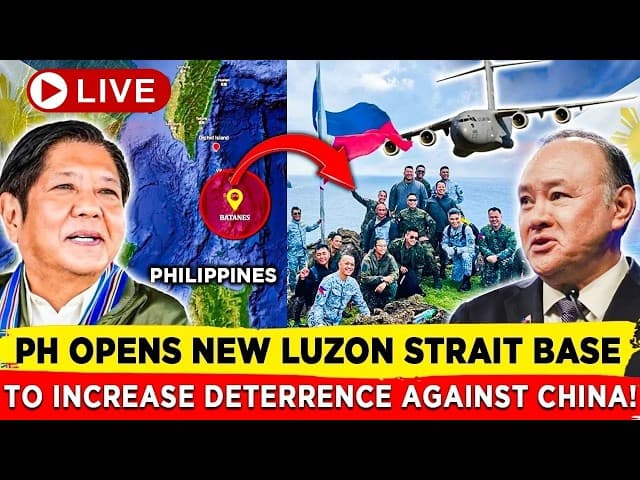
Complementing these regional efforts, the United States is **expanding its military footprint** across the Indo-Pacific. Recent deployments include the **B-21 Raider stealth bomber**, which bolsters **long-range strike capabilities**, and the establishment of **dispersed bases and remote outposts**, such as a **new Philippine base in Luzon Strait**. These moves aim to **improve operational flexibility** and **deterrence posture**, especially in the face of China's naval expansion. Additionally, the U.S. is **accelerating development of long-range anti-ship missile systems**, including variants like the **PrSM missile capable of striking targets up to 1,000 km away**, critical for **contesting Chinese naval movements** and **controlling key maritime choke points**.
In the non-kinetic domain, the competition extends into **space and the Arctic**, where escalation risks are increasingly evident. A recent YouTube analysis titled *"U.S. vs China in Space: Who Wins?"* highlights the race to **dominate Low Earth Orbit (LEO)**, with both nations developing **anti-satellite weapons (ASATs)**, generating **space debris**, and harnessing space technology for military advantage. These developments raise the specter of **miscalculation** and potentially **conflict in orbit**.
Meanwhile, China’s ambitions in the Arctic are expanding. Once considered a Western domain, the Arctic has now become a **frontline of strategic competition**, with China investing in **infrastructure, resource extraction, and new shipping routes**. Such activities increase regional stability concerns and underscore the need for **multilateral mechanisms** to **manage emerging risks** and **prevent escalation**.
### Regional Posture Shifts and Deterrence Measures
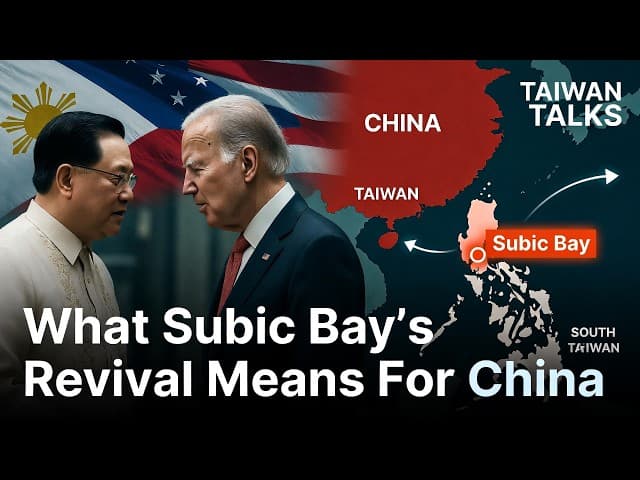
Recent infrastructure and military deployments underscore the intensifying regional competition. The Philippines' upgrade of Pag-asa Island’s runway **significantly enhances regional deterrence**, enabling **more advanced aircraft operations** and **improved surveillance**. The recent approval of a plan—reported in a YouTube video titled *"Marcos and Trump Approve Subic Bay Ammunition Hub Plan | Taiwan Talks"*—indicates a broader strategic effort involving the Philippines to bolster its defense capabilities, including potential **ammunition storage and logistics hubs** at key bases like Subic Bay. Such facilities **strengthen Manila’s defensive posture** and **enhance regional interoperability** with U.S. forces.
Simultaneously, the U.S. has announced the **establishment of a new base in Luzon Strait**, which will serve as a critical node for **power projection and rapid response** in the Indo-Pacific. The deployment of the **B-21 Raider** enhances **long-range strike options**, signaling a clear intent to **deter Chinese military assertiveness** across the region.
Furthermore, the U.S. is **advancing its missile capabilities**, notably with the **PrSM missile system**, which can **strike targets up to 1,000 km away**. These capabilities are vital in **contesting Chinese naval and missile modernization efforts** and **maintaining maritime control** over vital straits and chokepoints.
### Alliances, Partnerships, and Diplomatic Dynamics
The broader strategic environment is heavily influenced by **deepening alliances and international partnerships**. The U.S. continues to **coordinate closely with allies through frameworks like the Quad**, comprising the U.S., Japan, India, and Australia. This alliance aims to **present a unified front** against Chinese influence and **coordinate military, technological, and diplomatic initiatives**.
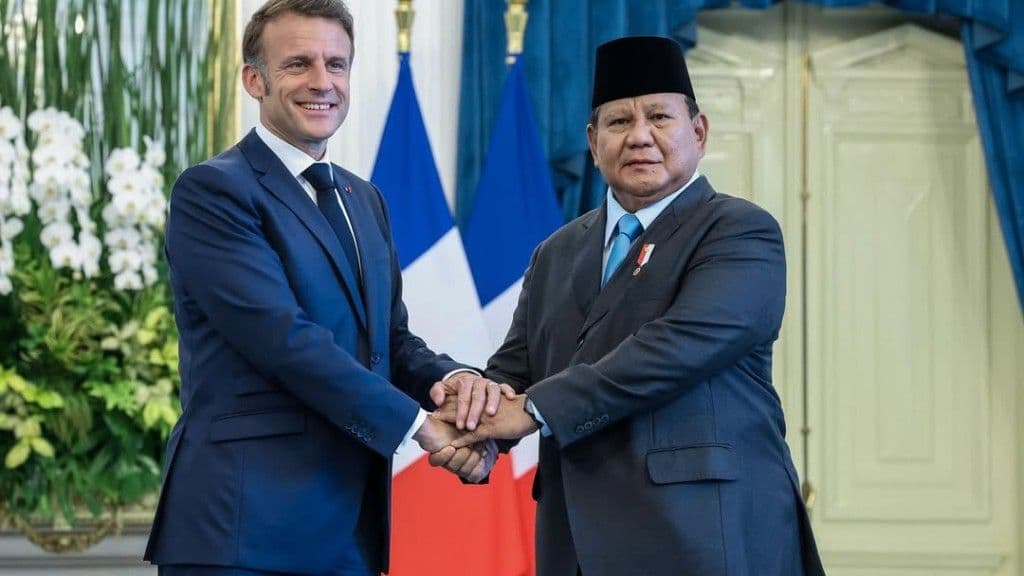
European powers are increasingly engaged in the Indo-Pacific security landscape. France has expanded its naval deployments, exemplified by initiatives such as **Mission Jeanne d’Arc 2026**, which signals a **broader international effort to counter China's expanding footprint**. The UK’s **Indo-Pacific strategy** emphasizes **diplomatic, military, and economic engagement**, reflecting an understanding that **regional stability depends on multilateral cooperation**.
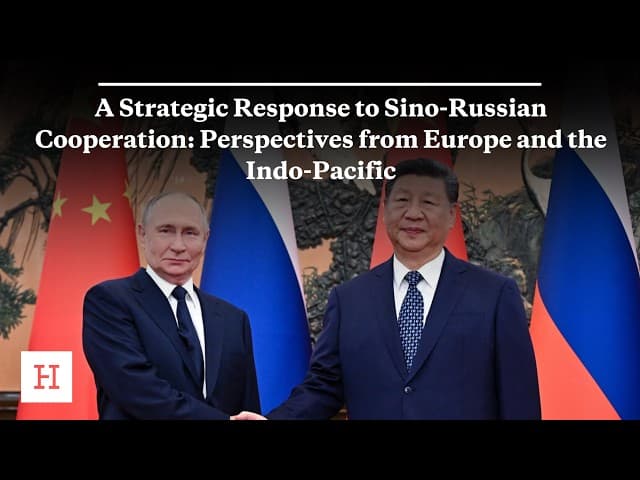
Adding complexity, **Sino-Russian cooperation** has grown, with analyses pointing to **closer strategic partnership dynamics**. European and Indo-Pacific responses underscore the importance of **coordinated diplomacy and deterrent measures** to **manage the risks associated with a multipolar alliance system**.
In parallel, the United States has **strengthened cooperation with Pacific island states**. Recent discussions at the State Department, involving Pacific leaders and military representatives, focus on **regional security, infrastructure development, and strategic investments**. These talks aim to **fortify regional resilience** against Chinese influence and **advance joint security initiatives**.
### Emerging Domains and Escalation Risks
The competition in **space and the Arctic** is particularly concerning. The race to **dominate Low Earth Orbit (LEO)** involves **development of anti-satellite technologies** and **space debris generation**, which **heighten risks of accidental conflict**. The U.S. and China are investing heavily to **integrate space-based assets into military doctrine**, raising questions about **stability in orbit**.
In the Arctic, China’s investments in **infrastructure and resource extraction**—including plans for new ports and icebreaker ships—are expanding its strategic footprint. Once primarily a Western domain, the Arctic is now a **frontline of contest**, with China seeking access to **resources and shipping routes**, prompting concerns over **regional stability** and the potential for **conflict escalation**.
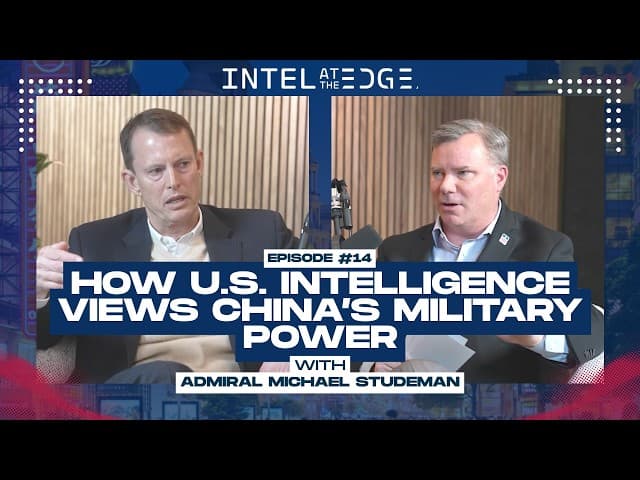
Intelligence assessments, including insights from Admiral Michael Studeman, indicate that **China’s military modernization is progressing rapidly**, with **notable advances in naval, missile, and cyber capabilities**. The **"Military Balance 2026"** report emphasizes that **China is closing the gap in key military domains**, pursuing **asymmetric strategies** to **counter U.S. technological advantages** and **expand operational reach**.
### Diplomatic Messaging and Influence Strategies
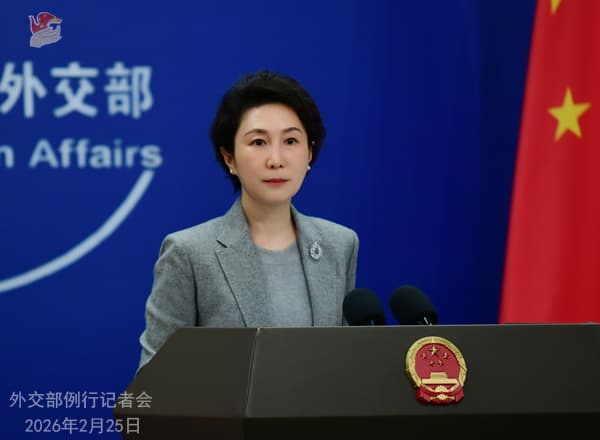
China continues to emphasize **"peaceful development"** and **"mutual benefit"** in its diplomatic narrative, as articulated in recent briefings. It portrays itself as a **stabilizing force**, even as it **expands influence** through **infrastructure investments, resource diplomacy**, and **regional outreach** into Latin America, Africa, and the Arctic.
In contrast, the U.S. emphasizes **alliance-building, institutional influence, and economic measures**. Recent initiatives include efforts to **expand security cooperation** with Pacific island nations, with the State Department actively engaging regional leaders on **security, infrastructure, and economic projects**—evidenced by ongoing **discussions at forums like the East-West Center**. These efforts are aimed at **countering Chinese influence** and **strengthening regional resilience**.
### Recent Developments: Strategic Infrastructure and Regional Security
A notable recent development is the **approval of a plan involving Subic Bay** to establish an **ammunition hub**—a move that enhances logistical capabilities for U.S. and allied forces operating in the Indo-Pacific. The plan, discussed in a YouTube report, signifies **heightened military coordination and infrastructure investment** aimed at **bolstering regional defense**.
Additionally, the State Department has engaged in **discussions with Pacific leaders** regarding **regional security, infrastructure projects, and strategic investments**. These dialogues underscore a **concerted effort to build regional resilience**, promote **stability**, and **counterbalance Chinese influence** through **diplomatic and military cooperation**.
### Implications and Future Trajectory
The current trajectory suggests that **competition across all domains will intensify**, with both superpowers investing heavily in **military, technological, diplomatic, and economic capabilities**. The risks of **miscalculation or accidental escalation**—particularly in space, the Arctic, and maritime zones—are rising, emphasizing the **urgent need for confidence-building measures** and **multilateral security frameworks**.
The competition’s expanding scope involves **a complex web of alliances, regional actors, and emerging domains**, challenging the international community to **balance deterrence with diplomacy**. The goal must be to **prevent conflicts**, foster **stability in a multipolar world**, and **manage escalation risks** through **transparent communication, arms control initiatives**, and **regional cooperation**.
**In sum**, the U.S.-China rivalry is increasingly a **multi-layered, multi-domain contest** that will shape the global order for years to come. The coming period will be pivotal in determining whether this competition results in a **delicate balance of power** or **destabilizing escalation**, with the international community’s ability to **navigate these challenges** being critical.
---
**Current Status:** As both nations deepen their investments and strategies, the world faces a pivotal moment. The interplay of military modernization, infrastructure development, diplomatic engagement, and emerging domain competition underscores the importance of **preventive diplomacy** and **multilateral cooperation** to **mitigate risks** and **promote stability** in an increasingly contested global landscape.