# Indo-Pacific Strategic Competition 2026: Naval Modernization, Undersea Domain, and Diplomatic Maneuvers Intensify
The Indo-Pacific region in 2026 remains the epicenter of a rapidly escalating geopolitical contest, driven by China’s aggressive naval and undersea expansion, technological bifurcation, and strategic alliances designed to counterbalance Beijing’s growing influence. Recent developments reveal a complex tapestry of military modernization, cyber and undersea threats, and diplomatic initiatives, all shaping the future security architecture of this critical region.
---
## China's Undersea and Naval Expansion: Deepening the Threat
China’s maritime ambitions have reached new heights, with a pronounced focus on **submarine proliferation** and **undersea operational capabilities**. Its **submarine fleet**, now among the largest and most sophisticated globally, serves multiple strategic objectives:
- **Power projection** beneath the waves, extending China's influence into contested waters.
- **Deterrence and coercion**, particularly targeting regional rivals and the United States.
- **Protection of critical undersea infrastructure**, notably the **vast network of undersea cables** that carry over **90% of global internet and data traffic**.
**Recent intelligence reports** indicate increased Chinese naval patrols and activities near **undersea cables** and vital maritime zones such as the **South China Sea**, **East China Sea**, and around **Taiwan**. These operations include **monitoring**, **covert surveillance**, and potential **sabotage efforts**, raising alarms over **cybersecurity vulnerabilities**, **communications disruption**, and **regional stability**.
### Undersea Operations and Risks
Disruption or sabotage of undersea cables could have **catastrophic consequences**:
- **Crippling global financial markets** and **communications networks**.
- **Impeding supply chains**, especially Taiwan’s **semiconductor sector**, with **TSMC** being central.
- **Potential escalation into regional conflicts**, particularly if coercive actions against Taiwan or other territorial claims intensify.
The **Pentagon warns** that **China might aim for a potential invasion or coercive pressure on Taiwan as early as 2027**, prompting allies to **accelerate military readiness** and **deter Chinese aggression**.
---
## Regional Responses and Defense Modernization
In response to China’s expanding naval and undersea capabilities, regional powers have launched significant modernization efforts:
- **Australia** has prioritized **maritime resilience** through **advanced submarine programs**, **maritime surveillance**, and **strengthened alliances** with the US and Southeast Asian nations. Its **2026 National Defence Strategy** emphasizes **submarine modernization** and **maritime domain awareness** to counter Chinese threats.
- **Japan** has adopted a **more proactive naval posture**, exemplified by **arming Yonaguni Island** with **Type-03 Chū-SAM missiles**—a highly mobile surface-to-air missile system capable of intercepting aircraft and missiles. This move reflects Japan’s intent to **bolster regional missile defenses** and **deter Chinese and North Korean threats**. Recently, Japan also **expanded its missile defense perimeter** to include **forward deployment** in strategic outposts.
- **South Korea** continues to enhance **missile defenses**, **submarine fleets**, and **maritime patrols**, all while maintaining **economic ties with China** to balance security needs amid regional tensions.
- **European nations** like the **Netherlands**, **Germany**, and **Sweden** are implementing **export controls** on **semiconductors** and **dual-use technologies**, emphasizing **supply chain resilience** and **regional stability**.
- The **United States**, through initiatives like **Quad** and **AUKUS**, maintains its commitment to **freedom of navigation operations** and **deterrence**. Recent strategic moves include:
- The **opening of a new U.S. airbase in the Philippines**, which **"sends shockwaves to Beijing"**, bolstering regional deterrence and strategic mobility.
- The **expansion of logistics support at Subic Bay**, transforming it into a **major hub for ammunition and supplies**, deepening U.S.-Philippines military cooperation.
- Enhanced bilateral security arrangements, such as **Philippines–Japan cooperation**, which signals a **strengthening of regional security partnerships**.
### The U.S.-Philippines Nexus in Taiwan Defense
The **U.S. and Philippines** have deepened their strategic partnership, notably through **joint military exercises** and **logistics support**, positioning the Philippines as a potential **forward enabler for Taiwan’s defense**. As the threat of Chinese coercion against Taiwan rises, the Philippines’ strategic location and military strengthening efforts are viewed as **key components of broader regional deterrence**.
---
## The Undersea Domain: A Growing Flashpoint
The **undersea realm** is increasingly recognized as a **strategic flashpoint**:
- China's focus on **submarine proliferation** and **cable security** underscores its desire to **control communication routes** and **project influence beneath the waves**.
- **Monitoring and sabotage activities** near undersea cables have heightened concerns over **cybersecurity vulnerabilities**.
- **Taiwan**, critical for **semiconductor manufacturing**, invests heavily in **cable security** and **maritime patrols** to safeguard its economic infrastructure.
**Southeast Asian nations** like **the Philippines** and **Vietnam** are deploying **coast guard vessels**, **patrol ships**, and **undersea sensors** to **protect their maritime zones**. These efforts are often supported by **international cooperation frameworks** and **regional alliances**, although **the risk of kinetic conflict remains** as tensions in the undersea domain escalate.
**Contingent capabilities**—such as anti-access/area denial (A2/AD) systems—are emerging across Southeast Asia, complicating deterrence and access for external powers.
---
## Technological Competition and Supply Chain Resilience
The **technological battleground** remains fierce:
- **Semiconductor manufacturing** is a core area of contention, with the US and China **accelerating efforts to develop domestic production**, leading to a **"Silicon Curtain"**—a bifurcation of technological ecosystems.
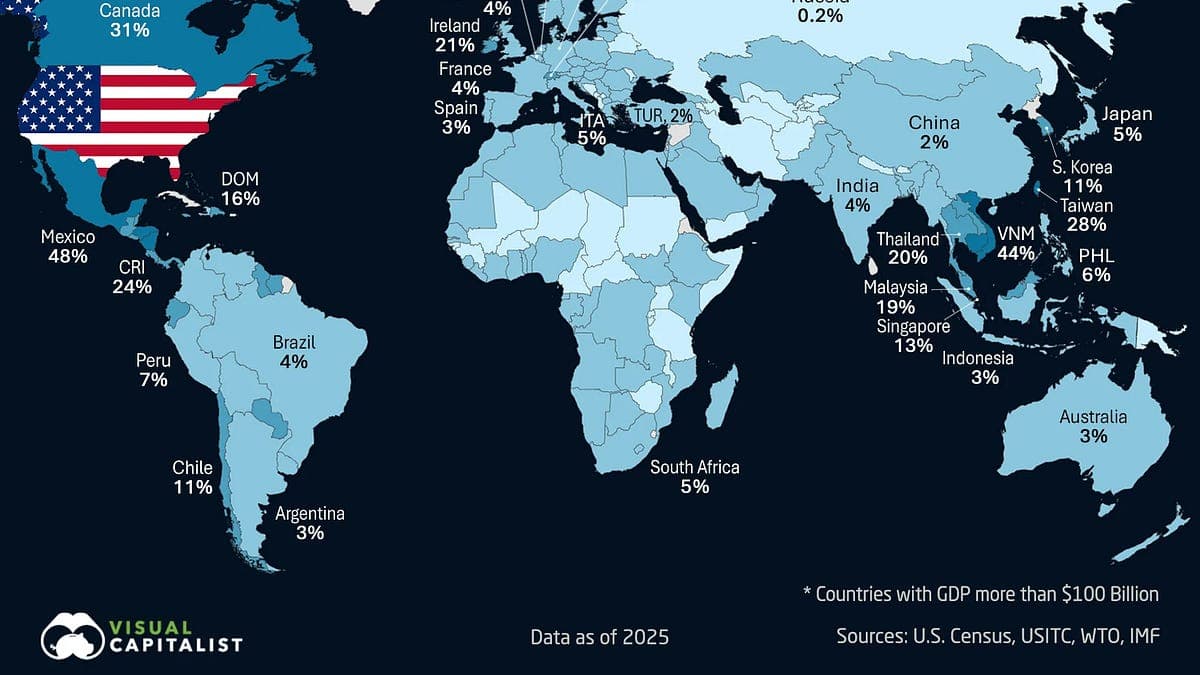
- Despite tensions, **China’s trade expansion** persists, with its **global trade share rising**, reflecting Beijing’s push toward **technological self-sufficiency** and **trade diversification**.
- Countries like **Japan**, **Australia**, and **South Korea** are **diversifying resource bases**, especially for **rare-earth minerals** vital for electronics and military hardware, aiming to **reduce dependence on China**.
### Cyber Threats and Supply Chain Security
- **Chinese cyber units** are increasingly active in **offensive cyber operations**, targeting **undersea cables**, **critical infrastructure**, and **supply chains**.
- Recent reports highlight a **surge in cyberattacks** on **power grids**, **communications networks**, and **financial institutions**, complicating defensive efforts.
- **Regional and global initiatives** focus on **cyber resilience**, **redundant infrastructure**, and **international cybersecurity alliances**, exemplified by the **Trust, Data, and Deterrence** conference held in New Delhi.
---
## Diplomatic Initiatives and Infrastructure Resilience
Diplomatic efforts are now centered on **building resilient infrastructure** and **strengthening regional partnerships**:
- **Japan and Australia** are deploying **redundant communication networks** and **cyber defenses**.
- The **UK’s expanded Indo-Pacific strategy** includes **capacity-building** to **protect supply chains** and **critical infrastructure**.
- The recent **U.S.-Philippines military cooperation** exemplifies **deepening alliances**, with **bilateral agreements** fostering **joint logistics** and **regional deterrence**.
The **opening of a new U.S. airbase in the Philippines** exemplifies **forward deterrence**, enhancing **strategic mobility** and **regional presence**.
---
## Recent Articles and Diplomatic Milestones
### **Seventy Years On: Philippines-Japan Security Ties in the Indo-Pacific**
In January 2026, the Philippines and Japan signed a **new bilateral Agreement on Security Cooperation (ACS)**, marking **seven decades of strategic partnership**. This agreement includes **joint military exercises**, **intelligence sharing**, and **cooperative patrols**, reinforcing **regional stability** and **deterrence against Chinese assertiveness**.
### **The United States, the Philippines, and the Defense of Taiwan**
Authored by **Capt. Brent Ramsey, USN ret**, this analysis emphasizes the **crucial role of U.S.-Philippines cooperation** in **deterring Chinese coercion** and **supporting Taiwan’s defense**. The **U.S. aims to fortify regional alliances** to **maintain strategic balance** amid **heightened tensions**.
### **Contingent Capabilities: Southeast Asia’s Emerging Anti-access Environment**
This research highlights **Southeast Asian nations' investments** in **A2/AD systems**, **maritime patrols**, and **undersea sensors**. While these measures **improve regional resilience**, they also **introduce complexities** for **external military operations**, emphasizing the need for **cross-domain cooperation**.
---
## Current Status and Future Outlook
The Indo-Pacific in 2026 is characterized by:
- An **intensified naval arms race**, with numerous countries expanding **submarine fleets** and **undersea capabilities**.
- A **technological bifurcation**, especially in **semiconductors** and **critical minerals**, leading to **fragmented supply chains**.
- **Deepening alliances** such as the **Quad**, **AUKUS**, and regional coalitions focused on **counterbalancing China**.
- A strategic emphasis on **cross-domain resilience**—maritime, cyber, space, and supply chain security.
**China’s response** involves **ramping up indigenous naval and cyber capabilities** to attain **self-reliance** amid external pressures, while **allied nations** bolster **deterrence and resilience measures**.
---
## Strategic Implications
This evolving landscape signals a **strategic bifurcation**:
- Countries are **investing heavily in military modernization**, **deterrence**, and **diplomatic engagement**.
- The **fragmentation of supply chains** and **technological ecosystems** underscores the need for **prudent diplomacy** and **technological innovation**.
- The **undersea domain**, with its increasing importance and vulnerabilities, requires **cross-domain cooperation** to **mitigate risks**.
Recent moves—such as **arming Yonaguni Island**, **expanding U.S.-Philippines logistics**, and **strengthening regional alliances**—are aimed at **deterring Chinese coercion** and **protecting critical infrastructure**.
---
## Conclusion
As China advances toward **self-reliance** and **regional influence**, the **strategic landscape** of the Indo-Pacific is being reshaped by **alliances, technological resilience**, and **dynamic strategic calculations**. The region's stability hinges on **adaptability**, **cooperation**, and a nuanced understanding of the **multifaceted contest** underway. **Forward deterrence**, **cyber resilience**, and **multi-domain coordination** will be vital in maintaining regional security and preventing escalation in this high-stakes environment.