4h ago
Governance Before Scale: Government's Real AI Bottleneck
- High-stakes accountability gap: Government AI errors affect citizen benefits and rights, requiring documented oversight and explainability that...

Created by Kristopher` Howard
AI breakthroughs and policy analysis on safety, ethics, and societal impact
Explore the latest content tracked by AI Research & Policy
AI governance helps tribal organizations manage risks and improve outcomes by setting clear ground rules for AI tool use.
Enterprises are shifting from high-level AI governance principles to runtime controls that constrain agents in real time.
Singapore's MoU with Anthropic gives its AI Safety Institute direct technical access to Claude for model evaluation, testing standards, and incident...
Healthcare AI oversight is expanding past accuracy worries to structured authorization, workflow limits, and accountability.
81 of 134 AI models failed terrorism-safety evaluations. This result shows why safety claims need adversarial, domain-specific testing rather than broad alignment assurances.
Clinical heart-disease prediction demands model comparisons that weigh interpretability and clinical accountability equally with raw performance. The...
US experts advocate a new CLIA-style FDA framework for academic medical center AI models to fix inconsistent validation and a two-tier market.
-...
Liam Devenish outlines a risk-first approach to AI in trials, rejecting hype for narrow, evidence-based use.
Generative AI policies permit tools to improve readability and language while strictly banning use for generating data, results, fabricated sources, or AI-generated text, preserving research integrity through defined limits.
Newer image models prove less robust than predecessors, with over twice as many attacks succeeding on OpenAI's latest versus older versions. Cheap, open-source methods exposed these regressions without extra training.
Health experts at the 2026 conference argued that digital health and AI can meaningfully reduce medical errors and preventable patient harm. WHO data...
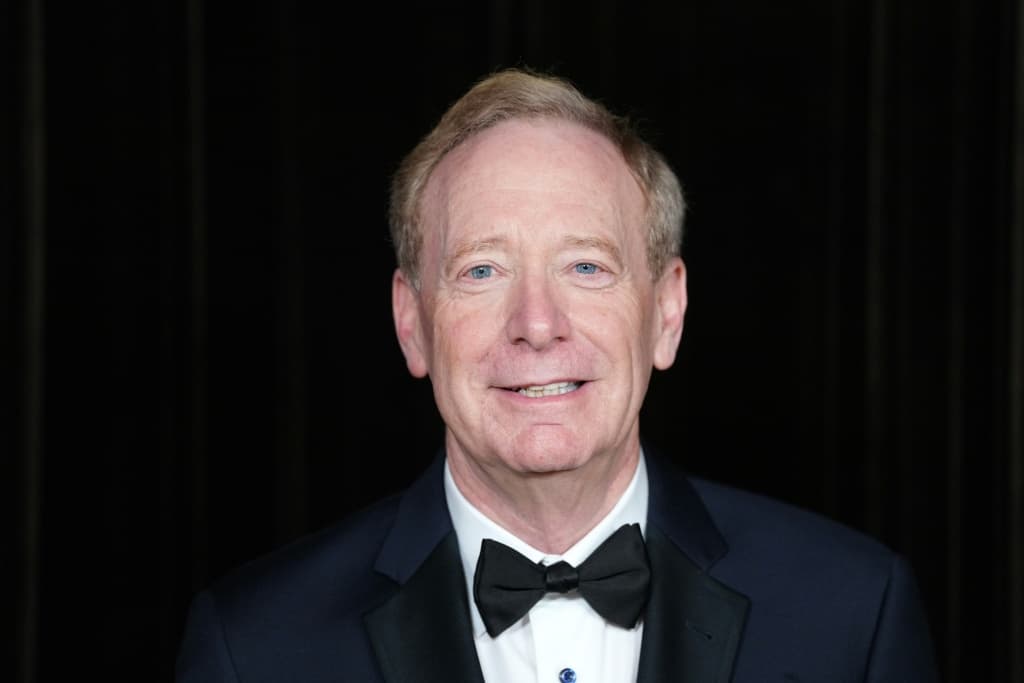
Microsoft president Brad Smith is pushing for binding rules as AI risks mount, arguing the technology needs oversight beyond self-regulation.
Key...
Georgia Tech's Nexus AI supercomputer, funded by a $20 million NSF grant, reserves at least 90% of capacity for nationwide researchers through...
Hong Kong's banking regulator is preparing institutions for agentic AI through targeted supervision, data infrastructure, and expanded testing.
A new forum series at College of the Atlantic shifts AI policy discussions from institutional control to community-level civic engagement, drawing on...
Massachusetts is advancing what could become the nation's strictest AI safety law, requiring independent evaluators to test frontier models for...
A dedicated Spatial Bias Detection tool now integrates geographic coordinates into fairness audits, flagging uneven outcomes across regions using...
Healthcare AI must be judged not only on clinical accuracy but also on its effects on workers, including de-skilling, eroded patient relationships,...