Prediction markets are rapidly evolving from niche speculative arenas into critical components embedded within **Wall Street trading desks, regulated exchanges, ETFs, and central bank research frameworks**. This institutionalization, fueled by multi-billion-dollar liquidity, cutting-edge technology, and increasing regulatory clarity, is transforming how event-driven macroeconomic, geopolitical, and political risks are priced, hedged, and incorporated into mainstream finance.
---
### Accelerated Institutional Integration and Strategic Partnerships
Institutional adoption has surged, marked by deepening collaborations between traditional finance and emerging prediction market platforms:
- **Tradeweb’s expanded minority stake and strategic alliance with Kalshi** has deepened integration of event-based contracts into fixed income and derivatives workflows. Asset managers now routinely deploy **probabilistic hedging on Federal Reserve announcements, inflation data releases, and geopolitical tensions**, enhancing portfolio risk management with real-time event signals.
- The **Cboe Global Markets binary options pilot** has matured into a cornerstone product, offering standardized, regulated “Yes/No” contracts. This exchange-listed solution appeals strongly to institutional risk managers seeking regulatory certainty while leveraging the innovation of crypto-native binary formats.
- **Bitwise Asset Management’s PredictionShares ETFs** have moved past final regulatory hurdles, now trading with weekly inflows consistently surpassing **$45 million**, up from $38 million last quarter. These ETFs provide diversified, portfolio-compatible exposure to event-driven contracts predominantly sourced from Kalshi, covering topics from U.S. elections to Fed policy shifts.
- **Jump Trading’s growing role as a liquidity provider and market maker** on platforms like Kalshi and Polymarket has enhanced market depth and price efficiency, enabling tighter spreads and increased participation from institutional and quant funds.
- **Coinbase’s launch of ultra-short-term contracts**, such as 15-minute Ethereum price movement futures, has attracted a new wave of AI-driven and high-frequency trading strategies, further increasing on-chain liquidity and shortening reaction times to market-moving events.
---
### Multi-Billion-Dollar Liquidity, Fragmented Volume Reporting, and the Push for Standardization
Prediction markets now routinely exceed **$7 billion in weekly trading volumes**, with Kalshi and Polymarket maintaining leadership. Despite this scale:
- **Volume and liquidity reporting remain fragmented**, owing to disparate contract types (binary, scalar, categorical), heterogeneous platforms (centralized exchanges, decentralized apps, OTC desks), and inconsistent transparency practices.
- Industry stakeholders, including Tradeweb, Cboe, and Bitwise, are spearheading initiatives to develop **standardized volume metrics, unified reporting frameworks, and independent audit mechanisms**. These efforts aim to bolster institutional confidence, facilitate regulatory oversight, and strengthen market integrity.
- The **Prediction Markets Standards Consortium (PMSC)**, recently formed by leading platforms and institutional participants, announced plans to publish its first comprehensive framework by Q3 2024, targeting harmonization of trade reporting and contract classification.
---
### Central Bank and Federal Reserve Validation Drives Broader Adoption
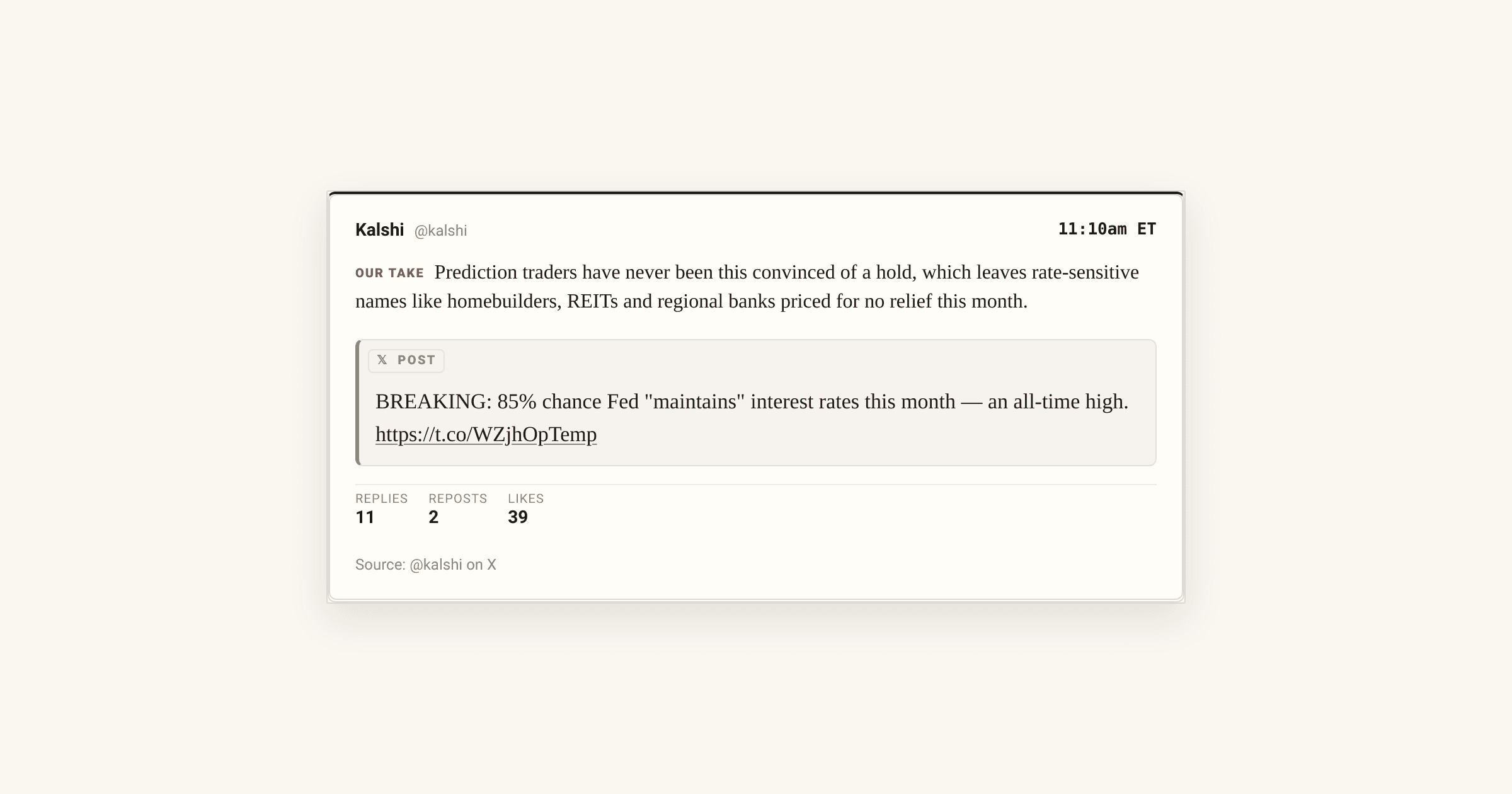
A watershed moment arrived with the **Federal Reserve’s 2026 validation study** confirming that Kalshi’s market-implied probabilities **outperform traditional survey-based and econometric models** in forecasting Fed rate decisions, especially during volatile pre-announcement windows.
- Fed researchers emphasized that **integrating decentralized, real-time market data could enhance monetary policy responsiveness and risk assessment frameworks**, marking a paradigm shift in how central banks leverage market intelligence.
- Building on this, multiple **major central banks in Europe and Asia**, including the European Central Bank (ECB) and the Bank of Japan (BoJ), have initiated pilot programs incorporating prediction market signals into their macroeconomic forecasting and geopolitical risk assessments.
- Leading global **asset managers and hedge funds** have also expanded their use of prediction market data to hedge regulatory and policy uncertainties, signaling growing acceptance of these platforms as critical tools for strategic decision-making.
---
### Productization and Market Infrastructure: ETFs, Exchange Listings, and Wallet Integrations
The institutional mainstreaming of prediction markets is increasingly visible through new product launches and infrastructure enhancements:
- **Bitwise’s PredictionShares ETFs** have now been joined by Roundhill Capital’s event-driven ETF, broadening investor choice with slightly different contract baskets and risk profiles.
- **Cboe’s binary options contracts** have seen expanding volumes and increasing participation by pension funds and insurance companies seeking transparent, regulated event hedging instruments.
- Integration efforts like **Phantom wallet’s seamless access to Kalshi contracts** are bridging traditional finance with blockchain ecosystems, enabling crypto-native users to access regulated event markets without sacrificing compliance or custody controls.
- The **NYSE President recently confirmed** that prediction markets are “transitioning from experimental to foundational,” influencing investor risk pricing models and portfolio construction methodologies across major financial institutions.
---
### Technological Innovation: AI Liquidity Provision, Algorithmic Market Making, and Surveillance
Technological advances underpin the maturation and liquidity enhancement of prediction markets:
- AI-powered liquidity agents operate continuously across platforms, delivering **tight bid-ask spreads and dynamic price adjustments**, even in ultra-short-term contracts like Coinbase’s 15-minute ETH futures.
- A **Solana-based AI trading bot on Polymarket now reportedly earns approximately $2,100 daily**, reflecting sophisticated, profitable machine learning strategies capable of exploiting subtle event-driven inefficiencies.
- Machine learning-powered surveillance systems have been deployed to monitor trading behaviors in near real-time, detecting **potential manipulation, collusion, and insider trading attempts**, thus strengthening compliance and investor protections.
- Emerging **hybrid governance models** blend decentralized autonomous organizations (DAOs) with traditional corporate oversight, balancing community participation with regulatory alignment and operational transparency.
---
### Regulatory Landscape: Enforcement, Litigation, and Political Scrutiny
The regulatory environment remains dynamic, with recent enforcement actions and litigation shaping the ecosystem’s trajectory:
- The **Polymarket federal lawsuit against Massachusetts’ restrictive ban** has advanced to appellate courts, with legal experts anticipating a landmark ruling on federal preemption by late 2024. A favorable outcome could enable **nationwide regulated operations and rapid scalability**.
- Contrastingly, **Nevada’s lawsuit against Kalshi** underscores ongoing challenges from fragmented state-level regulations, complicating compliance and market access.
- Enforcement actions have increased in scope and severity:
- Kalshi’s ban and fine imposed on a former California gubernatorial candidate for insider trading remains the highest-profile case, signaling zero tolerance for market abuse.
- A **MrBeast employee’s suspension and fine** for trading on video outcome contracts highlight enforcement reach into influencer-driven contract markets.
- Polymarket’s investigation into a user who profited $400K betting on the ZachXBT crypto probe illustrates regulatory vigilance against insider trading and suspicious wallet activity.
- Bipartisan political pressure has intensified calls for restricting contracts involving **ethically sensitive topics, including death, violence, and personal privacy**, influencing product design and regulatory approaches.
---
### Outlook: Toward Maturity, Harmonization, and Mainstream Expansion
The prediction market ecosystem is on a clear trajectory toward broader mainstream adoption, institutional maturity, and regulatory clarity:
- **Liquidity and product diversity continue to expand**, with ETFs, regulated exchange offerings, and wallet integrations embedding prediction contracts as essential portfolio diversification and macro hedging instruments.
- Ongoing efforts by the PMSC and leading industry players aim to deliver **standardized reporting and transparency frameworks by late 2024**, critical for sustained institutional confidence and regulatory acceptance.
- Pivotal court rulings and evolving guidance from the SEC and CFTC are expected to **harmonize federal and state regulations**, enabling uniform operations with enhanced investor protections.
- Central banks and institutional investors increasingly incorporate **real-time, decentralized market data** into macroeconomic models and risk management processes, reflecting validation of prediction markets as valuable policy tools.
- Continued innovation in **AI-driven liquidity provision, machine learning surveillance, and hybrid governance** will safeguard market integrity, enhance user experience, and mitigate manipulation risks.
---
### Conclusion
Prediction markets have decisively transitioned from speculative curiosities to **foundational instruments within institutional finance, regulated exchanges, and central bank research**. The confluence of **multi-billion-dollar liquidity**, strategic institutional partnerships (Tradeweb/Kalshi, Cboe binaries, Bitwise ETFs), **Federal Reserve validation**, and **advanced AI trading and surveillance technologies** is reshaping how event-driven risks are priced and hedged worldwide.
While legal and regulatory uncertainties persist, landmark litigation and rigorous enforcement are fostering a maturing ecosystem steadily advancing toward transparency, accountability, and national legitimacy. Sustained progress in **standardization, regulatory harmonization, and governance innovation** will be pivotal in unlocking prediction markets’ full potential as mainstream tools for macroeconomic forecasting, strategic hedging, and investment diversification.