The global electric vehicle (EV) market in 2026 is undergoing an intensification of previously observed dynamics, as **government incentives, trade policies, and geopolitical tensions intertwine with rapid technological innovation and evolving consumer preferences**. Recent developments underscore how these forces increasingly interact to shape **pricing strategies, residual values, and buyer behavior across both new and used EV segments**. This updated analysis explores the latest advances and challenges, highlighting the multi-layered complexity that OEMs, policymakers, and consumers must navigate to sustain the sector’s growth trajectory.
---
### Escalating Policy Fragmentation & Localization Mandates Increase OEM Cost Pressures
Mid-2026 has seen **further tightening of localization requirements worldwide**, notably within the U.S., Europe, and Canada, creating new hurdles for EV manufacturers:
- The U.S. has **raised domestic content thresholds under the Inflation Reduction Act (IRA)**, compelling OEMs to source an even larger share of EV components, especially batteries, domestically to remain eligible for federal tax credits. These stricter “Buy America” rules have resulted in **higher production costs and constrained supply chains**, prompting OEMs to absorb or pass on price increases to consumers.
- **Canada’s more permissive approach**, allowing EVs with critical Chinese-origin parts to qualify for provincial incentives, contrasts sharply with U.S. policy. This divergence has increased regulatory arbitrage risks and complicated the integration of supply chains under the USMCA trade framework, intensifying calls for policy harmonization to sustain North American competitiveness.
- Europe continues to push “Made in Europe” mandates, with **national subsidies linked to locally produced batteries and cells**, adding operational complexity for multinational OEMs. Efforts to scale European battery gigafactories have accelerated but face challenges around raw material sourcing and infrastructure readiness.
- Industry experts warn that without **greater international coordination on localization and incentive standards**, OEMs will face ballooning costs, fractured supply chains, and diminished economies of scale—potentially slowing EV adoption and inflating prices for consumers.
---
### BYD’s Integrated Vehicle-Battery-Infrastructure Model Deepens Market Disruption
BYD’s cross-border manufacturing and integrated ecosystem strategy remains a powerful disruptive force, reshaping affordability and residual value expectations:
- BYD has expanded its **battery production footprint beyond China with new plants in Mexico and Europe**, enabling compliance with strict USMCA and European content rules. This localization facilitates BYD’s ability to price EVs below $15,000 USD in competitive markets—a **benchmark pressuring traditional OEMs to rethink cost structures and market positioning**.
- The company’s deployment of **megawatt-scale fast chargers for commercial fleets** at strategic hubs like LaGuardia Airport exemplifies its growing leadership in ultra-rapid charging infrastructure, setting new standards for reliability and scalability.
- BYD’s batteries now power vehicles beyond its brand, such as Hyundai’s Elexio in Australia, demonstrating its **expanding cross-border supply chain influence and technological integration**.
- Western OEMs are responding with strategic moves, including **Stellantis’ ongoing negotiations with Leapmotor** to access advanced Chinese battery technology, reflecting the urgent need to accelerate electrification roadmaps amid BYD’s competitive pressure.
- Market analysts observe that BYD’s vertically integrated model **compresses prices and exerts downward pressure on residual values in the entry-level EV segment**, forcing incumbents to either innovate aggressively or risk market share erosion.
---
### Used EV Market Bifurcation Intensifies Along Brand Equity and Battery Health Lines
The used EV market in 2026 reveals a pronounced divergence driven by brand strength, battery diagnostics sophistication, and regulatory scrutiny of AI-enabled features:
- The **phase-out of the U.S. federal EV tax credit in March 2026** initially triggered a surge in used EV demand, as buyers sought to capitalize on residual incentives. However, intermittent delays and uncertainty around new rebate programs have introduced ongoing market volatility.
- Premium brands, led by **Tesla**, continue to maintain or even increase residual values, with Tesla used car prices rising approximately **4% since the federal credit ended**. This resilience stems from Tesla’s **advanced Battery Management Systems (BMS), real-time AI diagnostics, and robust over-the-air (OTA) software updates**, which collectively sustain battery health and vehicle desirability.
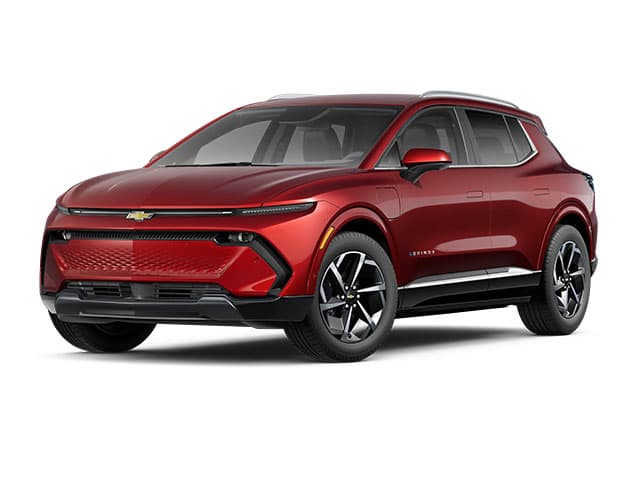
- Conversely, **entry-level EVs face significant downward pressure on resale values** amid an oversupplied secondary market and BYD’s aggressive pricing strategies. For example, Chevrolet’s Bolt RS struggles to compete with BYD’s sub-$15,000 offerings, eroding its market value despite recent technology refreshes.
- Buyers increasingly depend on **AI-powered State of Health (SOH) battery diagnostics tools** that provide detailed insights into battery degradation patterns and thermal management, enabling more accurate valuations and reducing purchase risk.
- Despite these diagnostic advances, **warranty transferability remains uneven**, and recent high-profile battery-related recalls—such as the **Volvo EX30’s fire risk** and **Honda’s battery defects**—have heightened buyer caution.
- Tesla’s proprietary **Grok AI assistant faces intensified regulatory scrutiny in California**, amid concerns over data privacy and the safety implications of autonomous driving capabilities, potentially impacting consumer trust and residual values.
- The broader push toward **“eyes-off” autonomous driving systems** introduces complex safety, liability, and consumer acceptance challenges that will increasingly influence used EV market dynamics.
---
### Charging Infrastructure: Rapid Technological Advances Amid Regulatory and Cost Barriers
Charging infrastructure in 2026 continues to evolve rapidly, supported by technological innovation but complicated by emerging regulatory and cost hurdles:
- The adoption of **interoperability standards such as ISO 15118** has accelerated, enabling seamless plug-and-charge experiences with secure communication and smart grid integration.
- Tesla’s **opening of the North American Charging Standard (NACS) to third-party providers** has catalyzed widespread charger deployment, improving cross-compatibility and easing consumer range anxiety, which in turn supports stronger secondary market liquidity.
- The rise of **megawatt-scale fast chargers**, including BYD’s commercial fleet installations and the **600 kW chargers at LaGuardia Airport**, is pushing the boundaries of charging speed and operational efficiency.
- Collaborative initiatives like **EnergyHub’s integration with Rivian’s managed charging network** are advancing grid-responsive smart charging systems, optimizing energy costs, and enhancing grid stability.
- Regulatory changes, particularly the **2026 National Electrical Code (NEC) updates**, impose stricter permitting and installation requirements for home chargers, increasing upfront costs and installation complexity for consumers.
- Emerging **Vehicle-to-Home (V2H) and Vehicle-to-Grid (V2G) technologies**, championed by GM and others, promise energy cost savings and resilience benefits but require clearer regulatory frameworks and supportive infrastructure to achieve widespread adoption.
- Federal investments exceeding **$5 billion focus on equitable, data-driven charger deployment**, targeting underserved urban and rural areas to reduce geographic disparities in EV infrastructure access.
- Complementing these trends, European OEM **Škoda has ramped battery production to over 1,100 units per day**, exemplifying the growing industrial scale and sophistication of battery manufacturing on the continent.
---
### Battery and Materials Innovation: Solid-State and Dry-Process Electrodes Poised to Transform Cost and Performance
Significant advances in battery chemistry and manufacturing are shaping the future cost, safety, and sustainability profile of EV batteries:
- **QuantumScape is entering a critical proving phase in 2026**, with its solid-state battery technology poised to demonstrate commercial viability after over a decade of development. The promise of higher energy density, improved safety, and faster charging positions solid-state as a potential game-changer.
- Research groups, including a team at UNIST, have unveiled novel **dry-process electrode manufacturing techniques involving lithium films**, which curb early capacity losses and enhance battery longevity. This innovation could lead to longer-range EVs with more stable performance and lower production costs.
- Factorial Inc. recently signed a **manufacturing Memorandum of Understanding (MOU) with Cartesian Growth Corporation III** to scale its solid-state battery platform, signaling growing commercial momentum behind next-generation battery chemistries.
- Independent entities such as the **Donut Lab emphasize rigorous validation and safety assessment** to ensure that emerging battery chemistries meet stringent performance and reliability standards, crucial for consumer confidence and regulatory approval.
- Governments and OEMs are increasingly focused on **domestic sourcing and recycling of critical raw materials** like lithium, cobalt, and nickel, aiming to reduce geopolitical supply chain risks and foster circular economy practices.
- The expansion of **battery second-life applications and advanced recycling technologies** supports sustainability goals and may positively influence residual values by extending battery utility beyond first-life vehicle use.
- Educational initiatives, such as the *Chp10 01E Vehicle Materials Revolution* video, highlight how material innovations are reshaping supply chains and cost structures, preparing the EV industry for its next decade of growth.
---
### Autonomous and AI-Enabled Vehicles: Heightened Regulatory Scrutiny and Liability Complexity
The push toward fully autonomous, AI-driven vehicles continues to accelerate but is accompanied by intensified regulatory, safety, and liability challenges:
- Industry players are developing **unified, modular autonomous vehicle architectures** designed to streamline deployment, improve safety, and scale more efficiently, according to recent reports by *Highways Today*.
- The expansion of **“eyes-off” autonomous driving capabilities** raises pressing questions regarding accident liability, regulatory oversight, and consumer acceptance. Insurers and regulators are actively seeking frameworks to assign responsibility in AI-involved incidents, directly impacting OEM strategies and resale values.
- These regulatory and liability considerations are expected to shape the pace of autonomous feature adoption and influence buyer confidence in both new and used EV markets.
---
### Policy Imperatives: Coordinated Action Needed to Harmonize Incentives and Standards
Given the multifaceted challenges and opportunities, coordinated policy responses are critical to sustain EV market momentum and ensure equitable, sustainable growth:
- **Harmonizing localization and incentive policies across North America and Europe** is essential to reduce supply chain fragmentation, preserve economies of scale, and maintain competitive manufacturing ecosystems.
- International cooperation on **charging interoperability standards (ISO 15118, NACS, CCS)** will facilitate seamless user experiences and infrastructure efficiency, crucial for consumer adoption and secondary market vitality.
- Expanding **public-private partnerships to build resilient, ultra-fast, AI-enabled charging networks** is necessary to meet growing demand and integrate with evolving grid requirements.
- Improving **transparency and predictability in rebate programs and incentive communications** can stabilize buyer confidence, reducing market volatility.
- Sustained investment in **advanced Battery Management Systems, solid-state batteries, and circular economy initiatives** will be indispensable to enhance battery longevity, residual values, and environmental sustainability.
- Developing **clear regulatory frameworks addressing autonomous driving safety, privacy, and liability** will be vital to building consumer trust and accelerating widespread adoption.
---
### Conclusion
As 2026 progresses, the global EV market stands at a pivotal moment where **government incentives, trade rules, and geopolitical dynamics increasingly intersect with rapid technological innovation and shifting consumer behaviors**. BYD’s integrated vehicle-battery-infrastructure strategy exemplifies how localization and vertical integration can drive affordability and reshape competitive dynamics. Meanwhile, the used EV market bifurcates sharply between premium brands leveraging advanced diagnostics and entry-level segments challenged by oversupply and aggressive pricing.
Charging infrastructure advances in interoperability, ultra-fast charging, and smart grid integration are critical enablers but face regulatory and cost headwinds. Meanwhile, breakthroughs in solid-state batteries and novel manufacturing processes promise transformative improvements in cost, range, and safety, supported by growing commercial partnerships and rigorous validation efforts.
Autonomous and AI-enabled vehicles bring new regulatory and liability challenges that will influence market acceptance and resale values. Ultimately, realizing a sustainable, equitable, and scalable EV future demands **urgent, coordinated policy action, transparent industry collaboration, and continued innovation investment** to navigate this intricate landscape successfully.
---
**Selected New Supporting Articles:**
- *QuantumScape's Solid-State Battery Strategy: What Investors Should Know*
- *Longer-range electric vehicles: Dry-process electrodes use a lithium film to curb early losses*
- *Factorial signs manufacturing MOU to scale solid-state battery platform*
- *Over 1,100 per day. How Škoda manufactures batteries for electric cars - Škoda Storyboard*
- *Optimized Hybrid EV Charging System Interconnected with the Grid*
This update integrates the latest technological, regulatory, and market developments, underscoring the intricate interplay of policies, innovation, and market forces that will define the EV sector’s trajectory in the near term and beyond.