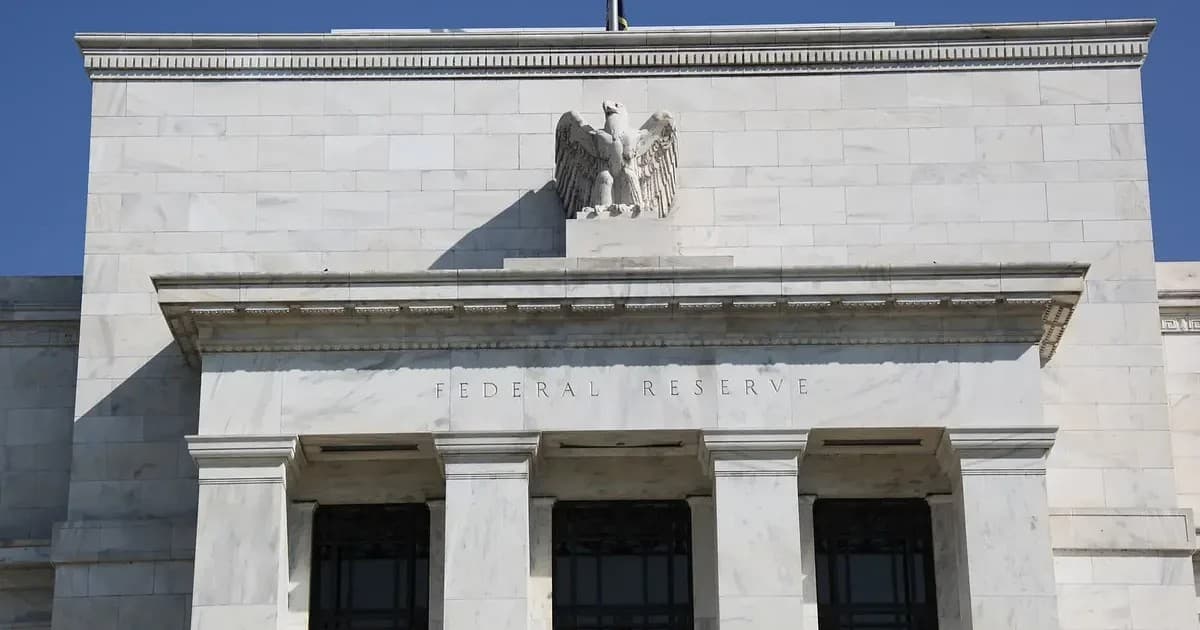
The U.S. Treasury and secured funding markets remain under intense pressure as mid-2026 unfolds, grappling with persistent liquidity constraints, record government debt issuance, and complex yield curve dynamics. These challenges are compounded by evolving Federal Reserve policy signals, structural shifts in mortgage finance, and emerging concerns over market functioning. Recent insights from the New York Fed, alongside continued elevated term premia, fragile repo conditions, and systemic housing finance vulnerabilities, underscore the intricate interplay shaping the macro-financial landscape.
---
### Persistent Treasury Market and Repo Funding Strains Amid Record Issuance and Dealer Constraints
Despite ongoing Federal Reserve efforts to ease funding market stresses through measured balance sheet expansions, the Treasury market continues to face pronounced liquidity bottlenecks:
- **Dealer balance-sheet constraints remain a critical impediment to liquidity**, especially in off-the-run Treasuries. Regulatory capital and leverage rules limit dealers’ ability to hold large inventories, leading to wider bid-ask spreads and episodic liquidity crunches during coupon and settlement cycles.
- The **repo market exhibits sustained fragility**, with elevated spreads and episodic spikes in volatility around tax deadlines and settlement dates. Recent Dallas Fed data confirm that domestic banks’ marginal funding capacity is stretched, limiting repo’s role as an effective shock absorber.
- New insights from a recent **New York Fed report highlight the “shrinking appeal” of government bonds**, emphasizing how dealer constraints and investor demand shifts are increasing the implicit costs of holding Treasuries. This dynamic contributes to elevated term premia and reflects a structural challenge in absorbing record issuance.
- **Federal Reserve’s cautious balance sheet expansions since late 2025 have provided partial relief but fall short of fully offsetting liquidity drains from ongoing record fiscal issuance**, which is projected to remain elevated through Q3 2026.
---
### Yield Curve Dynamics: Divergent Movements, Elevated Term Premia, and Complex Signaling
The Treasury yield curve continues to evolve in a nuanced manner that reflects a tug-of-war between market expectations of Fed policy, inflation risks, and liquidity conditions:
- The **2-year Treasury yield has declined sharply below 4.0%**, reflecting growing market conviction around potential Federal Reserve rate cuts later this year.
- Conversely, **short-term maturities between 3-month and 1-year tenors have experienced upward pressure**, as investors weigh persistent restrictive monetary policy and inflation uncertainty.
- **Long-term yields, including the 10-year note, have edged modestly lower to roughly 4.10%**, supported by safe-haven demand amid inflation uncertainty and expectations for gradual easing in 2027.
- The **10-year minus 2-year spread has moderately steepened**, though the yield curve remains segmented with inversions—particularly between 3-month and 10-year maturities—complicating the interpretation of traditional recession indicators.
- **Term premia remain stubbornly elevated**, driven by ongoing inflation risk, fiscal uncertainty, and liquidity constraints. The New York Fed’s analysis points to structural shifts in demand and dealer balance-sheet limitations as key drivers of these elevated premiums.
- Globally, the **widening spread between U.S. and German 10-year yields persists**, influenced by geopolitical tensions and diverging monetary policies, affecting capital flows and currency valuations.
---
### Federal Reserve’s Data-Dependent Stance Amid Persistent Inflation Pressures
Monetary policy remains finely balanced, with Federal Reserve officials emphasizing data dependency in a challenging inflation environment:
- The **January 2026 FOMC minutes describe the policy outlook as a “coin flip,”** reflecting deep internal divisions over the timing of rate cuts.
- Fed officials stress the importance of **achieving sustained inflation reductions before easing policy**, even as markets increasingly price in rate cuts later in the year.
- The **December 2025 core PCE inflation rate surprised to the upside at 3.0% year-over-year**, underscoring persistent inflation pressures that complicate the near-term easing narrative.
- Fed leaders like Kansas City Fed President Jeffrey Schmid and Chicago Fed President Austan Goolsbee highlight ongoing inflation challenges and the slow, uncertain impact of external factors such as tariff rulings.
- The appointment of Kevin Warsh to the Fed Board signals potential shifts toward a **more nuanced balance sheet strategy**, combining modest expansions with targeted reductions to improve market functioning without destabilizing liquidity.
- Debate continues over the utility of the Fed’s “dot plot” communication tool, with calls from some policymakers and analysts for its modification or phase-out to better convey uncertainty and avoid market misinterpretations that can distort yield curve dynamics.
---
### Mortgage Finance: Rates Fall Below 6% but Structural Risks Persist
A notable development in the mortgage market is the decline of average 30-year fixed mortgage rates below 6% for the first time since late 2022, providing welcome relief amid systemic vulnerabilities:
- The **average 30-year fixed mortgage rate fell to approximately 5.98% in early February 2026**, boosting affordability and homebuyer purchasing power—for instance, buyers in Phoenix have gained roughly $40,000 in potential purchasing power.
- Despite this improvement, **mortgage spreads over Treasuries remain elevated**, reflecting limited liquidity in mortgage-backed securities (MBS) markets, dealer constraints, and persistent risk premiums.
- The **nonbank mortgage lending sector continues rapid expansion**, addressing credit gaps left by traditional banks but raising systemic concerns about risk management, transparency, and regulatory oversight.
- The **U.S. Government Accountability Office (GAO) released a comprehensive report titled “The Big Shift in Mortgage Lending That Poses Risks to the Housing Market,”** calling for enhanced supervision, transparency, and improved risk frameworks for nonbank lenders.
- Federal Reserve Vice Chair for Supervision Michael Bowman echoed concerns, emphasizing the importance of addressing risks from the growing nonbank mortgage origination sector.
- In parallel, **Federal Home Loan Banks (FHLBanks) have increasingly “leaned in” as critical liquidity anchors**, providing stable, low-cost funding to housing finance institutions. This support complements Federal Reserve and Treasury liquidity efforts, helping to mitigate systemic risks amid housing market strains.
- The **spring housing market outlook remains cautiously optimistic**, with the National Association of Realtors forecasting increased listings and buyer activity driven by improved affordability, suggesting potential stabilization or modest growth.
---
### Banking Sector Funding Pressures Continue to Tighten Credit Conditions
Funding challenges in the banking sector are intensifying, with implications for credit availability and underwriting:
- Dallas Fed data indicate banks have **significantly raised deposit rates to attract funding**, compressing lending margins and elevating funding costs.
- The rising share of **uninsured and non-maturity deposits adds volatility to bank funding profiles**, increasing flight risk during stress episodes.
- Banks have responded with **more cautious underwriting standards**, particularly in commercial real estate (CRE) and mortgage lending, reflecting heightened risk aversion amid uncertain macroeconomic conditions.
- While some **slight easing in CRE lending standards** has been observed, the overall stance remains prudent.
---
### Cross-Market and Global Factors Add Complexity to the U.S. Financial Environment
External developments continue to influence U.S. markets, adding layers of volatility and uncertainty:
- The **U.S. dollar index (DXY) has softened modestly (~0.10%)**, pressured by renewed tariff uncertainties and escalating trade tensions that offset some earlier dollar strength derived from interest rate differentials.
- **Gold prices have surged**, driven by safe-haven demand amid geopolitical frictions, inflation uncertainties, and trade disputes.
- **USD/JPY volatility remains elevated** following Japan’s surprise dip in core inflation below the 2% target, highlighting the impact of divergent inflation trajectories and central bank policies on FX markets.
- The **widening U.S.–Germany 10-year yield spread continues to influence currency valuations and cross-border investment flows**, underscoring the interconnectedness of global financial markets.
---
### Intensifying Policy Coordination and Regulatory Focus Amid Structural Vulnerabilities
In response to ongoing stresses, policymakers and market participants emphasize enhanced coordination and oversight:
- Former Fed Vice Chair Richard Clarida and other experts advocate for **better synchronization between Treasury issuance calendars and Federal Reserve liquidity operations** to smooth episodic volatility and reduce funding pressures.
- Regulatory discussions are underway to **consider easing select capital and leverage constraints** to support mortgage credit availability without jeopardizing systemic resilience.
- Market participants remain vigilant for liquidity flashpoints during settlement cycles and in reaction to news-driven shocks that could amplify repo and Treasury market stresses.
- The GAO’s recent report on the nonbank mortgage sector reinforces calls for **strengthened supervision, risk management, and transparency** to mitigate systemic risks linked to the sector’s rapid growth.
---
### Summary and Outlook
As mid-2026 progresses, the U.S. Treasury and secured funding markets confront formidable challenges from record fiscal issuance, dealer balance-sheet constraints, and persistent inflationary pressures. The Treasury yield curve’s evolving “twist”—marked by sharply falling 2-year yields amid rising expectations of rate cuts, modest declines in long yields, segmental inversions, and elevated term premia—reflects a delicate balancing act between prolonged restrictive monetary policy and anticipated easing in 2027.
Mortgage markets have gained welcome relief as average 30-year fixed mortgage rates dip below 6%, improving affordability and stimulating housing demand in key regions. However, elevated MBS spreads and systemic risks associated with the rapid growth of nonbank mortgage lenders underscore ongoing vulnerabilities. The Federal Home Loan Banks’ proactive role as liquidity anchors provides an important stabilizing force amid these strains.
Bank funding pressures persist, driving tighter underwriting and more intense deposit competition. Globally, modest dollar softening, surging gold prices, elevated FX volatility, and widening international yield spreads further complicate the financial environment.
Looking ahead, market participants will closely monitor Treasury auctions, Federal Reserve communications, inflation data, and MBS liquidity conditions for signals on yield curve trajectory and funding market health. Enhanced policy coordination, targeted regulatory oversight—especially of nonbank mortgage lenders—and vigilant liquidity risk management will be critical to sustaining market functioning and credit availability amid these multifaceted challenges.
---
### Key Indicators (Mid-2026 Snapshot)
- **Treasury 10-year yield:** ~4.10%, with segmental curve twists and moderate steepening of 10Y–2Y spread
- **2-year Treasury auction yield:** Declining sharply below 4.0%, signaling rising rate-cut expectations
- **Core PCE inflation (Dec 2025):** 3.0% year-over-year (upside surprise)
- **Mortgage rates:** ~5.98%, first time below 6% since 2022, with elevated spreads over Treasuries
- **Repo market spreads:** Elevated and volatile around settlement cycles
- **Nonfarm payrolls (Jan 2026):** +130,000 (modest slowdown)
- **Unemployment rate (alternative measures):** ~5.5%
- **CRE lending standards:** Slight easing but cautious overall
- **Deposit competition:** Intensifying, raising funding costs
- **USD/JPY volatility:** Elevated amid Japan inflation surprise
- **U.S./Germany 10-year yield spread:** Widening, affecting FX and capital flows
- **Dollar index (DXY):** Modest decline amid trade uncertainty
- **Gold prices:** Surging on safe-haven demand
- **Regional housing affordability (e.g., Phoenix):** Purchasing power increased by ~$40,000 due to lower mortgage rates
---
This evolving macro-financial environment underscores the delicate equilibrium required from policymakers and market participants as they navigate fiscal pressures, inflation risks, liquidity constraints, and structural credit market shifts. Vigilant interpretation of yield curve signals, funding market stresses, and sector-specific credit dynamics remains essential to anticipating and mitigating potential disruptions within an increasingly interconnected global financial system.