May 5, 2026
Prosthodontic Research Digest · May 5 Daily Digest
Material Innovations
- 🔥 Zirconia vs Titanium Implants: Zirconia implants exhibited superior esthetic outcomes and greater early bone apposition...
Created by Benny Ferdman
Peer‑reviewed prosthodontic research, clinical techniques, materials, digital workflows, and practice outcomes
Explore the latest content tracked by Prosthodontic Research Digest
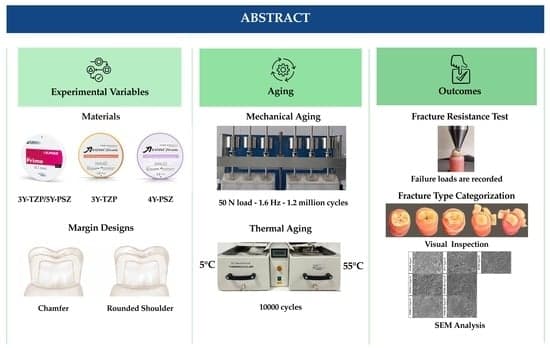
Key comparisons in zirconia-based materials for prosthetics:
Rising IOS momentum in prosthodontics streamlines workflows, enhances patient comfort, and enables direct integration.
Emerging techniques:
GIH patients facing oral cavity disorders or impaired prosthodontic function require immediate prosthetic treatment (IPT) for urgent care, with implications for masticatory function and OHRQoL.
Ridge augmentation tackles insufficient alveolar ridge bone volume, essential for secure denture placement or implant stability.
Reviews reveal 3D-printed resins show lower flexural strength, elastic modulus, fatigue resistance, and color stability, plus higher undisclosed drawbacks—critical for prosthodontic restorations.
Vertical dimension determination remains a clinical dilemma in prosthodontics, with equilibration techniques explained as a relevant approach for accurate assessment in complex cases.
Key findings from study on monolithic zirconia crowns for posterior use:
Key angles on practicality:
Master the science and art of ceramic layering in a three-day course in California – become the most knowledgeable ceramist.
Innovative anti-biofilm strategy for denture longevity:
Finite element analysis (FEA) offers promise for digitally modeling the stress-strain state in implant-abutment-prosthetic systems to predict clinical efficiency.
Ultra-thin glass-ceramic veneers, bonded solely to tooth front surfaces, achieve smile aesthetics with almost zero enamel removal—preserving healthy natural structure.
Patient-centered win in oncology prosthodontics:
Essential visual resource for prosthodontists:
Mastering stress-strain curves predicts how dental ceramics, resins, and others behave in the mouth, guiding prosthesis selection to avoid occlusal...
Intraoral scanners (IOSs), initially for tooth-supported restorations, are now widely applied in implant prosthodontics—with accuracy a key consideration in virtual workflows.