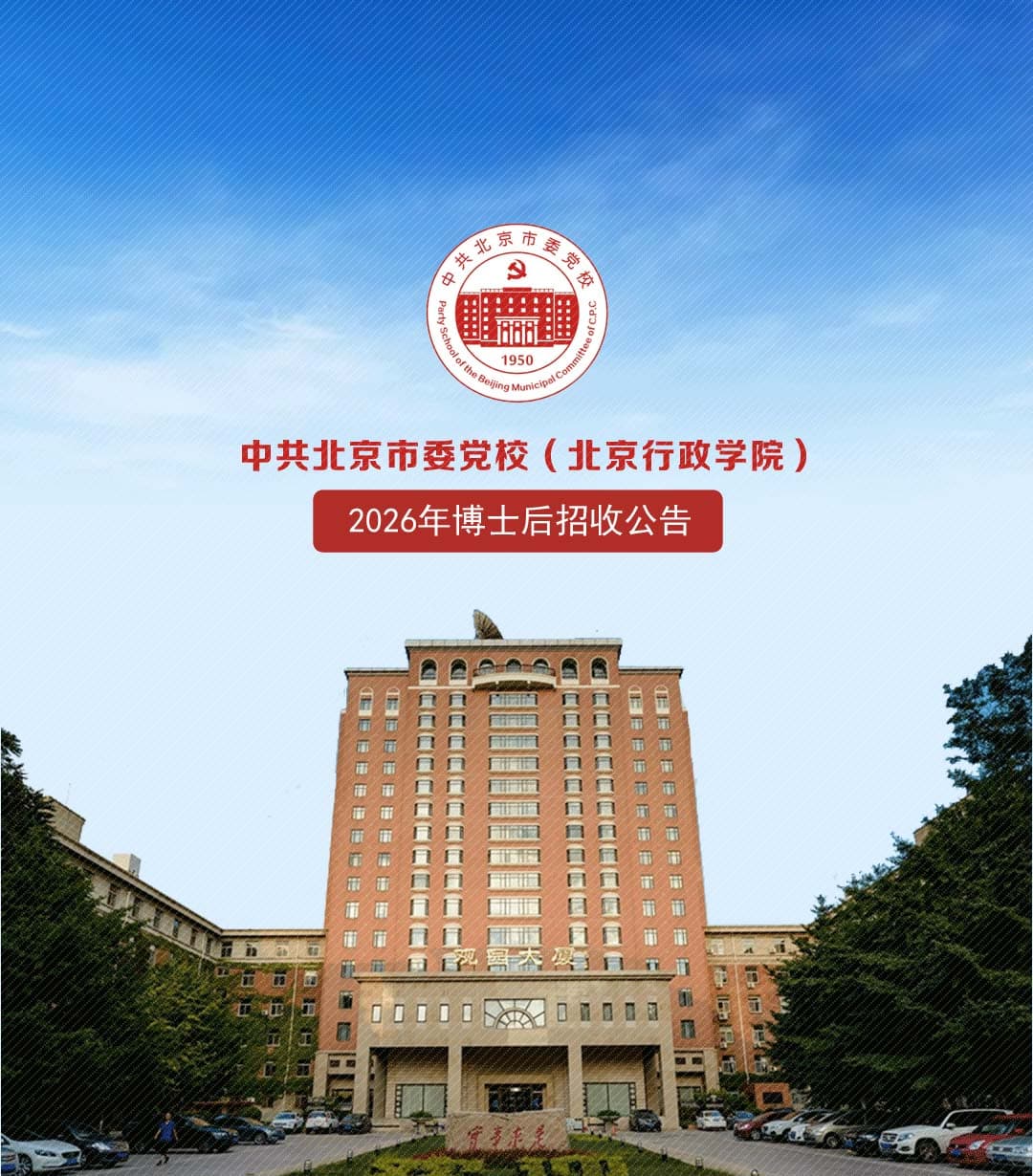
# Top Chinese Universities and Research Institutes Launch 2026 Public Management Postdoc Recruitment: An Expanded Outlook
In an era marked by rapid technological transformation and evolving governance challenges, Chinese academic and research institutions continue to reinforce their strategic focus on cultivating high-level talent in public management, governance innovation, and science & technology policy. Building on previous initiatives, the 2026 recruitment cycle reveals a broad and ambitious push to attract promising early-career researchers who will shape China’s future policy landscape amid the complexities of AI, digital sovereignty, and regional development.
## Major Institutions Leading the 2026 Recruitment Drive
A diverse and expanding cohort of prominent universities and research centers has announced their plans to recruit postdoctoral researchers, emphasizing thematic areas that intersect governance, technology, and regional growth:
- **Peking University**
- **Tsinghua University**
- **Guangzhou University**
- **Nanchang University**
- **Chinese Academy of Sciences / Beihang University’s Science & Technology Innovation Center**
- **粤港澳大湾区人才发展战略研究院 (Greater Bay Area Talent Development Institute)**
- **苏州大学政治与公共管理学院 (Suzhou University School of Politics and Public Management)**
Among these, **Suzhou University** has notably joined the roster, with Professor Ren Ping and Professor Sang Mingxu leading the 2026 postdoctoral recruitment efforts. This inclusion signals a broadening of regional and disciplinary engagement, particularly in political and public management spheres.
## Key Details of the 2026 Postdoctoral Recruitment
### Candidate Qualifications:
- **Age:** Typically under 35
- **Educational Background:** PhD degree obtained or expected in 2026
- **Other Qualities:** Good health, strong academic ethics, full-time dedication to research
### Focus Areas:
- **AI and Digital-era Governance:** Developing frameworks for AI ethics, digital sovereignty, and international digital regulation.
- **Public and Administrative Management:** Urban governance, social policy reform, sustainable development strategies.
- **Science & Technology Policy & Innovation Management:** Supporting the strategic oversight of scientific research, technological evaluation, and innovation ecosystems.
- **Social Development & Regional Strategies:** Addressing urbanization, regional disparities, and social policy reforms, with a focus on regional hubs like the Greater Bay Area and Jiangsu Province.
### Support and Incentives:
- **Housing Support:** Several institutions, including Guangzhou University, the Greater Bay Area Talent Development Institute, and now Suzhou University, offer dedicated postdoctoral apartments or housing subsidies.
- **Funding Tiers and Projects:** Positions are aligned with national postdoctoral programs, such as **卓粤博士后 (Zhuo Yue Postdoc)** and **青百博士后 (Qing Bai Postdoc)**, which provide varying levels of financial support and research funding.
- **Additional Benefits:** Opportunities for project funding, research allowances, and participation in major national or regional research initiatives.
## Recent and New Developments: Emphasis on AI Governance and Regional Talent Strategies
The 2026 recruitment cycle demonstrates an **enhanced focus** on **artificial intelligence (AI) governance**, **ethical regulation frameworks**, and **regional talent cultivation**:
### Tsinghua University’s Artificial Intelligence International Governance Institute
- **Spring 2026 Postdoctoral Call:** Centers on **AI international governance**, **ethics**, **digital sovereignty**, and **global regulatory cooperation**.
- **Candidate Profile:** Requires a PhD in public policy, law, computer science, or related fields, with a strong interest in AI ethics and policy formulation.
### Chinese Academy of Sciences / Beihang University’s Science & Technology Innovation Center
- **Research Focus:** Development of **science policy**, **technological strategic management**, and **innovation ecosystems**.
- **Positions:** 1-2 postdoctoral roles emphasizing **technology assessment**, **innovation policy**, and **science & technology strategy**.
### 粤港澳大湾区人才发展战略研究院 (Greater Bay Area Talent Development Institute)
- **2026 Postdoc Recruitment:** Offers tiered positions (卓粤博士后、青百博士后A+/A/B), with **housing support**, **research project funding**, and incentives aimed at attracting top talent.
- **Significance:** This regional strategy highlights efforts to foster innovation-driven growth within the Greater Bay Area, integrating talent development with regional economic ambitions and technological competitiveness.
### **Suzhou University’s Role**
- **Position:** Professor Ren Ping and Professor Sang Mingxu's research teams are recruiting postdoctoral researchers for 2026, focusing on **political and public management**.
- **Content:** As detailed on the **博士后招聘网**, Suzhou University’s School of Politics and Public Management aims to attract scholars passionate about governance reform, policy analysis, and regional development.
- **Implication:** The inclusion of Suzhou University broadens the geographical and thematic scope, emphasizing regional governance and policy innovation in the Yangtze River Delta.
## Significance and Broader Implications
This comprehensive recruitment effort underscores **China’s strategic emphasis** on **building expertise at the nexus of governance, technology, and regional development**. Specific highlights include:
- **Enhancing policy research capacity** in emerging technological domains such as AI ethics, digital governance, and innovation policy.
- **Fostering interdisciplinary approaches** that combine political science, law, computer science, and social sciences.
- **Supporting national priorities** like **digital sovereignty**, **AI regulation**, and sustainable urbanization.
The focus on **AI governance** and **science & technology policy** reveals an understanding that **technology regulation is a critical pillar** of modern public management, aligning academic research with **China's strategic ambitions** for **technological sovereignty** and **ethical AI deployment**.
## Current Status and Outlook
As of early 2026, the recruitment campaigns are actively progressing, with application deadlines approaching and the selection process underway. The strategic expansion—highlighted by new regional actors like Suzhou University—indicates a **robust pipeline** for cultivating scholars equipped to navigate complex governance challenges in the digital age.
**In summary**, China’s top universities and research institutes are establishing an innovative academic environment that encourages early-career researchers to contribute to **policy formulation**, **governance reform**, and **technological regulation**. These efforts are poised to influence both **domestic policy** and **global discussions** on AI ethics, governance frameworks, and sustainable development.
---
**This evolving landscape offers exciting opportunities** for motivated scholars passionate about **public management**, **technology policy**, and **regional development**. As China aims to lead in AI governance and innovation regulation, these postdoctoral programs are critical in shaping the next generation of influential thinkers and policymakers.