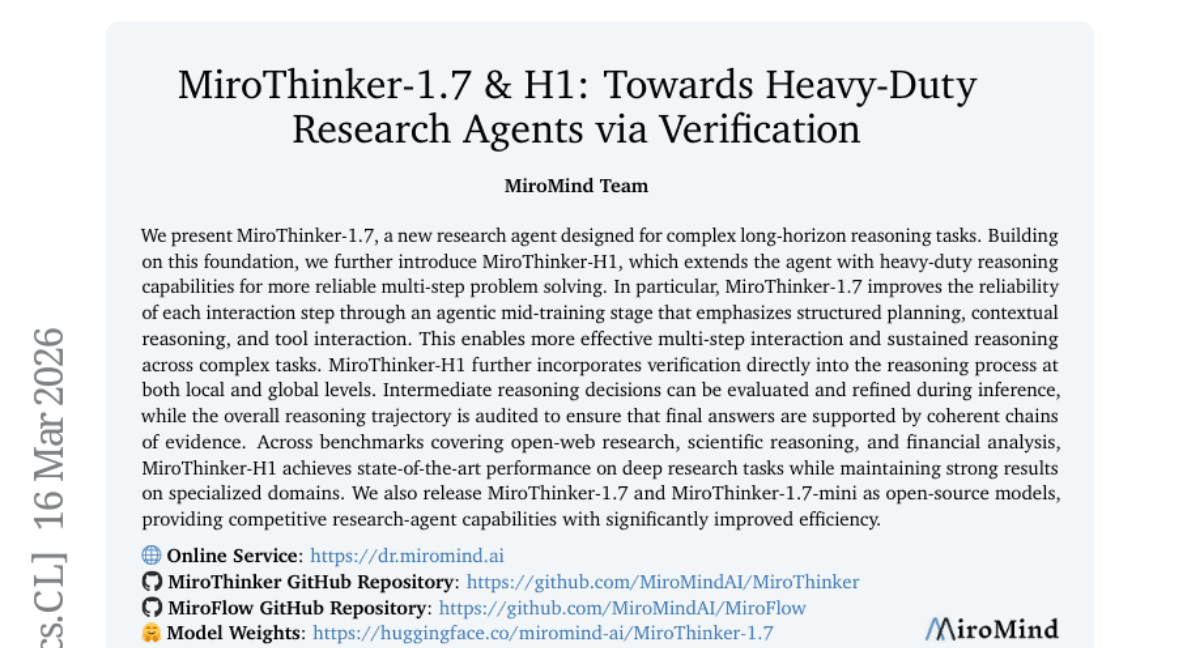
# The 2024 Evolution of Autonomous AI Agents: From Specialized Models to Ubiquitous Ecosystems
The landscape of autonomous artificial intelligence in 2024 is experiencing a seismic shift, driven by groundbreaking advances in **agent-optimized large language models (LLMs)**, expansive open-source ecosystems, sophisticated tooling, and an evolving regulatory landscape. These developments are transforming AI agents from experimental prototypes into **integral components** of enterprise workflows, creative industries, and societal infrastructures—ushering in an era of **trustworthy, multimodal, and scalable multi-agent systems**.
---
## Cutting-Edge Developments in Agent-Optimized LLMs and Capabilities
This year has seen remarkable progress in the design and deployment of **models explicitly engineered for agentic functions**, characterized by **extended context processing**, **multimodal reasoning**, and **multi-agent orchestration**. These capabilities enable agents to handle complex, multi-step reasoning tasks with diverse data inputs such as text, images, and voice, enhancing their reliability and autonomy in real-world applications.
### Notable Model Innovations:
- **Seed2.0 (ByteDance)**: Continues to push boundaries with **up to 1 million tokens of context** and advanced **multimodal reasoning**, allowing agents to process vast data streams and perform **multi-step autonomous reasoning**.
- **Aya models (Cohere)**: Emphasize **local effectiveness** and **linguistic nuance**, supporting **region-specific autonomous decision-making** with a focus on **data sovereignty**.
- **OpenClaw (Open-source)**: Embedded in products like **Moonshot AI’s Kimi Claw** and adopted by **Baidu**, supporting **multi-agent orchestration** and discovery primitives—**streamlining the building, deployment, and scaling** of multi-agent ecosystems.
- **DeepMind’s M2.5 and Aletheia**: Designed for **production environments**, enabling **autonomous research, adaptation, and complex task execution**.
- **Grok 4.2**: Incorporates **four specialized agent heads** that **debate and reason collectively**, fostering **collaborative problem-solving** with **more nuanced and reliable outputs**.
Recent developments further expand these capabilities:
- **Anthropic’s acquisition of Vercept** signals a strategic move to enhance **Claude’s computer use capabilities**, enabling it to **write and run code across entire repositories**—a significant step toward autonomous coding and complex computational reasoning.
- **OpenAI’s GPT-5.3-Codex** and new audio models, now integrated into **Microsoft Foundry**, mark a leap forward in **agentic coding and multimodal interaction**, allowing models to **generate, understand, and execute code** with unprecedented accuracy and contextual awareness.
These models leverage **extended contexts**—up to **1 million tokens**—and **multimodal inputs**, enabling agents to **synthesize multi-modal data**, **perform multi-step reasoning**, and **operate more independently and reliably**.
---
## Expanding Ecosystems: Protocols, Frameworks, and Developer Tools
Supporting these advanced models is a **robust ecosystem** of **standards, protocols, and development environments**, designed to foster **interoperability, security, and reliability** in complex multi-agent architectures.
### Key Components and Platforms:
- **A2A (Agent-to-Agent) Protocol**: Developed collaboratively with **Google Cloud** and **IBM Research**, it provides a **secure communication layer** facilitating **heterogeneous agent interoperability**—a critical enabler for large-scale multi-agent collaboration.
- **SPECTRE**: Offers a **comprehensive framework** for **benchmarking security, robustness, and reliability**. Its primitives— `/Scope`, `/Plan`, `/Execute`, `/Test`, `/Evaluate` — support **modular development**, **testing**, and **iterative improvement** of autonomous systems.
- **Mato Workspace**: A **visual, terminal-based environment** akin to **tmux**, designed for **orchestrating, monitoring, and debugging multiple agents**, significantly **accelerating development workflows**.
- **AgentReady Proxy**: Acts as a **central hub** for **agent orchestration and deployment**, **simplifying integration workflows** and **scaling efforts**.
- **Siteline**: An **analytics platform** that provides **growth insights** for the **agentic web**, helping operators **track user interactions, traffic sources, and trending topics**—crucial for **deployment optimization** and **user engagement**.
### Recent Platform Integrations:
- **Perplexity’s 'Computer' Platform**: Recently launched as a **unified environment** for **research, coding, and deployment**, consolidating various AI tools into a **single accessible interface**—streamlining **agent development and scaling efforts**.
This ecosystem **accelerates development cycles**, **enhances safety and reliability**, and **fosters cross-organizational collaboration**, laying the groundwork for **widespread adoption**.
---
## Democratization and Domain-Specific Autonomous Agents
A defining trend in 2024 is the **democratization of autonomous agent technology** via **open-source projects** and **domain-specific solutions**, dramatically lowering barriers to entry and expanding **participation across sectors**.
### Leading Initiatives:
- **ClawSwarm (by @Scobleizer)**: Offers a **lightweight, natively multi-agent framework** optimized for **scalability and interoperability**, especially suited for **edge deployment**.
- **Kimi and Minimax**: Enable **autonomous coding** and **multi-agent orchestration**, facilitating **rapid prototyping** and **system development**.
- **ZuckerBot**: An **open-source API and MCP server**, automating **industry-specific workflows** such as **Meta/Facebook ad campaign management**, exemplifying how **domain-focused autonomous agents** are transforming operational workflows.
- **Kaiasm**: An **ontology and knowledge graph platform** that enhances **explainability**, **regulatory compliance**, and **provenance tracking**—becoming increasingly vital under frameworks like the **EU AI Act**.
- **Bazaar V4**: An **agentic video editing and creative suite** that leverages **AI-driven motion graphics** and **video generation**. Its **Bazaar Agent** enables **real-time editing**, **creative content creation**, and **media workflows**, expanding **agent-assisted media production**.
### Broader Adoption:
- **Notion’s Custom Agents**: Recently introduced features allowing users to **automate repetitive tasks** within the collaboration platform, empowering **non-technical users** to create **tailored AI workflows**.
- **OpenClaw’s OHaaS (OpenClaw as a Service)** by **Ask Sage**: Provides a **secure, scalable platform** for deploying **OpenClaw-based autonomous systems** in **government and commercial sectors**.
- **Creative Media**: Advancements in **agent-driven video editing** and **motion graphic generation** are transforming **content creation**, enabling **media professionals** and **content creators** to leverage AI for **more efficient workflows**.
This open-source and domain-specific proliferation **fosters innovation**, **broadens participation**, and **reduces barriers**, accelerating **widespread adoption** across industries—from enterprise automation to creative media.
---
## Ensuring Security, Provenance, and Regulatory Compliance
As autonomous agents assume roles in **critical sectors** such as finance, healthcare, and public infrastructure, **trustworthiness and security** are paramount. Recent efforts have intensified around **identity verification**, **provenance tracking**, and **malicious activity detection**.
### Key Initiatives:
- **Cryptographic agent identities** and **tamper-resistant keys** are increasingly adopted to **establish secure provenance** and **prevent spoofing**.
- Platforms like **GoDaddy’s ANS** and **Salesforce’s MuleSoft Agent Fabric** enable **discovery**, **verification**, and **trusted communication** among agents.
- **Detection of distillation and capability extraction attacks** has become urgent. Investigations reveal **campaigns by labs such as DeepSeek, Moonshot, and MiniMax** attempting to **illicitly extract model capabilities**, posing **security threats**.
- Industry benchmarks like **EVMBench** and **SPECTRE** are now standard tools for **validating agent integrity**, **behavior predictability**, and **resistance to tampering**.
- The **EU AI Omnibus** has catalyzed a regulatory focus emphasizing **explainability**, **provenance**, and **compliance**. Solutions like **Kaiasm** and **knowledge graphs** are central to **meeting these standards**.
- **Machine identity management** is evolving to allow **autonomous agents** to **manage their identities securely**, fostering **trust in autonomous infrastructures**.
---
## Hardware and Infrastructure for Edge Deployment
Recent hardware breakthroughs are enabling **offline, real-time inference** and **edge deployment** of large models, expanding the reach of autonomous agents outside centralized data centers.
### Key Hardware Innovations:
- **NVMe-to-GPU bypass techniques** and **high-throughput hardware** such as **Taalas HC1**, capable of **17,000 tokens/sec**, support **large-model inference** on **commodity GPUs** like **RTX 3090**.
- **Micron’s faster memory modules** reduce **latency** and **power consumption**, critical for **industrial automation** and **remote deployment**.
- **Edge inference** ensures **data privacy**, **low latency**, and **robustness**, making autonomous agents viable **beyond centralized cloud infrastructures**—especially in **remote, privacy-sensitive, or resource-constrained environments**.
---
## Major Enterprise and Product Milestones
Organizations are embedding **agentic capabilities into core workflows** at an unprecedented scale:
- **Atlassian** has integrated **Jira and Rovo agents** to **automate project management** and **workflow orchestration**, illustrating **agent embedding in enterprise tools**.
- **Google’s Opal platform**, upgraded in early 2026 and built on **Gemini 3 Flash**, now offers **automated, scalable enterprise workflows**, demonstrating **enterprise-grade autonomous system maturity**.
- **Jira’s latest updates** feature **AI agents working alongside humans**, boosting **collaborative productivity** and **decision-making**.
These milestones **signal a paradigm shift** where **agents are integral** rather than supplementary—**transforming operational efficiency** and **decision support** across sectors.
---
## Current Status and Future Implications
The momentum in 2024 clearly indicates a **maturing, interconnected ecosystem** of **powerful multimodal models**, **secure infrastructures**, and **open-source democratization**. With **regulatory frameworks** like the **EU AI Omnibus** emphasizing **explainability**, **provenance**, and **safety**, the focus is on **building trustworthy, transparent, and compliant autonomous systems**.
### Key Implications:
- **Deep integration into enterprise workflows**, exemplified by **Google Opal**, **Jira**, and other platforms.
- **Enhanced security measures**, including **cryptographic identities**, **attack detection**, and **provenance tracking**, becoming **industry standards**.
- **Edge deployment** and **offline inference** are unlocking new scenarios—**remote, privacy-sensitive, or resource-constrained environments**.
- **Creative media tools** like **Bazaar V4** are revolutionizing **content creation**, **video editing**, and **media workflows**.
**In sum**, 2024 stands as a pivotal year where **autonomous agents** are transitioning from experimental AI components to **trustworthy, scalable, and creative partners**—shaping the future of **industry**, **society**, and **digital culture**. The convergence of **technological innovation**, **open collaboration**, and **regulatory maturation** promises a **robust ecosystem** capable of **transforming industries and empowering users worldwide**.