The landscape of AI agents is rapidly evolving from isolated large language models (LLMs) into sophisticated, coordinated multi-agent systems that actively leverage diverse tools and infrastructures. This shift is not merely about scaling models but about creating ecosystems where multiple AI agents interoperate, plan, communicate, and execute complex tasks across domains. The expansion of platforms, research, and governance frameworks reflects this transition, underscoring the growing need for rigorous benchmarks and safety standards to govern these powerful systems.
---
### From Single-Model LLMs to Multi-Agent Ecosystems
Initially, AI agents were largely single-model entities, performing discrete tasks within narrowly defined scopes. However, recent developments showcase a robust move toward **multi-agent frameworks** that enable AI models to collaborate, share resources, and orchestrate tool use in real time. This paradigm shift is driven by both technological necessity and practical enterprise demand, as complex workflows require modular, interoperable AI components rather than monolithic systems.
Key platforms and frameworks exemplify this trend:
- **Perplexity’s Multi-Agent “Computer”**: An innovative platform allowing agents to query, compute, and integrate information through coordinated workflows.
- **OpenTools**: A community-driven toolkit designed to standardize how agents invoke external tools and interact, promoting interoperability.
- **NVIDIA Qwen 3.5 Endpoints**: Deployed on NVIDIA’s Blackwell GPUs, these endpoints provide scalable, cloud-based infrastructure optimized for multi-agent tool use.
- **Microsoft CORPGEN**: A suite focused on corporate settings, enabling agents to manage complex enterprise workflows through planning and communication protocols.
These platforms collectively stress **standardization**, **scalability**, and **real-world applicability**, bridging the gap between research prototypes and industrial-scale deployments.
---
### Advances in Agent Planning, Communication, and Evaluation
Research efforts continue to deepen our understanding of how AI agents can best plan, communicate, and self-evaluate within multi-agent frameworks:
- **Toolformer** demonstrates how LLMs can learn to use external tools autonomously, improving efficiency and accuracy by offloading specific sub-tasks.
- **AgentDropoutV2** explores robustness in multi-agent collaboration, focusing on fault tolerance and adaptive communication strategies.
- **CORPGEN** research extends beyond infrastructure, delving into agentic planning for corporate decision-making, showing promising results for enterprise adoption.
- **AI Gamestore** provides an interactive environment to test agent decision-making in simulated game-like scenarios, highlighting emergent behaviors and strategy evolution.
- **LLM-based Error Detection** frameworks use large language models to audit and correct agent outputs, adding a crucial layer of self-supervision and quality control.
These developments collectively improve the **autonomy**, **coordination**, and **accountability** of AI agents, pushing them closer to reliable deployment in complex environments.
---
### Cross-Domain Expansion: Domain-Specific Suites and Simulation Frameworks
A notable new direction is the **application of multi-agent systems to highly specialized domains**, showcasing the versatility and power of these frameworks:
- **A Multi AI Agent Suite for Undruggable Proteins**: This domain-specific multi-agent system tackles one of biomedicine’s most challenging problems—designing interventions for proteins previously deemed “undruggable.” By coordinating multiple AI agents with specialized expertise, the suite accelerates hypothesis generation and molecular design, potentially unlocking new therapeutic avenues.
- **A Large Language Model-Based Agent Framework for Simulating Building Environments**: Addressing the complexities of architectural and urban planning, this framework uses multi-agent LLMs to simulate interactions within building environments. Such simulations facilitate better design decisions, energy optimization, and safety assessments by modeling human behavior and mechanical systems collaboratively.
These applications highlight the **cross-domain adaptability** of multi-agent AI, extending their impact beyond traditional text or data tasks into **science, engineering, and simulation**.
---
### Governance, Safety, and Real-World Lessons
The growth of multi-agent AI systems raises serious questions about oversight, safety, and evaluation standards. Recent insights and critiques have underscored existing gaps:
- **Amazon’s Real-World Experiences**: Internal assessments reveal challenges in safely deploying multi-agent systems at scale, particularly around unpredictable emergent behaviors and integration with legacy systems. Amazon’s lessons emphasize the need for continuous monitoring and layered safety mechanisms.
- **Critical MIT Study**: A landmark independent review from MIT highlights weaknesses in current benchmarking practices, arguing that many evaluation frameworks fail to capture the nuanced risks posed by multi-agent coordination, such as cascading failures or subtle adversarial exploits. The study calls for **robust, multi-dimensional benchmarks** that assess both performance and safety comprehensively.
Together, these findings stress that **governance frameworks must evolve in tandem with technical capabilities**, incorporating multi-agent-specific safety protocols, transparency measures, and rigorous validation methodologies.
---
### Infrastructure and Ecosystem Maturation
Supporting this multi-agent evolution is an expanding ecosystem of **enterprise-grade infrastructure and tooling**:
- NVIDIA’s deployment of **Qwen 3.5 on Blackwell GPUs** exemplifies cutting-edge cloud support, offering the compute power and latency optimizations critical for real-time multi-agent interactions.
- Community efforts like **OpenTools** catalyze standardization, enabling diverse agents to seamlessly access APIs, databases, and external services.
- Microsoft’s CORPGEN and Perplexity’s Computer provide **integrated development and evaluation environments**, fostering faster iteration cycles and reproducibility.
The convergence of **powerful hardware**, **open-source tooling**, and **platform-level orchestration** is accelerating the practical adoption of multi-agent AI in enterprise, research, and specialized domains.
---
### Conclusion
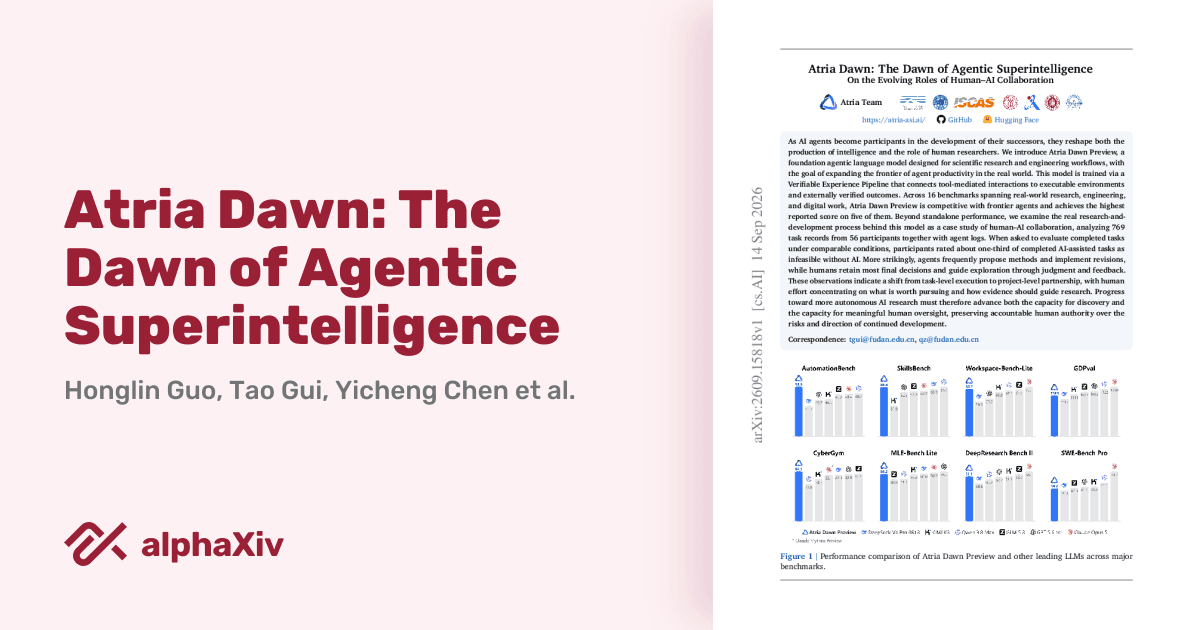
The evolution from single-model LLMs to coordinated, tool-using multi-agent systems represents a pivotal inflection point in AI development. New platforms, research breakthroughs, and domain-specific applications illustrate the breadth and depth of this transformation. At the same time, emerging governance challenges and real-world lessons caution that **robust benchmarks, safety standards, and oversight mechanisms are essential** to ensure these powerful systems are reliable and trustworthy.
As infrastructure and ecosystems mature, the future promises an era where multi-agent AI systems not only enhance productivity and innovation across industries but do so under principled, well-governed frameworks—unlocking the full potential of AI as a collaborative, intelligent force across domains.