# The 2026 Surge in AI Security: Innovations, Threats, and the Road Ahead
The year 2026 stands as a defining moment in the evolution of AI security, marked by an unprecedented escalation in threats and a parallel wave of groundbreaking defensive innovations. As AI systems—particularly large language models (LLMs) and vision-language agents—become embedded in critical infrastructure spanning defense, finance, healthcare, and space exploration, securing their integrity, privacy, and reliability has become a top global priority. This year’s landscape is characterized by a fierce arms race: malicious actors deploying sophisticated multi-modal, multi-turn exploits, while industry leaders and startups race to develop hardware, protocols, and observability frameworks that can ensure AI remains trustworthy and resilient.
---
## Escalating Threat Landscape: Multi-Modal, Multi-Turn, and AI-Driven Attacks
The threat environment in 2026 has evolved dramatically, with attackers leveraging AI itself to craft more convincing, targeted, and complex exploits:
- **AI-Powered Malware and Social Engineering**
Researchers at **ESET** uncovered **PromptSpy**, a malware targeting Android devices that uses **generative AI** to produce highly personalized phishing content. By tailoring messages to individual targets, PromptSpy amplifies the effectiveness of social engineering campaigns, making them harder to detect with traditional security systems.
- **Multi-Modal and Context Injection Attacks**
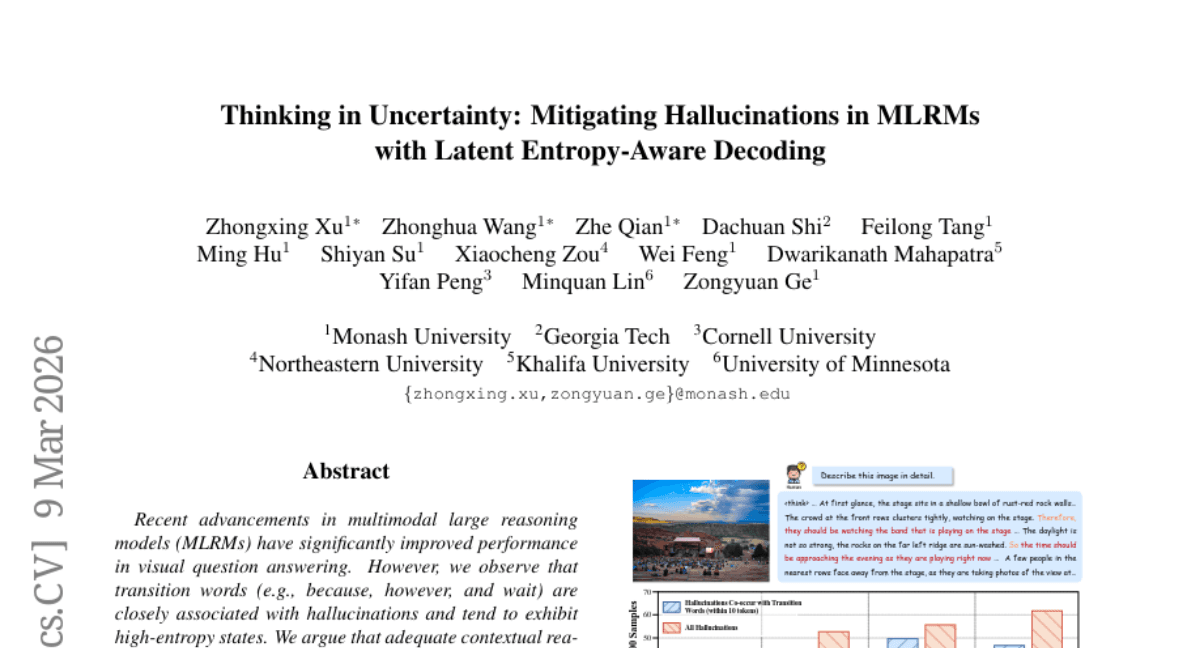
Attackers exploit **multi-turn prompts** and **visual memory injection techniques** to subtly manipulate vision-language models. These sophisticated attacks threaten autonomous navigation, surveillance, and decision-making systems by injecting malicious context—often bypassing existing filters designed to detect adversarial inputs. During critical operations, such manipulations can cause models to produce unpredictable or harmful outputs, raising profound safety concerns.
- **Jailbreaks and External Tool Vulnerabilities**
Techniques such as **"Large Language Lobotomy"** demonstrate how safety guardrails can be disabled, enabling models to produce harmful or unfiltered outputs. The **"Mind the GAP"** attack exposes vulnerabilities during external API interactions, where malicious prompts influence agent behavior—potentially leading to misinformation, data exfiltration, or malicious control over autonomous systems.
- **Model Extraction and Intellectual Property Theft**
As proprietary AI models become highly valuable assets, attackers are intensifying **model distillation and cloning efforts** through tools like **DeepSeek** and **Moonshot AI**. These extraction techniques threaten intellectual property rights and could enable malicious actors to deploy surrogates capable of executing high-risk functions, thereby magnifying systemic security risks across sectors.
- **Emergence of Local Retrieval-Augmented Generation (RAG) Systems**
A notable development is **L88**, a **local RAG** system that can run efficiently on **8GB VRAM**, enabling **offline, on-device retrieval and generation**. This shift reduces reliance on vulnerable cloud infrastructure, thereby enhancing **security, privacy, and decentralization**. Similarly, models like **Qwen3.5 INT4**, achieved through **extreme quantization**, facilitate **offline inference** and further decentralize AI deployment—crucial in a landscape fraught with cyber threats.
---
## Defensive Innovations: Hardware, Fine-Tuning, and Operational Controls
In response to these escalating threats, organizations and startups are deploying cutting-edge defensive measures:
- **Secure Hardware and On-Device Inference**
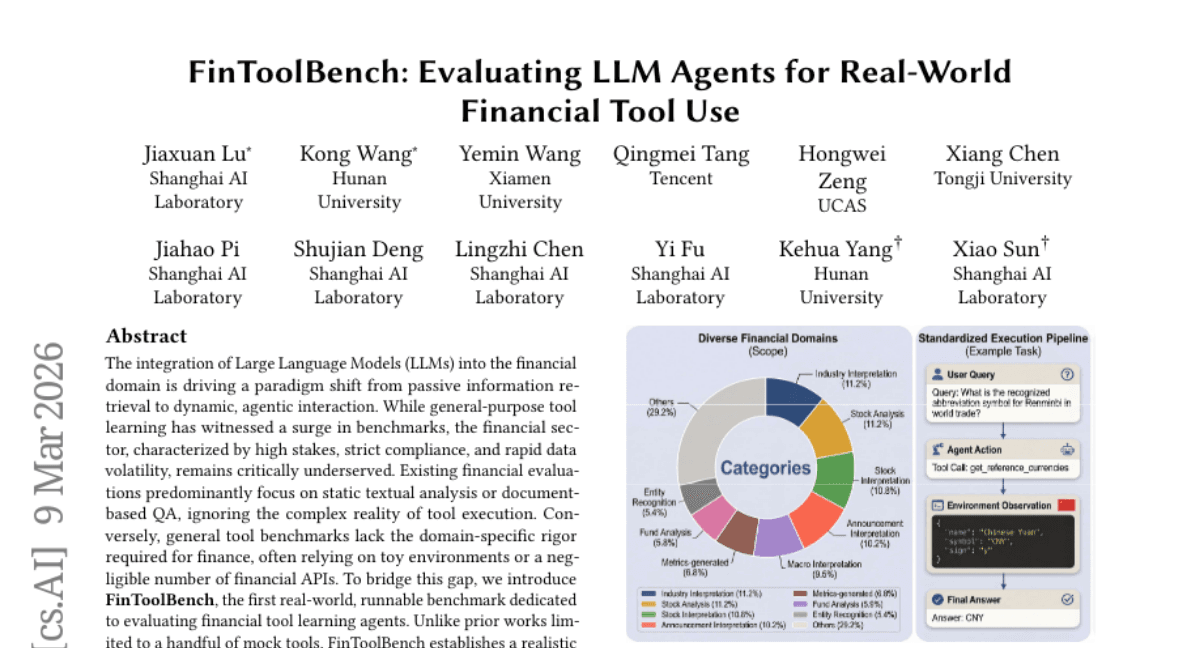
- **Taalas’ ASIC chips** now power **on-device inference** for models like **Llama 3.1 8B**, achieving speeds of **17,000 tokens/sec**. This shift minimizes dependence on cloud infrastructure, reducing attack surfaces and improving resilience.
- **Space-grade AI hardware** from companies like **Boeing** emphasizes **tamper-resistant modules** and **secure enclaves**, designed specifically for space and defense applications, ensuring physical and cyber protection for mission-critical systems.
- **Advanced Fine-Tuning and Privacy Technologies**
- **Neuron Selective Tuning (NeST)** enables **fine-grained adjustment** of individual neurons—especially safety-critical ones—enhancing **robustness against jailbreaks** without impairing overall model performance.
- Frameworks like **OPAQUE** support **encrypted inference**, allowing models to process sensitive data securely and resisting data leakage or manipulation during deployment.
- **Operational Controls and Observability Platforms**
- Platforms such as **LLMOps** and **Portkey** facilitate **continuous monitoring**, **anomaly detection**, and **policy enforcement**—crucial for **autonomous agents** operating amid unpredictable or adversarial conditions.
- **Provenance and memory infrastructures**, exemplified by **Cognee** (which recently raised €7.5 million), focus on **structured memory systems** that bolster **context management**, **traceability**, and **long-term reliability**.
---
## Standardization, Provenance, and Transparency: Building Trust
Trustworthiness in AI depends heavily on transparent standards and robust data management:
- **Agent Data Protocol (ADP)**, recently accepted at **ICLR 2026**, introduces **secure data provenance**, **context management**, and **data flow control**—aimed at preventing **context injection attacks** and ensuring **trustworthy data handling** in multi-agent ecosystems.
- The **Model Context Protocol (MCP)** enhances **fine-grained access control** by authenticating **contextual data**, reducing risks of input manipulation.
- Organizations like **Guide Labs** are pioneering **interpretable LLMs** that clarify **decision pathways**, fostering **transparency** and **auditability**—especially vital in safety-critical and regulatory environments.
- **Code Metal**, a platform specializing in **tamper-proof deployment** and **decision traceability**, recently secured **$125 million** in funding. It employs **cryptographic signatures** and **blockchain-inspired architectures** to produce **immutable decision logs**, supporting **regulatory oversight** and **incident investigations**.
---
## Benchmarking, Monitoring, and Long-term Reliability
Ensuring long-term performance and safety remains a focus:
- **Long-Horizon and World-Model Metrics**
Initiatives like **MIND** evaluate an agent’s ability to **maintain accurate world models** over extended durations—crucial for **autonomous systems** in complex, unpredictable environments.
- **Behavioral and Resilience Metrics**
The **AI Fluency Index**, introduced by **Anthropic**, assesses **11 key behaviors**—including reasoning, adaptability, and trustworthiness—providing a comprehensive view of **AI reliability** beyond traditional accuracy metrics.
- **Tamper-Proof Deployment and Decision Traceability**
Systems like **Code Metal** utilize **cryptographic signatures** and **blockchain-inspired architectures** to enable **secure, immutable logs** of AI decision processes—supporting **regulatory oversight** and **incident investigations**.
---
## Observability and Real-Time Monitoring: The Frontline of Defense
Real-time detection and response strategies are vital:
- **Monitoring Platforms**
Backed by **$80 million**, **Braintrust** exemplifies systems capable of **tracking model drift**, **detecting adversarial inputs**, and **alerting on malicious activity**, particularly for **edge devices** and **public-facing AI systems**.
- **AI-Powered Malware Detection and Hardware Security**
The proliferation of **AI-powered malware** like **PromptSpy** has spurred innovations in **specialized detection tools** and **secure inference hardware**. Initiatives such as **GutenOCR**, a space-optimized vision-language model, demonstrate efforts to **reduce dependence on cloud services**, further strengthening offline resilience.
---
## Recent Key Developments and Market Dynamics
The ecosystem continues to see significant investments and strategic shifts:
- **AI Chip Industry Boom**
- **SambaNova** announced the **SN50 AI chip**, developed with **Intel**, accompanied by **$350 million** in new funding. This chip aims to bolster **on-device inference** and **resilience**, marking a leap in hardware security capabilities.
- **MatX**, focusing on **AI edge chips**, raised **$500 million** led by **Jane Street** and **Situational Awareness**, emphasizing the importance of **hardware solutions** for secure, decentralized AI inference.
- **Axelera AI**, based in the Netherlands, secured over **$250 million** to develop **low-power, high-performance edge AI chips**, further enabling **offline, resilient AI deployment** and reducing attack vectors associated with cloud reliance.
- **Strategic Industry Shifts**
Industry giants like **Groq** and **Plug and Play** advocate for **independent AI infrastructure**. In an recent interview, **Plug and Play Chairman Amidi** emphasized, **"An independent AI foundation must be linked to global infrastructure,"** underscoring a move toward **resilient, decentralized ecosystems** reinforced by **hardware-backed security**.
- **Agent and Platform Enhancements**
The release of **Opal 2.0** by **Google Labs** introduces **smart agents** with **memory**, **routing**, and **interactive chat** capabilities—empowering **no-code AI workflows** but also expanding attack surfaces, heightening the need for robust security measures.
- **Faster, More Secure Agent Deployments**
Innovations such as **websockets** for **agent deployment**, highlighted by @gdb, have resulted in **30% faster rollouts** in systems like **Codex**, enabling more agile and secure deployment processes.
- **Benchmarking for Long-Horizon and Agentic AI**
New benchmarks such as **LongCLI-Bench** and **DREAM** are providing **initial evaluations** of **long-horizon agentic programming** and **performance metrics**, aiding in the development of **long-term reliability and safety standards**.
---
## New Market and Regulatory Developments: DeepSeek and Strategic Controversies
Recent developments have added layers of complexity and concern:
- **DeepSeek V4 Launch Sparks Nasdaq Jitters**
The upcoming release of **DeepSeek’s V4** model has caused **market nervousness**, with analysts warning that its performance and potential geopolitical implications could impact global AI markets. The model’s capabilities and strategic positioning are closely watched.
- **DeepSeek’s Low-Budget Models Raise Regulatory Questions**
When **DeepSeek** released its **V3** model early last year, it immediately influenced US markets. The launch of **low-budget variants** raises concerns about **regulatory oversight**, **market stability**, and **AI power**—especially as such models could be used for malicious purposes or undermine existing standards.
- **DeepSeek Withholds Latest Model from US Chipmakers**
An exclusive report reveals that **DeepSeek** has **not shared its upcoming flagship model** with U.S. chipmakers like **Nvidia**, citing performance and strategic reasons. This withholding sparks fears over **export controls**, **market fragmentation**, and **potential geopolitical tensions** in AI hardware supply chains.
---
## Current Status and Future Implications
The confluence of **hardware innovation**, **standardization efforts**, and **advanced observability platforms** signals a **paradigm shift** toward **decentralized, hardware-backed, and protocol-driven AI security frameworks**. The influx of **edge AI startups**, **massive funding rounds**, and a focus on **long-term reliability** underscores a collective industry movement to counteract increasingly sophisticated threats.
While **multi-modal exploits**, **model theft**, and **AI-powered malware** remain pressing concerns, the deployment of **secure hardware solutions**, **trustworthy protocols** like **ADP** and **MCP**, and **real-time monitoring systems** are establishing a resilient defense infrastructure. These advancements are essential to ensure AI systems remain **powerful**, **trustworthy**, and **safe**—especially as AI becomes deeply integrated into societal and industrial infrastructure.
**In summary**, 2026 exemplifies a year of **intense innovation, strategic investment, and standardization** in AI security. As threats evolve, so too do our defenses—through **hardware breakthroughs**, **governance protocols**, and **reliability frameworks**—paving the way for AI that is not only advanced but also **trustworthy and resilient** for the challenges ahead.