# Edge AI in 2026: Unprecedented Advances in Hardware, Ecosystems, and Multimodal Capabilities
The landscape of edge AI in 2026 is more vibrant and transformative than ever before. Driven by groundbreaking hardware innovations, sophisticated runtime ecosystems, and highly optimized models, on-device intelligence now enables **powerful, private, and real-time multimodal AI directly within devices**. These developments are not only accelerating technological capabilities but also redefining industries—from autonomous vehicles and augmented reality to healthcare and industrial automation—by embedding **robust AI systems seamlessly into everyday objects and mission-critical infrastructure**.
---
## Hardware Breakthroughs and Geopolitical Dynamics Power the Edge Ecosystem
**Hardware remains the cornerstone** of this AI revolution, with recent innovations and geopolitical shifts shaping a resilient and scalable ecosystem:
- **SambaNova’s SN50 AI Chip**: Announced earlier in 2026, the **SN50** has set new benchmarks in inference speed and energy efficiency. Designed for scalability, it supports large, multimodal models and real-time processing while consuming minimal power. Its strategic partnership with **Intel**, backed by a **$350 million funding round**, is fast-tracking deployment across consumer electronics, autonomous vehicles, and industry. This collaboration ensures **complex models can operate locally at speeds previously unattainable**, drastically reducing latency and dependence on cloud infrastructure.
- **Emerging Chips from Startups**: Companies like **MatX** and **Axelera** are rapidly capturing attention with **innovative ASICs** optimized for handling **multimodal data**—vision, audio, and language—in small, energy-efficient packages. For example, **Taalas’ HC1 ASICs** now achieve **17,000 tokens/sec** processing speeds for models like **Llama 3.1**, enabling **instantaneous inference** suited for robotics, augmented reality, and autonomous navigation.
- **Geopolitical Shifts and Supply Chain Resilience**: A notable recent development involves **DeepSeek**, a prominent AI model provider, which **withheld its latest AI model from U.S. chipmakers including Nvidia**. This move reflects ongoing geopolitical tensions and strategic considerations around **supply chain sovereignty**, urging the industry toward **regional AI hardware ecosystems** and **diversified supply sources**. Such actions underscore the importance of **self-sufficiency** in hardware development to safeguard critical AI capabilities.
**Implication**: These hardware innovations **minimize latency, bolster privacy**, and facilitate **on-device execution** of large, complex models—an essential capability for **safety-critical applications** like autonomous vehicles and industrial automation.
---
## Accelerating Runtime Ecosystems and Multi-Agent Reasoning
Complementing hardware progress, **runtime protocols and multi-agent systems** are evolving rapidly to support **scalable, collaborative reasoning directly on edge devices**:
- **Runtime Efficiency Gains**: Recent breakthroughs have achieved **30% reductions in deployment times** for large models such as **Codex 5.3**, enabling **near real-time interactions**. These improvements facilitate **distributed reasoning** across multiple agents using **Websockets-based communication**, supporting **scalable, collaborative decision-making** at the edge—crucial for autonomous robots and interactive devices.
- **Standardized Multi-Agent Protocols**: Frameworks like **Agent Development Protocol (ADP)** and **Multi-Agent Communication Protocol (MCP)** are gaining maturity. Recent enhancements in **MCP descriptions** significantly improve **agent efficiency, understanding, and resilience**. These standards underpin **long-horizon planning, skill transfer, and complex problem-solving**, empowering **autonomous systems** to operate **independently of cloud reliance**.
- **Leading Initiatives and Results**: Projects such as **Aletheia** and **Gemini** exemplify cutting-edge **distributed reasoning**. For instance, recent work demonstrates **advanced reasoning capabilities** in **scientific and industrial contexts** using **Aletheia agents powered by Gemini 3**, enabling **robust, on-device multi-agent collaboration** vital for **safety-critical applications**.
**Implication**: These ecosystems **enable multi-agent systems** to function **reliably without cloud dependency**, ensuring **robustness, privacy, and low latency** across diverse operational environments.
---
## Model Compression and Multimodal Capabilities Reach New Heights
Efficiency techniques have become more sophisticated, unlocking **high-fidelity, multimodal, real-time AI** on resource-constrained devices:
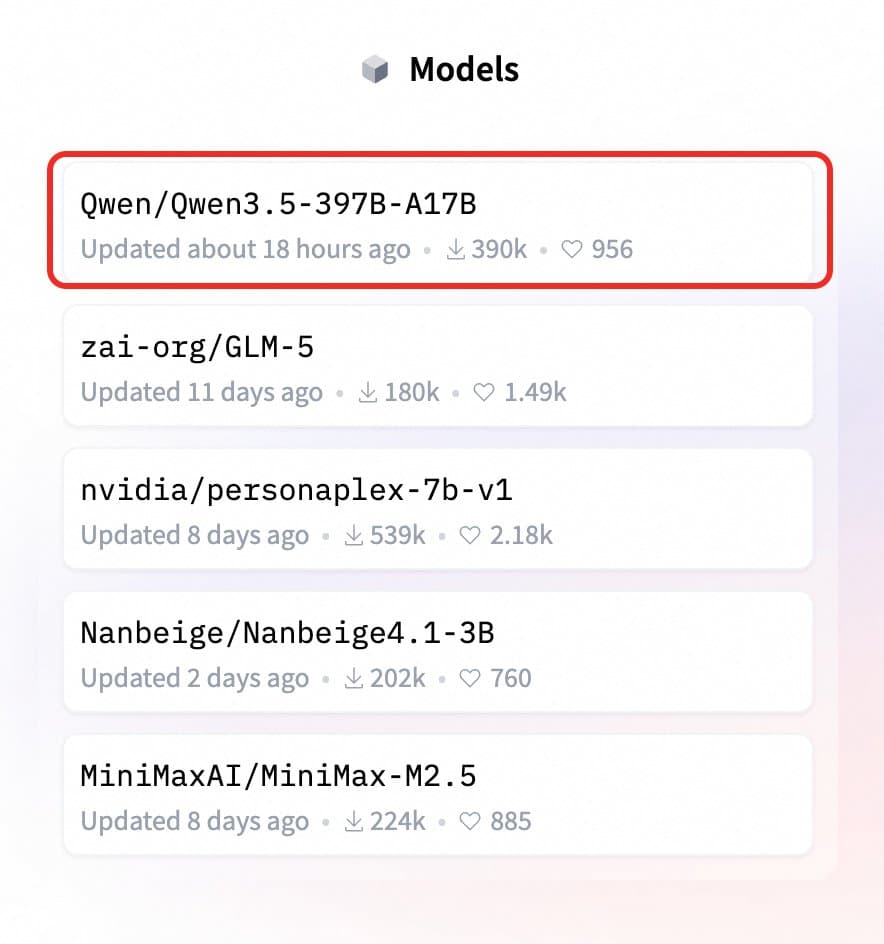
- **Quantization and Pruning**: Techniques like **INT4 and INT8 quantization**—embodied in models such as **Qwen3.5**—now allow models to **run directly within browsers using WebGPU**, facilitating **privacy-preserving, offline multimodal reasoning**. Users can perform **vision-language tasks, audio processing, and reasoning locally**, eliminating reliance on cloud servers.
- **Diffusion and Speed Optimizations**: Innovations like **SeaCache**—a **Spectral-Evolution-Aware Cache**—accelerate diffusion models by leveraging spectral evolution techniques, achieving **up to 14× inference speedups** **without sacrificing output quality**. This breakthrough makes **real-time multimedia synthesis, augmented reality, and robotic perception** feasible on embedded hardware.
- **Multimodal and Spatial Models**: The release of **SkyReels-V4**, a **multi-modal video-audio generation, inpainting, and editing model**, exemplifies advances toward **on-device spatial understanding**. Coupled with datasets like **DeepVision-103K**, these models enable **spatial reasoning, immersive AR environments**, and **virtual scene generation**, broadening **edge multimodal reasoning** capabilities.
- **New Multimodal Tools**: Open-source initiatives like **Faster Qwen3TTS** for high-quality, real-time speech synthesis, **DreamID-Omni**—a **unified human audio-video model**—and **Moonshine Voice**, an **AI toolkit for developers building real-time voice applications**, affirm a thriving ecosystem for **privacy-preserving, multimodal edge AI**.
---
## Ecosystem and Deployment Tooling for Seamless On-Device AI Integration
The ecosystem supporting **edge AI deployment** continues to expand rapidly:
- **Advanced Platforms**: **Google’s Opal 2.0** now offers **enhanced agent capabilities**—including **memory, routing, multi-agent coordination**—making **complex multimodal workflows** accessible with minimal coding. This democratizes **powerful AI development**, enabling **non-experts** to create sophisticated edge applications.
- **Enterprise and Management Frameworks**: Funding initiatives like **Trace**, which recently raised **$3 million**, focus on **scaling AI agent deployment in enterprises** through **scalable orchestration, deployment, and management tools**. Similarly, **ARLArena** supports **robust reinforcement learning** for autonomous agents, facilitating **adaptive, reliable edge systems**.
- **Scaling Strategies**: Discussions around **sharding and parallelism** (e.g., **DP, TP, layer sharding**) guide **model scaling** to **edge-capable sizes**, ensuring **efficient hardware utilization** and **cost-effective deployment** at scale.
---
## Safety, Trust, and Provenance in Embedded AI
As models become embedded in **safety-critical domains**, ensuring **trustworthiness, security, and transparency** is paramount:
- **Local Safety & Verification**: Techniques such as **NeST (Neuron-Selective Tuning)** enable **local safety modifications** of large models **without retraining**, critical for **medical devices, autonomous navigation, and industrial automation**.
- **Hallucination Mitigation**: New methods like **NoLan**—a dynamic object hallucination suppression approach—improve **reliability and accuracy** of vision-language models, vital for **robust decision-making** in critical applications.
- **Content Provenance & Media Integrity**: Tools like **Safe LLaVA** and media provenance systems help **verify content authenticity**, combating **misinformation** and **media manipulation**—a pressing concern with widespread AI-generated media.
- **Hardware Attestation & Standards**: Protocols such as **ADP** now incorporate **hardware attestation** and **data provenance**, ensuring **physical security** and **trustworthy deployment** in sectors like defense, energy, and infrastructure.
---
## Recent Developments: Reinforcing the Edge AI Frontier
Recent additions to the edge AI arsenal further accelerate multimodal, real-time, privacy-preserving capabilities:
- **Faster Qwen3TTS**: An enhanced speech synthesis model delivering **realistic, high-quality voice output at 4× real-time** speeds, enabling **natural voice interactions** on embedded devices.
- **DreamID-Omni**: A **unified human audio-video model** capable of **integrated video synthesis, editing, and spatial understanding**, facilitating **immersive AR and virtual environment creation** directly on devices.
- **Moonshine Voice**: An **open-source AI toolkit** designed for developers to build **robust, real-time voice applications**, empowering **custom voice assistants, telepresence, and interactive media** at the edge.
---
## Current Status and Future Outlook
By 2026, **edge AI has become an integral component** of modern technology infrastructure. **Large models** confidently run **on smartphones, embedded hardware, and even space-grade systems**, supporting **multimodal, privacy-preserving, real-time intelligence**. Hardware innovations like **SambaNova’s SN50** and startup ASICs, combined with **runtime improvements** and **standardized protocols**, are pushing the boundaries of what is possible **at the edge**.
The recent geopolitical move by **DeepSeek**—withholding its latest advanced AI model from U.S. chipmakers—underscores a growing emphasis on **regional sovereignty and self-sufficiency** in hardware ecosystems. This shift is likely to catalyze further investments in **domestic chip development and regional AI sovereignty**.
In sum, **edge AI in 2026** epitomizes a **synergy of hardware, software, safety, and ecosystem development**—delivering **trustworthy, multimodal, real-time intelligence** directly on devices. It **reduces reliance on cloud infrastructure**, **enhances privacy**, and **empowers autonomous, responsive systems**—laying a resilient foundation for a future where **powerful AI is truly ubiquitous**.
The journey continues, with ongoing innovations and geopolitical shifts shaping a landscape where **edge AI is poised to redefine our digital and physical realities**, fostering a future characterized by **autonomy, security, and seamless intelligence**.