# The 2026 AI Infrastructure Revolution: Decentralization, Resilient Agents, and Space-Enabled Ecosystems - Updated and Expanded
The AI landscape of 2026 is more dynamic and transformative than ever, driven by rapid advancements in decentralized agent infrastructure, groundbreaking hardware innovations, sophisticated model systems, and resilient space-enabled ecosystems. Building upon earlier milestones, recent developments underscore a clear trajectory toward autonomous, secure, and interplanetary AI systems—integrating on-device intelligence, secure hardware, and space-based networks into a cohesive, resilient fabric supporting both terrestrial and extraterrestrial pursuits.
---
## Continued Decentralization and Edge-First Agent Infrastructure
A core theme of 2026 remains the **deepening shift toward decentralized AI**, emphasizing **edge control, remote management, and sovereignty**. These innovations are vital for **remote terrestrial deployments**, **resource-constrained environments**, and **space missions**, where reliance on centralized data centers or cloud infrastructure is impractical.
### Advances in Remote and Device Control
- **Anthropic’s Claude Code Remote Control** has launched a **transformative feature** that **turns smartphones into remote coding terminals**. This feature enables users to **manage coding sessions on a PC via their phones**, significantly **enhancing flexibility, accessibility, and responsiveness**—especially crucial for **space missions** or **remote terrestrial operations** where physical access is limited or delayed.
- **Google’s Opal platform**, a no-code AI workflow tool, has **introduced new agent steps** capable of **automatic tool selection, context retention, and autonomous operation**. These enhancements **streamline deployment**, **lower technical barriers**, and **accelerate agent responsiveness** across diverse environments.
- The deployment of **Websockets technology**, as highlighted by @gdb, **accelerates agent deployment by approximately 30%**, facilitating **faster model updates** (e.g., Codex) and enabling **more dynamic, real-time agent management**—a key factor for **spacecraft navigation**, **autonomous robots**, and **remote infrastructure**.
### Device Autonomy and Sovereign Stacks
These innovations **expand device-level agent control**, reducing dependence on **centralized servers**. This is especially pertinent for **space exploration**, where **autonomous, self-sufficient operation** is essential. **Multi-step autonomous task execution** on edge devices is now increasingly accessible, paving the way for **resilient agent ecosystems** that function seamlessly across **Earth and space**.
---
## Hardware and Fabrication Momentum: Strengthening the Space-Ready Supply Chain
Hardware remains the backbone of **resilient, space-compatible AI systems**. Recent investments and technological breakthroughs are **revolutionizing chip manufacturing**, ensuring **robust supply chains** and **local AI processing capabilities** for **extreme environments**.
- **European chip manufacturing** has gained significant momentum with **Axelera AI’s recent $250 million funding round**, led by **Innovation Industries** with participation from **BlackRock**. This influx aims to **expand capacity for specialized AI chips** optimized for **low-power, high-performance edge and space applications**.
- **Wafer-scale chips** and **silicon-printing techniques** pioneered by companies like **Taalas** are **transforming on-device AI**. These methods enable **embedding large language models (LLMs)** directly into hardware, **drastically reducing latency** and **eliminating reliance on terrestrial connectivity**—a **game-changer for spacecraft, planetary bases, and remote stations**.
- Advances in **EUV lithography**, especially **ASML’s breakthroughs**, bolster **chip quality and manufacturing capacity**, supporting the creation of **smaller, more reliable chips** capable of operating in space environments.
- **Hardware-integrated LLMs**, such as those developed by **Taalas**, are now **"printing" large models onto chips**, fostering **robust local AI execution** that is **impervious to connectivity disruptions**, thereby supporting **deep-space missions** and **remote edge deployments**.
---
## Model and System Improvements: Democratization and Performance
AI models are achieving **remarkable improvements in speed, reasoning, and multimodal understanding** through **innovative architectures and optimization techniques**.
### Multimodal and Long-Video Processing
- **ReMoRa (Refined Motion Representation)** now enables **long-video comprehension**, allowing AI to interpret **extended visual and sensory data**—a critical capability for **space exploration**, **navigation**, and **scientific observation**.
- **Google’s Gemini 3.1 Pro**, incorporating **Noam Shazeer’s innovations**, recently **achieved the highest benchmark scores** in multimodal inference. Its readiness for **planetary exploration** and **remote operational tasks** underscores the push toward **autonomous, space-capable AI**.
- **OpenAI’s Gemini 3 Deep Think** integrates **text, images, and sensory data** into **context-aware decision-making systems**, capable of **adapting to unpredictable environments**—a vital trait for **interplanetary agents**.
### Inference Speedups and Architectural Innovations
- **Hugging Face’s Triton kernels**, optimized for **Mixture of Experts (MoE) models**, now **accelerate training speeds up to 12×** and **reduce VRAM usage by 35%**, democratizing access to **large models at the edge**.
- **Diffusion models** now **operate up to 14× faster**, enabling **real-time autonomous responses**—crucial for **spacecraft navigation** and **autonomous agent control**.
- **Enterprise AI pipelines** can now process **up to 17,000 tokens per second**, supporting **scalable, trustworthy AI solutions** for **critical missions**.
### Emerging Architectures and Defensive Measures
- **Recursive Language Models (RLMs)** facilitate **iterative, self-referential reasoning**, enhancing **robustness** in complex tasks such as **autonomous decision-making** in unpredictable environments.
- **Model merging techniques**, increasingly discussed within the community, allow **combining multiple models** into **single, versatile entities**, enabling **faster deployment** and **adaptive capabilities**—especially useful for **autonomous agents** in space and remote settings.
- **Security and defense mechanisms** are gaining prominence: recent research highlights **industry-scale distillation/IP-extraction attacks** that threaten **LLM intellectual property**. This has spurred **development of robust defenses**—including **model fingerprinting, watermarking, and access controls**—to **protect proprietary models** from theft and misuse, which is vital for **space agencies and commercial operators**.
---
## Space-Resilience & Market Movements: Building a Cosmic AI Ecosystem
As AI systems venture further into **interplanetary environments**, the focus on **resilience, local operation, and infrastructure** intensifies:
- **Advanced chips**—such as **wafer-scale designs** and **dynamic GPU partitioning**—are **enabling low-latency inference** for **planetary rovers**, **deep-space probes**, and **space stations**.
- **Silicon printing techniques** are **creating custom, hardware-embedded models** capable of **operating independently of terrestrial connectivity**, essential for **interplanetary autonomy**.
- **Satellite and space AI infrastructure** continues to expand:
- **SpaceX’s xAI satellite constellation** now integrates **AI processing capabilities** designed for **resilient interplanetary communication**.
- **Grok**, a startup specializing in **interplanetary autonomous AI networks**, aims to **maintain AI resilience across cosmic distances**, supporting **exploration and colonization efforts**.
- **Regional initiatives**, such as **Saudi Arabia’s investments** in space AI resilience, emphasize the strategic importance of **off-Earth AI ecosystems**.
- **Autonomous vehicles and robotics** remain a hotbed of investment:
- **Wayve’s recent $1.2 billion funding round** from **Mercedes** underscores confidence in **remote and space-deployable autonomous systems**.
- **Consumer devices** are also becoming more **autonomous and personalized**:
- **Amazon’s Alexa+**, with **new personality options**, exemplifies **edge AI becoming more embedded and human-like**, expanding AI's role in daily life and **space habitats**.
---
## Security, Governance, and Interoperability: Safeguarding the Future
The proliferation of **autonomous agents** across Earth and space underscores the necessity for **robust security, interoperability, and responsible governance**:
- Incidents like **Microsoft’s Copilot email leak** highlight vulnerabilities in **complex AI systems**, emphasizing the need for **fail-safe architectures** and **multi-layered security**.
- **Startups such as Koi and GitGuardian** are pioneering **tamper-resistant hardware**, **identity verification**, and **malicious activity detection**, crucial for **space missions** and **mission-critical infrastructure**.
- **Standardization efforts** led by **NIST**, **EU AI Act**, and international bodies are establishing **security, explainability, and interoperability benchmarks**, vital for **interplanetary AI ecosystems**.
- **Protecting AI IP** remains a priority: recent research focuses on **defensive techniques** against **distillation/IP theft**, including **model watermarking** and **trusted hardware enclaves**.
---
## The Current State and Future Outlook
Today, the **AI ecosystem** is on the cusp of an **interstellar epoch**. Major investments, technological breakthroughs, and regulatory initiatives are **converging** to **embed AI into every facet of human and extraterrestrial life**. The **progress in hardware fabrication**, **model capabilities**, and **agent infrastructure** underscores a future where **autonomous agents** will be **indispensable**—from **spacecraft navigating the cosmos** to **smart cities on Earth**.
While **security, interoperability, and ethical considerations** remain critical, the **trajectory is clear**: **AI will soon be the backbone** of civilization—**spanning planets, space stations, and beyond**—ushering in a new era of **resilient, decentralized, and interconnected ecosystems** that support humanity’s **interstellar journey**.
---
## Recent Key Developments at a Glance
- **@AWScloud** showcases **scalable, secure, and interoperable agent development platforms**, with **full details anticipated soon**.
- The **growing interest in model-merging techniques** promises **faster, more capable autonomous systems**, as discussed widely within the AI community.
- **Amazon’s Alexa+** now offers **new personality options**, making consumer AI **more autonomous and personalized**.
- **Axelera AI’s** additional **$250 million funding** enhances **European chip manufacturing capacity**, supporting **space and edge AI hardware needs**.
- **Wayve’s $1.2 billion funding** from **Mercedes** underscores industry confidence in **autonomous systems suitable for remote and space applications**.
- **Grok’s Imagine platform** (xAI) now offers **public access**, enabling **more widespread adoption of space-enabled AI tools**.
- **MIT’s Recursive Language Models** demonstrate **scaling to processing 10 million tokens**, advancing **self-referential reasoning capabilities** critical for **autonomous decision-making in complex environments**.
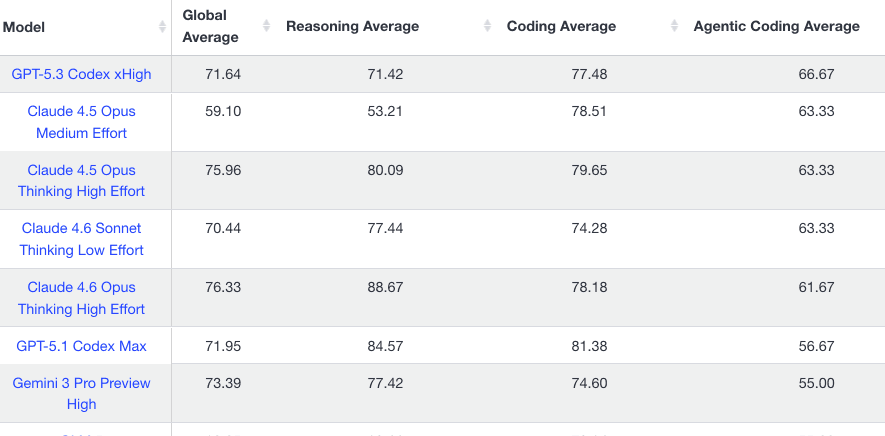
- **Codex 5.3** continues to **set new standards in agentic coding**, surpassing previous models like Opus 4.6, and reinforcing **AI’s role in autonomous programming and problem-solving**.
---
### **In Summary**
The developments of 2026 mark a **transformative epoch**—where **hardware, models, and infrastructure** converge into a **resilient, decentralized, and space-enabled AI ecosystem**. This revolution **accelerates exploration, supports colonization efforts**, and **ensures security and interoperability** across Earth and beyond. As humanity pushes into the cosmos, AI is poised to become **the foundational infrastructure**—guiding our journey into the stars with **autonomous, secure, and resilient ecosystems** that underpin our **interstellar civilization**.