# 2026: A Pivotal Year for Sovereign AI, Regional Cloud Infrastructure, and India’s Strategic Tech Initiatives — Updated and Expanded
The AI landscape in 2026 continues to demonstrate an unprecedented shift toward **regional sovereignty**, **hardware innovation**, and **autonomous governance**. Major investments, technological breakthroughs, and geopolitical strategies are converging to reshape how nations develop, deploy, and safeguard AI ecosystems. This year marks a critical inflection point where **India**, **Middle Eastern nations**, and **Europe** are accelerating efforts to build **local models**, implement **confidential hardware**, and establish **regulatory frameworks** that foster **trustworthy**, **resilient**, and **sovereign AI infrastructures**.
---
## Persistent Momentum in Regional and Sovereign AI Investments
### India’s Expanding Ecosystem: Funding, Hardware, and Indigenous Models
India remains at the forefront of **AI sovereignty** initiatives, leveraging both public and private sector momentum:
- The **Peak XV** fund (formerly Sequoia India) announced a dedicated **$1.3 billion** fund targeting **homegrown AI startups** and **sovereign AI projects**. Focus areas encompass **healthcare**, **financial services**, **linguistic diversity**, and **regulatory compliance**, emphasizing **region-specific solutions** that uphold **data sovereignty** and **cultural relevance**.
- Notable startups such as **Sarvam** are making significant strides:
- Their **Indus** AI chat platform, designed to accommodate India’s **multi-lingual landscape**, is now in beta, aiming to **bridge language divides** and **foster inclusivity**.
- Indigenous efforts around **large language models (LLMs)** are advancing rapidly; India is developing a **105-billion-parameter generative model** locally—reducing dependence on Western architectures and bolstering **regional autonomy**.
- The **cloud infrastructure** landscape is also expanding:
- India’s **data center capacity** is scaling from an initial **100 MW** in partnership with **Tata** and **OpenAI** to an ambitious **1 GW** facility. This infrastructure underpins **local deployment** of models like **Indus AI** and **Sarvam**, ensuring **privacy**, **security**, and **on-premises data processing** aligned with **sovereignty goals**.
- **Neysa**, a leading Indian AI cloud startup, is raising **up to $600 million** as part of a **broader $1.2 billion** funding round, focusing on establishing **local cloud infrastructure** tailored for **healthcare**, **finance**, and **government** sectors—key pillars in India’s pursuit of **digital independence**.
### Broader Regional Investments Beyond India
- **Abu Dhabi** continues its ambitious trajectory with a **$100 billion** sovereign fund dedicated to **autonomous urban infrastructure**, **healthcare**, and **transportation**, emphasizing **digital sovereignty** and **smart city ecosystems**.
- The regional tech giant **G42** is deploying **8 exaflops** of computing power across India via collaborations with **Cerebras**, focusing on **trustworthy AI** for **urban planning**, **emergency response**, and **infrastructure management**.
- In **Europe**, over **$1 billion** has been invested into **interoperability frameworks**, **trust standards**, and **high-safety AI ecosystems**, fostering **cross-border collaboration** and **regulatory alignment** to reinforce **AI sovereignty** continent-wide.
---
## Hardware and Chip Innovation: Powering Confidential, Localized AI
A cornerstone of **regional AI sovereignty** remains the development of **regionally optimized, confidential hardware** capable of **on-device inference** and **privacy-preserving deployment**:
- **SambaNova** introduced its latest **AI processing chip**, supported by a **$350 million** strategic investment from **Intel**. Its goal: **accelerate local AI model training and inference**, challenging **Nvidia’s dominance**.
- **Intel**’s collaboration with SambaNova involves a **$350 million** infusion to push **AI chip development**, with hardware increasingly embedded within **regional AI infrastructure**.
- The **Taalas HC1 chip**, now capable of executing **Llama 3.1 8B models** at nearly **17,000 tokens/sec**, delivers **tenfold performance improvements** over previous generations. Its **energy-efficient design** makes it ideal for **confidential, on-device AI applications** handling sensitive data.
- **Positron’s Atlas chip** offers **massive parallelism**, rivaling Nvidia’s **H100**, and is optimized for **industrial automation**, **urban robotics**, and **large-scale inference**.
- The startup **MatX** recently raised **$500 million**, reflecting strong investor confidence amid a surge of **$1.1 billion** in VC funding for **AI hardware startups** this year. These investments escalate the competition among players like **SambaNova**, **Positron**, and others aiming to challenge Nvidia’s hardware dominance.
- Nvidia continues expanding its hardware footprint through acquisitions like **Illumex**, an Israeli AI hardware company, further reinforcing its **industry dominance** and prompting rivals to accelerate R&D efforts.
- **Edge-optimized models** such as **MiniMax-2.5-MLX-9bit** are gaining traction, enabling **privacy-preserving inference at the edge** and supporting **localized AI ecosystems** for **confidentiality** and **low-latency** applications.
---
## Protecting AI Intellectual Property and Combating Model Theft
As AI models become **strategic assets** for **regional sovereignty**, safeguarding **IP rights** and preventing **unauthorized replication** has taken center stage:
- Techniques such as **behavioral fingerprinting** and **trace rewriting** are increasingly employed to **detect and prevent industrial-scale distillation attacks**, which pose a rising threat in 2026.
- The startup **Opaque Systems** secured **$24 million** in funding at a **$300 million valuation** to develop **trustworthy, transparent AI workflows** emphasizing **confidentiality** and **security**.
- Major large models like **Qwen3.5** (397 billion parameters) and **GLM-5** (744 billion parameters) are being enhanced with **safety**, **trustworthiness**, and **reliability features**. The recent release of **Qwen3.5 INT4** facilitates **faster inference** and **energy efficiency**, making **regionally deployable, confidential AI** more feasible.
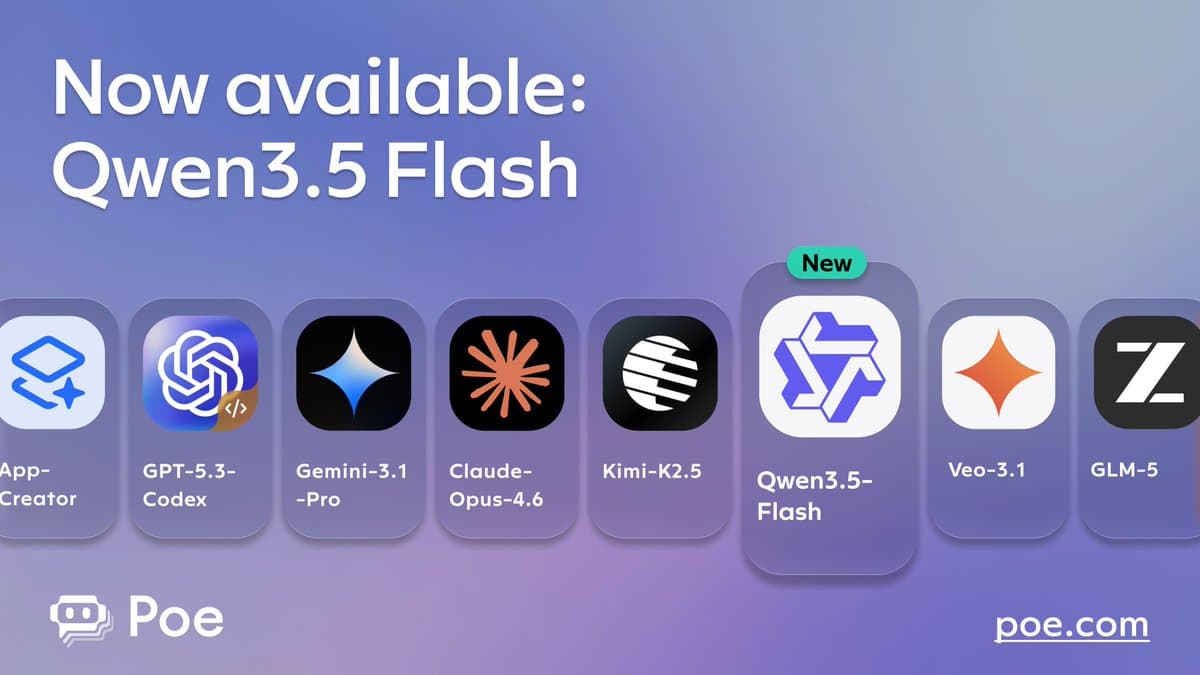
- The deployment of **Qwen3.5 Flash** on **Poe (N5)** exemplifies the rapid availability of **high-performance, multimodal models** that process text and images efficiently—crucial for **regional AI ecosystems** demanding fast, reliable inference close to users.
- The rise of **open-source models** from Chinese startups like **z.ai**, employing **reinforcement learning slime techniques** to reduce hallucinations, has ignited **export control debates** and **geopolitical tensions** over **AI hardware** and **model transfer protocols**.
### Strategies Against Industrial-Scale Distillation
In 2026, **protective measures** such as **behavioral fingerprinting** and **trace rewriting** are vital for **maintaining regional control** over AI assets. An influential publication titled ["Defending Against Industrial-Scale AI Distillation Attacks | Protecting LLM IP in 2026"](https://youtube.com/watch?v=...) underscores these security strategies as essential components of **sovereign AI ecosystems**.
---
## Emergence of Agentic Platforms and Governance Frameworks
### Autonomous Multi-Agent Platforms and Structured Memory
**Autonomous agent platforms** and **structured memory systems** are transforming **AI governance**:
- **Mato**, a **tmux-like multi-agent terminal workspace**, now supports **visual orchestration** of multiple AI agents, enabling **complex workflows** with embedded **regulatory compliance** and **auditability**.
- **Treasure Data’s Treasure Code** introduces **agentic governance**, embedding **regulatory policies**, **audit trails**, and **decision transparency** directly into **AI workflows**.
- **Sphinx** is innovating **regulatory automation tools** to ensure **compliance** and **transparency** in sensitive sectors such as **finance**, **healthcare**, and **government**.
- **Cognee**, a Berlin-based startup, secured **€7.5 million** to develop **structured memory systems** supporting **long-term reasoning** and **context retention**—crucial for **autonomous decision-making agents**.
- The recent **Gushwork AI** seed round of **$9 million**, led by **Susquehanna Asia VC**, highlights the emergence of **agentic search engines** that combine **autonomous reasoning** with **discovery capabilities**, signaling a shift toward more **self-sufficient AI tools**.
### Enhancing Ecosystem Safety with Human Feedback and Tooling
- **Rapidata** raised **$8.5 million** to expand its **human feedback platform**, vital for **refining model safety**, **trustworthiness**, and **cultural nuances**, especially for **region-specific models**.
- **Rubrik Agent Cloud** offers **advanced policy controls** over **agent prompts** and **responses**, bolstering **security**, **regulatory compliance**, and **trust** in **agent-based AI**.
---
## Cloud Architectures, Interoperability, and Open Standards
The drive toward **sovereign and interoperable AI ecosystems** is accelerating with the development of **standards** and **architectural frameworks**:
- The **LLM-LD** (Large Language Model - Launch Description) specification, introduced by **Capxel**, provides a **structured framework** for **model accessibility**, **deployment**, and **interoperability** across diverse platforms, streamlining **cross-region deployment** and **standardized serving architectures**.
- **High-performance serving architectures** are evolving to support **low-latency**, **scalable** deployment of **LLMs**, enabling **privacy-first** and **confidential AI ecosystems** across multiple regions.
---
## Latest Signals and Emerging Trends
Recent developments include:
- **Gushwork AI** secured **$9 million** in seed funding for an **agentic AI search engine** designed for discovery and research, emphasizing **autonomous reasoning** in **knowledge exploration**.
- **@GaryMarcus** cautions that **"more agents does not automatically mean smarter systems"**, warning that an increase in **multi-agent proliferation** may lead to **louder agreement** rather than **greater intelligence**.
- A **London-based startup** focusing on **breaking Nvidia’s data-center workload dominance** raised **$10.25 million**, underscoring ongoing **market diversification** and **hardware competition**.
- The **startup building an operating system for biotech AI** is pioneering **AI infrastructure** for **biotech research**, including **bacteria engineered to target cancer** and **innovative methods for drug discovery**, exemplifying **vertical AI** applications.
- **Open-source OS for AI agents**, such as **@CharlesVardeman’s** Rust-based project with **137,000 lines under MIT license**, signals a move toward **standardized, transparent agent frameworks** that support **autonomy** and **trust**.
- **Anthropic’s** recent acquisition of **Vercept**, an AI startup specializing in **complex agentic tools**, bolsters its **agent tooling capabilities** and aligns with the broader trend of **autonomous, compliant AI systems**.
---
## Current Status and Broader Implications
In 2026, the AI ecosystem is sharply pivoting toward **regional sovereignty**, **hardware independence**, and **trustworthy governance**:
- **Massive investments** in **local models**, **hardware**, and **cloud infrastructure** are underpinning a **decentralized AI landscape**.
- **Hardware breakthroughs** facilitate **confidential**, **on-device inference**, reinforcing **privacy** and **data security**.
- The rise of **multi-agent governance platforms** and **structured memory systems** ensures **regulatory compliance**, **auditability**, and **long-term reasoning**—crucial for **autonomous decision-making**.
- Geopolitical factors, including **export controls**, **hardware tensions**, and **regional resilience strategies**, continue to influence **AI development trajectories**.
These trends suggest that **AI ecosystems** will become **highly localized**, **trust-centric**, and **resilience-focused**, with **India**, **China**, **Middle Eastern nations**, and **Europe** leading efforts to establish **sovereign AI hubs**—balancing **technological innovation** with **ethical** and **regulatory sovereignty**.
---
## Notable Recent Development: Qwen3.5 Flash on Poe (N5)
Adding to this momentum, **Qwen3.5 Flash**, a **fast, multimodal model** capable of processing text and images efficiently, is now **live on Poe (N5)**. This deployment exemplifies the rapid availability of **regionally deployable AI models** that combine **speed**, **efficiency**, and **multimodal capabilities**—crucial for **local AI ecosystems** that demand **low latency** and **privacy preservation**. With **Qwen3.5 Flash**, regional users can access **powerful inference** in a **confidential** manner, bolstering **sovereign AI initiatives** across diverse domains.
---
## Final Remarks
As **on-device AI** becomes ubiquitous, **multi-agent governance platforms** mature, and **hardware innovations** accelerate, the global AI landscape is entering a **trustworthy, decentralized era**. The strategic investments and technological advances of 2026 are laying the **foundations for a sovereign AI age**—one that harmonizes **technological prowess** with **regulatory sovereignty** and **ethical responsibility**.
Major players like **Nvidia** continue expanding through acquisitions such as **Illumex**, while startups like **MatX**, **Gushwork AI**, and **SambaNova** challenge traditional dominance. This dynamic signals the dawn of a **new era of regionalized, trustworthy AI**, poised to redefine the global AI trajectory for years to come.