# Navigating the 2026 Global Economy: Heightened Risks, Strategic Shifts, and Market Resilience
The global economy in 2026 stands at a crossroads marked by escalating geopolitical tensions, evolving strategic alliances, technological rivalries, and profound supply chain reconfigurations. While macroeconomic indicators suggest a veneer of cautious resilience, recent developments reveal mounting risks that threaten to destabilize fragile growth patterns and market stability. Policymakers, investors, and businesses must contend with a rapidly shifting landscape where strategic responses and adaptability are paramount.
---
## Escalating Geopolitical and Domestic Political Risks Amplify Market Uncertainty
The geopolitical environment remains volatile, with multiple flashpoints fueling market risk premiums and safe-haven inflows into assets like gold, U.S. Treasuries, and the dollar:
- **Middle East Instability**: The recent shoot-down of an Iranian drone near a U.S. aircraft carrier underscores persistent regional volatility. Given the Middle East’s dominant share of global oil reserves, any flare-up—such as renewed hostilities—can trigger sharp oil price swings. Energy markets have responded with heightened volatility, driven by fears of supply disruptions. U.S. Secretary of State **Antony Blinken** reinforced this concern, stating, “the region remains volatile,” highlighting ongoing risks that have ripple effects globally.
- **U.S.-China Strategic Confrontation**: The rivalry continues through **trade restrictions** and **technology bans**. China’s **export controls** on **lithium** and **rare earths**—both critical for green energy, electronics, and defense—are prompting countries worldwide to **diversify sources**, accelerate **recycling efforts**, and **stockpile** these vital resources. This trend toward **deglobalization** fuels **technological bifurcation** and fosters **regionalized supply chains**, which geopolitically enhance resource-rich nations’ leverage.
- **Russia-Ukraine Tensions**: Despite ongoing diplomatic efforts, sharp rhetoric persists—highlighted by **U.S. Senator Marco Rubio**, who recently declared, *“We have NO INTEREST in being polite,”*—a reflection of deepening instability. These tensions threaten energy security and regional stability, adding to financial market uncertainty and prompting cautious policy stances.
- **Arctic Sovereignty and Military Posturing**: Melting ice caps have revealed significant energy reserves, igniting disputes among **Canada**, **NATO**, and the **U.S.** over Arctic sovereignty. Increased militarization and resource claims in this melting frontier heighten regional risks, with potential implications for energy markets and security alliances.
- **Trade Frictions Among Allies**: The U.S. has threatened a **100% tariff** on Canadian imports, exemplifying a trend toward **trade fragmentation**. Meanwhile, Canada and other allies are **diversifying trade alliances** and developing **alternative routes**, signaling resilience strategies that could reshape regional trade flows and increase fragmentation.
- **Broader Security Challenges**: Ongoing conflicts, such as **ISIS prison controls** in Syria and escalating Middle Eastern tensions, threaten regional stability. U.S. policymakers are contemplating more assertive responses, risking further escalation and market destabilization.
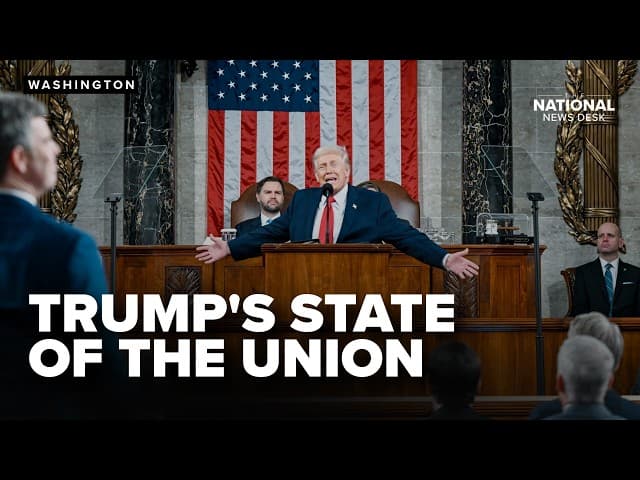
- **Domestic Political Volatility**: Recent rhetoric from President **Trump** emphasizes **“a new era of American AI supremacy,”** framing technological dominance as a core security element. Additionally, warnings to Iran and recent analyses, such as a **YouTube video** titled *“Trump Declares War in Speech; National Emergency at U.S.-Mexico Border,”* point toward heightened geopolitical tensions. Such developments foster a **heightened state of alert** and assertiveness, increasing policy uncertainty.
**Market Implication**: These conflicts and political tensions are driving **safe-haven inflows** into assets like **gold**, **U.S. Treasuries**, and the **U.S. dollar**. Energy prices, especially oil, remain **highly volatile**, reacting sharply to regional flare-ups and supply shocks.
---
## Central Banks Maintain a Cautious, Data-Dependent Stance
Amid these geopolitical and economic uncertainties, **major central banks** are adopting a **pause-and-wait approach**, emphasizing **data dependency**:
- The **Federal Reserve** continues to **hold interest rates steady**, highlighting the importance of **monitoring inflation**, **housing market indicators**, and **financial stability signals** before making policy moves. Recent **testimonies** reaffirm the Fed’s commitment to **adjust rates** if inflationary pressures or market instability emerge.
- The **European Central Bank** echoes this cautious stance, balancing **inflation concerns**—particularly driven by energy costs and geopolitical shocks—with uncertain economic prospects across the Eurozone.
- **Market volatility** remains elevated; policymakers warn that **minor policy shifts** could trigger outsized reactions. The environment favors **risk-aware, adaptable strategies** capable of responding swiftly to rapid market shifts.
**Implication for Investors**: Close monitoring of **central bank signals**, **economic data releases**, and **geopolitical developments** is essential. The environment favors **flexible strategies** that can accommodate **market surprises** and **rapid changes**.
---
## Reshaping Trade and Supply Chains: Fragmentation, Regionalization, and Resilience
Geopolitical tensions are accelerating **global supply chain restructuring**:
- **Onshoring and Regional Alliances**: Both the U.S. and Europe are **expediting onshoring efforts** and forging **regional trade pacts** to **reduce dependency on China**. These initiatives involve **localizing manufacturing**, even at higher costs, to **strengthen resilience** against disruptions and geopolitical shocks.
- **Securing Critical Resources**: Europe is **bolstering domestic mineral extraction** and establishing **partnerships with resource-rich nations** like **Africa** and **Australia**. These strategies aim to **diversify supply sources**, especially in response to Chinese export restrictions on **lithium** and **rare earths**—resources vital for **green energy** and **high-tech industries**.
- **Chinese Export Controls and Diversification**: Countries are **diversifying import sources**, **increasing recycling efforts**, and **building strategic reserves** to buffer against supply shocks. These costly measures are crucial for **long-term resilience** amid ongoing fragmentation.
- **Reconfiguring Supply Routes**: Nations are **augmenting stockpiles** and **reorienting trade routes** to lessen reliance on Chinese exports, signaling a shift toward **autonomy-driven supply chains**. This **regionalization** trend signifies a move away from hyper-globalization, with profound implications for **trade volumes** and **investment patterns**.
**Market Implication**: Companies are adopting **regional sourcing**, **inventory buffers**, and **multi-sourcing strategies**. While these measures may elevate costs in the short term, they are vital for **building resilience** amid a more fragmented global environment.
---
## The Rise of De-globalization and Strategic Regional Blocs
The global economy is increasingly characterized by **deglobalization**, driven by **economic sovereignty goals** and the formation of **regional alliances**:
- **Localized and Nearshored Supply Chains**: Countries are **nearshoring** and establishing **regional resilience networks**, reducing reliance on distant, hyper-globalized models. This shift influences **trade flows**, **investment patterns**, and **market structures**.
- **Emerging Blocs and Alliances**: Strategic groupings such as **US-led Resource Alliances**, the **EU Green Energy Pact**, and China’s **Belt and Road Initiative** are vying for influence, often leading to **risk premiums** and increased **regional fragmentation**.
**Market Impact**: These developments heighten **volatility** and favor **regionalized strategies**, compelling firms and investors to prioritize **local sourcing** and **technological independence**.
---
## Technological Race and Political Rhetoric Amplify Uncertainty
The **AI and technological competition** remains a central aspect of geopolitical rivalry:
- The **U.S. government** actively **promotes AI innovation** as a strategic priority. Recent speeches by **Trump** have emphasized **“AI supremacy”** as essential for **national security** and **military dominance**. This fuels **sector valuations**, **investment flows**, and **defense strategies**, especially in **cyber warfare** and **autonomous systems**.
- **Cyber risks** and **disinformation campaigns** are intensifying, particularly ahead of **midterm elections**, raising concerns over **AI-generated disinformation** undermining democratic processes. Nations are leveraging **AI-driven cyber capabilities** to **evade sanctions** and **counter adversaries**, adding layers of complexity to diplomatic negotiations.
**Implication**: The **race for technological dominance** introduces **policy uncertainties** and **market volatility**, with **defense** and **innovation sectors** gaining prominence as critical investment areas.
---
## Recent Key Developments Reshape the Geopolitical and Market Landscape
Adding to the turbulence are several significant recent events:
- **ASEAN’s Pivot Toward BRICS**: A notable **regional realignment** is underway as ASEAN nations explore **closer ties with BRICS**. This challenges Western influence and could **reshape regional influence and economic cooperation**. A **YouTube analysis** titled *“(Middle) power play: de-risking from America”* underscores these shifts, emphasizing efforts by countries seeking **strategic autonomy** amid U.S.-led tensions.
- **U.S.–Bangladesh Trade Deal**: The U.S. has negotiated a **trade agreement** focusing on Bangladesh’s **garments sector**, aiming to **diversify supply chains** and **expand influence** in South Asia. This reconfigures regional trade flows and enhances **resilience** by reducing reliance on traditional hubs.
- **Coordinated Treasury Sell-Offs**: Multiple countries are **reducing holdings of U.S. Treasuries**, driven by **dollar devaluation fears** and geopolitical tensions. Recent **multi-country sell-offs** suggest a **potential weakening of the dollar**, which could **push yields higher** and **tighten global dollar liquidity**—a sign of shifting macro balances.
- **IMF Critique of China’s Economic Model**: The IMF recently **criticized China’s reliance on state-led investment** and **slow reforms**, raising concerns over **long-term growth sustainability** and **macro risks** associated with **policy rigidity**. This could influence future **policy shifts** within China and impact global supply chains.
- **U.S. Fuel Embargo**: Amid ongoing conflicts, the U.S. has implemented a **new energy embargo**, intensifying **global energy disruptions** and **price volatility**. This assertive move underscores strategic energy independence and has broad market implications.
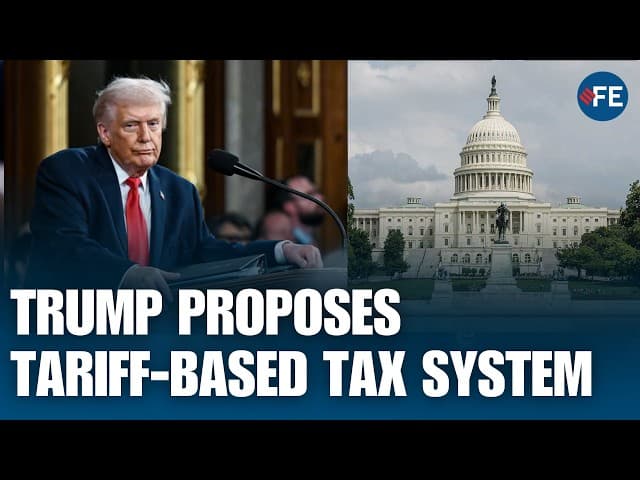
- **Tariff and Legal Policy Shifts**: The **Supreme Court** struck down some tariffs previously imposed, limiting protectionist tools, but recent **tariff hikes** from **10% to 15%** and ongoing **trade litigation** reflect persistent protectionist tendencies. These developments complicate diplomatic negotiations and threaten **trade stability**.
- **Trump’s Strategic Posture**: Recent statements from **Trump** suggest **countermeasures** against emerging **large-scale alliances**, hinting at a **more confrontational approach** that could further **destabilize geopolitical alignments**.
**Current Outlook**: Despite these risks, the U.S. macroeconomic outlook remains **cautiously optimistic**, with Treasury Secretary **Scott Bessent** projecting **3.5% growth** in 2026. This resilience supports **risk appetite**, even amid geopolitical headwinds.
---
## Critical Role of Rare Earths and Critical Minerals
A recent **YouTube analysis** titled *“Rare Earth Minerals: The New Geopolitical Weapon Shaping Global Markets”* emphasizes the strategic importance of **rare earths** and **critical minerals**:
- Control over **supply chains** grants geopolitical leverage and influence. Chinese export restrictions on **lithium** and **rare earths** have prompted nations to **diversify sources**, **ramp up recycling**, and **stockpile** these resources, despite persistent market volatility.
- **Market Impact**: As these minerals become **weapons of influence**, prices are volatile, affecting **green energy investments**, **defense procurement**, and **sector valuations**. Countries like **Australia**, **Africa**, and **South America** are intensifying domestic extraction and forming **strategic partnerships** to mitigate risks.
---
## Current Status and Market Outlook
Despite the mounting risks, **U.S. macro resilience** endures, supported by **strong labor markets**, **robust consumer spending**, and **technological productivity gains**. However, recent events like the **U.S. fuel embargo**, geopolitical tensions, and supply chain fragmentation have heightened **market volatility** and **energy price swings**.
**In conclusion**, 2026 is defined by a **delicate equilibrium**: ongoing **conflicts and cooperation**, **fragmentation and innovation**. Success hinges on **diversification**, **regional sourcing**, and **risk-aware strategies**. While risks are elevated, there are significant opportunities for actors who lead in **technological innovation**, **critical resource management**, and **resilience-building** to navigate and capitalize on this turbulent environment.
---
## **Implications for Stakeholders**
- **Policymakers** must prioritize **geopolitical risk management**, **supply chain resilience**, and **technological competitiveness**.
- **Investors** should closely monitor **central bank signals**, **critical minerals markets**, and **regional geopolitical developments**.
- **Businesses** need to accelerate **regional diversification**, **inventory strategies**, and **technological innovation** to withstand volatility.
Ultimately, the current landscape underscores that **resilience** and **proactive adaptation** are essential. Success in this era requires vigilant monitoring of evolving geopolitical and economic currents, alongside strategic agility to respond swiftly to unpredictable shocks and opportunities.