# Legal Wins Collide with Backlash Over Migrant Detention Policies: A Turbulent Path Forward
The landscape of U.S. immigration enforcement remains intensely polarized, marked by significant judicial victories for the government, mounting legal challenges from advocates, and fierce political and public debates. Recent developments reveal a complex interplay of court decisions, systemic issues, and partisan rhetoric—all shaping the future trajectory of immigration policy in America. At the heart of this turbulence are efforts to expand detention authorities, the judiciary’s role in scrutinizing these practices, and the political narratives fueling the controversy.
## Judicial Landscape: Reinforcing Enforcement Amid Increasing Scrutiny
**Recent federal appeals courts have delivered decisive rulings supporting the government’s authority to detain migrants**, including asylum seekers, pending their immigration proceedings. A notable example is a **federal appeals court ruling that upheld the policy allowing detention without bond hearings** for certain categories of migrants—signaling a judicial endorsement of expanded detention powers initially rooted in Trump-era policies. This decision **affirmed the legality of detaining migrants during the asylum process without requiring individualized bond assessments**, thereby reinforcing the administration’s enforcement toolkit.
**The Supreme Court also played a pivotal role** by **upholding the Trump-era detention mandate**—a policy that permits the detention of migrants during their immigration proceedings without significant procedural hurdles. This ruling **effectively cements the government's authority** to continue such detention practices, at least for the foreseeable future, and **serves as a legal foundation** for current enforcement strategies.
Meanwhile, courts are **imposing restrictions and demanding procedural safeguards** to prevent violations of constitutional rights. For example, some rulings **limit Immigration and Customs Enforcement’s (ICE) authority to detain individuals without adequate procedural oversight**, signaling a potential recalibration of enforcement tactics and a recognition of constitutional protections.
**A critical legal debate emerged during the recent State of the Union address**, where President Biden’s administration sought to clarify **the scope and legality of pretermission tactics**—the practice of unlawfully dismissing or delaying asylum claims to expedite removals. This clarification is seen as pivotal, as it **may influence future litigation and enforcement standards**, potentially curbing unlawful dismissals and ensuring fairer procedures.
### The Trump-Era Detention Mandate
The **Supreme Court’s decision upholding the detention mandate** effectively **legalizes the broad detention powers** established during the Trump administration, allowing the government to detain migrants during the immigration process **without requiring individualized hearings or procedural safeguards**. This decision has significant implications for detention capacity and enforcement authority, reinforcing the administration’s capacity to detain large numbers of migrants—though it also raises ongoing constitutional questions.
### Judicial Oversight and Human Rights Concerns
Despite these victories, courts are increasingly **challenging enforcement tactics** that may infringe on constitutional rights. Rulings have scrutinized **procedural delays, detention conditions, and the unlawful dismissal of asylum claims**, emphasizing the judiciary’s role in balancing enforcement with constitutional protections. Such cases reflect a judiciary **moving toward more restrained enforcement practices**—though the overall legal environment remains supportive of detention expansion.
## Surge in Litigation: Systemic Challenges and Class-Action Lawsuits
The volume of legal challenges related to detention practices has surged dramatically. **More than 18,000 individual cases** challenge the legality of detention practices, exposing systemic deficiencies such as **delays, backlogs, and violations of migrants’ right to fair hearings**. These cases **threaten to overwhelm federal courts** and have prompted calls for comprehensive reform.
A prominent example is **Barbara v. Trump**, a class-action lawsuit filed by the ACLU and partners. The suit **alleges systemic violations of constitutional rights**, including **unlawful detention, due process infringements**, and **abuse of pretermission tactics**. The case **aims to compel reforms** such as:
- **Limiting detention durations**
- **Enhancing procedural safeguards**
- **Expanding community-based alternatives to detention**
Legal experts warn that **the outcomes of these cases could significantly restrict the government’s detention authority**, making indefinite detention without due process increasingly difficult to sustain.
## Political and Public Dynamics: The State of the Union and Public Opinion
The political arena remains deeply divided. The **upcoming State of the Union** has become a battleground of contrasting narratives:
- **President Biden** is expected to emphasize **humane reforms**, increased transparency, and **expanding community-based alternatives** to detention. His administration is signaling a potential **recalibration of enforcement policies** to address systemic issues and restore public trust.
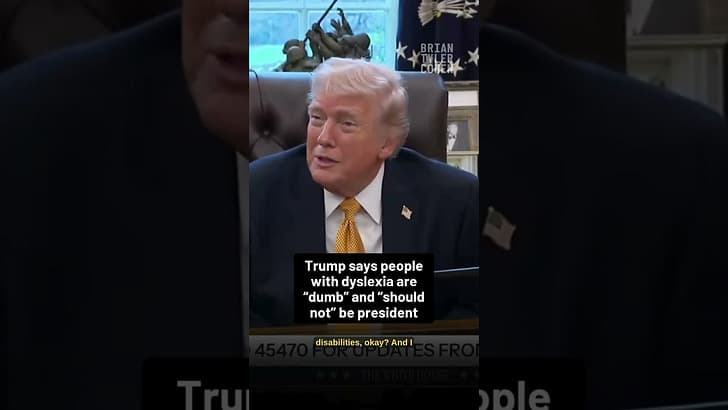
- **Former President Donald Trump** and Republican leaders are anticipated to **double down on tough-on-immigration rhetoric**, framing recent legal victories as validation of law-and-order principles. Trump’s confrontational style, including a **notable incident where he stared down Senator Mark Kelly**, continues to energize his base.
Recent coverage from Reuters underscores these tensions: **Trump’s stance emphasizes broad detention authority**—asserting that **the federal government has expansive powers to detain migrants, including asylum seekers**—and **frames border security as paramount**. Conversely, Democrats have **boycotted certain events** in protest of policies they consider inhumane, highlighting the partisan divide.
### Shifting Public Support and Political Risks
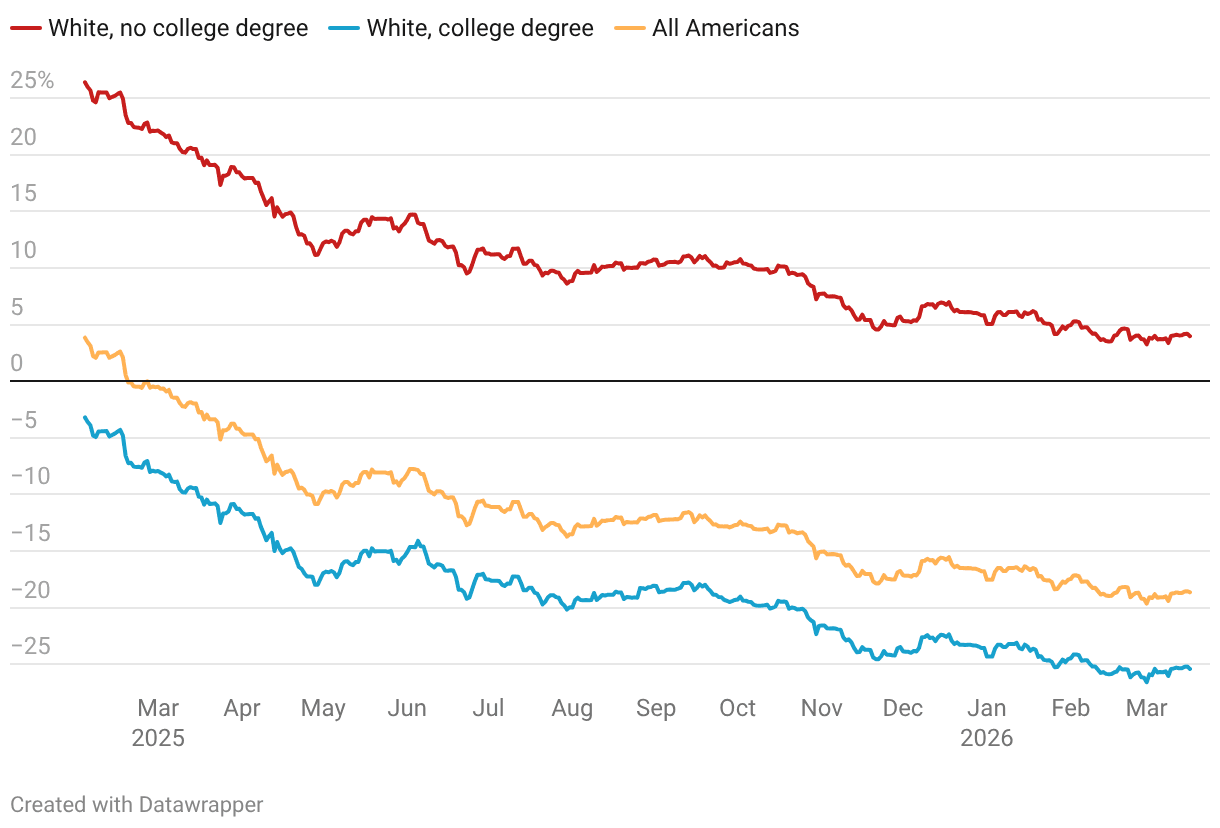
Polls indicate **a decline in support among traditional Republican voters** for aggressive immigration policies. Approximately **60% of Americans disapprove of Biden’s handling of immigration issues**, citing **humanitarian concerns** and **perceptions of overreach**. This erosion of support **poses political risks** for the Biden administration, especially ahead of the 2024 elections.
Meanwhile, Republican proposals include **revoke U.S. citizenship for certain foreign-born Americans**—a move condemned as unconstitutional—and **expand detention capacity**. These measures aim to **energize GOP voters** but risk deepening partisan divides and attracting legal challenges.
## New Developments: Clarifications and Legal Questions
### Trump’s Clarification During the State of the Union
Many anticipated a tense exchange during Trump’s recent address when he **addressed key legal questions** surrounding immigration enforcement. He **emphasized** that **the federal government possesses broad detention powers**, including for asylum seekers, asserting that **such authorities are vital for national security**. His remarks **reinforced his administration’s tough stance** on immigration enforcement and **could influence ongoing and future litigation**, including cases like **Barbara v. Trump**.
### The Impact of Legal and Political Movements
These clarifications **may bolster the government’s legal position** in ongoing cases, providing a **more explicit narrative supporting detention practices**. Conversely, advocates **argue that such policies violate constitutional protections** and **undermine due process**. The debate will likely intensify as courts weigh these issues amid political pressures.
## Near-Term Outlook: Recalibration and Reform
In response to legal setbacks, political backlash, and shifting public sentiment, the Biden White House is **considering a recalibration of immigration policies**, including:
- **Increasing transparency** around detention conditions and decision-making processes
- **Implementing reforms** to improve detention conditions and ensure compliance with humanitarian standards
- **Expanding community-based alternatives** such as supervised release programs and electronic monitoring
Sources suggest the administration **aims to reduce reliance on detention**, rebuild public trust, and **align enforcement with constitutional protections and human rights standards**. These efforts could **address court backlogs**, **mitigate political tensions**, and **restore legitimacy** to immigration enforcement.
## Key Developments to Watch
- **Legal outcomes in Barbara v. Trump**, which could **set important precedents** for detention standards and due process protections.
- **Judicial rulings on pretermission practices**, potentially curbing unlawful dismissals and delays.
- **Further restrictions on ICE detention authority**, signaling increased judicial oversight.
- **The State of the Union address**, where contrasting narratives will influence policy directions.
- **Shifts in public opinion and legislative proposals** that could lead to **revisions in detention laws** and **citizenship policies**.
- **High-profile enforcement actions** and prosecutions that may impact detention practices and litigation strategies.
## Conclusion: Navigating an Uncertain Future
As the Biden administration contends with mounting legal challenges, political opposition, and evolving public sentiment, the future of U.S. immigration enforcement remains uncertain. Recent judicial rulings support detention expansion, yet systemic flaws and increasing judicial oversight threaten to constrain enforcement efforts.
**The administration’s signals toward reform—emphasizing transparency, humane detention conditions, and community alternatives—** suggest an awareness of these pressures**. Whether these initiatives will lead to meaningful change is yet to be seen, but they represent a critical step toward **balancing border security, constitutional protections, and human rights**.
**The coming months will be decisive.** The outcomes of ongoing litigation, legislative debates, and public discourse will determine whether the U.S. moves toward a more humane, lawful immigration system or persists on a contentious enforcement path. The challenge remains to **reconcile security concerns with justice and compassion** in a deeply divided environment, shaping the nation's approach to immigration for years to come.
---
### Recent High-Profile Event: Clarification of Legal Questions
**Trump Just Clarified a Major Legal Question**
During the recent State of the Union, many in Washington expected fireworks, but Trump **addressed critical legal issues** related to immigration detention. He **affirmed** that **the federal government has broad authority to detain migrants**, including asylum seekers, emphasizing that **these powers are essential for national security**. This **reinforces** his administration’s **tough stance** on immigration enforcement and **could influence ongoing and future litigation**. Critics argue that such assertions **risk undermining constitutional protections**, but supporters view it as **a reaffirmation of lawful enforcement**.
---
*In sum, the evolving legal, political, and public environment underscores a pivotal moment for U.S. immigration policy—one that tests the balance between security, justice, and human rights amid increasing polarization.*