# How Everyday Factors and Treatments Shape Cardiovascular Risk: An Updated Perspective
Cardiovascular disease (CVD) continues to be the leading cause of death worldwide, reflecting its intricate nexus of biological, behavioral, social, and environmental influences. Over recent years, our understanding and management of cardiovascular risk have undergone a profound transformation—from reactive treatment paradigms to proactive, lifelong, personalized strategies. This evolution is driven by groundbreaking research, innovative therapeutics, and an expanding recognition of social determinants of health. Today, it’s clear that **everyday factors**, ranging from lifestyle choices and environmental exposures to advanced diagnostic tools, significantly influence cardiovascular risk—while early, tailored interventions can dramatically improve outcomes.
## Embracing a Lifespan, Personalized Approach to Prevention
A pivotal advancement in cardiovascular health is the recognition that **risk develops dynamically across the lifespan**. This understanding underscores the importance of **early detection and intervention**, utilizing sophisticated diagnostics—including genetic testing, biomarkers like Lipoprotein(a) [Lp(a)], and advanced imaging techniques such as computed tomography coronary angiography (CTCA).
### Early Risk Assessment and Intervention
Initiatives like Portugal’s **SANTORINI project** exemplify this proactive strategy. By aiming to **bridge the LDL-cholesterol (LDL-C) treatment gap** in high-risk populations, they promote **initial combination therapies**—such as statins paired with ezetimibe—to **prevent or slow atherosclerosis from childhood**. This highlights the shift toward **prevention long before clinical symptoms** develop. Correspondingly, the **2026 American Cardiovascular Disease Prevention Guidelines** now advocate for **risk assessments starting early in life**, including during adolescence, to **detect and combat early atherosclerotic changes**.
### Rethinking Statin Use in Older Adults
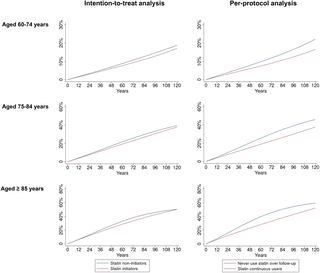
Recent evidence challenges traditional age-based hesitations regarding statin therapy. Data now suggest that **personalized risk assessments**, which account for **frailty, comorbidities, and patient preferences**, are essential—particularly for adults aged 80 and above. Clinicians are increasingly adopting **individualized decision-making**, moving **beyond rigid age cutoffs**, to **safely reduce cardiovascular events** even in the oldest populations. As highlighted by **Weill Cornell Medicine-Qatar**, this tailored approach **improves clinical outcomes** and **minimizes unnecessary medication exposure**.
## Therapeutic Innovations Supporting Early and Effective Intervention
The therapeutic landscape continues to evolve, offering new tools for **risk reduction** and **disease management**:
- **Statins** remain the cornerstone of lipid management, with extensive evidence confirming their **safety and efficacy**.
- **PCSK9 inhibitors**, **inclisiran** (a novel RNA interference therapy), and **bempedoic acid** now provide **potent LDL-C lowering options**, especially for patients who are **statin intolerant**.
- The emergence of **GLP-1 receptor agonists (GLP-1 RAs)**—originally developed for diabetes—has garnered prominence due to **their cardioprotective effects** and **cost advantages**.
### The Promise of Oral GLP-1 Receptor Agonists
A recent breakthrough is the development of **oral formulations of GLP-1 RAs**, which could **reduce treatment costs** and **improve patient access**. An influential article titled **"Oral GLP-1 Pipeline Signals Potential Cost Declines"** discusses how these oral therapies might **disrupt current injectable regimens**. Policy discussions, especially around **Medicare coverage and reimbursement**, suggest that **broader availability** will foster **more equitable access**, expanding the reach of effective cardiometabolic therapeutics.
### Updated Guidelines and Practice
The **2025 Brazilian Dyslipidemia Guidelines** now endorse **early combination therapies** to **rapidly achieve LDL-C targets**, particularly among **high- and very high-risk groups**, aligning with a **lifespan prevention paradigm**. Similarly, the **2026 American guidelines** reinforce **risk assessment beginning early in life** and emphasize **personalized, lifelong management** to **prevent overt disease**.
### Personalizing Pharmacotherapy
In addition to expanding lipid-lowering options, **personalized antiplatelet strategies**—guided by **genetic testing** and individual response profiles—are gaining traction. This approach aims to **optimize therapy** and **minimize bleeding risks**. The shift involves **balancing benefits and risks in older adults**, favoring **individualized, rather than age-based, decisions**.
## Beyond BMI: The Nuanced Role of Metabolic and Genetic Risk Factors
Our understanding of obesity and its cardiovascular implications has become more refined:
- **BMI** remains a useful marker but is now complemented by assessments of **metabolic health**, including **insulin sensitivity**, **lipid profiles**, and **inflammatory markers**.
- The concept of **metabolically healthy obesity** underscores that **not all obese individuals share the same risk**, emphasizing **personalized risk stratification**.
- A landmark study titled **"High Lipoprotein(a) and High BMI Jointly Confer the Highest Risk of ASCVD"** demonstrates that individuals with **both elevated Lp(a)**—a genetically inherited lipoprotein—and **high BMI** face **disproportionately high cardiovascular risk**. This finding underscores the importance of **expanded screening** and **targeted interventions** in these high-risk groups.
- The **"CHG (Cholesterol, HDL, Glucose) index"** is gaining recognition as a **valuable metabolic marker** for predicting adverse outcomes after myocardial infarction, enabling **more refined, individualized post-event management**.
## The Critical Role of Lifestyle, Oral Health, and Public Health Measures
Preventive efforts remain rooted in **behavioral and environmental modifications**:
- **Diet**: Emphasizing **plant-based, minimally processed foods** reduces risk; caution is advised with fad diets like ketogenic approaches, which may induce **dyslipidemia**.
- **Physical activity**: As detailed in **"Relationship Between Physical Activity Frequency and Cardiovascular Risk Throughout the Life Cycle"**, lifelong **regular exercise** is vital for **vascular health**, **metabolic regulation**, and **blood pressure control**.
- **Smoking cessation** and **moderate alcohol consumption** remain foundational.
- **Nutritional sufficiency**, including **vitamin D levels**, correlates with **less severe coronary artery disease**. Routine **nutritional assessments** and **appropriate supplementation** are increasingly recommended.
- **Oral health** is gaining recognition as a **systemic inflammation contributor**. Maintaining **good oral hygiene** and **regular dental care** helps combat **periodontal disease**, which is linked to **systemic inflammation** and **atherosclerosis**.
### Public Health and Policy Momentum
Recent legislative efforts highlight the importance of **systemic approaches**:
- The U.S. Congress has introduced bipartisan legislation aimed at **improving disease management and prevention**. As reported in **"Senators Collins, Peters Introduce Bipartisan Bill to Improve Disease Management and Prevention"**, this bill seeks to **expand access to preventive services**, **enhance funding for public health initiatives**, and **support innovative care models**. Such policy measures are crucial in **scaling up effective interventions** and **reducing disparities**.
## Advances in Secondary Prevention and Acute Care
Progress continues in **secondary prevention**:
- The use of **cost-effective GLP-1 RAs** can **reduce recurrent cardiovascular events**.
- **Early invasive strategies**, such as **prompt coronary angiography** in **acute coronary syndrome (ACS)**, improve survival.
- The expansion of **antiplatelet therapy options**, guided by **genetic and response profiling**, enables **personalized prevention**.
- For **stroke survivors**, comprehensive secondary prevention—targeting **blood pressure**, **lipids**, and **lifestyle**—remains essential to prevent recurrence.
### Precision Pharmacology in Antiplatelet Therapy
The **"Clinical pharmacology of antiplatelet drugs"** underscores the importance of **genetic factors** and **individual responses**. Advances in **pharmacogenomics** facilitate **tailored antiplatelet regimens**, optimizing **efficacy** and **reducing bleeding risks**.
## Methodological and Public Health Considerations
Recent discussions focus on **defining the smallest worthwhile difference in cardiovascular risk**, which influences **clinical guidelines** and **policy decisions**. The article **"What is the Smallest Worthwhile Difference in Cardiovascular Risk?"** emphasizes that establishing appropriate thresholds is crucial for **effective decision-making**.
Efforts targeting **type 2 diabetes** and **overweight** at the population level—through **public health strategies** and **individual interventions**—are increasingly recognized as **key to long-term risk reduction**. As highlighted in **BMJ Open**, **integrated societal approaches** can significantly **reduce the cardiovascular burden**.
## Current Status and Future Directions
The landscape of cardiovascular prevention is characterized by **rapid innovation and integration**:
- Incorporation of **genetic risk factors**, such as **Lp(a)**, into routine screening.
- Development of **imaging-guided therapies**, like **CTCA-guided statin therapy**, which **personalizes treatment** based on **detectable coronary atheroma**.
- Expansion of **digital health tools**, including **chat-based clinics** and **mobile health platforms**, demonstrating **improved engagement** and **adherence** among high-risk populations.
- **Regulatory and reimbursement changes**—such as the recent bipartisan bill in the U.S.—are expected to **enhance coverage and access**, enabling broader implementation of these advances.
### Notable New Developments
- **CTCA-guided statin therapy** is gaining traction; recent studies show that **detecting coronary atheroma via CTCA** can **inform personalized treatment** and **improve LDL-C management**.
- Integration of **cardiac biomarkers**, like **high-sensitivity troponins** and **Lp(a)**, into **risk prediction models** enhances **early detection** of high-risk individuals who might be **masked by traditional factors**.
- The proliferation of **digital clinics** and **chat-based health interventions** has shown promising results in **patient engagement** and **adherence**, supporting scalable and equitable preventive strategies.
## Conclusion
The future of cardiovascular prevention is increasingly **personalized, proactive, and holistic**. The integration of **genetic insights**, **innovative therapeutics**, and **social determinants** into practice promises **longer, healthier lives**. The development of **oral GLP-1 RAs**, **next-generation lipid-lowering agents**, and **imaging-guided therapies** broadens our toolkit, while a renewed focus on **early detection**, **lifestyle modifications**, and **public health policies** remains vital.
**Current legislative momentum**, exemplified by recent bipartisan bills aimed at **improving disease management and prevention**, signals a supportive environment for **scaling effective interventions**. Emphasizing **lifelong, equitable prevention**—from childhood through old age—is essential to **reduce the global cardiovascular burden**.
As these innovations and policies unfold, embracing **individualized care** and **public health integration** will be key to achieving **a future where heart health is accessible, personalized, and sustainable**. The commitment to this comprehensive approach is essential in **saving lives, reducing disparities, and enhancing quality of life worldwide**.
---
### **Key Points Summary:**
- **Lifespan, personalized prevention** begins early, incorporating **biomarkers (Lp[a])**, **imaging (CTCA)**, and **metabolic profiling**.
- **Therapeutic innovations**, including **PCSK9 inhibitors**, **inclisiran**, **bempedoic acid**, and **oral GLP-1 RAs**, enhance access and efficacy.
- **Risk stratification** now leverages **biomarkers** and **genetic testing** for more precise interventions.
- **Public health policies**, including recent bipartisan legislation, aim to **expand coverage and implement population-level strategies**.
- **Digital health tools** and **patient engagement platforms** support scalable, equitable prevention.
- Emerging evidence supports **imaging-guided therapies** and **integrated risk prediction models** for better individual risk management.
**The landscape is shifting toward a future where **personalized, lifelong cardiovascular prevention** is an attainable goal—saving lives and improving health outcomes globally.**