# Advancing Primary and Secondary Ischemic Stroke Prevention in Elderly with Frailty: Embracing Personalization, New Evidence, and Innovative Strategies
As the global demographic shift accelerates, the challenge of preventing ischemic strokes among elderly populations—particularly those characterized by frailty—has become increasingly complex. Frailty, defined by diminished physiological reserve, increased vulnerability, and functional decline, profoundly influences both the risk profile and the tolerability of preventive interventions. Recent advances in clinical research, guideline updates, and expert consensus emphasize a shift toward **personalized, dynamic, and multidisciplinary approaches** that incorporate frailty assessments, novel biomarkers, and shared decision-making to optimize outcomes for this vulnerable cohort.
---
## The Critical Role of Frailty in Stroke Prevention
**Frailty fundamentally alters the calculus of stroke prevention.** Elderly patients with frailty often respond differently to standard therapies, exhibiting heightened risks of adverse effects—such as bleeding complications from antithrombotic medications—and generally experiencing poorer prognoses. Recognizing this, clinicians are increasingly integrating **validated frailty assessment tools**—like the **Clinical Frailty Scale (CFS)**—into routine evaluations to facilitate:
- **Identification of high-risk individuals** who may not tolerate aggressive therapies
- **Personalization of interventions** based on functional capacity, comorbidities, and overall health status
- **Enhanced risk stratification** beyond traditional metrics like age or blood pressure
Recent studies underscore that **frail elderly patients often derive less benefit** from standard preventive therapies and may face increased harms, prompting a paradigm shift toward **more cautious, individualized strategies** that carefully balance potential benefits against harms—particularly bleeding risks associated with antithrombotic agents.
---
## Evolving Strategies for Primary and Secondary Prevention
Designing effective stroke prevention pathways in frail elderly populations requires **multidisciplinary, flexible, and patient-centered frameworks**. These encompass lifestyle modifications, pharmacological interventions, supportive services, and rehabilitative care—**all tailored to the individual's health profile**.
### Lifestyle Modifications with a Frailty-Informed Approach
- Core risk factors such as **hypertension**, **dyslipidemia**, **smoking**, and **physical inactivity** remain central.
- Interventions are adapted to functional limitations; for example, **low-impact or chair-based exercises** are recommended for mobility-impaired individuals.
- **Nutritional support** plays a vital role, addressing malnutrition linked to increased cardiovascular and stroke risk through dietary counseling and supplementation when necessary.
### Pharmacotherapy: Caution and Personalization
Recent guidelines and expert opinions advocate for **more cautious, individualized pharmacological strategies**:
- **Aspirin in primary prevention** has come under increased scrutiny. The **BMJ** emphasizes that *"if the initial indication for aspirin is unclear, consider stopping it,"* highlighting the elevated bleeding risks, especially in frail seniors.
- **Anticoagulation in atrial fibrillation (AF)** requires **meticulous evaluation** of **benefits versus bleeding risks**, considering comorbidities, life expectancy, and patient preferences.
- **Lipid management** now favors **early, aggressive LDL-C reduction**, employing **statins**, **combination therapies**, and **PCSK9 inhibitors**. The **SANTORINI trial** demonstrates that **early LDL-C lowering** correlates with **reduced recurrent events**, emphasizing timely intervention.
### Use of Validated Risk Scores and Emerging Biomarkers
- **Risk stratification tools**, such as the **PREVENT risk score**, have been **externally validated** across diverse populations, providing a more precise identification of high-risk patients who may benefit from targeted therapies.
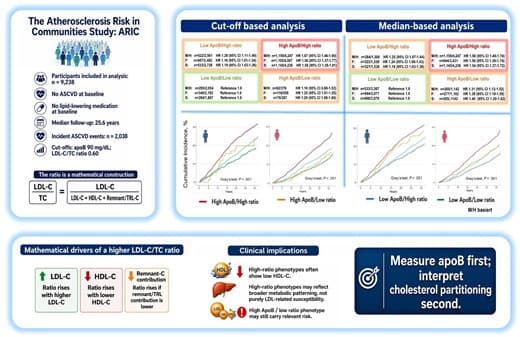
- **Emerging biomarkers**, notably **Lipoprotein(a) [Lp(a)]**, are gaining prominence. Elevated Lp(a) levels are associated with increased cardiovascular risk; when combined with **high BMI**, it indicates an especially high ASCVD risk. Incorporating these biomarkers into risk assessments supports **more aggressive lipid-lowering strategies**—including **PCSK9 inhibitors** or **lipoprotein apheresis**—for high-risk elderly individuals.
### Incorporating Cardiac Biomarkers into Risk Stratification
A recent advancement involves **integrating cardiac biomarkers into the AHA PREVENT equations**, which **improves the identification of high-risk individuals** who may be overlooked by traditional factors. This approach recognizes that some patients—particularly frail elders—may have **subclinical disease** unrecognized by standard assessments, and **biomarker-enhanced models** can facilitate **more targeted prevention efforts**.
### Supportive, Rehabilitative, and Psychosocial Interventions
- Addressing **nutritional needs**, **mental health**, and **social support** enhances resilience, reduces recurrence, and improves overall quality of life.
- **Rehabilitation programs**, tailored for frail elderly—such as physical therapy, occupational therapy, and social engagement initiatives—are essential components of comprehensive stroke prevention.
### Shared Decision-Making and Dynamic Reassessment
- **Engaging patients and caregivers** ensures that treatments align with individual values, prognosis, and preferences.
- **Regular reassessment** of frailty, functional status, and goals of care allows for **flexible, timely adjustments**, acknowledging that health status evolves over time.
---
## Incorporating New Evidence and Guidelines
Recent publications and studies reinforce and expand upon prior knowledge:
- The **NEJM** underscores that **managing modifiable risk factors**—like hypertension, dyslipidemia, and diabetes—is central to **secondary stroke prevention**, advocating for **comprehensive, individualized approaches** that carefully weigh benefits and harms, especially in frail elderly patients.
- **Aggressive lipid-lowering strategies**—such as early initiation of **statins**, **combination therapies**, and **PCSK9 inhibitors**—are supported by evidence like the **SANTORINI trial**, demonstrating **reduced recurrent stroke risk**.
- A **new focus involves testing and considering elevated Lp(a)** levels. Despite some clinician hesitancy, elevated **Lp(a)** is a strong marker of cardiovascular risk; targeted therapies like **PCSK9 inhibitors** and **lipoprotein apheresis** have shown promise in high-risk cohorts, including the elderly.
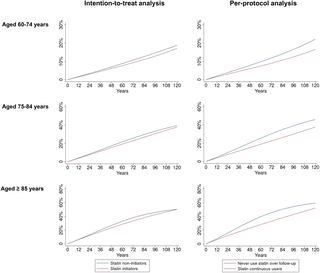
- The **Weill Cornell Medicine-Qatar (WCM-Q)** collaborative publication calls for **re-evaluating statin guidelines** in older adults, emphasizing that **treatment should be personalized** and that **benefits must outweigh potential harms**—noting that **statins are effective in secondary prevention** but require case-by-case judgment in frail individuals.
### Reinforcing the Role of Statins
Long-term data on **atorvastatin** support its **durable benefits** when initiated early and maintained, but safety considerations in frail elders necessitate **individualized decision-making**. The emphasis is on **personalized lipid management**, balancing **clinical benefits** with **patient tolerance**.
### The "Smallest Worthwhile Difference" in Risk Reduction
A vital ongoing debate concerns **what level of risk reduction is meaningful** to patients. The article **"What is the Smallest Worthwhile Difference in Cardiovascular Risk?"** highlights that:
> "Clinical benefits must be weighed against patient preferences, especially in frail populations where the minimal worthwhile benefit may differ from healthier cohorts."
This underscores the importance of **shared decision-making**, ensuring that **treatment goals** align with what patients value most—be it longevity, functional independence, or quality of life.
---
## Practical Implications and Current Status
The evolving landscape underscores several key points for clinicians:
- **Routine frailty screening** should be embedded in all risk assessments.
- **Prioritize patient-centered goals**, such as quality of life and functional independence.
- **Deprescribing** therapies like aspirin in primary prevention when harms outweigh benefits, especially in frail individuals.
- **Adopt multidisciplinary, flexible care pathways** that include rehabilitation and psychosocial support.
- Utilize **validated risk scores** and **emerging biomarkers** (e.g., Lp(a), cardiac biomarkers) for **precise risk stratification**.
- **Reassess regularly**—considering the dynamic nature of frailty—and **engage in shared decision-making** to tailor interventions.
---
## Key Recent Articles and Their Contributions
### 1. **Relationship Between Physical Activity Frequency and Cardiovascular Risk Throughout the Life Cycle**
This study emphasizes that **physical activity remains a cornerstone of prevention** at all ages. For frail elderly, **low-impact, regular activity**—such as chair-based exercises—can significantly reduce cardiovascular risk without undue strain, highlighting the importance of **personalized, feasible activity regimens**.
### 2. **Beyond Cholesterol Lowering: Clinical Caution, Personalization, and ...**
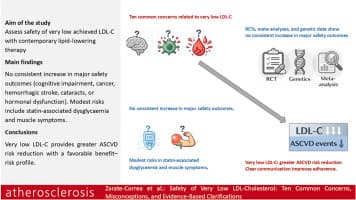
This publication advocates **caution in applying cholesterol-lowering therapies broadly**, emphasizing that **therapy decisions should be individualized**, especially in frail older adults. It stresses **clinical judgment**, **consideration of comorbidities**, and **patient preferences** to optimize safety and efficacy.
---
## Final Remarks
The future of **ischemic stroke prevention** in elderly patients with frailty hinges on **holistic, personalized care**. By **integrating frailty assessments**, employing **emerging biomarkers**, and fostering **shared decision-making**, clinicians can better balance **preventive benefits** with **potential harms**. Early, tailored interventions—including appropriate lifestyle modifications, **cautious pharmacotherapy**, and supportive services—are vital to reducing stroke incidence while **preserving quality of life and functional independence**.
As research continues to evolve, the emphasis remains on **flexibility, individualization, and patient-centered goals**, ensuring that prevention strategies are both effective and aligned with what matters most to each patient.