# 2026: A Landmark Year in Menopause-Related Skin and Hair Care—Innovations, Market Growth, and Holistic Strategies
The year 2026 has cemented its position as a transformative milestone in the realm of menopause-related dermatology and hair health. Building upon previous advancements, this year has witnessed groundbreaking scientific breakthroughs, an expanding market landscape, and a profound shift toward personalized, resilience-oriented care. Menopause is increasingly recognized not merely as a phase of decline but as a vital stage ripe for renewal, vitality, and tailored health optimization. This comprehensive movement encompasses clinical innovations, consumer-centric products, educational initiatives, and cutting-edge research—collectively elevating menopause management into a sophisticated, evidence-based domain.
## Industry Leadership and Market Dynamics: Galderma’s Strategic Influence
A defining hallmark of 2026 has been **Galderma’s prominent presence at IMCAS**, reaffirming its role as a pioneering leader in menopause-specific skin and hair solutions. Their recent survey illuminated **the unique dermatological concerns** faced by menopausal women—**breakouts, hair loss, crepey skin, and increased skin fragility**—which historically received limited targeted attention. By prioritizing **menopause-specific research and product development**, Galderma is shifting the narrative from traditional anti-aging to **evidence-based, tailored interventions** designed explicitly for women navigating hormonal transitions.
This leadership is catalyzing a **broader industry transformation**:
- **Clinical practices worldwide** are integrating menopause insights into dermatology protocols.
- **Product pipelines** are increasingly focusing on **barrier repair, hormonal influences, and tissue resilience**.
- **Market forecasts** project a **multi-billion-dollar industry**, driven by rising consumer awareness and demand for validated, menopause-centric therapies.
**Key drivers fueling this growth include**:
- **Growing awareness** among women about menopause-related skin and hair changes.
- The **demand for targeted therapies**, such as topical formulations, minimally invasive procedures, and injectables.
- **Increased R&D investments** from pharmaceutical and cosmetic sectors committed to developing menopause-specific solutions.
Complementing these scientific and clinical advances are **educational campaigns** aimed at normalizing menopause-related changes, thereby shifting societal perceptions from decline to opportunity. These initiatives empower women to adopt **proactive skincare and hair care routines**, fostering confidence and resilience during this transformative life stage.
## Scientific and Therapeutic Breakthroughs: From Hormonal Acne to Cutting-Edge Hair Loss Treatments
2026 has been marked by **remarkable advances** in diagnosing and treating menopause-associated skin and hair issues, with several therapies transitioning from experimental to routine clinical practice:
### Hormonal Acne: The Promise of Denifanstat
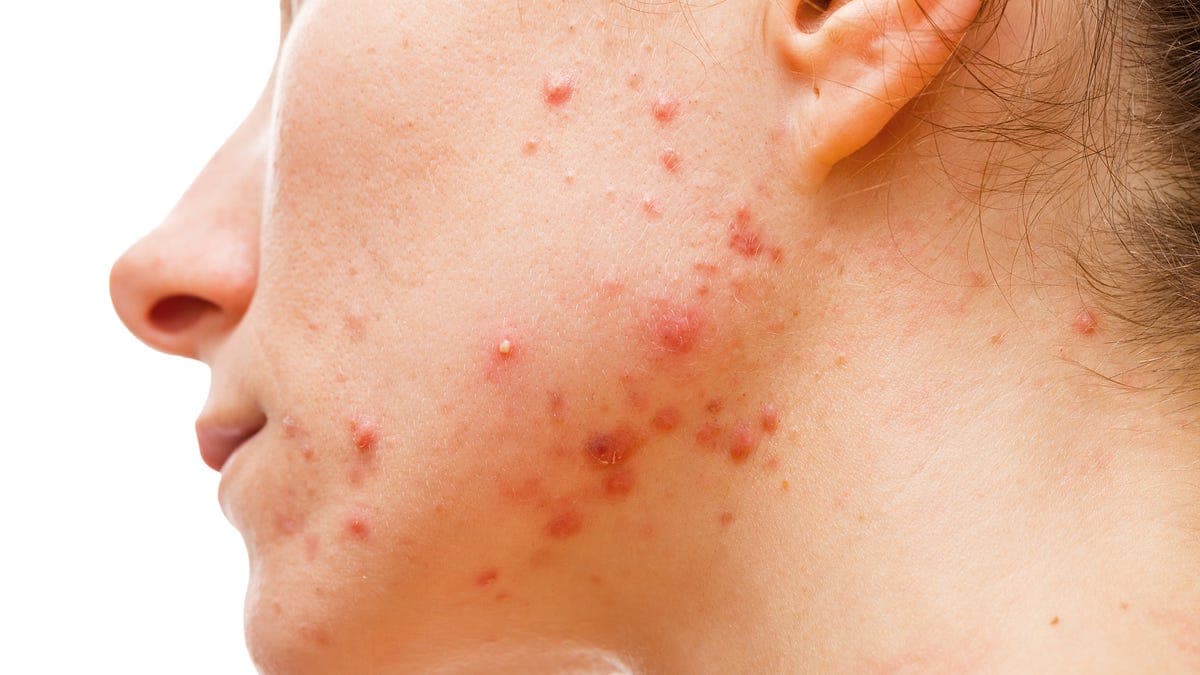
Sagimet and Ascletis announced **positive 52-week safety and efficacy results for denifanstat**, a novel systemic agent demonstrating **sustained improvements in adult hormonal acne**. Given that hormonal fluctuations during menopause often trigger persistent breakouts, denifanstat offers **a targeted, long-lasting systemic therapy** aligned with women’s broader health management. Its **mechanism involves precise endocrine regulation**, representing a significant shift from traditional treatments like antibiotics or broad-spectrum retinoids, which can have limitations or adverse effects. Dr. Doris Day emphasized, **"Targeted hormonal modulation is redefining how we approach menopausal skin issues."**
### Expanding the Arsenal Against Hair Loss
Hair thinning remains a pervasive concern during menopause, but **multiple innovative therapies are emerging**:
- **PRP (Platelet-Rich Plasma)** therapy continues to demonstrate promising results, especially for early-to-moderate androgenic alopecia, appreciated for its **natural approach and minimal adverse effects**.
- **Low-dose Dutasteride (0.1 mg)** is gaining popularity in markets such as Japan, offering **favorable efficacy-to-safety profiles** for women with thinning hair.
- **Botanical options**, notably **saw palmetto (Serenoa repens) extract**, are supported by recent research like **"The Safety and Efficacy of a Novel Saw Palmetto (Serenoa repens) Extract,"** which reports positive effects on hair growth with good tolerability.
- **JAK inhibitors**, including **upadacitinib**, are being explored for autoimmune hair loss conditions such as alopecia areata, with experts suggesting **JAK inhibitors should be standard of care** in these cases, marking a systemic and targeted therapeutic paradigm shift.
### Regenerative and Device-Based Innovations
Research continues to emphasize **peptides, exosomes, and regenerative therapies** aimed at stimulating collagen synthesis and repairing skin and hair follicle damage:
- **Exosomes** are emerging as **next-generation regenerative tools**, delivering growth factors and signaling molecules that promote tissue renewal, enhance skin elasticity, and support hair follicle health.
- **GLP-1 receptor agonists**, initially developed for metabolic health, are being investigated for **skin rejuvenation and longevity pathways**, revealing an exciting intersection of metabolic and dermatological science.
- **Wearable light therapy hats** are gaining attention for their ability to **suppress hair loss markers by up to 92%**, providing a **non-invasive, user-friendly adjunct** for hair health. Developed by Korean scientists, these devices are poised to revolutionize non-invasive hair loss management.
## Restoring Barrier Function and Managing Menopause Symptoms
As declining estrogen levels lead to **drier, more fragile skin prone to irritation**, the focus has shifted toward **restoring and maintaining skin barrier integrity**:
- **Ceramides** are now recognized as essential lipids that **enhance hydration** and **protect against environmental stressors**.
- **Peptides and antioxidants** are incorporated into formulations to **stimulate collagen synthesis**, repair damage, and **bolster defenses against oxidative stress**.
- **Gentle skincare protocols** have become standard, emphasizing **avoiding harsh exfoliants and over-cleansing**, which are critical in preventing further barrier disruption.
A significant area of concern—**persistent itchy skin without rash**—has been extensively studied in **"Itchy Skin with No Rash: Causes Explained (Feb 2026)"**. Contributing factors include **xerosis, neural hypersensitivity, and hormonal fluctuations**, with management strategies focusing on **emollients, systemic therapies, and hormonal modulation**.
## Cross-Disciplinary Innovations and Protocol Optimization
Major conferences such as the **South Beach Symposium 2026** have highlighted **advances in clinical protocols**:
- **Energy-based device parameters** are being carefully optimized to **ensure safety and efficacy** on **fragile, hormonally sensitive skin**.
- **Botanical options**, like saw palmetto, continue to gain favor due to their **favorable safety profiles**.
- Thought leaders such as **Doris Day, MD**, emphasize a shift from merely reversing signs of aging toward **supporting fibroblast function and skin longevity** through **lifestyle modifications, regenerative therapies, and strategic filler use**. The goal is to **enhance skin resilience** rather than solely improve appearance.
### Systemic and Lifestyle Interventions
In addition to topical and procedural therapies, **systemic therapies and lifestyle medicine** are increasingly prominent:
- **Low-dose dutasteride (0.1 mg)** remains a popular option for androgenic hair loss.
- **Supplements and targeted nutrition** now play integral roles in comprehensive care plans. Resources like **"How to Improve Hair Health: A Dermatologist Explains Supplements + Lifestyle Medicine"** highlight the importance of diet, exercise, and holistic health strategies to **maintain skin and hair vitality**.
## Practical Guidance for Women Over 50
Empowering women with simple, evidence-based routines continues to be a priority:
- The **"The ONLY 3 Skincare Steps You Need Over 50 (Derm Approved)"** resource emphasizes:
- Using **gentle, pH-balanced cleansers** to safeguard the skin barrier.
- Incorporating **hydrating serums enriched with ceramides and peptides**.
- Applying **moisturizers that reinforce barrier function daily**, combined with **broad-spectrum SPF**.
These practical steps foster **confidence and resilience**, enabling women to actively support their skin health amidst hormonal fluctuations.
### Targeted Educational Content
Recent videos such as **"Thinning, Dry, Fragile Hair After 50? A Dermatologist Explains"** and **"Cherry Angiomas, Sensitive Skin & Shaving Tips"** provide tailored advice for common concerns, promoting **self-care empowerment** and dispelling myths around menopause-related skin and hair changes.
## The Rise of Red Light Therapy and Its Role
A particularly transformative addition to non-invasive treatments is **red light therapy**, which has garnered significant attention:
- **How Red Light Works (and How to Double Your Skin Care Results)**—a detailed YouTube explainer—clarifies that **red light penetrates the skin**, stimulating **mitochondrial activity** to promote **collagen production, improved elasticity, and reduced inflammation**.
- **Photobiomodulation** through red light therapy enhances **cellular energy**, accelerating **skin renewal** and **complementing topical treatments**.
- Especially relevant for **menopause-related concerns** like **crepey, dull skin and fine lines**, red light therapy offers a **safe, non-invasive adjunct** that can **amplify regenerative outcomes**.
## Incorporating New Scientific Insights: Finasteride vs. Dutasteride
Recent articles like **"Should I switch from finasteride to dutasteride for hair loss?"** provide nuanced guidance:
- **Dutasteride** inhibits both **Type I and Type II 5-alpha-reductase enzymes**, leading to a **broader suppression of DHT**—a key factor in androgenic alopecia.
- **Finasteride** selectively inhibits **Type II**, which may be sufficient for some but less effective in others.
- For women experiencing persistent hair loss, especially when finasteride yields limited results, **switching to dutasteride** might offer **enhanced efficacy**, but with careful monitoring due to its **potent DHT suppression**.
- **Consultation with a knowledgeable dermatologist** remains critical, considering potential side effects and individual health profiles.
## Distinguishing Evidence from Hype: Dermatologist vs. Influencer Skincare
Another critical development is the increasing need to **differentiate science-backed skincare from hype**, especially as consumer interest surges:
- The article **"Dermatologist vs Influencer Skincare: Hype or Science When It Comes to Effective Skincare?"** emphasizes that:
- **Dermatologists prioritize evidence-based formulations** and clinical validation.
- **Influencers** may promote products based on marketing rather than scientific efficacy.
- Consumers are encouraged to **seek guidance from qualified professionals** and **critically evaluate product claims**, particularly for sensitive, hormonally affected skin during menopause.
- This awareness helps avoid **hype-driven purchasing** and ensures women choose therapies that **truly support their skin and hair health**.
## New Focus: Persistent Facial Redness and Inflammatory Skin Disease Management
2026 also brought increased attention to **persistent facial redness**, especially in the context of menopausal vascular changes. **Erythematotelangiectatic rosacea (ETR)**—characterized by persistent redness, visible dilated blood vessels, and sensitivity—has been increasingly recognized as a common concern among menopausal women experiencing flushing and vascular instability.
**"Erythematotelangiectatic Rosacea (ETR): Persistent Redness Explained"** explores:
- How hormonal fluctuations exacerbate vascular fragility.
- The importance of **gentle skincare, avoiding triggers**, and **targeted vascular treatments** such as laser therapy.
- Emerging therapies focusing on **vascular stabilization** and **anti-inflammatory approaches** are now integral to managing this condition.
Further, **"Horizons in Advanced Practice Returns With Deep Dives Into Complex Inflammatory Skin Disease Management"** underscores the complexity of inflammatory skin disorders during menopause, emphasizing the need for **multimodal treatment strategies** that include **topical agents, systemic therapies, and advanced procedural options**. This approach aims to **reduce inflammation, restore skin barrier integrity, and improve overall skin resilience**.
## Current Status and Future Outlook
The developments of 2026 exemplify a **paradigm shift**: menopause is increasingly viewed through a lens of **resilience, personalized care, and systemic vitality**. The convergence of **scientific breakthroughs, innovative therapies, and educational outreach** elevates menopause management from mere symptom mitigation to **holistic health optimization**.
Looking ahead:
- **Validated menopause-specific products** will become more prevalent, targeting skin, hair, and systemic health.
- **Multimodal, personalized treatment protocols**—integrating pharmacological, regenerative, and device-based therapies—will become standard.
- **Refined clinical guidelines** will incorporate hormonal assessments, systemic health considerations, and individualized strategies to maximize resilience and longevity.
Supporting these trends are ongoing research efforts:
- **Standardized scalp surface area measurement (N1)** enhances diagnostic accuracy for hair loss, enabling **more precise monitoring and tailored treatments**.
- **Dermoscopy in radiation-induced alopecia (N2)** provides insights into **diagnostic markers and treatment responses**, improving management of hair loss caused by medical interventions.
## Implications and Final Thoughts
2026’s breakthroughs reflect a **transformative era**—where menopause is reframed as a period of **empowerment, resilience, and vitality**. Driven by **scientific innovation, clinical excellence, and women’s empowerment**, this year marks a milestone in redefining menopause management as a **holistic, personalized journey** toward longevity and well-being.
The integration of **validated therapies, non-invasive device innovations** like wearable red light hats, and **systemic health interventions** promises a future where women can **approach menopause not with resignation but with proactive confidence**. As research deepens, the goal remains clear: to support women in maintaining **skin and hair health, systemic vitality, and overall resilience**, ensuring menopause is celebrated as a new chapter of strength and renewal.
This evolving landscape underscores that menopause is no longer a decline but a **renaissance of health, vitality, and self-care**, heralding a future where **resilience and personalized medicine** set the standard for women’s wellness worldwide.