# Building, Choosing, and Powering Off-Grid Truck Campers for 2026: The Next Frontier of Sustainable Adventure
The landscape of off-grid truck camping in 2026 has undergone a remarkable transformation, driven by groundbreaking technological innovations, an increasing emphasis on environmental sustainability, and a community of adventurers eager to explore remote wilderness independently. No longer tethered to fossil fuel-dependent systems, today’s off-grid campers are primarily electric, highly efficient, and intelligently integrated—merging rugged durability with sophisticated energy management. This evolution is redefining outdoor exploration, making off-grid living more accessible, reliable, and eco-friendly than ever before.
## The Mainstream Shift Toward Electric and Sustainable Off-Grid Campers
Traditionally, off-grid campers relied on propane, gasoline, or diesel for power, heating, and hot water—methods proven reliable but increasingly scrutinized for their environmental footprint. As of 2026, **electric systems have become the new standard**, heralding a cleaner, quieter, and more efficient approach.
### The Rise of Fully Electric Truck Campers
Innovative models like the **Northstar GMAX600** exemplify this new paradigm, demonstrating the **feasibility and appeal** of electric off-grid setups. Key features include:
- **Electric Powertrains**: Operating silently with **zero emissions**, these powertrains require **less maintenance** and have **fewer moving parts** than traditional combustion engines.
- **Large Lithium-Ion Battery Systems**: Incorporating **2 to over 4 kWh** of lithium batteries, these systems capitalize on **lightweight design**, **deep-discharge capabilities**, and **high efficiency**, supporting **extended autonomous periods**.
- **Integrated Solar Power**: Solar panels are now **standard equipment**, providing **continuous energy augmentation** and ensuring **off-grid independence** even in the most remote locations.
- **Smart Electrical Management**: Advanced control systems—with **real-time monitoring**, **automated load prioritization**, and **predictive alerts**—enhance system reliability and ease of use.
**Benefits** of these advancements include **reduced noise pollution**, **lower environmental impact**, and **lower ongoing maintenance costs**. However, challenges such as **battery weight**, **charging logistics**, and **long-distance travel into areas with limited infrastructure** remain, requiring careful planning and innovative solutions.
### Breakthroughs in Power and Solar Technologies
Supporting the electrification wave are rapid advancements in energy infrastructure:
- **Enhanced Solar Sizing & Optimization**:
Solar arrays now range from **300–600W**, with high-end systems surpassing **1 kW**. The deployment of **MPPT (Maximum Power Point Tracking)** chargers boosts efficiency by **20–30%**, especially under variable sunlight conditions, maximizing energy harvest.
- **Smart Energy Management Systems**:
Devices like **Victron XS50s** facilitate **real-time energy monitoring**, **load balancing**, and **preventive alerts**, crucial for rugged terrains and unpredictable off-grid conditions.
- **Battery Technologies & 48V Architectures**:
Lithium-ion batteries with capacities **from 2 to over 4 kWh** are now standard. The adoption of **48V systems** offers **greater efficiency**, **simplified wiring**, and **scalability**, especially for larger or more complex setups.
### The Emergence of Flexible "Paper" Solar Panels
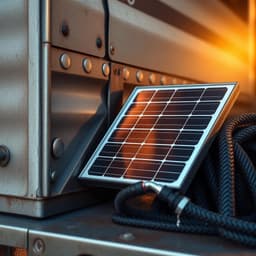
One of 2026’s most exciting innovations is the development of **ultra-thin, flexible "paper" solar panels**, also called **"sticker" modules**. These **lightweight, adaptable solar sheets** can be **adhered directly onto camper surfaces**, including roofs, windows, or portable frames:
> *"New Flexible Solar Panel 2026 🌞 Paper Solar Sticker for Home & Car | Solar Energy Explained"* emphasizes their **versatility and ease of installation**. Their **discreet aesthetic** and **quick deployment** make them ideal for **rapid setup** and **augmenting existing solar capacity**, especially in remote or challenging environments.
These panels **reduce barriers** to off-grid energy independence by enabling **quick, damage-resistant**, and **discreet power augmentation**—perfect for **temporary setups**, **on-the-fly repairs**, or **additional capacity** without extensive modifications.
## Vehicle and Build Choices in 2026
The shift toward electric power significantly influences **design and build choices** for off-grid campers:
- **Electric Trucks**:
Fully electric trucks equipped with **long-range, off-road-capable platforms** are increasingly available. These vehicles feature **large battery packs**, **off-road suspensions**, and **robust drivetrains**, serving as **integrated, sustainable living hubs**.
- **Electrified Vintage Vehicles**:
Classic trucks like the **Toyota Hilux** remain popular for **lithium battery conversions**, blending **rugged heritage** with **modern efficiency**. Enthusiasts showcase **creative electrification projects**, involving **precise measurements**, **vibration-resistant mounting**, and **weatherproofing**.
- **DIY & Expedition-Grade Builds**:
The **DIY community** continues to thrive, producing **custom, modular campers** emphasizing **durability**, **off-road resilience**, and **optimized interior layouts**. Recent builds such as the **"Hilux Ausbau 8"** demonstrate **advanced interior solutions**, **robust exterior mounting**, and **integrated power systems** designed for **long-term off-grid living**.
- **Exterior Power System Mounting & Upgrades**:
Proper securing of batteries, solar panels, and other components—using **vibration-resistant fixtures** and **reinforced mounting points**—is crucial in rugged terrains. Modern exterior-mounted lithium batteries now feature **weatherproof enclosures** and **shock-resistant mounting** to withstand extreme conditions.
### Recent Build Highlights and Practical Modifications
Recent content highlights **hands-on modifications** to optimize space and system integration:
- **"Creating a crawl through - DIY Camper build"**:
This 30-minute YouTube episode details **cutting into the cab** to create **crawl-through access**, enhancing **interior flow**, **ease of maintenance**, and **interior customization**—critical for **long-term off-grid setups**.
- **"Micro camper gets walls removed to match up for perfect fitment"**:
A nearly 2-minute clip demonstrates **precise interior adjustments** to **maximize space**, showcasing **structural flexibility** essential for fitting **large batteries**, **solar panels**, and other power components while maintaining **rigid durability**.
## Addressing Practical Challenges and Extreme Conditions
Operational reliability in extreme environments remains a top priority. Recent developments focus on mitigating issues like **moisture buildup**, **cold weather**, and **solar system failures**.
### Moisture Control and Ventilation
A recent video titled **"MOISTURE PROBLEMS IN A CAMPER // Truck camper life on the road"** underscores **moisture management** challenges in confined camper environments. Excess humidity can cause **mold**, **corrosion**, and **system failures**. Effective strategies include:
- Installing **ventilation systems** with **humidistat controls**.
- Using **moisture-resistant materials** for interior surfaces.
- Employing **dehumidifiers** suitable for 12V or 24V operation.
Proper moisture control **extends the lifespan** of electrical components and **improves habitability**, making long-term off-grid living more feasible.
### Cold Weather & Winterization
A detailed recent video, **"Freezing Cold Weather Changes EVERYTHING"** (29:47), explores how **sub-zero temperatures** impact **battery performance**, **solar efficiency**, and **plumbing systems**. Cold climates **reduce battery capacity**, **slow solar charging**, and pose **freeze risks**. Mitigation strategies involve:
- Using **cold-rated lithium batteries** designed for low temperatures.
- Installing **insulation wraps** around batteries, water lines, and tanks.
- Incorporating **electric or catalytic heaters** with **smart thermostats**.
- Ensuring **ventilation** to prevent condensation and corrosion.
### Solar System Failures in Desert Environments
A recent incident, **"Truck Camper Solar FAILED in the Utah Desert!"**, highlights **system vulnerabilities** under harsh conditions such as extreme heat, dust, and intense sunlight. To improve resilience:
- Opt for **high-temperature rated solar panels**.
- Use **vented enclosures** and **dust filters**.
- Install **over-temperature protection** and **regular cleaning routines**.
- Consider **shading** and **cooling solutions** to prevent overheating.
### Troubleshooting & Electrical Upgrades
As systems grow more complex, **diagnostic skills** are essential. Resources like **"My camper was set up for Solar. Let's install a solar charge controller."** and **"Truck Camper Upgrade: Battery + Lights + DC Charger"** provide practical guidance for:
- Installing **solar charge controllers** to optimize solar input.
- Upgrading **battery banks** for increased capacity.
- Adding **DC lighting** and **smart chargers** to enhance energy efficiency.
- Troubleshooting **power conversion** issues, ensuring **reliable operation** in remote environments.
## Latest Development Spotlight: The Silverado EV Foamie Camper
Among the latest innovations is the **DIY foam-core (PMF) camper build** in the **Silverado EV**, illustrating how electric vehicle platforms are increasingly tailored for off-grid living.
A detailed YouTube video titled **"DIY Foamie (PMF) Truck Camper In Silverado EV - Worth It?!?"** (23:30) showcases a **lightweight, modular camper** constructed using **foam core panels** and **advanced insulation techniques**. This approach offers several advantages:
- **Weight Reduction**: The foam-core panels significantly decrease overall camper weight, crucial for maintaining **long-range efficiency** in an EV-platform.
- **Customizable Interior**: Modular design allows for **easy reconfiguration** based on trip needs.
- **Compatibility with EV-specific adaptations**: The build demonstrates how **battery integration**, **thermal management**, and **electrical wiring** are tailored to **Silverado EV’s platform**, ensuring **safety** and **performance**.
This project exemplifies the trend toward **electric vehicle-based off-grid campers**, emphasizing **lightweight construction**, **innovative insulation**, and **system integration**.
## The 2021 Ford Ranger Overland Build with Super Pacific X1 Camper: Practical Overland Design
Adding to the current landscape is the recent **2021 Ford Ranger Overland Build** featuring the **Super Pacific X1 Camper**. This setup underscores **practical, overland-focused design considerations**:
- **Storage Solutions**: Optimized compartments for gear, tools, and essentials.
- **Power Systems**: Incorporation of **solar panels**, **lithium batteries**, and **DC-DC chargers** ensures reliable energy supply.
- **Heating & Insulation**: Use of **thermal management** to maintain comfort in diverse climates.
- **Sleeping Arrangements**: Compact yet comfortable setups tailored for extended trips.
This build exemplifies how traditional overland vehicles are integrating **electric and hybrid systems**, **modular storage**, and **off-grid power solutions** to enable **longer, more comfortable adventures** in remote environments.
## The Current Status and Future Outlook
Today, **electric drivetrains**, **advanced lithium batteries**, **flexible solar innovations**, and **smart energy management** are transforming off-grid truck camping from a rugged niche into a **sustainable lifestyle**. These developments:
- Enable **longer autonomous trips** with **lighter, more efficient systems**.
- Support **integrated vehicle-camper solutions** that **maximize space**, **durability**, and **power efficiency**.
- Expand **solar and charging infrastructure**, making **remote exploration** increasingly feasible.
- Continue to push **flexible solar technology**, reducing barriers and increasing versatility.
Looking ahead, the convergence of **electric vehicle advancements**, **modular materials**, and **intelligent energy systems** promises even greater capabilities. Innovations like **lightweight foam-core campers**, **integrated thermal management**, and **discreet, high-efficiency flexible solar panels** will make **long-term, reliable off-grid adventures** more accessible and environmentally responsible.
---
**In summary**, 2026 marks a pivotal year in the evolution of off-grid truck camping. The integration of **electric powertrains**, **next-gen lithium batteries**, **flexible solar solutions**, and **smart energy management systems** is elevating the experience—allowing explorers to venture farther, stay longer, and do so sustainably. These innovations empower a new generation of adventurers to **delve deeper into untouched nature**, **live comfortably off-grid**, and **reduce their ecological footprint**. As materials and technologies continue to develop, the future of off-grid trucking is poised to become **more resilient, adaptable, and eco-conscious**, opening a new frontier for sustainable adventure.
---
### **Current Implications**
The rapid advancements in off-grid vehicle technology and energy systems are democratizing long-term off-grid living, making it feasible for both DIY enthusiasts and professional manufacturers. As **EV platforms become more rugged and capable**, and **solar technology continues to evolve**, the barriers to remote exploration diminish, promising an exciting future where **sustainable, off-grid adventure** is accessible to all who seek it.