# Local Battles Over AI License Plate Surveillance Reach New Heights Amid Growing Concerns and Developments
The controversy over AI-driven license plate recognition (LPR) technology in the United States has entered a critical and multifaceted phase. What once seemed like isolated community protests or cautious policy adjustments has now evolved into widespread, and sometimes fierce, conflicts. Municipalities, residents, lawmakers, and industry actors are engaged in a tense debate over whether these digital surveillance systems truly serve public safety or threaten fundamental civil liberties. Recent high-profile actions—such as city contract terminations, legislative reforms, public activism, and revelations about federal data access—highlight a society grappling with how to balance security with privacy in an increasingly monitored world.
## Escalating Local Conflicts: Dismantling, Pausing, and Expanding Surveillance
### Communities Moving to Remove or Temporarily Halt Programs
A wave of municipalities has responded to mounting concerns by **dismantling, suspending, or reconsidering** their license plate recognition programs:
- **Mountain View, California:** Marking a significant turning point, the **City Council unanimously voted on February 24th to terminate its contract with Flock Safety**. This decisive move signals a broader shift away from existing surveillance contracts amid fears of **federal access** and **privacy violations**. The decision was driven by **public pressure**, **privacy advocates**, and **transparency demands**, illustrating how community activism can influence policy at high levels.
- **Springfield, Illinois:** On **February 3rd**, Springfield **removed all Flock Safety cameras**. While cost savings (~$77,000 annually) played a role, the primary motivation was **public outcry over privacy violations** and concerns over **federal and third-party access**. Citizens expressed fears about **who can access license plate data**, **how long it is stored**, and whether **federal agencies like FBI or ICE** could access this information without oversight.
- **Santa Clara County, California:** Leaders are **considering a reevaluation** of Flock deployments, citing **federal access concerns**. County officials debate **a partial ban** on Flock systems, fearing that **federal agencies** can **retrieve license plate data** without local approval, raising issues of **racial profiling** and **privacy breaches**.
- **Santa Cruz, California** and **Flagstaff, Arizona:** Both **voted to end or suspend** their programs, citing **privacy concerns** and **community mistrust**.
- **Bend, Oregon:** **Disabled its cameras** following public protests and activism.
- **Redmond, Washington:** **Discontinued** its program amid community demands for **greater transparency**.
- **Dunwoody, Georgia:** Announced a **pause** on renewing contracts until **more oversight and transparency** are established.
- **Lynnwood, Washington:** **Paused** its program to conduct a **comprehensive privacy review**.
- **Natick, Massachusetts:** The **Select Board rejected** proposals for pilot projects, citing **community mistrust** and **privacy issues**.
- **South Tucson, Arizona:** On **February 14th**, the **City Council voted 5-2** to **cancel all Flock contracts**, citing **privacy concerns** and **federal data sharing fears**.
- **Windsor, Connecticut:** The **Town Council** voted to **temporarily pause** license plate reading systems pending **further review**.
- **Seneca, Missouri:** The **Police Department** ended its **short-lived** contract with Flock amid **public opposition**.
- **Woodside, California:** Announced that their **contract with Flock ends in September**, with residents demanding **greater transparency**.
### Cities Continuing or Expanding Surveillance
Despite the pushback, some jurisdictions are **maintaining or expanding** their surveillance infrastructure:
- **Kirksville, Missouri:** Recently **approved additional Flock cameras**, emphasizing **crime prevention** and **traffic safety**.
- **Hardin County, Kentucky:** Announced a **multi-year plan** to **install 17 more cameras**, citing **public safety benefits**.
- **Woodland, California:** Extended its **contract with Flock**, citing **traffic management** and **law enforcement support**.
- **Liberty Township:** Will be adding **10 rear license plate readers** at an annual cost of about **$30,000**, aiming to **bolster law enforcement capabilities**.
- **Ogdens, Utah**, and **Goodyear, Arizona:** Both **expanded their surveillance systems** to enhance **crime detection**.
- **Appleton, Wisconsin:** Police officials report **safeguards are in place**, and **community oversight** continues.
- **Tampa, Florida:** The **City Council is considering** approval for **Flock-integrated speed cameras** in school zones, despite ongoing privacy concerns.
### Recent Trends: Delays, Contract Halts, and Acts of Vandalism
Heightened public apprehension has led some communities to **delay or halt** contract renewals:
- **Genesee County, Michigan:** Leaders are **waiting to renew** existing contracts, citing the need for **additional privacy safeguards** and **more community input**. The county manages about **30 cameras**, with **20 under current contracts**.
- **Montana, Oregon, Virginia:** Several regions are **reevaluating** their surveillance programs, with some **halting or delaying** contract renewals altogether.
Adding to the unrest, **acts of vandalism and physical destruction** of cameras have surged:
- **Communities from California to Massachusetts** have seen **cameras vandalized or destroyed**, reflecting **deep societal opposition** and acts of resistance. These incidents **disrupt law enforcement operations** and symbolize **growing societal pushback** against digital tracking.
## Key Developments and Their Significance
### Federal Agency Access and Privacy Concerns
A central issue fueling the controversy is **federal access** to license plate data:
- Disclosures reveal that **federal agencies such as the FBI and ICE** can **retrieve license plate information** from systems like Flock **without local approval or oversight**. This raises alarms over **overreach**, **racial profiling**, and the targeting of **immigrant and marginalized communities**.
- **Mountain View, California**, was among the first to **shut down its Flock cameras** after reports surfaced about **federal access**. Now, **many jurisdictions** are **reevaluating or withdrawing** systems for similar reasons.
### Industry Responses and Pullbacks
The **surveillance industry** is also responding to public pressure:
- **Ring**, owned by Amazon, **ended its partnership with Flock Safety** in a move driven by **privacy concerns** and **public backlash**:
> *"We have ended our partnership with Flock Safety. Our priority is to protect our customers’ privacy and ensure our security solutions are used responsibly."*
- Revelations about **Flock’s connections to the CIA and NSA** have **amplified fears** of **surveillance capitalism** and **potential intelligence operations**, fueling calls for **greater transparency** and **regulation**.
### Law Enforcement Advocates Emphasize Public Safety
Despite opposition, law enforcement agencies highlight **the utility** of license plate readers:
- Cases like the **arrest of a wanted suspect in Dover, Tennessee** demonstrate **public safety benefits**.
- Critics warn that **expanding surveillance** risks **racial profiling** and **overreach**, especially with **federal access** involved.
## Legislative and Policy Responses: Moving Towards Regulation
In reaction to the mounting concerns, several states and local governments are **pursuing legislative reforms**:
- **Washington State:** Enacted the **"License Plate Reader Reform Act,"** which **limits law enforcement’s use**, **restricts federal data sharing**, and **establishes community oversight**. Key provisions include:
- **Data retention limited to 30 days** unless justified.
- **Requiring local approval** for federal access.
- **Mandating public hearings** before deploying new systems.
- **Creating community oversight committees**.
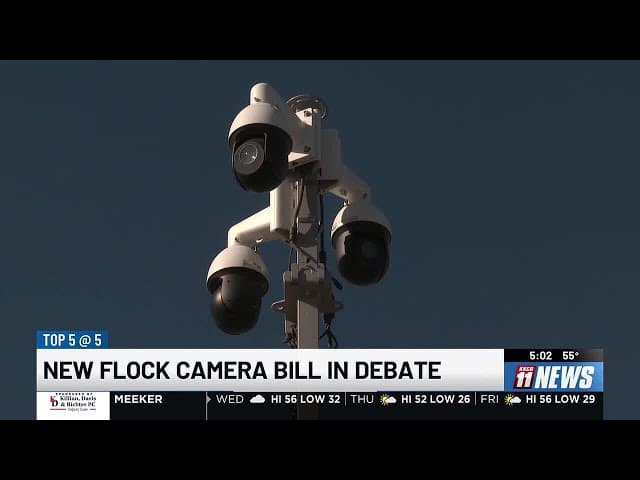
- **Colorado:** A **bipartisan bill** is progressing to **require warrants for license plate reader data**, marking a significant shift toward **privacy protections** at the state level. This legislation seeks to **restrict law enforcement’s ability to access and share license plate data** without proper legal procedures.
- **California, Massachusetts, and others:** Considering bills to **set stricter data retention limits**, **curtail federal access**, and **enhance oversight**.
- **Iowa, Texas, New York:** Advancing measures to **restrict data sharing**, **increase transparency**, and **protect civil liberties**.
### The Colorado Senate Bill
A notable recent development is the **Colorado Senate bill** which would **require law enforcement agencies to obtain warrants** before accessing license plate data collected via Flock or similar systems. The legislation reflects **growing bipartisan concern** over **privacy violations** and **federal overreach**, representing a **heightened legal barrier** to unchecked surveillance.
### Broader Regional Trends
Across the country, **more jurisdictions** are **reviewing or halting deployments**:
- The **City Council of Mountain View**'s decision to **terminate its ALPR contract** is emblematic of **local governments pushing back** against surveillance overreach.
- **Windsor, Connecticut**, and **Seneca, Missouri**, are **pausing or reevaluating** their programs amid **public mistrust**.
- Several regions are **delaying contract renewals** or **imposing stricter oversight** as part of **a broader movement** toward transparency and community involvement.
## Current Status and Implications
The landscape of AI license plate surveillance is **highly dynamic**:
- **Many communities are dismantling or suspending systems** due to **privacy fears** and **federal access concerns**.
- **Others continue or expand** their surveillance efforts, citing **public safety benefits**.
- **Legislative activity** is **accelerating**, especially in states like **Washington** and **Colorado**, where laws are **tightening restrictions** on data access, retention, and oversight.
- The **acts of vandalism** and **industry pullbacks** underscore **societal divisions** and **resistance** to digital surveillance.
**The overarching question remains**: **How can society balance the need for public safety with the protection of civil liberties?** The ongoing conflicts, legislative reforms, and community activism suggest that **a more nuanced approach**—centered on transparency, oversight, and legal protections—is emerging.
### **Looking Forward**
The coming months will likely see **continued activism**, **regulatory developments**, and **potential shifts** in how license plate recognition technology is deployed. Policymakers face the challenge of **crafting regulations** that **respect privacy rights** while **supporting law enforcement objectives**.
**Ultimately**, the debate over AI license plate surveillance is shaping up to be a defining issue in **the future of civil liberties and digital rights** in America. Society appears to be **actively defining its boundaries**—and the outcome will influence **privacy norms**, **law enforcement practices**, and **technological oversight** for years to come.