# Bay Area Recovery and Resilience: Advancing Permitting, Housing, Transit, and Civic Engagement in a Changing Region
The San Francisco Bay Area continues to demonstrate remarkable resilience amid a landscape marked by rapid transformation, persistent challenges, and innovative solutions. Recent developments reveal a region actively refining its land-use policies, unlocking stalled development, revitalizing downtown districts, strengthening transit infrastructure, and fostering civic engagement—all crucial elements shaping a more sustainable, inclusive, and resilient future.
## Modernizing Permitting and Land-Use Rules: Accelerating Development
A central pillar of the Bay Area’s revival is the ongoing effort to **streamline permitting processes** and facilitate **more flexible land use**. The success of **PermitSF**, a comprehensive digital permitting portal, has already begun to reduce delays, increase transparency, and attract investment. Building on this momentum, local jurisdictions are implementing targeted updates.
For instance, **San Bruno** is actively working on a **long-term plan to revise land-use rules**, aiming to make permits easier to obtain and support balanced growth. According to city officials, these updates will help **encourage development that aligns with community needs**, fostering resilience through adaptive reuse and smarter zoning.
In San Francisco, **proposals to cut transfer taxes**—a move championed by Mayor Daniel Lurie and Supervisor Bilal Mahmood—aim to **stimulate stalled housing projects**. By **reducing or eliminating transfer taxes** on certain property transactions, the city hopes to **create incentives for developers** and accelerate projects that have faced bureaucratic hurdles.
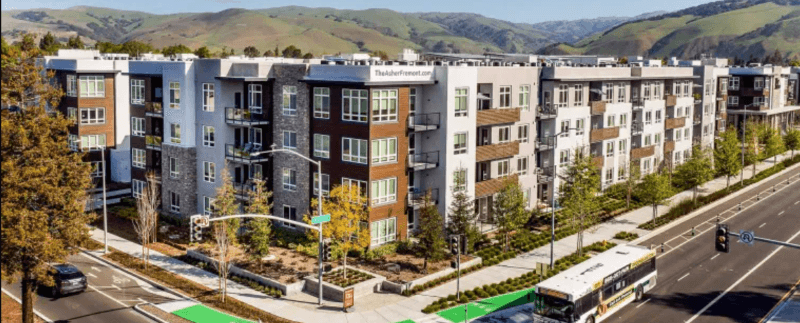
Further, the city is advancing initiatives like **Downtown Tax Incentive Districts**, which promote conversions of vacant office buildings into residential and mixed-use spaces. Notable examples include **West Oakland BART development**, which exemplifies transit-oriented growth designed to address housing shortages near transit hubs while fostering sustainable, dense urban environments. Nearby municipalities such as **Menlo Park** are exploring innovative land reuse strategies, including **transforming underutilized parking lots into housing**, aligning with regional goals for **compact and environmentally conscious growth**.
## Housing and Homelessness: Challenges and New Opportunities
The housing affordability crisis remains a defining issue. **San Francisco’s rent levels** are among the highest nationwide, with **Realtor.com® reporting 29 consecutive months of rent increases for 0-2 bedroom units**. This sustained trend exacerbates instability for residents and intensifies pressure on policymakers.
A recent critical development involves the **expiration of a federal housing subsidy program**, which affected over 900 families in San Francisco. As federal assistance ends, many vulnerable households face displacement, underscoring the urgency for **alternative solutions**. Initiatives like **Magnolia Plaza** and the **‘Doorways-to-Permanent Housing’** program are vital in providing pathways from emergency shelters to stable, long-term housing.
Amid these challenges, signs of positive change are emerging in the East Bay, particularly in **Pleasanton**, where **homeownership is on the rise**. Despite regional affordability pressures, many residents are finding opportunities for stability and investment, suggesting that **the dream of homeownership remains alive in parts of the Tri-Valley**. This trend indicates a potential shift toward **more balanced housing markets** and **greater regional equity**.
Community tensions persist, exemplified by **plans in Berkeley to evict disabled residents from the Harrison Corridor encampment**. Advocates emphasize the importance of **humane, community-centered approaches** that respect residents’ rights while addressing public safety and health concerns. Such debates highlight the need for **long-term, inclusive solutions** that balance immediate needs with sustainable growth.
## Downtown Revitalization and Cultural Placemaking
Federal and state investments continue to pour into downtown districts, with **over $33 million allocated for infrastructure, affordable housing, and environmental resilience projects**. These efforts are critical in **reactivating economic activity** and **restoring vibrancy** after pandemic-related setbacks.
Cultural placemaking initiatives are playing a vital role. For example, **Oakland Restaurant Week (March 12–22, 2026)** aims to **draw foot traffic**, **support local businesses**, and **celebrate culinary diversity**, fostering a lively, 24/7 downtown environment. Venues like **‘Amatka Cafe’ at the Lawrence Hall of Science**, showcasing Ohlone cuisine, exemplify efforts to **enrich the region’s cultural tapestry** and promote **inclusivity and shared identity**—key elements of resilient communities.
## Transit Infrastructure Under Strain: Risks and Responses
As the region’s population grows, **transit agencies face increasing vulnerabilities**. **BART has warned that without urgent upgrades**, service could be **reduced by up to 63% starting in January 2027**, risking severe disruptions to mobility and local economies.
Recent incidents underscore the fragility of transit infrastructure. Notably, a **transbay tube outage caused by an RV fire damaging communication cables** highlighted risks associated with encampments near critical systems. In response, BART has launched **targeted repairs** expected to **significantly reduce the approximately 34,000 delays experienced annually**. Additionally, **SF Bay Ferry has announced schedule adjustments starting March 9** to improve reliability.
Furthermore, there is a rising call to **link transit funding to housing policy**, including proposals to **allocate more resources based on local affordability and growth metrics**. This approach aims to **foster sustainable investment** and **ensure transit systems can serve an expanding, diverse population**, while preventing service cuts that could hinder downtown accessibility and regional mobility.
## Utility Governance and the Public Power Movement
A significant debate is unfolding around **utility governance and regional control**. Many San Francisco officials are advocating for a **split from PG&E**, citing concerns over **reliability, safety, and resilience**. Notably, **California State Senator Scott Wiener** has proposed legislation to **establish a public power utility** for the Bay Area, aiming to **improve response times**, **increase accountability**, and **bolster infrastructure investments**.
This push toward **public ownership of utilities** reflects widespread dissatisfaction with private providers, especially in the wake of recent wildfire and outage crises. The movement seeks to **enhance regional resilience** and **self-sufficiency**, ensuring that critical infrastructure can better withstand climate and safety challenges.
## Environmental Resilience and Equity Initiatives
Environmental projects are central to the region’s resilience agenda. Noteworthy among these is the **planned green buffer along I-880’s Frontage Road in West Oakland**, scheduled for installation in March 2026. This project aims to **mitigate freeway pollution**, **improve air quality**, and **address environmental justice concerns** affecting disproportionately impacted communities.
Additional initiatives include **urban flood mitigation efforts**, **reducing heat islands**, and **expanding green spaces**—all vital in adapting to climate change. **Urban solar canopy projects** are also gaining momentum, addressing budget constraints while advancing sustainability objectives.
## Civic Engagement and Policy Debates: Shaping the Future
Community participation remains a driving force behind policy evolution. Recent debates include **regulation of street vending**, with Redwood City’s city council reviewing ordinances designed to **support small businesses** while **managing concerns over noise, fire hazards, and unpermitted food sales**.
In immigration policy, **San Francisco has moved to ban ICE activity on city property**, with the **Board of Supervisors unanimously approving legislation** to prohibit federal immigration enforcement on city-owned land. This “ICE Free Zone” initiative underscores the city’s commitment to **protect immigrant communities** and **affirm sanctuary policies**.
Furthermore, local elections and community committees are shaping the region’s development. In **San Francisco’s District 2**, residents will decide on **tax measures, housing initiatives**, and **urban preservation efforts**. Initiatives like **recruitment of community members to advisory committees** ensure that **public voices influence policy implementation**, fostering transparency and trust.
The **YIMBY movement**, once a fierce advocate for housing expansion, faces setbacks amid political and economic headwinds. Policymakers are now pursuing **balanced, community-supported growth strategies** that aim to **meet housing needs without sacrificing neighborhood character**, advocating for **more sustainable and inclusive development**.
## Current Status and Future Outlook
The Bay Area stands at a critical juncture. The region’s **technological innovations**—such as PermitSF—combined with strategic investments in infrastructure and green projects, lay a solid foundation for sustainable growth. Yet, substantial challenges remain—**housing affordability**, **transit capacity**, **utility resilience**, and **public safety**—demand **coordinated, persistent efforts**.
Recent initiatives, including **Wiener’s bill for regional utility control**, underscore a regional movement toward **greater resilience and self-sufficiency**. Transit agencies are actively repairing infrastructure and adjusting schedules to **improve reliability**, while civic engagement continues to influence policy directions.
The future of the Bay Area hinges on **balancing growth with equity**, **leveraging community input**, and **prioritizing resilience**. The region’s ability to **adapt and collaborate** will determine whether it can realize its vision of a **sustainable, inclusive, and resilient urban landscape** for generations to come.