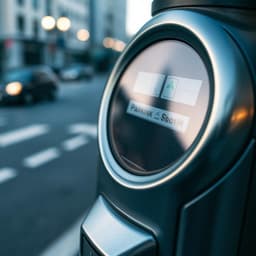
Cities and travel hubs worldwide continue to accelerate their transition toward fully digitalized parking systems, revolutionizing urban mobility with smarter access, seamless payments, and more effective enforcement. This ongoing evolution, driven by technological innovation, legislative adjustments, community engagement, and sustainability commitments, is shaping urban environments that are more efficient, equitable, and resilient.
## Continued Innovation in Parking Operations
Major airports, universities, and municipalities are deploying advanced digital platforms that significantly enhance user experience and operational efficiency:
- **Airports and Educational Institutions Leading the Way:**
- **Phoenix Sky Harbor International Airport** upgraded to **Portier's Unity5 platform**, integrating **smart guidance, real-time occupancy updates, and dynamic routing**. These features have notably **reduced vehicle queues during peak travel times**, a critical improvement as international travel rebounds post-pandemic.
- **Eastern Kentucky University (EKU)** expanded its **ParkZen** system to facilitate **digital bookings and real-time parking guidance** across its **600-acre campus**, easing congestion and enhancing safety.
- **Fort Smith Regional Airport, Arkansas** introduced an **automated parking system** that expedites entry and exit, **minimizing wait times** and boosting capacity for thousands of travelers annually.
- **Global Investment and Private Sector Innovations:**
- **Saudi Arabia** announced a **$400 million initiative** employing **real-time vehicle flow analytics** to combat urban congestion and optimize parking space utilization.
- **Qatar** expanded sensor networks to support **urban planning and public safety enforcement**, enabling **more proactive mobility management** based on extensive data collection.
- **Inrix** extended its **real-time parking data services** into **13 U.S. cities**, providing agencies with **valuable analytics on curb demand, enforcement, and compliance**.
- The **Peuka–ParkBee** partnership now manages over **1,600 locations** across Europe, supporting **cross-border mobility** and **digital permit interoperability**.
- **TKH Security** integrated **occupancy, enforcement, and security systems** in **Hollywood, Florida**, improving operational oversight.
- **Streetline** is deploying **AI-powered freight parking solutions** through collaborations, addressing **urban freight congestion** and fostering **innovative management strategies**.
## AI-Driven Enforcement and Legal Frameworks
Artificial Intelligence (AI) continues to revolutionize parking enforcement, boosting efficiency but also raising important privacy and cybersecurity concerns:
- **Predictive Analytics and Automated Devices:**
- **Los Angeles** employs **predictive analytics** to **dynamically optimize enforcement strategies** based on demand patterns.
- **Albuquerque** has introduced **AI “parking sticks”** that **detect violations** such as overstaying or illegal parking, **automatically issuing citations via mail**—a move that **reduces manual patrol costs**.
- **Pittsburgh** reports a **surge in citations and fines** with its **automated enforcement system**, issuing **hundreds of tickets daily**. While this demonstrates **enforcement efficiency**, it also underscores the importance of **transparency and fairness**.
- **Legal Developments and Privacy Concerns:**
- Legislation like **AB-2401** is progressing in various jurisdictions, **permitting video imaging** for parking violation enforcement and **facilitating data sharing** among agencies.
- As enforcement tools grow more sophisticated, **privacy and cybersecurity issues** are intensifying. Notably, the **ParkMobile data breach** impacted **21 million users**, highlighting the **urgent need for robust cybersecurity measures** to maintain public trust.
- **Innovative Enforcement Tools:**
- New **“safety sticks”** now **issue instant $30 tickets** for violations such as **standing longer than 90 seconds** or **illegal parking**—streamlining citation processes.
- **St. Paul, Minnesota**, exemplifies the benefits of **AI-enhanced enforcement**, reporting **reductions in violations and meter cheating**, illustrating how **high-tech solutions foster compliance**.
- Additionally, **Philadelphia** is pioneering the use of **AI-enabled trolleys** that **use cameras to catch illegal parking in trolley lanes and stops**, representing a novel approach to targeted enforcement.
## Payment Systems, Permits, and Equity
The shift toward **cashless and contactless payment systems** continues to be central, with increased focus on **equity and accessibility**:
- **Innovative Payment Options:**
- **Chennai, India**, adopted **FASTag**, a **unified toll and parking payment system** supporting **electric vehicles and multimodal transit**.
- **San José, California**, introduced **text-to-pay options** at on-street meters, simplifying transactions and improving accessibility.
- **Ensuring Inclusive Access:**
- Municipalities are deploying **offline kiosks** and **online permit portals** to bridge the digital divide:
- **Charlottesville, Virginia**, plans to **launch touchless payment kiosks by January 2026**, enabling residents with limited digital access to participate seamlessly.
- **Revere, Massachusetts**, will **mandate digital parking permits via an online portal starting March 1, 2026**, aiming to balance operational efficiency with inclusivity.
- **Institutional Permitting and Resident Programs:**
- **Duke University** transitioned its **campus parking system** to **T2 Systems**, improving permit sales, real-time space detection, and enforcement.
- **Oceanside, California**, introduced a **special annual permit for oversized vehicles**, supporting **overnight street parking for large work vehicles** and reducing illegal parking.
- **Monterey, California**, announced that **residential guest permits** expiring on **December 31, 2025**, will be **honored through April 30, 2026**, providing **additional flexibility** during ongoing digital upgrades.
- The **City of Monterey** now offers a **Resident Parking Program**, allowing residents to purchase **discounted parking passes** that prioritize local needs and better manage demand.
## Community Engagement and Emergency Management
Cities emphasize **community-centered rollout strategies** and leverage **digital tools during weather emergencies**:
- **Phased and Trust-Building Implementations:**
- **Fernandina Beach, Florida**, adopted a **“soft launch”** approach for **paid parking in Downtown Fernandina Beach**, easing residents’ and visitors’ adaptation.
- **Citation enforcement** was **initially delayed** to **build trust** and **prevent immediate penalties**.
- Local business owners, such as **Anna Martinez**, support this approach:
> “This gives us time to educate customers and avoid immediate penalties.”
> “It's a sensible approach that shows the city values its residents and visitors.”
- Such **community-focused strategies** foster **trust** and facilitate smoother transitions to digital systems.
- **Weather-Related Parking Management:**
- During recent **snow emergencies**, cities used **digital enforcement tools** and **real-time communication** to manage parking bans effectively:
- **Boston** declared a **snow emergency** with a **parking ban from 2:00 p.m.**, urging residents to **move vehicles**.
- **Providence** announced a **citywide parking ban** starting **February 22, 2026, at 10:00 p.m.**.
- **Springfield** and **Fall River** issued similar bans amid heavy snowfall, coordinating **snow removal efforts**.
- **Lansing, Michigan**, enforced **snow emergency rules**, while **Dearborn, Michigan**, issued over **500 citations**, some captured on viral videos, highlighting enforcement challenges.
- **Edmonton, Canada**, entered **phase two** of its **snow removal parking bans**, sharing updates via **YouTube**.
- These examples demonstrate how **digital enforcement, real-time communication**, and **public cooperation** are vital during **weather emergencies** to **maintain safety and operational efficiency**.
## Addressing App and Payment Confusion
Despite technological advances, **user experience issues** persist. A recent incident involving the **SEPA parking app** highlights this challenge:
- **Ticketing Despite Payment:**
- Commuters reported **being ticketed despite paying correctly via the SEPA app**. A **YouTube video** captured their frustration, exposing **confusion among users**—many believed they had paid, only to receive fines.
- This incident underscores the **critical importance of user-friendly interfaces, clear communication, and robust payment verification** processes to prevent eroding public trust and ensure compliance.
## Cybersecurity and Data Governance
As parking systems become more interconnected, **cybersecurity** remains a top priority:
- The **ParkMobile breach**, impacting **21 million users**, exemplifies the **risks associated with digital infrastructure**.
- Agencies and providers are adopting **enhanced cybersecurity protocols** to **protect vehicle location data, payment information, and enforcement records**.
- Ensuring **public confidence** hinges on **transparent data governance policies**, **privacy safeguards**, and **rapid response strategies** to potential breaches.
## Recent Developments in Local Parking Policies
Recent initiatives illustrate how cities are refining their strategies:
- **Palo Alto** has increased **RV parking enforcement**, prompting some residents to express dissatisfaction, as authorities seek more regional collaboration to balance needs.
- **San Diego** has funneled **parking funds into neighborhood repairs**, completing over **3,500 projects** since reallocating **$1.8 million**, exemplifying innovative funding models that support community development.
- **Lewes, Delaware**, faces ongoing challenges with **downtown parking crunches**, with local working groups considering solutions like **dynamic pricing** and **permit adjustments**.
- **Balboa Park in San Diego** will soon offer **more free parking for residents**, beginning **March 2**, with verified residents able to **pay through an online portal**—a move aimed at easing congestion and promoting local access.
## Policy and Sustainability: Moving Toward Greener Cities
Environmental considerations heavily influence parking policies:
- Cities are expanding **electric vehicle (EV) charging stations**, with over **20 new stations planned** across multiple regions to support sustainable transportation.
- Many communities are working to **eliminate parking minimums** in key districts by **2028**, encouraging **walkability, transit use, and reduced urban sprawl**.
- Some areas are **restricting large SUVs downtown** to **reduce emissions and congestion**, exemplified by residents reserving parking spots after snowstorms—highlighting demand management efforts.
- **Recent local policy shifts include:**
- **Kansas City, Missouri**, considering **eliminating downtown parking requirements** for new developments to **foster walkable, transit-friendly neighborhoods**.
- **Downtown Jackson, Michigan**, has updated its **parking regulations** to **streamline enforcement** and **better serve local businesses and residents**.
## Governance, Fairness, and Security
Legal and enforcement frameworks are evolving:
- **Ottawa’s crackdown** on **misused accessible parking permits** aims to **ensure fairness and compliance**.
- **Chicago’s recent ruling** over **overcharging parking fines** for residents underscores the importance of **transparency and accurate enforcement**.
- The **ParkMobile data breach** exemplifies the **cybersecurity vulnerabilities** inherent in interconnected systems, prompting calls for **robust safeguards**.
- Incidents of **payment confusion**, such as the **SEPA app ticketing mishap**, further emphasize the need for **user-centric design** and **clear communication**.
## **Implications and the Road Ahead**
The landscape of urban parking is rapidly transforming, blending **technological innovation** with **policy reform**, **community involvement**, and **sustainability goals**. While **digital systems** offer **greater efficiency, safety, and environmental benefits**, they also pose **challenges related to privacy, cybersecurity, and equitable access**. High-profile incidents like **data breaches** and **payment errors** highlight the importance of **trustworthy governance**.
As cities like **Kansas City** and **Jackson** pursue **demand-based pricing and reduced parking minimums**, the focus increasingly shifts toward **more livable, sustainable, and community-oriented urban spaces**. Maintaining **public trust**, ensuring **fairness**, and safeguarding **data security** will be paramount as the urban parking ecosystem continues its digital evolution.
**In conclusion**, the future of city parking lies in a balanced integration of **cutting-edge technology**, **transparent policies**, and **inclusive practices**—building smarter, safer, and more sustainable cities that serve the diverse needs of their residents and visitors alike.