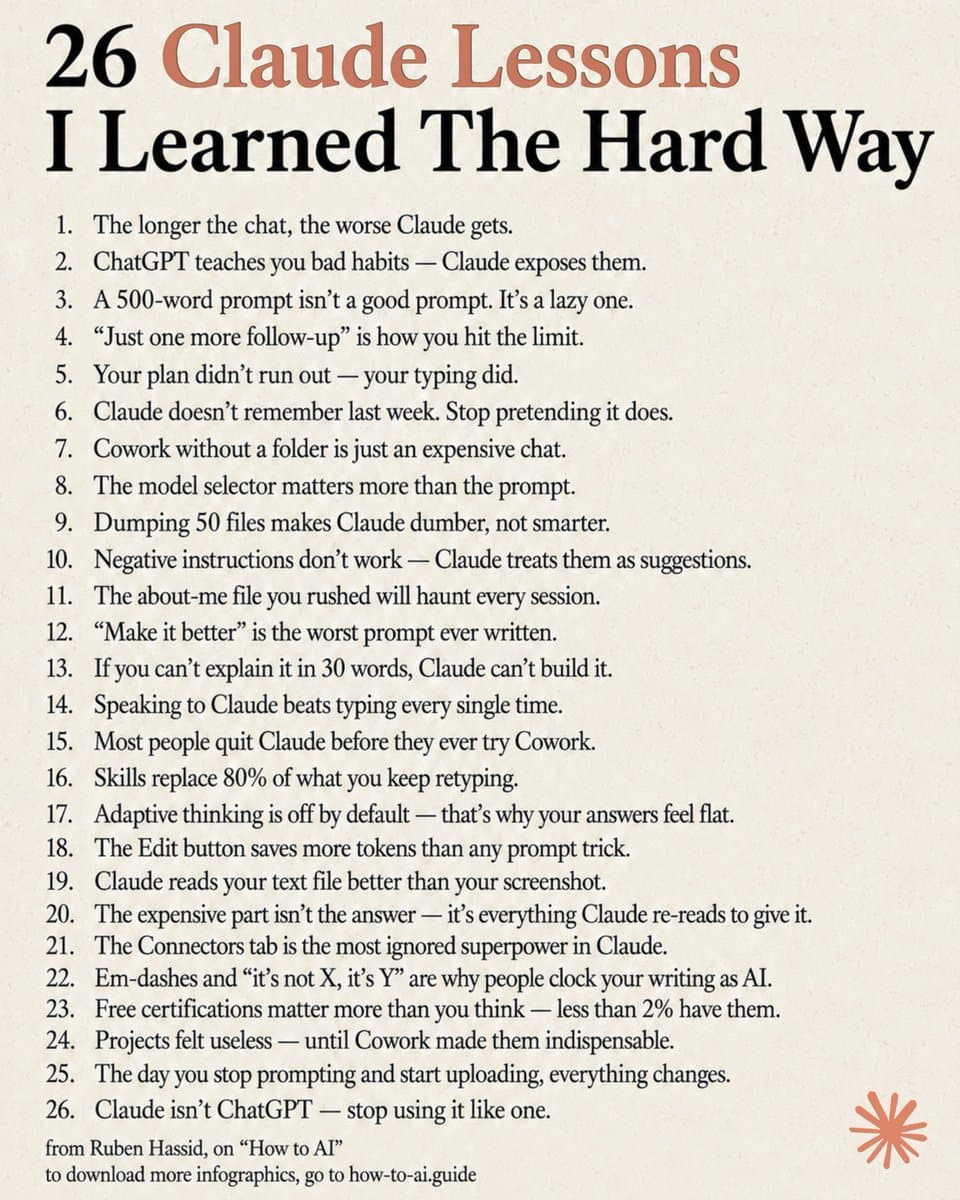
The landscape of AI-powered coding and automation continues to evolve rapidly in 2026, with a pronounced focus on **hands-on, privacy-first tools** that empower developers and knowledge workers to harness advanced AI capabilities locally. Building on prior breakthroughs in deploying commercial-grade AI copilots like Claude Code via Ollama, alongside open-source models such as Qwen3 and Llama 3, this year has seen significant strides in **simplifying setup, expanding control interfaces, and broadening access through curated aggregators and autonomous productivity apps**. These advances reinforce a clear trend: making AI coding and automation **practical, cost-free, and privacy-respecting**, while providing users full control on their personal hardware—even remotely.
---
### Simplified, Privacy-First Local Deployments with Expanded Mobile Control
One of the most impactful developments in AI-assisted coding is the **continued enhancement of local deployment workflows** for commercial-level AI copilots and open-source models:
- **Claude Code on Ollama** remains the flagship example, now easier than ever to deploy with a **single command and zero cost**, a process thoroughly demonstrated in a popular 12-minute walkthrough video earlier this year. This seamless setup ensures that developers can benefit from a powerful AI assistant without sending code to the cloud, thereby **safeguarding sensitive intellectual property and personal data**.
- Extending usability beyond desktops, the recently released open-source web interface **CloudCLI** (also known as Claude Code UI) enables users to **control Claude Code and similar CLI-based AI agents directly from their phones or remote devices**. This innovation addresses the growing need for **mobile and remote AI access**, allowing developers to maintain their workflows on the go while preserving local execution and data sovereignty.
- Open-source models such as **Qwen3** and **Llama 3** continue to gain traction, supported by vibrant community-driven guides that optimize their use for complex coding tasks—ranging from generation and debugging to advanced refactoring. These models benefit from the same accessibility and privacy benefits as commercial copilots but offer additional flexibility for customization and experimentation.
Collectively, these improvements emphasize a **local-first AI paradigm** that balances power, privacy, and user autonomy, appealing strongly to students, hobbyists, and professionals alike.
---
### Expansion of Agentic Productivity Tools and Accelerators for Knowledge Work
Beyond coding, AI automation tools are increasingly adopting **agentic capabilities**—that is, autonomous execution of multi-step tasks—transforming productivity for knowledge workers:
- **AIChecklist.io** exemplifies this new class of agentic productivity apps. Combining **voice commands, visual clipping, and autonomous AI agents** that proactively manage and complete tasks, AIChecklist.io embodies the “type it, say it, done” approach. This drastically reduces manual overhead in scheduling, meeting follow-ups, and document curation, freeing users to focus on higher-value activities.
- The AI research assistant **NotebookLM** has also gained attention for its ability to accelerate note-taking and document synthesis **up to 10 times faster**. By intelligently organizing, searching, and summarizing large volumes of information, NotebookLM streamlines workflows for researchers, students, and developers grappling with data overload.
These tools highlight the growing maturity of AI agents capable of **autonomous task management**, marking a shift from simple assistance to active execution within complex knowledge environments.
---
### Aggregators and Curated Free AI Toolkits Lower Barriers to Adoption
As AI tooling proliferates, discovery and curation become critical to effective use. This has spurred the emergence of aggregator platforms that **consolidate hundreds of free AI tools across domains**, dramatically reducing friction for newcomers and experts alike:
- One newly launched aggregator website curates **over 100 free AI utilities** spanning content generation, coding assistance, data analysis, SEO optimization, and more. By centralizing discovery, these platforms make it easier than ever to experiment with and integrate powerful AI capabilities without financial commitment.
- Complementing these broad aggregators, niche solutions like the **AI SEO Site Audit Tool** automate specialized workflows such as detailed website content audits, delivering AI-driven AEO/GEO scores to support marketing and development teams with minimal manual effort.
- Additionally, articles like **“10 Free AI Tools That Will Turbocharge Your Small Business (Without Spending a Dime)”** highlight practical, no-cost AI solutions tailored to entrepreneurs and small enterprises, emphasizing how democratized AI accelerates business innovation without budgetary constraints.
These curated collections underscore the democratizing potential of open AI ecosystems, making advanced automation accessible beyond large organizations or specialized research labs.
---
### Real-World Developer Insights: Balancing Automation, Accuracy, and Oversight
Hands-on experimentation with AI copilots and autonomous agents continues to reveal both promising capabilities and essential caveats:
- Developers have successfully demonstrated **end-to-end application development**, such as building full-featured Laravel point-of-sale (POS) systems powered by AI copilots and agentic workflows. These proofs of concept validate AI’s potential to drive complex software projects from inception through deployment.
- However, **reliability and precision remain key challenges**. Users report that **task-specific model selection is critical**—commercial assistants like Claude Code generally provide more polished and reliable outputs, while open-source models such as Qwen3 may require tuning, validation, and human oversight to meet production standards.
- The rise of autonomous agents executing multi-step tasks brings new risks of cascading errors. Consequently, robust **human-in-the-loop processes and error handling mechanisms** are indispensable. This necessity is fostering the growth of **agentic AI engineering** as a specialized discipline focused on designing AI systems capable of adaptive planning, execution, and fail-safe operation in complex workflows.
These insights emphasize that while AI is increasingly powerful, **human judgment remains essential** to ensure quality, correctness, and ethical use.
---
### Embracing a Hands-On, Privacy-Respecting AI Future with Broader Accessibility
The unifying theme of 2026’s AI coding and automation advancements is clear: **empower users with practical, privacy-conscious AI tools that run locally and integrate seamlessly into existing workflows**, while expanding accessibility through mobile control and rich curated resources.
- **Local deployment** continues to be prioritized for privacy, cost savings, and autonomy.
- **Mobile and remote interfaces** like CloudCLI address real-world use cases where developers need AI assistance beyond their primary workstations.
- **Agentic productivity apps** are evolving from passive assistants to active collaborators, autonomously driving task completion.
- **Aggregator platforms and curated free toolkits** lower barriers for experimentation and adoption across industries and skill levels.
This convergence is democratizing AI-powered coding and automation, moving beyond elite labs and enterprises to reach a diverse, global audience of creators, learners, and professionals.
---
### Looking Ahead: The Path to Seamless AI-Augmented Workflows
As we progress through 2026 and beyond, several trajectories are likely to shape the AI coding and automation ecosystem:
- Continued refinement of **local AI deployment tools** will push advanced copilots into the hands of everyday developers and learners with minimal friction.
- Autonomous agents will become more deeply embedded in daily workflows, intelligently reducing cognitive load and manual effort across domains.
- Curated toolkits and aggregators will specialize further, supporting niche industries and complex tasks with tailored AI utilities.
- The maturation of **agentic AI engineering** will ensure robust, reliable integration of autonomous AI within human workflows, balancing innovation with accountability.
Together, these trends herald a new era of **hands-on, user-empowered AI** that balances power, privacy, and accessibility—redefining software development, knowledge work, and productivity for a broad, inclusive audience.
---
### Key Resources and Examples
- **Use Claude Code for FREE with Ollama in 2026 (1 Command!)** — A concise video walkthrough demonstrating effortless local deployment of Claude Code
- **CloudCLI (Claude Code UI)** — Open-source web interface enabling remote and mobile control of CLI-based AI coding agents
- **AIChecklist.io** — Agentic task management app combining voice, visual clipping, and autonomous AI action
- **NotebookLM** — AI research assistant accelerating note management and document synthesis up to 10x
- **AI SEO Site Audit Tool** — Open-source AI automation for detailed website content audits
- **100+ Free AI Tools Aggregator** — Comprehensive curated platform lowering discovery barriers for AI utilities
- **10 Free AI Tools That Will Turbocharge Your Small Business** — Curated list of practical, no-cost AI solutions for entrepreneurs
These tools and insights mark pivotal milestones in the ongoing democratization and practical integration of AI-powered coding and automation—empowering users to innovate securely, efficiently, and independently.