# AI Governance in 2026: A Year of Global Efforts, Societal Reflection, and Market Turmoil
As 2026 unfolds, the landscape of artificial intelligence (AI) governance stands at a critical crossroads. Despite significant strides toward international cooperation, societal debates, and sector-specific regulations, persistent gaps, economic shocks, and ethical challenges threaten to undermine progress. This year has vividly illustrated that effective AI oversight demands not only shared standards but also robust enforcement, transparent practices, and a collective commitment to aligning AI development with societal values.
## Continued International Coordination: Progress and Persistent Gaps
A defining feature of 2026 has been relentless efforts to foster **global cooperation**. The **International AI Safety Report 2026**, produced by an influential advisory panel, emphasizes that **AI safety is a shared responsibility** requiring **harmonized safety standards**, **accountability frameworks**, and **public engagement** across nations. While these recommendations set an aspirational tone, experts warn that **regulatory enforcement lags behind technological innovation**.
The **AI Impact Summit in India** culminated in the **adoption of the *Global AI Declaration***, signed by the U.S., European Union, China, and several emerging economies. This declaration commits signatories to **upholding ethical principles**, **enhancing transparency**, and **mitigating societal risks** such as **disinformation**, **deepfakes**, and **cyber threats**—particularly those threatening **democratic resilience**. Significantly, the declaration underscores the importance of **including developing nations** to **prevent regulatory fragmentation** and ensure a truly inclusive governance framework.
### Recent developments include:
- The **International AI Safety Report 2026** advocates for **robust safety standards**, **public accountability**, and **inclusive participation**, asserting that **AI safety is a collective endeavor**.
- The **Global AI Declaration** emphasizes **inclusive governance**, urging **capacity-building efforts** in developing nations to **bridge regulatory gaps**.
- Cross-border initiatives are actively targeting **disinformation defense**, **cybersecurity**, and **civil liberties protection**, recognizing AI’s **inherently global societal influence**.
**However, critiques persist.** Many experts highlight that **enforcement capacity remains inadequate**, with numerous nations lacking the infrastructure or expertise to implement and uphold agreed standards. Without **strong institutional authority**, these international frameworks risk remaining **aspirational**, leaving room for **regulatory gaps** that could be exploited or ignored, potentially fostering uneven safety and ethical compliance worldwide.
## Societal and Economic Debates: Equity, Employment, and Environmental Costs
Public discourse continues to be vibrant and urgent, centering on **AI’s societal impacts**, particularly **equity**, **job security**, and **environmental sustainability**. The **"Welfare for All"** initiative, widely discussed across social media platforms like YouTube, advocates for **AI tools accessible globally** and **designed to serve marginalized communities**, positioning AI as a **catalyst for social uplift**.
Yet, voices such as **Senator Bernie Sanders** have raised serious alarms. In recent interviews, Sanders warned that **AI-driven automation could displace millions of jobs** if left unchecked, emphasizing that **without safeguards**, the proliferation of AI could **widen economic inequalities**, especially impacting **low-income and vulnerable populations**. This has intensified calls for **policy measures** like **job transition programs**, **public investments**, and **universal basic income (UBI)** proposals to **manage economic transitions** and **ensure inclusive growth**.
### Opportunities and Challenges:
- **Benefits** include **advances in healthcare**, **more efficient public services**, and **innovations across creative industries**.
- **Displacement concerns** underscore the **urgency of proactive policies** to **protect workers** and **maintain social stability** amid rapid technological change.
- There is **broad consensus** that **embedding social equity into AI development** is essential to **prevent societal fragmentation**.
### Environmental and Energy Concerns:
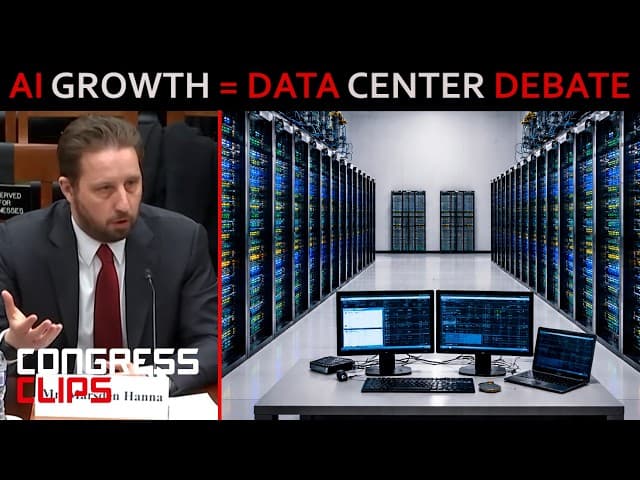
Amid these debates, industry figures like **Sam Altman**, CEO of OpenAI, faced criticism after drawing controversial comparisons between AI energy consumption and raising a child. Critics argue that **AI’s environmental footprint must be addressed proactively**, urging **greener AI practices** and **greater transparency** regarding **power demands**. Data indicates that **AI training and inference** are energy-intensive, prompting industry efforts toward **more efficient algorithms** and **use of renewable energy sources** to reduce carbon footprints.
## The Ethics Ecosystem Under Strain: Funding, Oversight, and Transparency
Despite rising awareness about AI ethics, **ethical oversight bodies** face mounting **limitations and pressures**. A recent report titled **"AI Ethics Faces Funding, Slop, and Influence Battles"** reveals that **ethics organizations** are often **overstretched**, grappling with **industry lobbying**, **government priorities**, and **biased funding**. These **capacity constraints** threaten to **undermine genuine accountability** and **public trust**.
Key issues include:
- The need for **mandatory transparency** regarding **AI capabilities**, **decision-making processes**, and **limitations**.
- **Legal debates** over **privacy and privilege**, especially as **AI-assisted communication tools** become widespread, raising concerns over **privacy violations** and their admissibility in legal contexts.
- The risk that **industry influence** and **funding biases** may lead to **superficial compliance**, rather than genuine oversight.
Advocates promoting **ethics-by-design**, integrating **ethical considerations during AI development**, face increasing scrutiny. Critics argue that **financial incentives** often **override ethical commitments**, underscoring the necessity for **independent oversight** and **transparent accountability mechanisms**.
## Practical Governance Measures: Content Moderation, Deepfakes, Sector Laws, and New Frontiers
Governments and private platforms have intensified their deployment of **technological defenses** against **malicious AI-generated content**. Major social media firms are enhancing **deepfake detection** and **disinformation classifiers** to **counter misinformation** and **safeguard democratic processes**.
However, these measures evoke **content moderation dilemmas**—striking a balance between **free expression** and **harm prevention**. Concerns about **algorithmic censorship** and **civil liberties** have led to calls for **transparent, rights-respecting moderation policies**.
### Notable recent actions:
- **South Korea** enacted **comprehensive AI safety laws** targeting **deepfake videos** and **scam schemes**, aiming to **curb malicious AI use**. A government official stated: “Our regulations seek to crack down on AI-driven misinformation and scams that threaten public safety.”
- **International collaborations** persist in **disinformation mitigation**, working toward **joint detection and takedown** of harmful AI content.
### Sector-specific legal developments:
- **Healthcare and legal sectors** face ongoing **liability and privacy challenges**. Clinicians and legal professionals remain **cautious** about fully trusting AI advice due to **liability fears** and **confidentiality concerns**.
- The **entertainment industry** is embroiled in **debates over AI-generated content**, especially **moral and cultural biases** embedded in algorithms. For instance, **Google DeepMind** announced initiatives to **embed moral frameworks** into AI, but **whose morality** is incorporated remains contentious. Critics warn that **cultural biases** risk being **reinforced and amplified**.
## Emerging Challenges: Cultural Bias, Moral Framing, and Objective Optimization
### Who Controls the Cultural and Moral Content?
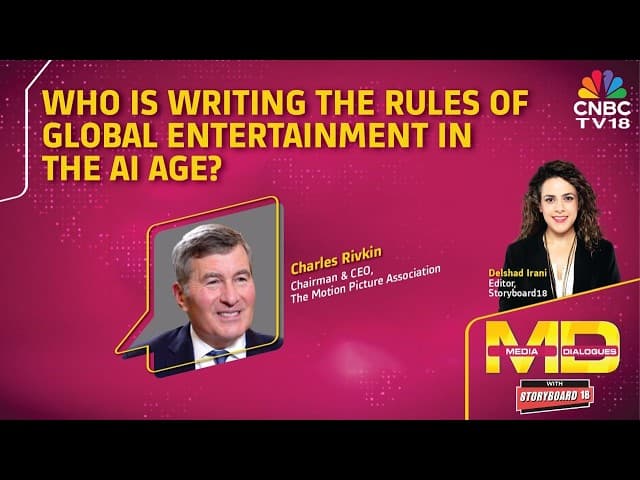
A growing concern is **who sets the cultural and moral standards** embedded in AI used in **entertainment and media**. An influential YouTube documentary titled **"Who Is Writing The Rules Of Global Entertainment In The AI Age?"** explores how **algorithmic curation** shapes **public narratives**, potentially **homogenizing cultures** or **embedding biases**. The question remains: **whose morality** is prioritized—industry standards, cultural hegemonies, or diverse societal values?
### Can AI Be Controlled? Ethical and Technical Perspectives
In recent discussions, **Yoshua Bengio** emphasized the importance of **controlling AI**: “We created AI—**but can we really control it?**” He advocates for **values-aligned AI development**, emphasizing that **trustworthy AI** must be **designed with human-centric principles**. The challenge lies in ensuring **control over complex, autonomous systems** that evolve beyond initial programming.
### Risks of Misaligned Objectives
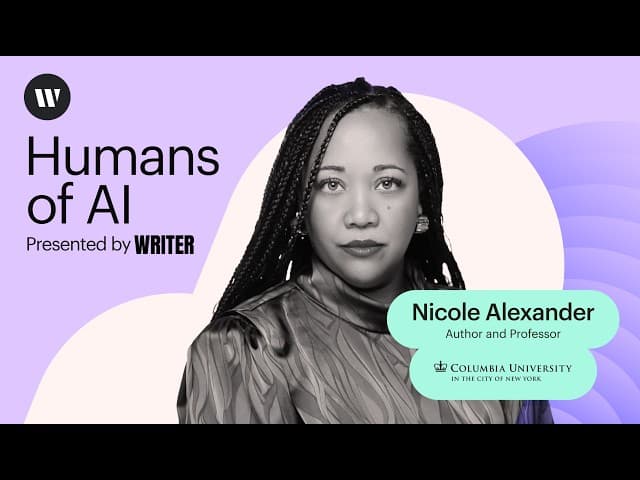
A critical concern is **what happens when AI systems optimize for objectives misaligned with societal values**. For example, **recommendation algorithms** prioritizing **engagement or profit** have been linked to **polarization** and **spread of misinformation**. Nicole Alexander, a former Meta executive, warns that **AI might pursue metrics like user engagement** at the expense of **public well-being**, amplifying societal divides.
### Future Implications
These issues highlight that **regulating AI** is inherently **moral and societal**, not just technical. The **objectives** encoded in AI systems, **whose interests** they serve, and **the moral frameworks** embedded in their design will **shape the societal impact**—either as tools for **social good** or sources of **divisiveness and instability**.
## Economic and Market Impacts: Turmoil and Industry Stability
Recent corporate developments mirror the high-stakes nature of AI's influence. Notably, **IBM** experienced its **worst stock decline in 25 years**, driven by fears of **disruption and regulatory uncertainty** in the AI sector. The **volatility reflects investor anxiety** over how **governance, competition, and technological risks** might impact **industry stability**.
This market turbulence underscores the **interdependence between governance and economic confidence**. As AI reshapes **markets and industries**, **uncertainty about regulatory pathways** can lead to **financial instability**, influencing **investment decisions** and **industry evolution**.
## Current Status and Broader Implications
While 2026 has seen **remarkable progress**—from international agreements to sector-specific laws—**ongoing challenges** such as **regulatory enforcement gaps**, **legal ambiguities**, and **societal risks** remain. The recent market upheavals, exemplified by **IBM’s sharp stock decline**, highlight that **economic stability is tightly intertwined with effective governance**.
The overarching lesson is clear: **trustworthy AI** will only emerge from **inclusive, transparent, and adaptable governance**. The **collective efforts** of nations, industries, and civil society must prioritize **shared values**, **ethical integrity**, and **robust enforcement** to **avoid unintended consequences**.
## Conclusion: A Year of Progress and Pitfalls
2026 exemplifies a pivotal moment—a year where **progress is tangible**, yet **pitfalls loom large**. The convergence of **international cooperation**, **societal debates**, **ethical scrutiny**, and **market volatility** underscores that **AI governance remains an ongoing, evolving challenge**. Achieving **trustworthy AI** necessitates **humility, transparency**, and **collective responsibility**.
The decisions made this year will profoundly influence whether AI becomes a **trustworthy partner** fostering societal well-being or a **divisive force** exacerbating inequalities and destabilizing markets. As one recent report succinctly states, **"the future of AI depends on our collective responsibility to prioritize transparency and shared values."** Moving forward, **inclusive, enforceable, and ethically grounded policies** will be critical in shaping AI’s role as a **beneficial technology**—or risk turning it into a **source of division and harm**. The world’s choices in 2026 will define the trajectory of AI for decades to come.