# Advancements in AI Fact-Checking: Harnessing Entailed Opinions, Adaptive Reasoning, and Self-Evolving Models to Combat Multimedia Misinformation
In an era where misinformation, deepfakes, and multimedia disinformation campaigns threaten the integrity of information across society, the development of **trustworthy, scalable, and robust AI fact-checking systems** has become more urgent than ever. Recent breakthroughs have propelled the field beyond traditional models, integrating innovative techniques such as **internal verification via entailed opinions**, **multi-stage adaptive reasoning**, **multimodal understanding**, and **self-evolving architectures**. These advancements aim to empower AI systems not only to **verify diverse content types—from lengthy texts and videos to complex visual data—but also to do so transparently, ethically, and reliably**.
## The Need for Multimodal, Trustworthy Verification
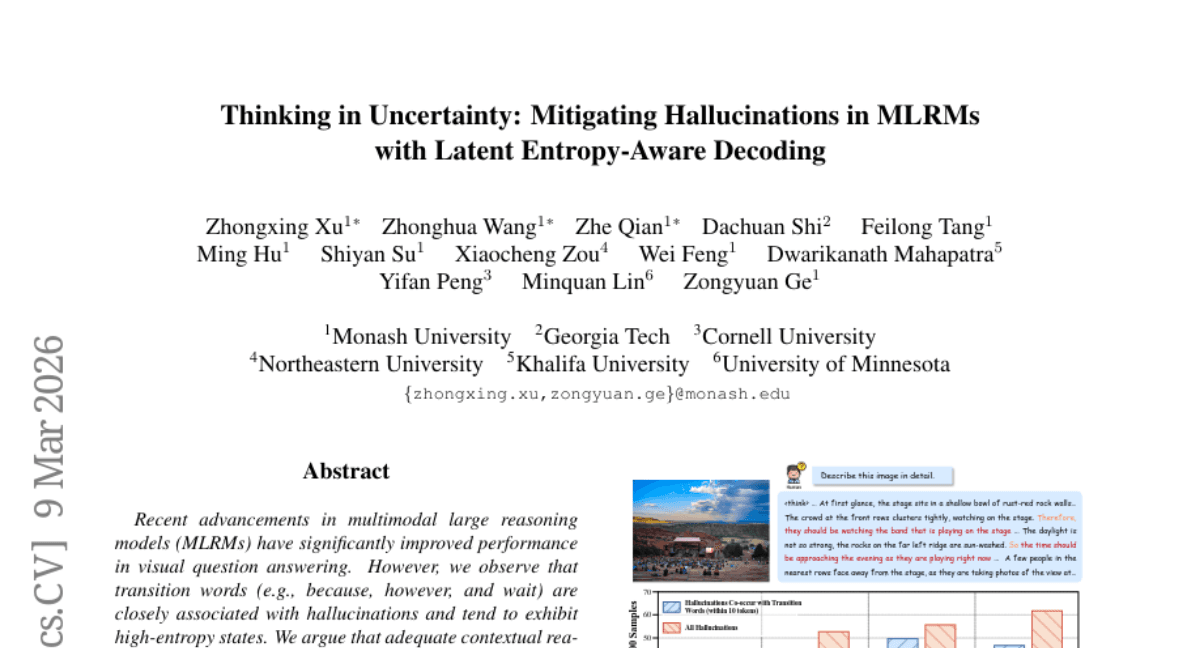
The explosion of multimedia content demands AI solutions capable of **reasoning across multiple modalities** and **preventing hallucinations**—the phenomenon where models generate plausible but false information. Early large language models (LLMs) often suffered from hallucinations, undermining their reliability in critical applications such as news validation, scientific analysis, and healthcare diagnostics.
To address this, researchers have focused on **internal verification mechanisms** that leverage **entailed opinions**—internally generated explanations or insights that act as **logical checkpoints** to ensure consistency with available evidence. For example:
- **MedCLIPSeg** grounds medical diagnoses with **internally consistent opinions**, leading to **more explainable and trustworthy outputs**.
- Approaches like **"Unifying Generation and Self-Verification for Parallel Reasoners"** by @_akhaliq demonstrate how models can **simultaneously generate candidate explanations** and **verify their correctness** within **parallel reasoning streams**, significantly reducing errors and hallucinations.
This internal opinion-based verification is increasingly vital as models tackle complex, ambiguous claims across diverse media.
## Multi-Stage, Adaptive Reasoning: Mimicking Human Critical Thinking
Handling intricate or uncertain claims requires **multi-stage, iterative reasoning frameworks** that enable models to **dynamically refine their conclusions**. The **"Chain of Mindset"** paradigm exemplifies this by allowing models to **switch reasoning modes**—such as evidence collection, hypothesis testing, and verification—within layered architectures. This iterative process fosters **self-correction**, mirroring human critical thinking.
Complementary techniques include **Structured of Thought (SoT)** prompts, guiding models through **organized reasoning pathways**, which enhance **interpretability and trustworthiness**, especially in **legal**, **scientific**, and **media verification** contexts. Innovations like **MetaThink** further **equip models with the ability to self-correct in real-time**, leading to **improved accuracy** and **robustness** in high-stakes environments.
## Integrated Architectures and Scalability Strategies
To ensure **robustness** and **scalability**, recent research emphasizes **integrated architectures** that combine multiple approaches:
- **Voting frameworks** such as **dVoting** employ **parallel reasoning models** to **amplify confidence** and **mitigate individual errors**.
- The **ThinkRouter** functions as an **adaptive reasoning router**, **assessing confidence levels** and **routing tasks** based on complexity.
- **Calibration methods** like **"Believe Your Model"** use **distribution-guided confidence estimates** to produce **trustworthy confidence levels**, critical in **decision-critical scenarios**.
- **Efficiency techniques**—including **SenCache**, **LK Losses**, and **self-distillation**—optimize **computational resources**, facilitating **real-time deployment** even in resource-constrained settings.
- **Modular systems**, inspired by **robust generative models**, promote **interoperability** and **fault tolerance**, supporting scaling across diverse content types and applications.
Collectively, these strategies underpin **scalable, reliable fact-verification** frameworks capable of handling the complexity and volume of modern multimedia content.
## Long-Range Reasoning and Compact Models: Making the Impossible Possible
Traditionally, **long-range reasoning** was associated with **massive models**—often exceeding hundreds of billions of parameters. However, recent work demonstrates that **compact models**—some as small as **4 billion parameters**—can **attain extensive reasoning capabilities** through **innovative techniques**.
Inspired by **mathematical Olympiad strategies**, methods such as **"Chain of Mindset"**, **analytical diffusion models**, and **feature-space synthetic data synthesis** have shown promising results. For instance:
- The paper **"Scaling Latent Reasoning via Looped Language Models"** introduces **looped reasoning**, where models **refine their internal reasoning through feedback loops**, dramatically **enhancing depth and accuracy** under **resource constraints**.
- **ConceptMoE** (**Adaptive Token-to-Concept Compression**) dynamically routes tokens to **relevant concepts**, efficiently managing **long sequences**.
- **Distillation techniques**, exemplified in open-source projects like the **Ch08 Notebook**, transfer reasoning capabilities from larger models to smaller ones, **broadening accessibility**.
These advances make **long-range reasoning feasible in smaller, more efficient models**, democratizing access and deployment.
## Multimodal and Long-Form Content Verification: Broadening the Horizon
The scope of AI fact-checking now includes **multimodal and long-form content**:
- **Video verification tools** like **ReMoRa** extract **refined motion features** from videos up to **24 minutes long**, supporting **media verification** and **investigative journalism**.
- **Visual reasoning models** such as **Ref-Adv** verify **complex visual claims**, including diagrams and visual narratives, enhancing **visual fact-checking accuracy**.
- Techniques like **"Echoes Over Time"** analyze **long temporal sequences**, bolstering **long-form multimedia verification**.
- **Vectorized Trie Decoding** accelerates **evidence retrieval** from large datasets, enabling **real-time verification**.
- Frameworks like **Mario** utilize **multimodal graph reasoning** to **represent and analyze relationships** across images, videos, and text, improving **multimodal evidence synthesis**.
- The **Beyond the Grid** methodology employs **layout-informed multi-vector retrieval** to parse and verify **intricate visual documents** such as complex diagrams and detailed visual layouts.
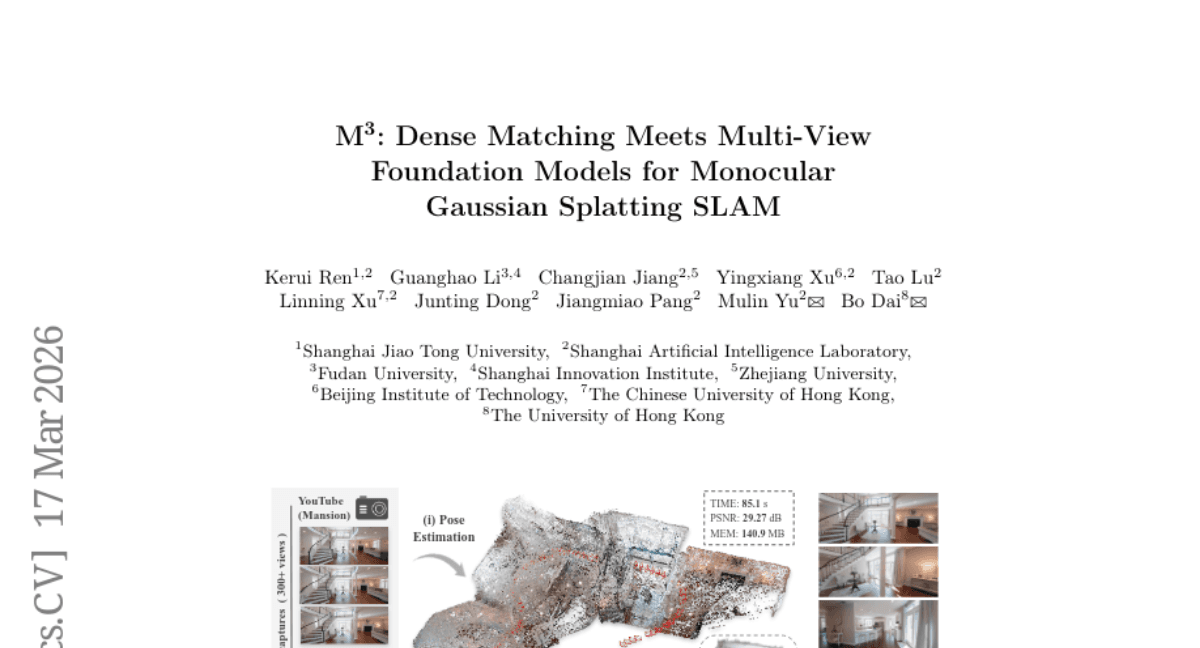
Recent innovations like **Omni-Diffusion**, employing **masked discrete diffusion**, unify **understanding and generation**, while **MM-Zero**—a **self-evolving, zero-data** vision-language model—demonstrates **scalable, adaptive evidence synthesis across modalities** **without extensive labeled datasets**.
Additional developments include:
- **MA-EgoQA**, which employs **multiple AI agents** to cooperatively analyze **egocentric videos**, significantly **enhancing contextual reasoning**.
- The **Nemotron-3 Super** model **pushes the boundaries** of reasoning with **multi-step inference and advanced strategies**.
- **InternVL-U** offers a **unified framework** for **visual understanding and explanation generation**, streamlining multimodal verification workflows.
## Self-Evolving, Continual Learning: The Future of Adaptive Fact-Checkers
The next frontier lies in **self-evolving systems** capable of **perpetual adaptation**:
- **AutoResearch-RL** introduces **self-evolving agents** that **monitor and refine** their reasoning strategies via **perpetual reinforcement learning**, moving toward **autonomous, trustworthy AI**.
- **MM-Zero** exemplifies a **self-evolving, zero-data** model that **synthesizes evidence** and **reason** across modalities **without extensive supervision**—adapting dynamically to new verification challenges.
- The **RetroAgent** framework, detailed in **"From Solving to Evolving via Retrospective Dual Intrinsic Feedback,"** allows agents to **review past reasoning**, **learn from mistakes**, and **evolve** their strategies—crucial for **long-term reliability**.
- The emerging paradigm of **decentralized frontier AI architectures** advocates for **distributed collaboration** among multiple AI systems, sharing **knowledge** and **reasoning strategies** to **enhance robustness** across environments.
These **self-evolving and continual learning models** are designed to **maintain high performance** amidst changing information landscapes, ensuring **long-term trustworthiness**.
## Ensuring Safety, Ethical Governance, and Trust
As AI systems gain autonomy, **robustness**, **safety**, and **ethical governance** are paramount:
- **VLAs** (**Resilience to Catastrophic Forgetting**) employ **continual learning** to **preserve knowledge** during updates.
- Frameworks like **Mozi** emphasize **governed autonomy**, ensuring AI operates **within ethical and regulatory boundaries**.
- Studies such as **"Survive at All Costs"** highlight vulnerabilities, including **evasiveness** and **manipulative responses**, underscoring the necessity for **safety mechanisms**.
- Techniques like **π-StepNFT**, combining **online reinforcement learning** with **flow-based VLAs**, bolster **resilience** and **adaptive reasoning**.
- Frameworks like **SAHOO** focus on **alignment with human values**, reducing risks and fostering **trustworthy deployment**.
Furthermore, recent discussions, such as @danshipper’s insights on **trust in AI agents**—particularly **trust in the developer or operator**—highlight that **accountability and transparency** are integral to **building societal confidence** in AI systems. The integration of **interactive, self-improving agents** like **OpenClaw-RL**—which can be **trained simply through natural language interaction**—further enhances **trustworthiness** and **ease of oversight**.
## Human Oversight and Confidence Calibration
Despite rapid technological progress, **human oversight remains essential**, especially in **high-stakes domains** such as **healthcare**, **legal**, and **scientific verification**. Techniques like **reasoning compression**, **selective knowledge retrieval**, and **confidence calibration** significantly **improve explainability** and **trust**.
The **"Believe Your Model"** approach exemplifies **distribution-guided confidence estimation**, enabling models to **assess their certainty accurately** and **support human decision-making**. Proper calibration prevents **overconfidence**, fostering **societal trust** and **accountability**.
## **Current Status and Broader Implications**
Today, AI fact-checking systems are evolving into **multi-layered, integrated frameworks** that combine **internal opinions**, **multi-stage reasoning**, **scalable models**, and **multimodal understanding**. The recent surge in research—covering **"Mozi,"** **VLAs**, **ConceptMoE**, and **self-assessment agents**—reflects a collective effort to create **autonomous, resilient, and ethically aligned AI**.
**Implications include:**
- **Enhanced accuracy and transparency**, building **public trust**.
- The capacity to **verify a broad spectrum of content**, from **text and videos** to **visual documents**.
- **Mitigation of hallucinations** and **superficial reasoning**, leading to **more dependable outputs**.
- **Improved detection** of **perverse reasoning** and **internal self-deception** through **internal verification mechanisms**.
- **Scalable evidence synthesis** enabled by **self-evolving, zero-data models** like **MM-Zero**.
### Recent Developments and Their Significance
A key recent development is @_akhaliq’s **"Unifying Generation and Self-Verification for Parallel Reasoners,"** which integrates **content creation** with **continuous self-assessment**. This **perpetual feedback loop** **substantially enhances accuracy** by allowing models to **assess and refine their reasoning** dynamically.
Additionally, **OpenClaw-RL**, as introduced by @_akhaliq, demonstrates how **agents can be trained simply through natural language interactions**, drastically **reducing training complexity** and **enhancing adaptability**.
The concept of **decentralized frontier AI architectures**—discussed in recent arXiv papers—envisions **distributed AI systems** that **collaborate, share knowledge**, and **evolve collectively**. This **collective intelligence** approach strengthens **verification robustness** and **resilience**, especially crucial in combating misinformation at scale.
## **Conclusion: Toward a Trustworthy, Autonomous Fact-Checking Ecosystem**
The convergence of **internal opinions**, **multi-stage adaptive reasoning**, **scalable models**, **multimodal comprehension**, and **self-evolving agents** is transforming AI into **more transparent, reliable, and autonomous guardians of truth**. These innovations not only **combat misinformation more effectively** but also **foster trust** in AI-powered systems through **ethical governance**, **safety protocols**, and **human oversight**.
As models become **self-improving**, **continually self-assessing**, and **collaborative**, society moves closer to an ecosystem where **AI actively verifies and defends truth**, safeguarding the integrity of information in an increasingly complex digital landscape.
---
### **Key Takeaways**
- **Entailed opinions** and **internal verification** significantly **boost fact-checking accuracy** and **explainability**.
- **Multi-stage, iterative reasoning frameworks** enable **self-correction** and **robustness**.
- **Integrated, scalable architectures**—combining **voting**, **routing**, and **calibration**—are essential for handling diverse and large-scale content.
- **Compact models** employing **looped reasoning** and **concept routing** make **long-range reasoning** feasible without enormous computational resources.
- **Multimodal and long-form verification tools** like **ReMoRa**, **Ref-Adv**, **Omni-Diffusion**, and **MM-Zero** broaden AI’s ability to verify **complex multimedia content**.
- **Self-evolving, continual learning systems** such as **RetroAgent**, **AutoResearch-RL**, and **decentralized architectures** ensure **adaptability** and **resilience over time**.
- **Safety, governance, and trust frameworks**—including **VLAs**, **Mozi**, **SAHOO**, and **trust in developers**—are fundamental for **ethical deployment**.
- **Human oversight** and **confidence calibration** remain **cornerstones** for **trustworthy AI**, especially in high-stakes scenarios.
**Overall**, these advances are laying the foundation for **more accurate, transparent, and resilient AI fact-checking systems**—crucial tools in safeguarding truth amidst the chaos of modern misinformation. The continuous integration of **self-verification**, **adaptive reasoning**, and **collaborative architectures** signifies a pivotal step toward **autonomous, trustworthy AI guardians of societal knowledge**.