# OpenClaw Ecosystem Maintains Leadership in Autonomous Agent Innovation with 2026 Breakthroughs
The year 2026 marks a pivotal milestone for the **OpenClaw ecosystem**, reaffirming its position as the **central open-source platform** driving the development, deployment, and management of **robust autonomous agents** across diverse sectors. Building upon its foundational architecture—featuring **production-grade runtimes, multi-agent orchestration, long-term context management, and observability tools**—OpenClaw continues to expand into emerging technological frontiers such as **robotics, physical-data infrastructure, and enterprise tooling**, demonstrating remarkable agility and relevance.
## Expanding Multi-Layered Architecture for Real-World Complexity
OpenClaw’s architecture remains a **multi-tiered framework**, now more deeply integrated with **hardware innovations** and **industry-specific solutions**:
- **PicoClaw**: Its recent optimizations now enable **complex reasoning and retrieval-augmented generation (RAG)** tasks on hardware with **as little as 8GB VRAM**. This advancement facilitates **local, cloud-independent RAG systems**, crucial for **interplanetary communication**, **edge robotics**, and **resource-constrained environments**.
- **Kimi Claw**: With **over 5,000 community-shared skills** and **40GB of cloud storage**, Kimi Claw fosters **rapid prototyping** and **regional innovation**. Its widespread adoption across sectors—including **healthcare, manufacturing, and research**—solidifies its role as a **domain-specific agent deployment platform**.
- **CrewClaw**: As the **multi-agent collaboration hub**, CrewClaw now underpins **enterprise workflows** such as **supply chain automation**, **research collaboration**, and **simulation environments**. Its support for **shared memory**, **identity management**, and **inter-agent reasoning** enables **resilient ecosystems** from **local networks** to **cloud-scale operations**, even extending into **space exploration** contexts.
This layered approach ensures agents can **operate seamlessly across environments**, supporting **long-term reasoning** and **dynamic communication**, which is vital for **missions in space and remote industrial settings**.
## Enhanced Production-Ready Runtimes and Orchestration at Scale
The core runtimes, **Oz** and **Reload**, continue to evolve into **highly resilient platforms** capable of **months-long persistent operations**—a necessity for **space habitats**, **remote robotics**, and **industrial automation**.
Recent breakthroughs include:
- **Stability and resilience improvements**: Agents managing **interplanetary systems** now maintain **coherent states over months**, even amid **intermittent connectivity** and **environmental disturbances**, ensuring **trustworthy autonomy** in the harshest conditions.
- **Advanced orchestration platforms**: The **Temporal** orchestration system, which recently secured **over $300 million in funding**, now offers **fault recovery**, **scalability**, and **reliability features** that keep **multi-agent workflows operational during critical missions**.
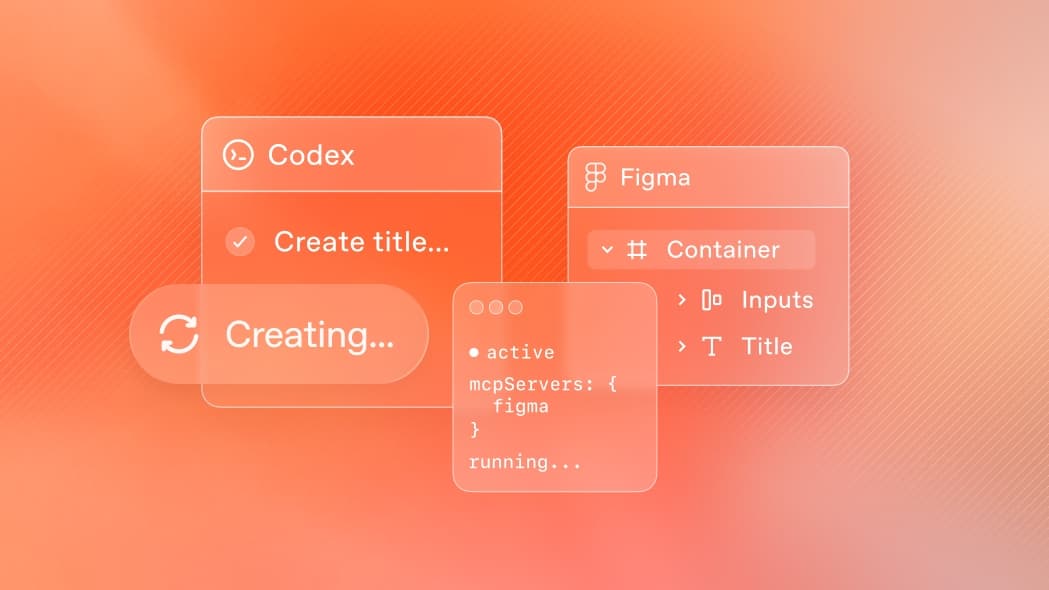
- **Open-source orchestration tools** like **Portkey** and **Composio** have enhanced **multi-step, adaptive task orchestration** with features such as **websockets-based communication**, leading to **30% faster agent rollouts** in systems like **Codex**. This enables **rapid deployment** and **real-time updates**, essential for **dynamic environments**.
## Long-Duration Context and Persistent Storage for True Autonomy
Achieving **long-term autonomy** hinges on **robust shared memory** and **persistent storage solutions**:
- **SurrealDB**, a **multi-model database**, raised **$23 million** this year, offering **scalable, shared memory paradigms** and **long-term context persistence**. It allows agents to **maintain coherent data states across months or years**, which is indispensable for **interplanetary missions** and **remote industrial systems**.
- **Reload** has integrated **innovations in long-term shared memory**, enabling agents to **persist states**, **recover seamlessly**, and **collaborate over extended periods**—even amid **disconnection and environmental challenges**. Projects utilizing Reload demonstrate **coherent operational states over months**, crucial for **harsh environments**.
This infrastructure underpins **trustworthy, sustained autonomy** in settings where **data integrity** and **state consistency** are paramount.
## Security, Safety, and Hardware Ecosystem Maturation
As autonomous agents increasingly operate in **high-stakes sectors**, **security** and **safety** measures are critical:
- **BrowserPod**, the **browser sandbox platform**, now supports **Windows**, enabling **safe testing of untrusted AI-generated code** within secure browser environments. This expansion is vital for **regulatory compliance** in **healthcare, space**, and **manufacturing**.
- **OpenClaw’s focus on isolation and safety** ensures **long-duration workflows** operate securely, reinforcing **trustworthiness** and **regulatory adherence** in mission-critical applications.
On the hardware front:
- **Axelera AI**, a Dutch startup, raised **$250 million** to develop **energy-efficient AI chips** tailored for **autonomous workloads**, especially **edge AI** and **space onboard systems**. These chips are designed for **power-constrained environments** while delivering **robust performance**.
- **Partnerships with giants like SambaNova and Intel** aim to **accelerate high-performance AI chip development**, focusing on **reducing latency** and **eliminating single points of failure** through **per-agent accelerators**, inspired by architectures such as **Daytona**.
- **Regional investments** continue to grow: **India** has committed over **$110 billion** toward **multi-gigawatt AI data centers** in Jamnagar, emphasizing **sovereign AI infrastructure** to support **local autonomous applications**. Similarly, **China** is expanding its **autonomous hardware infrastructure** to foster **regional resilience**.
- **Low-power photonic processors** from startups like **Neurophos** and **SambaNova** are powering **edge AI devices** and **space systems**, enabling **power-efficient, high-performance computation** in remote environments.
## Developer Ecosystem and Practical Guidance
The complexity of **multi-agent systems** demands **advanced tooling** and **developer support**:
- The **Cursor IDE**, an **AI-first code editor**, now supports **resource-limited devices**, streamlining **agent development** and **deployment**.
- SDKs such as **Kilo Code** and **Agent Bar** continue lowering barriers for **startups and enterprises**, facilitating **custom autonomous agent deployment** with minimal friction.
- **Evaluation frameworks** like **AI-Rank**, **AgentRE-Bench**, and **OpenBug** now enable comprehensive **performance**, **security**, and **reliability** assessments. For example, the **MiniMax M2.5** model now rivals **Claude Opus** at a **fraction of the cost**, democratizing access to **high-performance agentic AI**.
- **Observability tools** such as **Siteline** provide **behavioral analytics**, **agent interaction tracking**, and **performance metrics**, supporting **regulatory compliance** and **system optimization**.
- Practical guides, including **"How to create JOBS for OpenClaw agents"**, are now accessible via tutorials and community resources, fostering **best practices** and **developer onboarding**.
## New Frontiers: Robotics, Data Infrastructure, and Research
Recent initiatives highlight **agentic vision** advancements and **multi-agent management**:
- The startup **Encord** secured **$60 million** to develop **physical AI data infrastructure** tailored for **robotic and drone development**, emphasizing **high-quality data pipelines** essential for **training and deploying autonomous physical systems**.
- **RLWRLD**, a leader in **industrial robotics AI**, raised **$26 million** in **Seed 2 financing**, bringing total funding to **$41 million**. Its focus on **scaling AI for industrial robots** ensures **more adaptable, intelligent automation** in factories and logistics.
- **OpenClaw-hosted platforms** like **KiloClaw** now enable **managed multi-agent hosting**, supporting **large-scale ecosystems** vital for **space missions**, **autonomous factories**, and **global logistics**.
- Demonstrations such as **CrewAI**, a **multi-agent DevOps toolkit**, showcase **how multi-agent orchestration** can streamline **software deployment** and **system management**, reducing operational overhead.
- The adoption of **websocket-based rollouts**, as demonstrated by **@gdb**, accelerates **agent deployment cycles**, enabling **real-time, adaptive systems** suitable for **dynamic environments**.
- **Long-horizon CLI and agent benchmarks** now evaluate **multi-step, complex tasks**, ensuring **robustness**, **trustworthiness**, and **scalability** in **mission-critical applications**.
## Current Status and Future Outlook
The **OpenClaw ecosystem**, reinforced by recent technological and strategic developments, stands as the **comprehensive backbone** for **long-duration, resilient, and scalable autonomous systems**. Its **hardware collaborations**, **enterprise tooling**, and **research innovations** position it to support **missions extending from Earth to interplanetary space**, **smart factories**, and **critical infrastructure**.
With **industry giants**, **startups**, and **research institutions** investing heavily—evident in **Axelera’s hardware funding**, **SambaNova and Intel’s partnerships**, and **government-backed infrastructure projects**—the ecosystem is poised for **continued exponential growth**. Its capacity to **integrate hardware-software co-design**, **provide secure and trustworthy environments**, and **support long-term reasoning** signals a future where **autonomous agents become integral** to **human society's exploration, safety, and productivity**.
As OpenClaw advances into 2027, its **holistic approach** promises to deliver **autonomous ecosystems** that are **trustworthy**, **resilient**, and **adaptable**, underpinning **human endeavors** across **space, industry, and everyday life**.