June 18, 2026
Cyber Threat Digest · Jun 18 Daily Digest
SOC Detection Resources
- PowerShell Persistence Attack Simulation: New 6-minute Splunk video demonstrates simulation steps and detection rules...

Created by Elhanan S. Abrams
Latest vulnerability, exploit, and malware analysis for researchers and SOC professionals
Explore the latest content tracked by Cyber Threat Digest
AI is accelerating both zero-day discovery and evasion tactics, pushing defenders beyond signature-based tools.
Novo Nordisk confirmed unauthorized access to internal systems, with limited clinical trial participant data copied externally. Exposed categories...
SOC teams adopt AI tools widely but lack governance and validation structures, while staffing shortages block visibility and retention. Executives see...
Cyber threat intelligence sharing fails to prevent real-world breaches for small organizations without staff to convert alerts into action, demanding...
CVE-2026-20262 is actively exploited in the wild with confirmed real-world abuse. Rapid7 flags SD-WAN platforms as high-value targets, demanding urgent patching for SOC teams and researchers tracking enterprise edge threats.
Three major policy shifts from the June 12 memo:
Building a SOC requires careful planning across five core areas: strategy, technology, staffing, incident response and continuous improvement.
Organizations face agentic AI risks that demand both targeted IAM fixes and wider program updates.
ShinyHunters compromised Infinite Campus's Salesforce environment, leaking records from 137,100 accounts including names, emails, phones, addresses,...
AI enables defenders to learn complex patterns directly from heterogeneous security data and generalize beyond known signatures.
OpenAI's Daybreak promises to unify security workflows by combining threat modeling, vulnerability discovery, exploit validation, and remediation in...
A major database leak at Homers.fr exposed personal, financial, and behavioral customer data, with the breach scope highlighting critical vulnerabilities in protection measures.
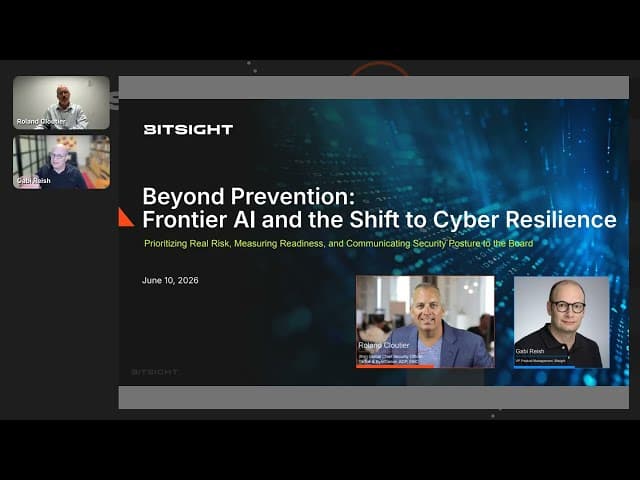
AI is accelerating threats across education and enterprise, forcing a move from prevention to resilience.
Everyday wireless devices create hidden attack paths in sensitive environments where guards and gates offer no protection.