# Tennessee Confronts $82.7 Billion Transportation Funding Shortfall with Innovative Strategies and Emerging Challenges
Tennessee is at a critical juncture as it seeks to bridge an **$82.7 billion projected funding gap** over the next five years for its transportation infrastructure. This daunting figure arises from the combined pressures of aging roads, bridges, transit systems, and the increasing impacts of climate change—posing risks to safety, economic stability, and environmental resilience. In response, the state is deploying a suite of innovative financing mechanisms, federal partnerships, and community engagement strategies to modernize and safeguard its transportation network for the future.
## The Scope of the Crisis and Strategic Response
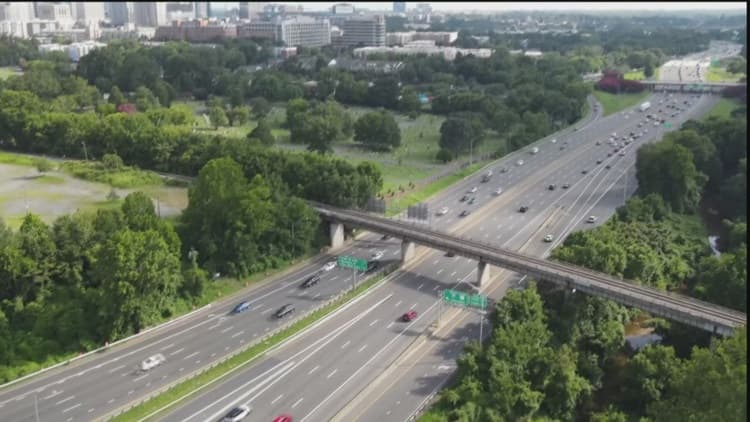
The assessment underscores that **transportation infrastructure is at the heart of Tennessee’s infrastructure crisis**. Deteriorating freight corridors, commuter routes, and public transit systems have led to **safety hazards, economic disruptions, and rising maintenance costs**. Addressing these issues requires a comprehensive approach that balances immediate repairs with resilience planning against future stresses.
To tackle this, Tennessee has adopted several forward-looking strategies:
- **Revised Project Valuation Frameworks**: The state is integrating **climate resilience** and **societal benefit assessments** into project evaluations. These models prioritize **long-term risk mitigation** and **public welfare**, helping attract private investment while safeguarding public interests.
- **Embracing Public-Private Partnerships (PPPs)**: Following federal guidance (published in the *Federal Register* on March 3, 2026), Tennessee is implementing **risk-balanced valuation models** that promote **transparent and disciplined PPPs**. These models aim to **maximize private sector participation** without compromising safety, sustainability, or oversight.
- **Regional Tolling and User-Fee Initiatives**: A notable milestone was the formation of the **ORX Tolling Body**, which held its **initial meeting on March 3, 2026, in Henderson, Kentucky**. During this session:
- **Initial toll rates** for regional tolling projects were established.
- The framework aims to **diversify revenue streams**, **manage congestion**, and **generate dedicated income** for infrastructure maintenance and expansion.
The development of a **regional tolling system** is increasingly viewed as **crucial** for **bridging funding gaps** through **user-based, sustainable financing mechanisms**.
## Broader Financing and Technological Initiatives
Beyond tolling, Tennessee is exploring a **diversified funding portfolio**:
- **Infrastructure Bonds**: Leveraging favorable interest rates and long-term repayment plans.
- **Federal Grants and Aid**: Focusing on **modernization, safety, and climate resilience** initiatives.
- **Refined PPP Structures**: Employing **risk-balanced valuation models** to attract private capital efficiently.
- **EV Charging Infrastructure**: The state is deploying **electric vehicle charging stations** along key corridors, aligning with **federal climate goals** and encouraging **sustainable mobility**.
- **Transit Modernization**: Efforts are underway to **enhance transit services**, reduce congestion, and **expand access**—particularly targeting underserved communities—supported by upcoming **federal surface transportation reauthorization**.
## Community Engagement and Emerging Controversies
Public involvement remains vital as Tennessee proceeds with its ambitious infrastructure projects. Recent events highlight the importance of **transparent communication**:
### Nashville’s Opposition to Choice Lanes
On March 3, 2026, Nashville residents voiced **significant opposition** to the proposed **“choice lanes”**, a form of **high-occupancy toll (HOT) lanes** designed to ease congestion. Many community members expressed skepticism, with one resident stating, **"No one wants this,"** reflecting concerns over tolling projects perceived as favoring certain groups or increasing costs for everyday commuters. This controversy underscores the necessity for **equitable planning**, **community buy-in**, and **transparent stakeholder engagement** as Tennessee advances its tolling initiatives.
### Public Outreach on Autonomous Transit Projects
In addition, recent developments include efforts to **engage the public regarding autonomous shuttle plans at Pittsburgh International Airport**, as announced by PennDOT’s Office of Public-Private Partnerships. While specific details remain ongoing, these initiatives highlight a broader trend toward **integrating autonomous transit solutions** into Tennessee’s transportation future, emphasizing the importance of **stakeholder input and transparent planning**.
## New Challenges: Rising Oil Prices and Funding Pressures
An emerging concern is the potential impact of **rising oil prices** on transportation funding. As reported in recent analyses, **gas prices are increasing due to geopolitical tensions**, such as the war in the Middle East and disruptions in oil shipping channels. This escalation could **worsen Tennessee’s transportation funding pressures**, especially as higher fuel costs may **reduce driver convenience and revenue from fuel taxes**, which traditionally support infrastructure budgets.
Furthermore, ongoing efforts include **bipartisan federal legislation** to **adjust highway funding formulas**, aiming for **more equitable and stable resource distribution**. These efforts could bolster Tennessee’s financial position, but the pressure from volatile fuel markets remains a significant concern.
## Recent Milestones and the Road Ahead
Recent notable developments include:
- The **establishment of initial toll rates** by the ORX Tolling Body.
- The **release of federal guidance** advocating **risk-balanced, transparent PPP models**.
- The **introduction of a bipartisan Senate bill** to **reform federal highway funding formulas**, promising more equitable allocations.
- **Continued investments** in **EV infrastructure** and **transit modernization** to promote sustainability.
Looking forward, Tennessee’s strategy emphasizes **attracting private capital**, **balancing risk**, and **securing community buy-in**. The state’s multi-pronged approach aims to **close the funding gap** while fostering **safer, more reliable, and environmentally resilient transportation systems**.
## Implications and Conclusion
Tennessee’s proactive and innovative measures demonstrate a **holistic approach** to infrastructure renewal—one that **embraces technological advancements, financial innovation, and community participation**. As federal and state initiatives converge, the state is positioning itself as a **national model for infrastructure modernization**, showing that even the most formidable funding challenges are surmountable with **collaboration, transparency, and strategic planning**.
**Current Status**: With regional tolling systems progressing, federal guidance in place, and investments in EV and transit projects ongoing, Tennessee is making tangible strides toward its goal of transforming its transportation landscape. However, the **rising oil prices** and **public concerns** about tolling and autonomous transit projects underscore the need for **continued stakeholder engagement and adaptive strategies**.
**In summary**, Tennessee’s experience exemplifies that **innovative financing, community involvement, and technological innovation** are critical to overcoming infrastructure deficits, ensuring a **resilient, equitable, and sustainable transportation future** for the state and potentially serving as a blueprint for others facing similar challenges nationwide.