# Secure Deployment Patterns for OpenClaw in 2026: Navigating Innovation, Risks, and Best Practices
As AI agents like **OpenClaw** become foundational to modern workflows—spanning cloud, edge, hybrid, and local environments—the emphasis on **security-first deployment patterns** has never been more critical. The landscape of 2026 is characterized by rapid technological advancements, evolving attack vectors, and a vibrant community producing both innovative tools and persistent threats. This article synthesizes recent developments, emerging challenges, and updated best practices to ensure the resilient and secure deployment of OpenClaw across diverse infrastructures.
---
## Evolving Cloud Ecosystems and Provider Innovations
Major cloud providers such as **AWS** and **GCP** continue to enhance their ecosystems with features tailored for AI workloads, emphasizing **security**, **automation**, and **flexibility**:
- **AWS** has deepened its **IaC** capabilities with **Terraform** and **Ansible**, promoting **least-privilege IAM roles**, **multi-factor authentication (MFA)**, and **network segmentation** via **VPCs**, **private subnets**, and **VPNs**. Recent updates highlight the use of **spot instances** and **preemptible VMs**, optimized for cost while maintaining security controls, reducing risks associated with misconfiguration.
- **GCP** now offers **custom machine types**, **GPU-enabled instances**, and **Identity-Aware Proxy (IAP)**, enabling **granular access control** and **workload isolation**. The deployment of **firewall rules**, **VPC peering**, and **Cloud Armor** protections ensures AI services remain resilient against malicious traffic, especially as AI APIs become more openly accessible.
Automation remains central; tools like **Terraform**, **Ansible**, and **K8s operators** facilitate **standardized, repeatable deployment workflows**. These reduce human error—an essential defense given the sophistication of current threat actors.
---
## Community-Driven Tools, Marketplace Risks, and Automation Advances
The open-source community continues to streamline secure deployment, but recent incidents underscore the importance of vigilance:
- The **OpenClaw marketplace** saw the **most downloaded skill be malware**, exposing the risks inherent in plugin ecosystems. This incident, detailed in recent community reports, involved malicious skills masquerading as legitimate, emphasizing the need for **rigorous vetting**, **digital signatures**, and **trusted repositories** like **VoltAgent's "awesome-openclaw-skills"**.
- **KimiClaw**, a **managed deployment service**, has revolutionized the ecosystem by enabling **deployment of production-ready OpenClaw agents within 60 seconds**. Its low-code, **secure deployment pipeline** democratizes access, allowing smaller teams or individual developers to leverage AI securely without extensive setup overhead.
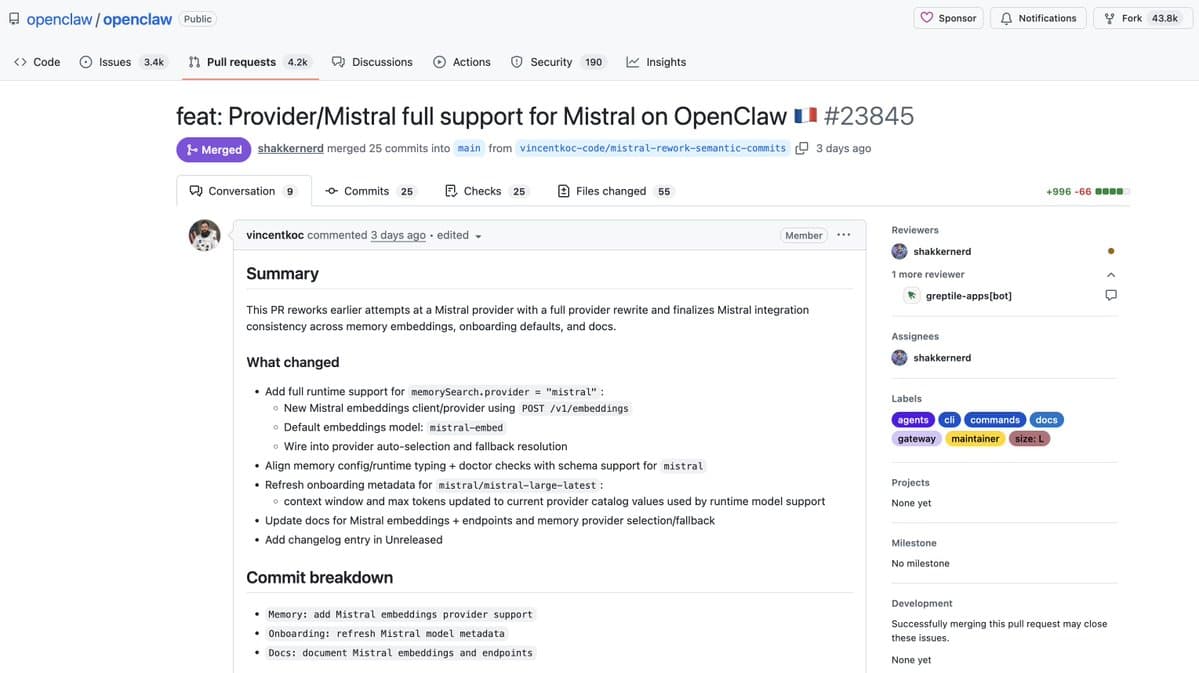
- Recent updates include **support for Mistral models and embeddings** in OpenClaw, as highlighted by community figures like @sophiamyang. This **enhances model versatility** but introduces new **configuration complexities**—requiring careful **provider-specific setup** and **model routing** to mitigate risks like model poisoning or misconfiguration.
---
## Edge and Local Deployments: Privacy, Performance, and Security
**Local inference** remains vital for privacy-sensitive applications, especially in environments where data sovereignty is paramount:
- Tutorials such as **"OpenClaw on Raspberry Pi"** and **"OpenClaw AI Agent on Raspberry Pi"** demonstrate how **lightweight models** and **optimized inference engines** can run efficiently on constrained hardware, enabling **offline, real-time decision-making** in remote sensors, industrial automation, or mobile robotics.
- The advent of **GPU acceleration** on **NVIDIA Jetson modules** has drastically improved **inference speeds**, supporting **low-latency autonomous operations**. **NanoClaw**, a **sandboxed variant of OpenClaw**, now emphasizes **attack surface reduction** through **component sandboxing**, **limited dependencies**, and **strict environment isolation**, making it suitable for **high-security environments** where containment is critical.
---
## Hybrid Architectures and Secure Offloading
**Hybrid deployment patterns** combine **local inference** with **cloud offloading**, balancing **privacy**, **performance**, and **scalability**:
- Sensitive tasks are processed **locally** to preserve **privacy** and **low latency**, while **heavy computations** and **model updates** are offloaded to **cloud GPU instances**.
- Secure communication channels such as **Tailscale** facilitate **encrypted, zero-trust connections** between devices and cloud resources, minimizing attack surfaces.
- The **KiloClaw** framework exemplifies this approach, providing **instant deployment** of **scalable, secure AI agents** that can be orchestrated across multiple environments seamlessly. Its recent updates support **multi-agent orchestration** for complex workflows, including coding assistance from platforms like **Discord** or **Telegram**, as showcased by community projects such as **Oh-My-OpenClaw**.
---
## Critical Security Challenges and Recent Incidents
Despite advancements, 2026 has seen notable security challenges:
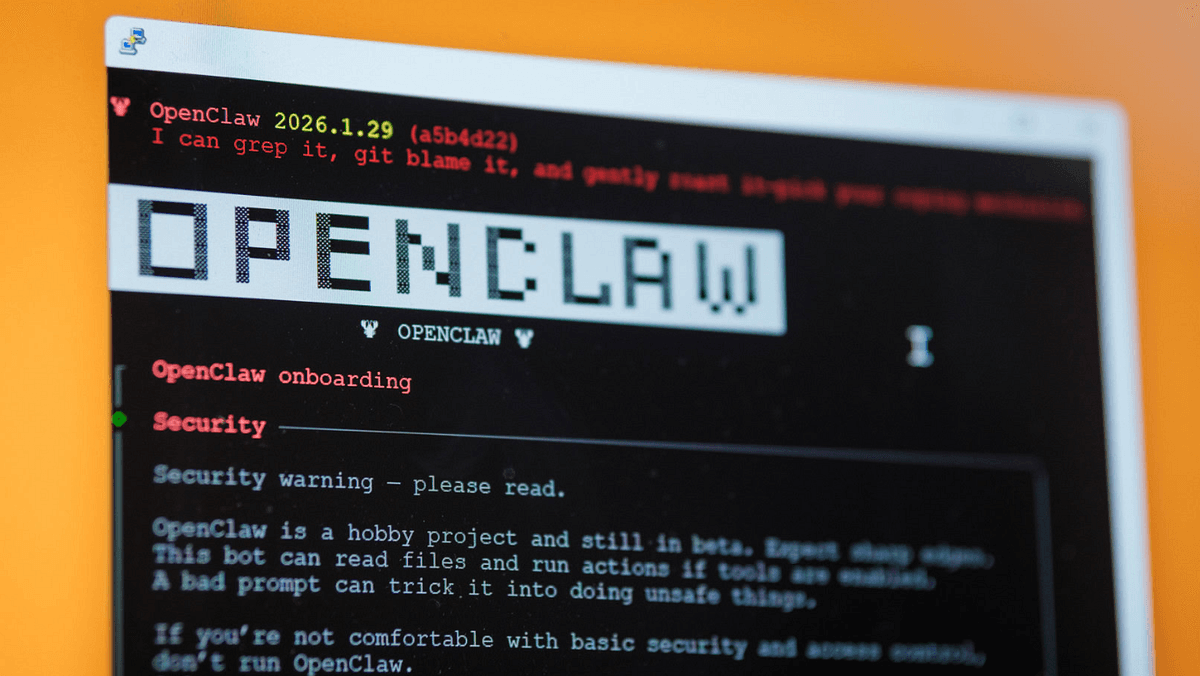
- **Prompt-injection vulnerabilities**, exemplified by the **"Viral OpenClaw stunt"**, demonstrate how malicious prompts can manipulate AI agents into executing harmful commands. This underscores the importance of **prompt sanitization**, **input validation**, and **runtime behavioral protections**.
- The **"Clawdbot" leak** revealed how **insufficient access controls** could result in **user data exposure**, prompting community-wide reinforcement of **authentication**, **authorization**, and **plugin vetting** protocols.
- **CVE vulnerabilities** such as **CVE-2026-27487** (macOS credential routines) and **CVE-2026-27488** (webhook handling flaws) highlight the necessity for **timely patching** and **secure coding practices**.
- Supply chain attacks like **ClawHavoc**, introduced via **malicious Skill-Page comments**, reinforce the criticality of **offline backups**, **digital signatures**, and **strict code vetting** to preserve system integrity.
---
## Actionable Best Practices for Secure Deployment
To mitigate current threats and future-proof deployments, practitioners should:
- **Regularly apply security patches**, especially addressing vulnerabilities like **CVE-2026-27487** and **CVE-2026-27488**.
- **Vet plugins and skills** meticulously, favoring **trusted repositories** and employing **static analysis** before deployment.
- **Implement runtime protections** such as **behavioral analytics**, **intrusion detection**, and **anomaly monitoring** during skill execution.
- **Enforce strict access controls** with **MFA**, **digital signatures**, and **role-based permissions** to prevent unauthorized access.
- **Design incident response protocols**, including **offline backups**, **automated patch routines**, and **rapid mitigation procedures**.
---
## The Road Ahead: Security as a Continuous Process
The security landscape in 2026 continues to evolve rapidly:
- **Managed services** like **KiloClaw** lower barriers to **secure deployment**.
- **Sandboxed variants** such as **NanoClaw** address **attack surface reduction**.
- **Community vigilance**, **automated security tools**, and **rigorous vetting** are essential to counter emerging threats.
- **New features**, like **multi-model support** (e.g., Mistral integrations), **multi-agent orchestration**, and **secure cross-environment communication**, further complicate the security landscape but also provide tools for **robust defenses**.
---
## Conclusion: A Multi-Layered, Proactive Approach
Deploying **OpenClaw** securely across **cloud**, **VPS**, **edge**, and **hybrid architectures** in 2026 demands a **multi-layered strategy**:
- Embrace **automation** and **standardization** to minimize human error.
- Prioritize **security patches** and **plugin vetting** to prevent vulnerabilities.
- Use **sandboxed variants** and **secure communication channels** to contain risks.
- Maintain **continuous monitoring** and **incident preparedness** to respond swiftly to threats.
By integrating these practices, organizations can leverage OpenClaw's full potential while safeguarding their systems against an increasingly sophisticated threat landscape—ensuring AI remains a **trustworthy**, **powerful** component of the technological future.
---
**Current Status:** The community and organizations are actively adopting these evolved patterns, with ongoing emphasis on **security hardening**, **trusted integrations**, and **automated defenses**. As threats evolve, so too must the strategies, making **security-first deployment** the standard in AI-driven environments in 2026 and beyond.