# 2026 AI Image and Video Creation Revolution: Unprecedented Advances in Models, Interfaces, and Global Creativity
The year 2026 marks a pivotal milestone in the evolution of AI-powered visual content creation. Building upon a foundation of rapid technological breakthroughs, this era is distinguished by the emergence of **regionally autonomous, high-performance models**, **innovative user interfaces**, **refined creative control tools**, and a decisive move toward **decentralization and inclusivity**. These developments are fundamentally reshaping how digital art, media, and videos are produced—empowering a diverse array of creators, from hobbyists to large enterprises, to generate stunning visuals with unprecedented ease, nuance, and interconnected workflows.
---
## Next-Generation Models: Speed, Quality, and Regional Sovereignty
At the core of this revolution are **next-gen AI models** that push the boundaries of **performance**, **versatility**, and **regional resilience**:
- **Alibaba’s Z Image Turbo** continues to lead with **up to three times higher processing throughput** and **per-image costs reduced to roughly one-seventh**. This dramatic efficiency democratizes access to **professional-quality visual synthesis**, enabling small teams and individual creators to produce high-fidelity images rapidly and affordably.
- The **Qwen-Image Series**, especially **version 3.5 INT4**, exemplifies advanced **multi-modal capabilities**. Users can **combine text prompts with sketches, depth maps, pose estimates, and semantic instructions**, streamlining workflows in **design, animation, and storytelling**. The recent release of **Qwen3.5 INT4** supports **low-resource deployment**, making high-performance generation accessible in regions with limited infrastructure and fostering local innovation.
- **Google’s latest integrated image tools**, embedded directly within **Search, Docs, and Photos**, enable **real-time editing**, **coherent image generation**, and **rich detail synthesis**. This seamless integration transforms everyday productivity applications into **creative platforms**, allowing **casual users and professionals** alike to swiftly translate concepts into high-quality visuals—**accelerating creative pipelines across industries**.
- Hobbyist communities continue to thrive around **SDXL (Stable Diffusion XL)**, which has received upgrades boosting **resolution**, **texture richness**, and **artistic style diversity**. This vibrant ecosystem promotes **global artistic exchange** and **cross-cultural collaborations**, enriching the creative landscape worldwide.
### **Regional AI Sovereignty and Hardware-Agnostic Models**
A groundbreaking development in 2026 is the rise of **GLM-Image**, a model trained **without reliance on Western hardware architectures**. This signifies a **strategic shift toward regional AI sovereignty**, supporting **local AI ecosystems**—particularly in areas facing Western supply chain restrictions. Its **hardware-agnostic training process** makes it **scalable and efficient on lower-cost hardware**, empowering **decentralized AI development worldwide**.
**Implications of Hardware Independence**:
- **Resilience against supply disruptions** ensures consistent access.
- **Local expertise and innovation** flourish, reducing dependence on Western-centric technologies.
- The **AI ecosystem** becomes **more diverse, competitive, and inclusive**, with models capable of leveraging **local datasets** and **cultural nuances**.
By fostering **regional innovation**, models like **GLM-Image** promote a **more resilient, inclusive, and globally competitive AI landscape**, supporting **diverse datasets** and **local adaptation**.
---
## Transforming Creative Control: From User-Friendly UIs to Precise Guidance
The interface landscape of 2026 has undergone a **radical transformation**, dramatically enhancing **accessibility** and **creative precision**:
- **Web-based, Stable Diffusion-inspired UIs** now feature **drag-and-drop functionalities** and **multi-condition ControlNet variants** such as **Canny**, **HED**, **Depth**, **Pose**, **MLSD**, and **Scribble modes**. Users can **guide outputs via multiple parameters simultaneously**, enabling **highly specific, consistent visuals** even without technical expertise—**democratizing detailed creative control**.
- **Refined inpainting and editing tools**—including **layered editing**, **masking**, and **adjustable parameters**—allow creators to **iteratively refine** their works while **maintaining coherence**. These tools are integral to **professional digital art, advertising, and design workflows**.
- **Model-variant selection**, guided by **industry benchmarks**, offers tailored options such as:
- **Turbo variants** for **rapid iteration**
- **Base models** emphasizing **fidelity and refinement**
- **Multi-modal models** like **Qwen-Image-3.5 INT4** supporting **multi-input projects**
This **demand-driven customization** significantly boosts **workflow efficiency** and **fosters creative experimentation** across skill levels and sectors.
### **Ecosystem & Accessibility Enhancements**
To promote widespread adoption, **lightweight wrappers** like **ComfyUI**—now featuring **video-models** such as **InfiniteTalk**, **WAN 2.2**, **SCAIL**, and **LTX-2**—simplify complex workflows, enabling **local and web deployment**. Community-led toolkits like **Run AI Toolkit on Google Colab** facilitate **training and fine-tuning models** like **Flux**, **Stable Diffusion**, **Z-Image**, and **Qwen-Image LoRAs** without heavy infrastructure investments. The **SimpleTuner** project empowers users to **customize diffusion models** for images, videos, and audio—tailoring models to specific styles or datasets.
The recent **availability of Qwen3.5 INT4** enhances model versatility, supporting **more efficient low-resource deployment** and **faster inference**, making high-quality generation accessible even on modest hardware setups.
---
## Industry Movements & Expanding Capabilities
Major tech companies and startups continue to push creative boundaries:
- **Google** has integrated **advanced image generation features** into **Search, Docs, and Photos**, enabling **on-the-fly visual creation**, **automatic enhancements**, and **creative suggestions**—bringing **AI-powered creativity into daily productivity**.
- **Microsoft’s Bing Image Creator** now offers **more granular control**, **style customization**, and **tighter integration with Microsoft 365**, streamlining **visual content creation** during routine tasks.
- **Startups like CraftStory** are pioneering **image-to-video workflows**, transforming static images into **animated, engaging content**—broadening storytelling, **interactive media**, and **dynamic advertising**.
The **AI Image and Video Generation Models Report 2026** remains a key industry resource, providing **benchmark standards**, **deployment strategies**, and insights into **emerging trends**, fostering **industry collaboration and innovation**.
---
## Ecosystem & Community: Tools, Speed, and Accessibility
Recent innovations continue to **democratize AI-generated visuals**:
- **LumeFlow AI Web 1.4.0** enhances **model integrations** and **global AI effects**, allowing the creation of **diverse visual styles** within an intuitive web interface—expanding creative versatility.
- **Flux.2 [klein]** exemplifies **speed and efficiency**, supporting **real-time, high-quality image generation in less than a second**. Its **interactive exploration capabilities** make it ideal for **virtual environments**, **rapid prototyping**, and **dynamic content creation**.
Community tools such as **ComfyUI** and its variants like **FLUX.1 Kontext** further **expand access**, offering **powerful, local, privacy-preserving generators** suitable for both **beginners and advanced users**.
---
## Semantic and High-Resolution Editing: The Rise of HuanYuan Image 3.0 & Nano Banana Pro
A **groundbreaking advancement** is **Tencent’s release** of **HuanYuan Image 3.0**, which introduces **semantic understanding-driven image-to-image editing**:
- Supports **highly accurate, context-aware edits** based on **single-sentence instructions**.
- Enables **semantic segmentation**, **detailed object editing**, and **precise modifications** that **align perfectly with user intent**.
- Commands like “Make the sky sunset” are executed with **remarkable accuracy**, **preserving the image’s coherence**.
Adding to this, **Nano Banana Pro (Nano Banana 2)** offers **state-of-the-art interactive editing**, excelling in **precise, detailed modifications** and **large-scale, high-resolution editing**. It **raises the bar** for **interactive visual refinement** within familiar interfaces.
---
## Speed Innovations & Performance Trade-offs
A recurring theme in 2026 is the **balance between speed and quality**:
- **Flux.2 Klein** supports **ultra-fast, real-time image generation** on **lower-cost hardware**, making it ideal for **interactive applications** and **rapid prototyping**.
- **Z Image Turbo** emphasizes **higher throughput with detailed, refined outputs**, optimal for **professional content creation** where **quality and consistency** are paramount.
### **Emerging Speed Technologies: CacheDit & Taylor Series Caching**
A **notable breakthrough** is the integration of **CacheDit**, which **predictively caches image generation states** using **Taylor Series approximations**:
> **“Dit 1.6x Faster Generation with CacheDit”** demonstrates how **predictive caching** accelerates image synthesis by **anticipating model computations**, reducing redundancy, and **speeding up rendering times by approximately 1.6 times**.
This **significantly reduces latency**, enabling **near-instantaneous feedback** and **transforming interactive AI art workflows**.
---
## Practical Demos & Resources for Creators and Hobbyists
To facilitate experimentation, several **new tools and demos** are now available:
- **Run AI Toolkit on Google Colab** supports training and fine-tuning models like **Flux**, **Stable Diffusion**, **Z-Image**, **Qwen-Image**, and the latest **Qwen3.5 INT4**, all without heavy infrastructure.
- **Qwen Camera Control** introduces tutorials such as **Flick**, enabling **precise character shots** and **dynamic scene control** through **intuitive camera manipulation**.
- The **“EDIT A 5K IMAGE!”** demo demonstrates **high-resolution editing capabilities**, emphasizing **powerful, accessible large-scale modifications**.
- The **SimpleTuner** project offers **flexible, user-friendly fine-tuning kits** for **image/video/audio diffusion models**, allowing users to **customize models** to specific styles or datasets.
---
## The Future of Semantic & High-Resolution Editing: Nano Banana Pro & WACV 'Unified Framework'
**Google’s Nano Banana Pro (Nano Banana 2)** exemplifies **state-of-the-art** in **interactive, precise image editing**, enabling **detailed, user-driven modifications** directly within familiar interfaces. Its **advanced capabilities** are set to **redefine high-resolution, semantic editing workflows**.
Meanwhile, **WACV 2026** introduced a **groundbreaking paper** titled:
> **"Unified Framework for RF Image Editing: Combining Optimal Transport with FLUX & SD3"**
This research **integrates model-based synthesis** with **semantic editing**, leveraging **Optimal Transport theory** alongside **FLUX** and **SD3 architectures**. The resulting **holistic editing framework** offers **more precise, flexible, and efficient** image modifications—marking a **significant leap toward unified AI image editing**.
---
## Societal & Geopolitical Implications
AI-generated visuals are now **critical components** of social media, marketing, virtual environments, and cultural expression. The **advent of high-quality models**, **intuitive UIs**, and a **decentralized ecosystem** fosters a **more inclusive and diverse global AI landscape**:
- **Models like GLM-Image**, trained **without reliance on Western hardware**, bolster **regional AI sovereignty**, supporting **local datasets**, **cultural specificity**, and **innovation ecosystems**.
- These developments **mitigate geopolitical risks** and **promote local expertise**, ensuring **broad participation** in AI-powered creativity worldwide.
---
## Current Status & Outlook
In 2026, AI-generated imagery and video are **integral to daily life**, powering **social media**, **entertainment**, **professional workflows**, and **artistic expression** at an unprecedented scale. The synergy of **speed innovations** like **CacheDit** with **regionally sovereign models** such as **GLM-Image** creates a **robust, inclusive, and dynamic ecosystem**.
Tools like **Qwen-Image-3.5 INT4**, **Flux.2 Klein**, **Nano Banana Pro**, and **SimpleTuner** democratize **powerful, customizable AI creative pipelines**, fostering a **vast community of creators** across the globe.
---
## Conclusion: A New Era of Creativity
The innovations of 2026 exemplify a **synergistic landscape** where **technological ingenuity**, **geopolitical decentralization**, and **community collaboration** converge. These advances **democratize** AI-powered visual creation, making **high-quality, nuanced visuals accessible to all**.
With **powerful models**, **intuitive interfaces**, and **community-driven resources**, **creativity is more vibrant and inclusive than ever before**. The future promises **more dynamic, expressive, and culturally diverse digital landscapes**, where **anyone can vividly realize their ideas with AI’s transformative capabilities**.
---
## Notable New Resources & Demos
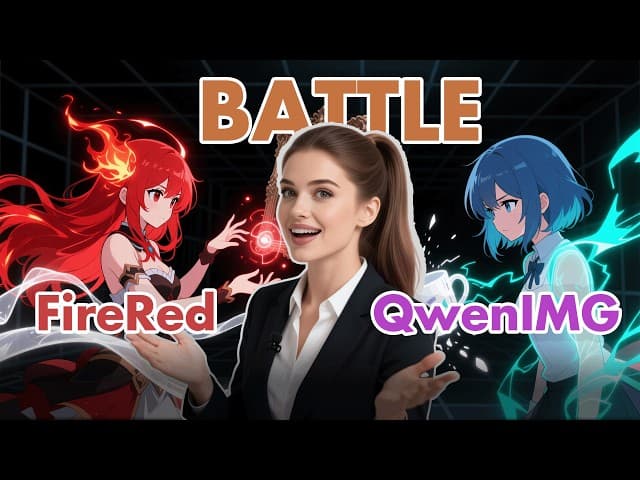
- **别再用Qwen!Fire-Red-Edit 才是真正的修图王者|零基础掌握 Fire-Red-Edit:最强 ComfyUI 修图指南** — [YouTube Video](https://youtube.com/watch?v=XXXXXX) *(11:48, 977 views)* showcases **advanced image editing techniques** with **Fire-Red-Edit**, emphasizing **ease of use and high-quality outputs**.
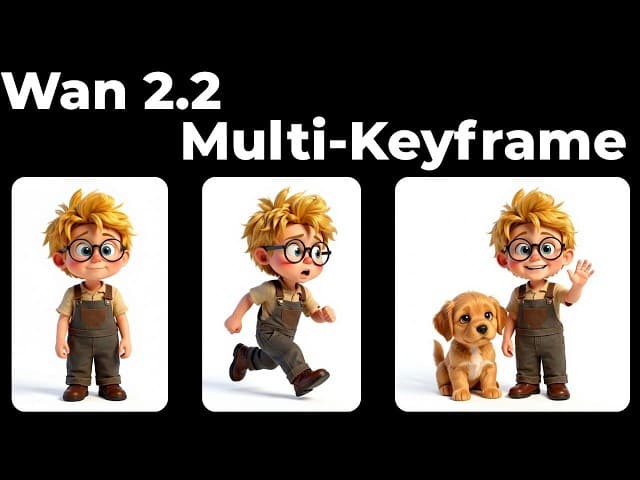
- **我用关键帧动画了一个角色(Wan 2.2 GGUF + SVI LoRA)** — [YouTube Video](https://youtube.com/watch?v=YYYYYY) *(9:11, 1,348 views)* demonstrates **dynamic character animation workflows** using **AI-driven video synthesis**.
These resources highlight the **continued push toward accessible, high-fidelity, and interactive AI creation tools**, reinforcing the **democratization of digital artistry** in 2026 and beyond.