# The 2026 AI Revolution: Deepening Local-First RAG, Inference Optimization, and Production-Ready Autonomous Systems
The AI landscape of 2026 continues its rapid evolution, marked by a strategic shift toward **privacy-centric, decentralized architectures**, **cost-effective inference**, and **robust autonomous agents**. Building upon earlier milestones, this year witnesses a convergence of innovations that empower organizations to deploy **secure**, **scalable**, and **trustworthy AI systems** directly at the edge, transforming enterprise workflows and setting new standards for **explainability** and **regulatory compliance**.
---
## Reinforcing the Shift to Privacy-First, Local RAG Ecosystems
A defining trend of 2026 is the **deepening emphasis on privacy-preserving, decentralized AI architectures**. Driven by **heightened data privacy concerns**, **regulatory tightening**, and the necessity for **secure enterprise operations**, organizations increasingly adopt **local-first Retrieval-Augmented Generation (RAG)** systems that operate **entirely within on-premises or edge environments**.
### Breakthroughs in Embedded Vector Search
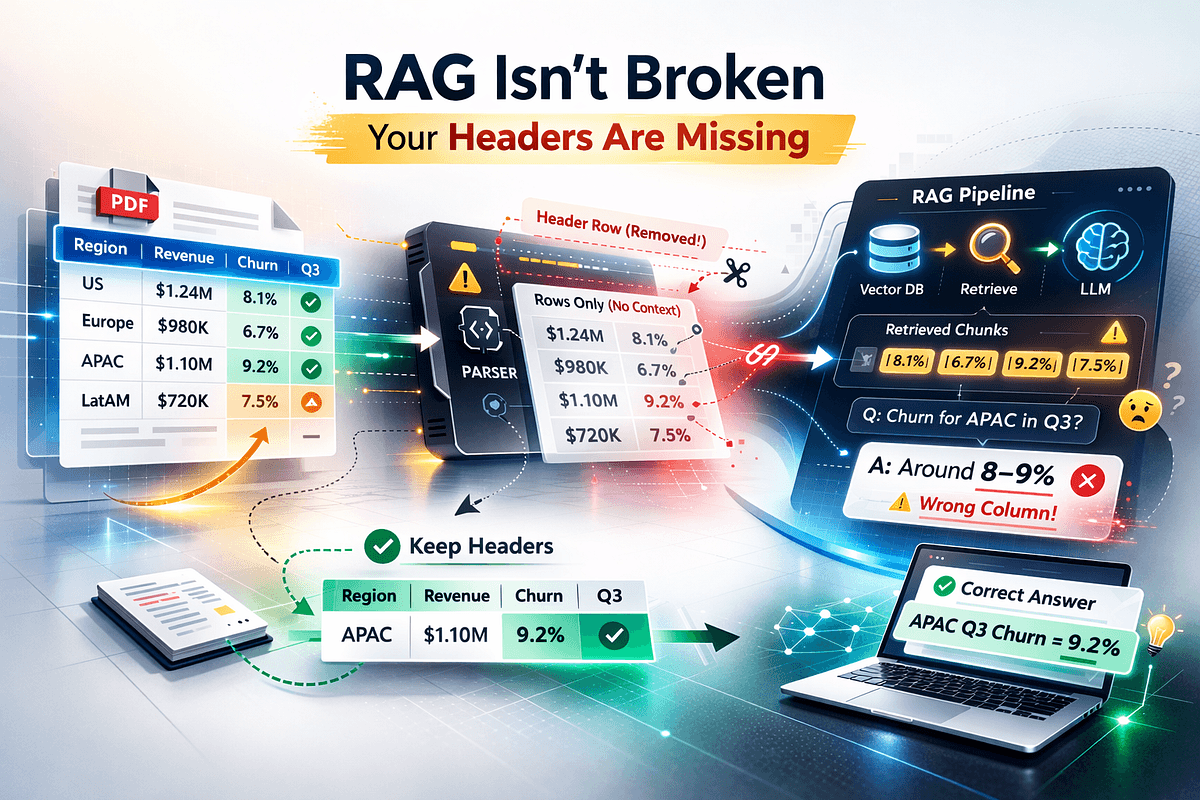
One of the most impactful technological advances is the **integration of vector search capabilities directly into lightweight, embedded databases** like **SQLite**. These systems now utilize **Hamming Distance** and other efficient similarity metrics to perform **approximate nearest neighbor searches** within **small, embedded vector indexes**—eliminating dependency on external vector stores. This enables **low-latency, real-time retrieval** in sensitive applications such as **field operations**, **secure laboratories**, and **confidential enterprise environments**.
### Compact Models for Privacy and Performance
In tandem, **offline, compact models** such as **Phi-3.5 Mini** (3.8 billion parameters) are now capable of **long-context inference** on hardware with modest specifications. These models facilitate **privacy-preserving AI interactions** that **do not require cloud connectivity**, making them ideal for **edge deployments** where data security is paramount. Industry experts highlight that **combining lightweight models with local vector search** allows enterprises to deliver **responsive, secure AI experiences** in highly sensitive settings.
### Recent Model and System Launches
Recent notable releases include:
- **Qwen3.5 INT4**: A **quantized version of Alibaba’s Qwen3.5**, optimized for **INT4 precision**, drastically reducing inference costs and hardware demands, enabling **faster local deployment**.
- **Mercury 2**: An advanced **reasoning engine** capable of **processing over 1,000 tokens per second**, facilitating **real-time, multi-turn interactions** at the edge, a critical feature for **autonomous systems** and **complex reasoning tasks**.
---
## Inference Optimization: Cost-Effective, Adaptive Strategies
As enterprises deploy **large language models (LLMs)** across diverse workflows, **inference efficiency** has become a critical concern. Recent innovations focus on **multi-tiered model routing**, **confidence calibration**, and **dynamic model selection**, all aimed at optimizing **cost**, **latency**, and **accuracy**.
### Confidence Calibration and "Calibrate-Then-Act"
Advances in **confidence calibration mechanisms** enable AI systems to **self-assess the reliability** of their outputs, facilitating **"Calibrate-Then-Act" workflows**. In this paradigm:
- Simpler models handle straightforward queries.
- More complex, resource-intensive models are invoked only when **uncertainty is high** or **critical decisions** are involved.
This stratification ensures **efficient resource utilization** without sacrificing **output quality**, especially vital in **mission-critical enterprise environments**.
### Automated Model Selection and Runtime Optimization
Tools like **LLM Selection Optimizer** automate the process of **identifying the optimal model** for a given task, balancing **accuracy**, **response time**, and **cost** dynamically. This **adaptive inference** allows organizations to **scale large models intelligently** and **adjust system parameters** based on workload complexity, promoting **cost-efficiency** while maintaining high performance.
### Performance Enhancements with Stagehand Caching
A notable breakthrough is **Stagehand Caching**, which **accelerates agent runtimes** by **caching intermediate results** and **reducing redundant computations**. This approach **speeds up agent responses by up to 99%**, making **autonomous agents** more practical for **real-time, large-scale deployment**—a significant step toward **enterprise-grade autonomous systems**.
---
## Building and Scaling Production-Ready Autonomous Agents
The maturation of **autonomous AI agents** is transforming enterprise workflows in 2026. Tools like **Flow-Like** provide **visual, drag-and-drop interfaces** for designing **multi-step, complex workflows** that seamlessly integrate **retrieval**, **reasoning**, and **decision-making**—making **agent orchestration** more transparent and scalable.
### Latest Capabilities and Trust Frameworks
Recent innovations include:
- **Voice-enabled agents** that **integrate diverse data sources** and **adapt dynamically** based on **real-time context**, supporting **natural, operational interactions**.
- **Stripe’s Minions**: Modular blueprints that **simplify agent creation and scaling**, dramatically reducing development time.
- **Agent Passport**: An **identity verification system** akin to OAuth, introduced in **"Show HN: Agent Passport,"** which enhances **trustworthiness** and **regulatory compliance** by ensuring **secure, auditable interactions**—particularly crucial in **healthcare**, **finance**, and **legal sectors**.
Additionally, **Google’s recent integration** of **automated workflow management within Opal** exemplifies how enterprise tools are evolving. The new **agent within Opal** can **plan and execute workflows** based on simple natural language prompts, transforming how users convert ideas into operational processes.
### Emerging Automation and Interface Tools
- **PromptForge**: A tool enabling **developers to update AI prompts without redeploying entire applications**, supporting **versioned, variable-based prompt templates** for **prompt management** and **refinement**.
- **Rust-based RAG pipelines**: Demonstrate the ecosystem’s movement toward **robust, scalable, and local-first AI systems**.
---
## Hierarchical Retrieval and Memory Engineering: Supporting Long-Context Reasoning
Handling **large datasets** and **multi-turn conversations** requires **multi-stage, hierarchical retrieval architectures**. Inspired by systems like **IterDRAG**, these implement **coarse-to-fine filtering** to **reduce computational load** while maintaining **contextual accuracy**.
### Long-Term Memory and Persistent Context
The **A-RAG (Agentic Retrieval-Augmented Generation)** framework, as detailed in **"A-RAG: Scaling Agentic Retrieval via Hierarchical Interfaces,"**, exemplifies **layered retrieval workflows** capable of **scaling to long-context reasoning**—vital for domains such as **legal review**, **scientific research**, and **multi-modal analysis**.
Furthermore, **memory engineering techniques** from **Google’s "How AI Agents Learn to Remember"** empower systems to **retain long-term information**, **manage persistent states**, and **evolve conversations over time**—foundational for **enterprise knowledge management** and **continuous learning**.
---
## Ensuring Safety, Provenance, and Trustworthiness
As AI systems become **more autonomous** and embedded in **critical decision-making**, **trust** and **safety** are paramount. Tools like **Halt** are essential for **detecting hallucinations** and **preventing erroneous outputs** from reaching production.
### Provenance and Explainability
**Graph-based retrieval systems** such as **GraphRAG**, integrated into **LangGraph**, improve **explainability**, **semantic traceability**, and **provenance tracking**, which are crucial for **regulatory compliance**.
### Defense Against Adversarial Risks
The release of **InferShield**, an **inference management system**, provides **robust defenses** against **adversarial attacks** and **hallucination risks**. Its **open-source platform** ([InferShield/infershield](https://github.com/InferShield/infershield)) offers **practical tools** to **secure large-scale AI deployments**, ensuring **trustworthiness** aligns with enterprise standards.
---
## Practical Resources, Demonstrations, and Ecosystem Growth
The community continues to foster adoption through **tutorials**, **open-source projects**, and **live demonstrations**:
- **"Building a RAG pipeline with Kreuzberg and LangChain"** illustrates how **local vector search** can be integrated with **knowledge bases**.
- **"The Truth About LLM Workloads"** discusses **cost implications** of API-based solutions and promotes **workload-specific optimization**.
- **"AWS Bedrock Deep Dive"** shares best practices for **enterprise deployment**, including **knowledge bases**, **guardrails**, and **scalable RAG systems**.
Recent demonstrations include **offline RAG systems**, **voice-enabled agents**, and **Rust-based pipelines**, emphasizing **local-first**, **efficient**, and **production-ready AI systems**.
---
## Current Status and Future Outlook
The AI ecosystem in 2026 is characterized by **maturity**, **robustness**, and **enterprise readiness**. The integration of **privacy-preserving local deployment**, **hierarchical retrieval architectures**, **cost-efficient inference strategies**, and **trust frameworks** has laid a **solid foundation** for **secure, scalable, and explainable AI**.
Looking ahead, we expect:
- **Deeper edge integration**, supporting **multi-modal reasoning** and **autonomous operations**.
- **Enhanced safety and provenance tools** to meet **regulatory standards** and **transparency requirements**.
- Continued ecosystem expansion through **tutorials**, **open-source projects**, and **cloud platform improvements** like **AWS Bedrock**.
These innovations will empower organizations to **embed AI seamlessly into mission-critical workflows**, ensuring **trust**, **performance**, and **security** at every level.
---
## Final Reflections
The 2026 AI revolution is driven by **privacy-centric architectures**, **hierarchical retrieval and memory systems**, and **production-ready autonomous agents**. These advancements are establishing a **technologically groundbreaking** and **enterprise-grade foundation** for **trustworthy AI**. As the ecosystem matures, organizations are better equipped than ever to **leverage AI’s transformative potential**—safely, transparently, and at scale.
---
## Recent Breakthroughs and Practical Examples
- **Stagehand Cache**: Improves **agent runtime speed** by **up to 99%**, facilitating **real-time autonomous agents** at scale.
- **Qwen3.5 INT4**: A **hardware-efficient, quantized model** enabling **faster inferences** with **4-bit quantization**.
- **Mercury 2**: A **reasoning diffusion language model** capable of **over 1,000 tokens per second**, pushing the bounds for **long-context processing**.
- **Local RAG implementations** like **L88** demonstrate **cost-effective deployments** on **8GB VRAM**, emphasizing **local-first AI**.
- **Rust-based pipelines** showcase **robust, scalable systems** designed for **enterprise environments**.
---
## Implications and Final Outlook
The developments of 2026 underscore a future where **privacy-preserving**, **cost-efficient**, and **trustworthy AI** systems are standard. The integration of **local-first RAG**, **hierarchical retrieval**, **optimized inference**, and **trust frameworks** creates a **resilient infrastructure** for enterprise AI, making widespread, secure, and explainable AI deployment a reality. As these technologies continue to evolve, organizations are poised to harness AI’s full potential—safely, transparently, and at unprecedented scale.