# Trump-era GOP Politics in 2024: Deepening Divides, Hawkish Posture, and Strategic Ambitions
As the 2024 presidential race intensifies, the Republican Party is navigating a complex landscape marked by unwavering loyalty to Donald Trump, internal ideological fissures, an increasingly assertive foreign policy stance, and a strategic mobilization around cultural grievances. These intertwined dynamics are shaping not only GOP messaging and electoral tactics but also influencing the broader societal and international spheres, raising concerns about escalation and polarization.
## Trump’s Enduring Symbolic Leadership and Faith-Centered Mobilization
Despite stepping back from official leadership, Donald Trump remains the de facto figurehead of the party, wielding influence through symbolic acts and populist messaging that resonate deeply with his core supporters.
- **Faith and Cultural Identity:** Trump’s recent appearances at events honoring conservative values—such as paying tribute to figures like Charlie Kirk—serve to reinforce his image as a champion of religious and traditional American values. A recent video titled *“Trump Pays Tribute to Charlie Kirk, Faith Resurgence in US”* underscores his positioning as a defender of faith against societal secularization. These efforts aim to galvanize religious conservatives and frame societal renewal as rooted in spiritual revival.
- **Angel Family and Pro-Societal Acts:** The signing of the **Angel Family Proclamation** exemplifies Trump’s strategy of positioning himself as a protector of American citizens, especially in the context of illegal immigration. An illustrative recent report titled *“Angel mom calls out Dems: They wouldn’t even stand. Who does that? | National Report”* captures this narrative—highlighting the emotional appeals from families affected by illegal crossings and positioning Democrats as dismissive and uncaring.
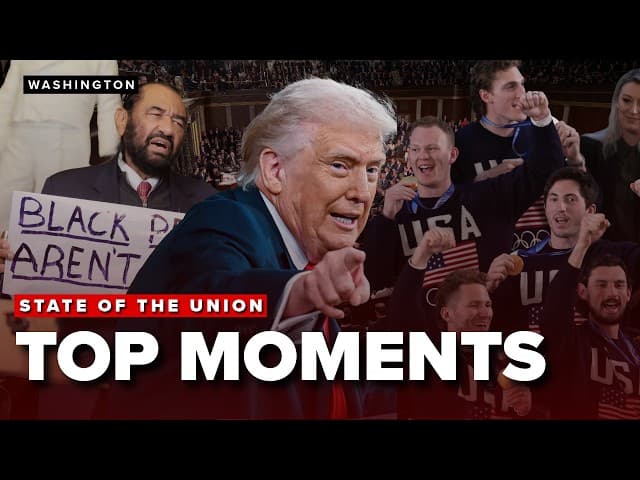
- **Media and Messaging Amplification:** Trump continues to leverage media appearances and targeted videos—such as *“Everything You Missed in Trump's State of the Union Address”*—to craft a cohesive narrative emphasizing **law and order**, **national security**, and **cultural identity**. These themes are designed to energize supporters, frame Democrats as threats to societal stability, and reinforce the overarching populist message.
- **Legal and Conspiratorial Narratives:** The release of disclosures like the Epstein-Maxwell files, which Trump and allies highlight as evidence of elite corruption and cover-ups, continue to fuel distrust in institutions. As Rep. Luna recently stated, *“Democrats are using Epstein files as a political smear,”* framing these revelations as part of a broader narrative of elite conspiracy and societal betrayal.
- **Upcoming Key Platforms:** The **State of the Union** remains a pivotal stage. A recent video, *“Everything You Missed in Trump's State of the Union Address,”* emphasizes how themes of law and order, security, and cultural identity are strategically woven into the speech to rally the base and set a confrontational tone against Democratic policies.
## Internal GOP Factions: Disputes Over Policy and Loyalty
While Trump’s influence remains dominant, internal divisions over core issues threaten party unity as the 2024 elections approach.
- **Economic Policy and Trade:** A notable ideological split persists on trade matters. The *Wall Street Journal* recently criticized Trump’s protectionist tariffs as an *“embarrassment,”* signaling a potential shift among some conservatives toward embracing free-market principles. This tension reflects a broader debate: should the GOP prioritize populist protectionism or adhere to traditional conservative orthodoxy emphasizing limited government and open markets?
- **Loyalty and Loyalty Struggles:** Trump's withdrawal of support for figures like Colorado’s Jeff Hurd—over disagreements on tariffs—exemplifies ongoing loyalty conflicts. These disputes highlight competing visions within the party: maintaining Trump’s nationalist-populist ethos versus upholding conservative principles of free trade and limited federal intervention.
- **Cultural Mobilization and Society War:** The GOP continues to rally around themes of **law-and-order**, **border security**, and **cultural identity**. Recent efforts include prominent tributes to conservative leaders and attacks on Democratic handling of high-profile cases. The Epstein-Maxwell disclosures are frequently invoked to stoke societal distrust and foster conspiracy narratives, depicting elite corruption as a threat to societal integrity.
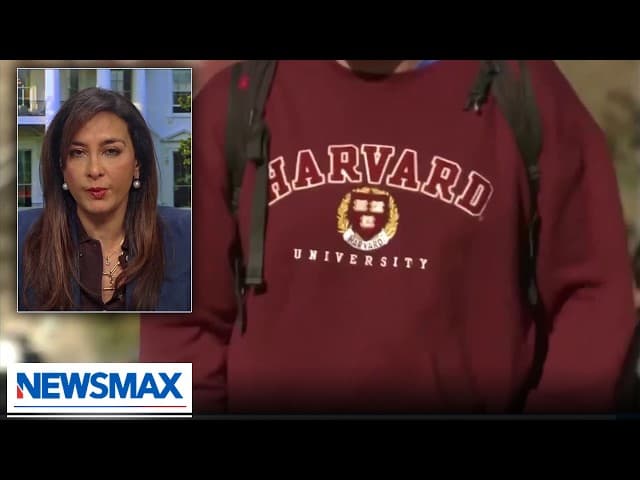
- **Cultural Grievances and Legal Narratives:** Figures like Chip Roy warn of “organized targeting” and “hate lists,” framing these issues as threats to free expression and societal stability. Such rhetoric fuels the ongoing culture war, energizing supporters through stories of victimization and ideological persecution. Additionally, cultural grievances related to higher education remain prominent; for instance, Harmeet Dhillon’s recent critique—*“Harmeet Dhillon: Harvard continues to discriminate against whites”—* underscores perceptions of systemic bias and societal marginalization, further mobilizing conservative resentment.
## An Intensified, Hawkish Foreign Policy Posture
The GOP’s foreign policy stance has shifted markedly toward assertiveness, emphasizing strength, sovereignty, and deterrence—particularly concerning Iran, Israel, and Ukraine.
- **Iran:** Congressional voices like Rep. Kiley accuse Iran of “delaying negotiations,” while figures such as Robert Wilkie advocate for increased pressure, including potential military options. Recent reports from outlets like **Newsmax** suggest Trump is weighing **limited military strikes**, possibly targeting Iranian leadership or nuclear facilities, to demonstrate resolve and curb Iran’s nuclear ambitions. Discussions about **decapitation campaigns** signal an escalation, with the aim of pressuring Iran into negotiations while projecting U.S. strength.
- **Israel:** The party remains strongly supportive of Israel, emphasizing its strategic importance in countering regional threats, especially Iran. The narrative frames Israel as a cornerstone of U.S. foreign policy and a key ally in maintaining regional stability amid internal tensions with Prime Minister Netanyahu.
- **Ukraine:** Despite continued aid, a faction within the GOP resists concessions on territorial integrity, advocating for sustained support to counter Russian expansionism. Recent high-level interactions, such as Senator Rubio’s meetings with Ukrainian President Zelensky and efforts to build alliances with nationalist leaders like Viktor Orbán, reflect a strategy to bolster U.S. influence and deter authoritarian regimes.
- **Military and Nuclear Modernization:** Trump’s considerations of **limited military strikes on Iran** and initiatives to **close the “nuclear weapons gap”** underscore a broader push for military assertiveness. Legislation led by Senators like Markwayne Mullin focuses on **upgrading nuclear delivery systems**, **modernizing command infrastructure**, and **expanding rapid deployment** capabilities—aims designed to project strength, ensure credible deterrence, and prepare for emerging crises.
## Strategic Military Modernization and Deterrence
The U.S. continues investing heavily in military modernization, with particular focus on nuclear forces to address vulnerabilities and preserve strategic superiority.
- **Nuclear Arsenal Upgrades:** Recent reports highlight efforts to **bridge the “Nuclear Weapons Gap”**, which involves upgrading delivery platforms, warheads, and command systems. These initiatives aim to:
- Maintain strategic superiority over adversaries like Russia and China
- Ensure credible deterrence in an era of emerging nuclear threats
- Enable rapid response capabilities for crises
- **Legislative Efforts:** Lawmakers such as Mullin are pushing to **reposition nuclear assets**, enhance command infrastructure, and expand rapid deployment forces, reinforcing a posture of strength and readiness.
## Diplomatic Signaling and Limited Military Options
Amid these assertive policies, reports suggest Trump is contemplating **limited military strikes** on Iran—targeted operations intended to pressure Tehran into negotiations, demonstrate resolve, and preserve diplomatic flexibility. These actions are framed as part of a broader strategy emphasizing **military strength** as a key component of U.S. foreign policy, with diplomacy seen as a complementary tool rather than a substitute.
Bipartisan support remains evident, with figures like Rep. Crenshaw emphasizing **sanctions** and **military readiness** as essential elements. The overarching narrative underscores that **strength and deterrence** are central to U.S. international strategy.
## Cultural and Legal Narratives Reinforcing Populist Themes
The GOP continues to leverage themes of **law-and-order**, **border security**, and **cultural identity** to energize supporters and frame Democratic policies as threats to societal stability.
- **Immigration:** The party portrays illegal crossings as a crisis driven by “open borders,” advocating for increased enforcement and border wall initiatives.
- **Cultural Confrontations:** Incidents such as protests against gender policies and confrontations with transgender communities serve to energize conservatives and deepen societal divides.
- **Disinformation and Distrust:** Conservative outlets continue to amplify claims of “systemic redactions,” elite cover-ups, and alleged corruption—like in the Epstein-Maxwell case—using these narratives to foster suspicion of institutions and fuel conspiracy theories.
## Recent Developments: The Culture War and Strategic Messaging
### The State of the Union as a Strategic Platform
The upcoming **State of the Union** is expected to be a key moment for GOP messaging. A recent video, *“Everything You Missed in Trump's State of the Union Address,”* highlights how the speech’s core themes—**law and order**, **national security**, and **cultural identity**—are crafted to energize the base and set the tone for the year. The emphasis remains on framing Democratic policies as threats to societal stability and promoting a narrative of American resilience and strength.
### Escalating Cultural Grievance Campaigns
- **Higher Education:** Harmeet Dhillon’s recent video, *“Harmeet Dhillon: Harvard continues to discriminate against whites,”* underscores ongoing cultural grievances and systemic bias narratives. These stories feed into the broader culture war, mobilizing supporters around perceived societal marginalization.
- **Media Amplification:** Conservative media persistently highlight claims of “organized targeting,” “hate lists,” and “assassin rhetoric,” exemplified by figures like Chip Roy. These narratives portray Democrats as existential threats to political and personal freedoms, framing elections as battles for survival.
### The ‘War on Fraud’ and Grassroots Mobilization
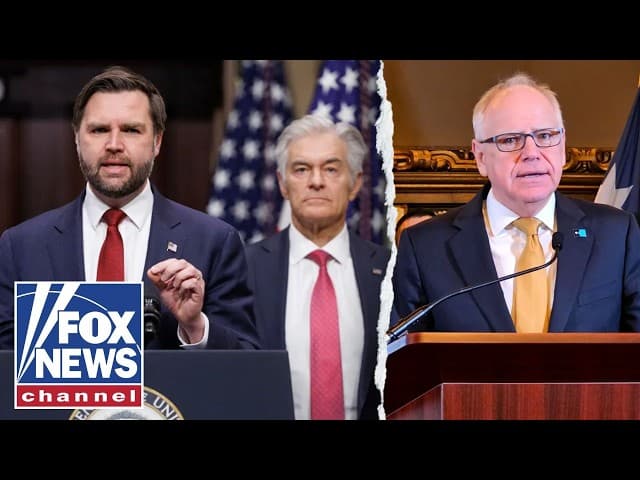
A recent video titled **“WAR ON FRAUD: JD Vance targets blue state”** exemplifies the GOP’s focus on election integrity and legal battles against alleged electoral misconduct. By framing such efforts as defending democracy, the party seeks to energize its base and position itself as the guardian of fair elections.
Similarly, the **Angel mom** narratives continue to resonate, with reports like *“Angel mom calls out Dems: They wouldn't even stand. Who does that?”* reinforcing emotional appeals tied to border security and societal protection.
## Current Status and Implications
The GOP’s trajectory heading into 2024 reveals a party increasingly polarized, militarized, and confrontational. Internal disputes over economic policies—particularly trade—coupled with a hawkish foreign policy stance, threaten to fracture party unity. The party’s emphasis on strength, cultural identity, and populist grievances aims to energize core supporters but may also escalate international conflicts and societal tensions.
Internationally, heightened prospects of military escalation—especially concerning Iran and Russia—loom on the horizon. Domestically, the intensification of the culture war and narratives of societal victimization threaten to deepen divisions, complicate efforts at national cohesion, and influence electoral outcomes.
**In summary**, the Republican Party is consolidating its identity around aggressive foreign policy postures, populist cultural messaging, and internal factionalism that risks further escalation. As the 2024 campaign unfolds, these dynamics will critically shape both domestic stability and international security, with the potential to intensify conflicts and societal fractures further. The coming months will be decisive in determining whether this approach consolidates support or triggers further divisions within a deeply polarized America.