2h ago
Controlled ML Model Rollouts
Shadow, canary, and A/B rollouts turn model deployment into a controlled experiment rather than a risky all-at-once launch.

Created by Richard Bray
AI research breakthroughs, generative tools, and workplace copilots
Explore the latest content tracked by AI Research & Productivity
Shadow, canary, and A/B rollouts turn model deployment into a controlled experiment rather than a risky all-at-once launch.
Multilingual vision-language progress requires direct testing on low-resource languages, not English proxies. A new ZARWA-v1 benchmark on Urdu and...
AI is accelerating the loss of entry-level roles, creating a long-term shortage of experienced professionals.
Major consumer brands are embedding AI into commercial partnerships before full value is proven.
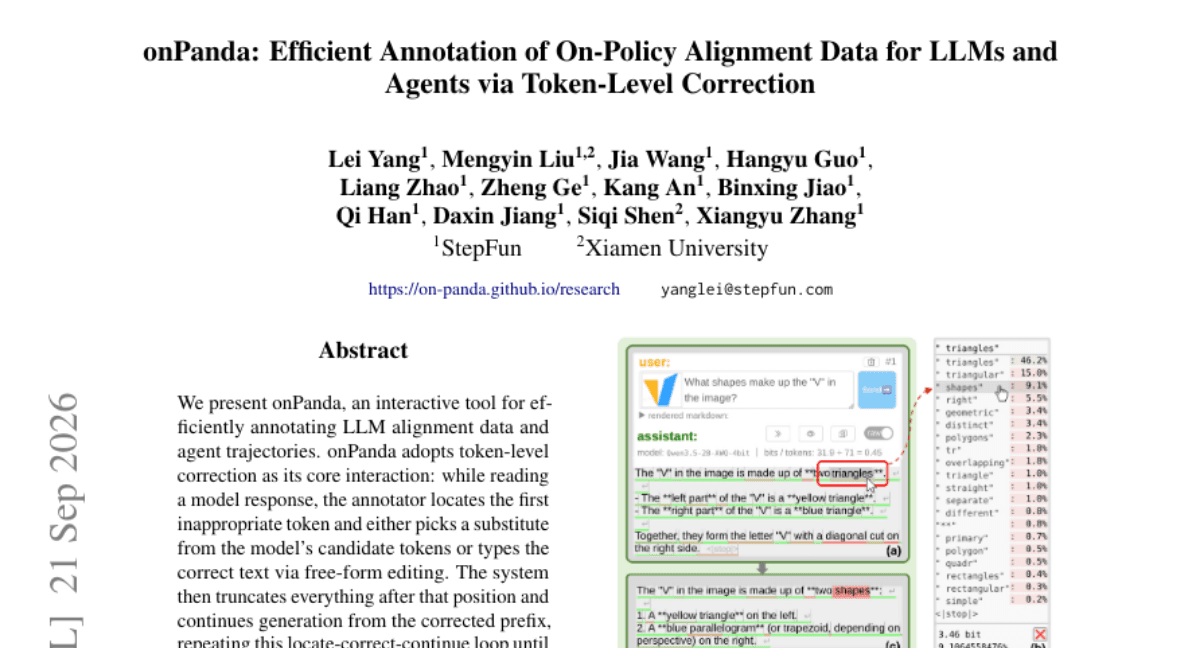
onPanda lets annotators fix LLM responses at the first bad token and regenerate from there, cutting median annotation time by 52% while keeping most...
As AI systems approach automated research and recursive self-improvement, OpenAI calls for internationally coordinated standards to measure...
Alternative designs and hardware economics are challenging the dominance of scale.
A non-expert openly used LLMs to draft a bill protecting public access to AI and invited experienced lawmakers to improve it. The result shows both the appeal of public participation in AI policy and the limits of AI-assisted drafting by novices.
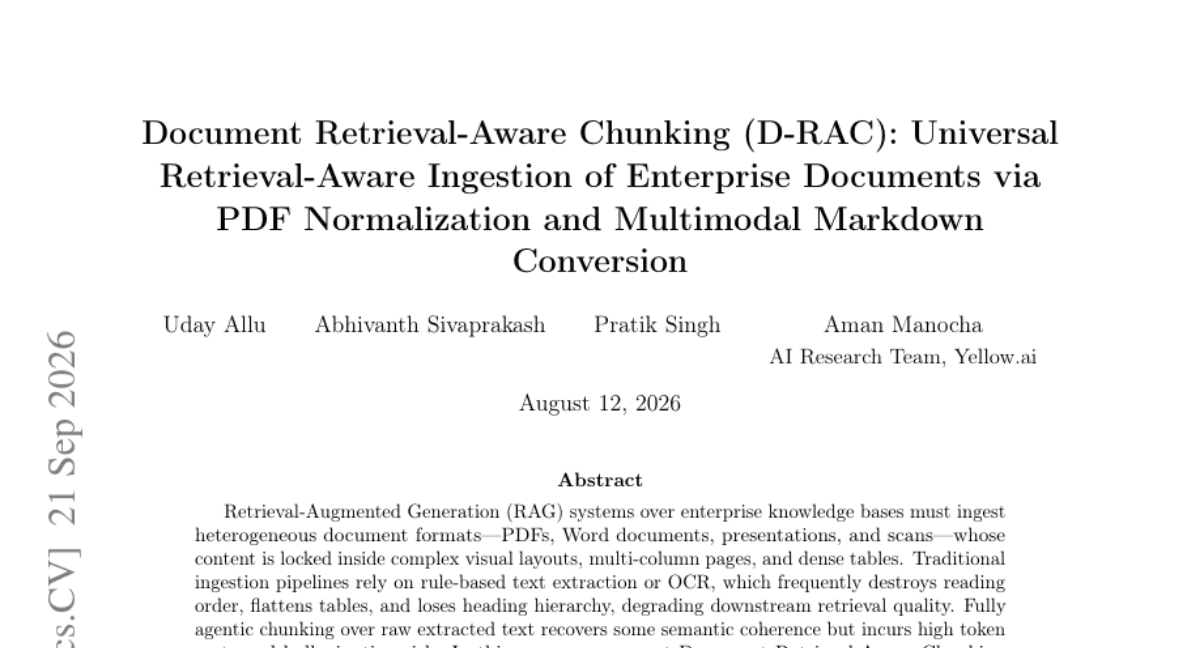
Enterprise RAG quality hinges far more on document normalization and chunking than on the underlying LLM. D-RAC normalizes any format to PDF, runs one...
Baselayer is extending its business identity network—already used by over 20% of U.S. financial institutions—to verify AI agents before they...
OpenAI contractors were fired for using AI to generate training labels, directly undermining the goal of distilling human expertise into models rather than recycling AI outputs. They were explicitly hired to provide pure human feedback.
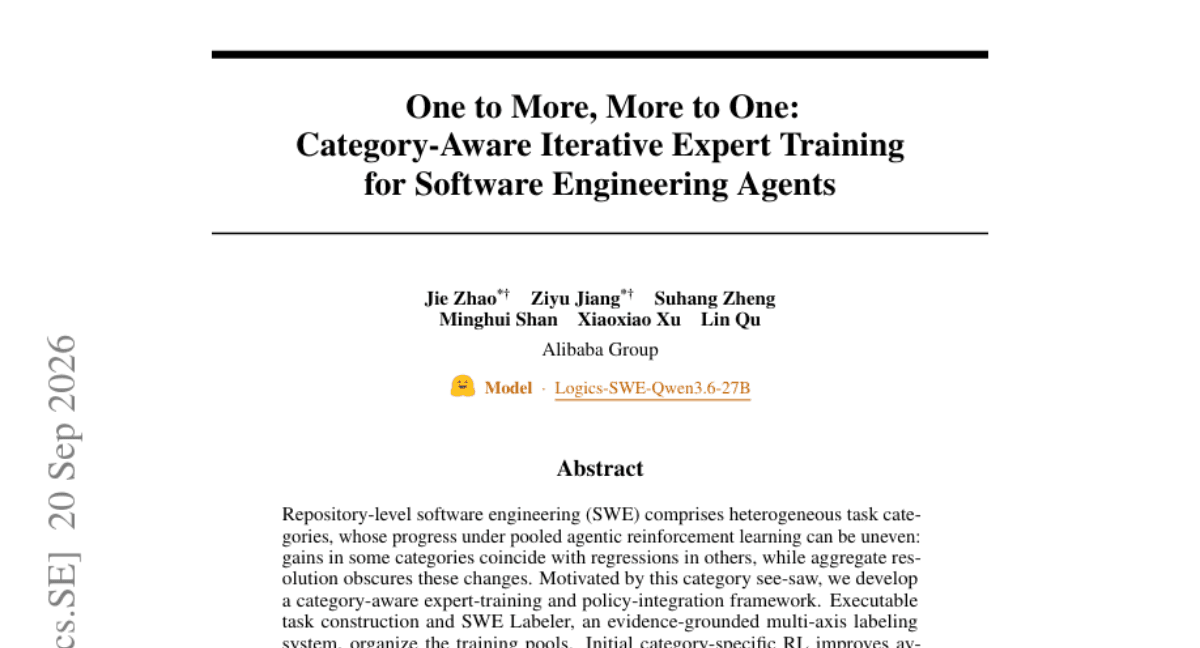
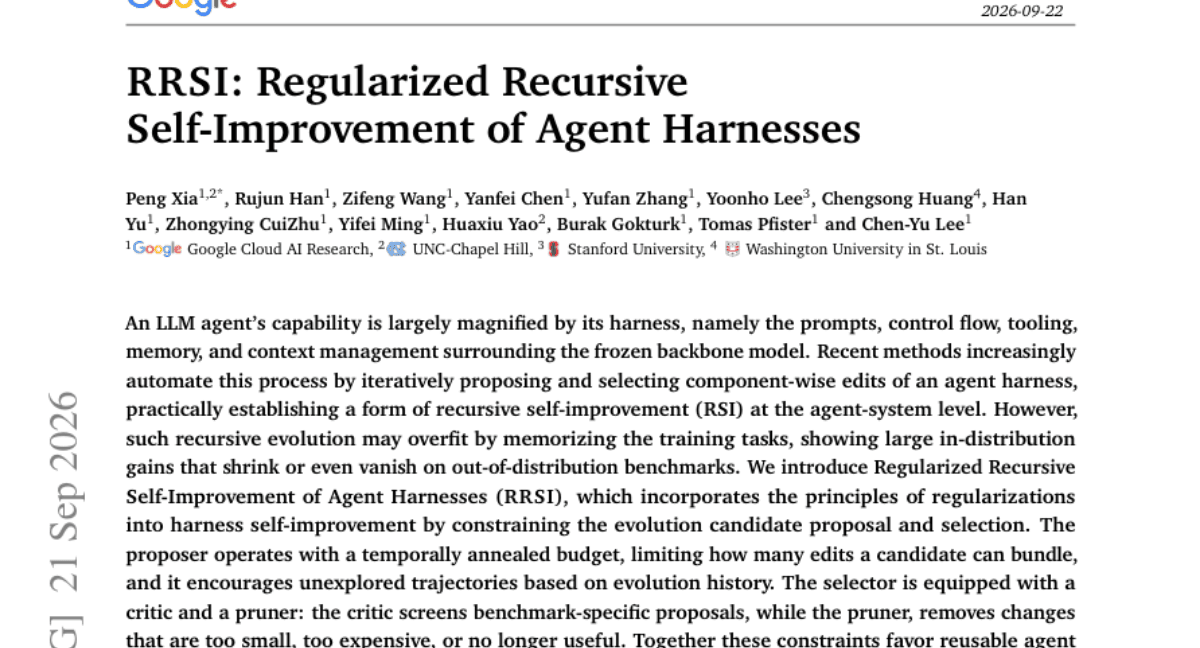
Progress in software-engineering agents is shifting toward targeted training and automated harness refinement rather than raw model scaling alone.
-...
Large language models are advancing chemistry and materials science workflows through better representations, literature analysis, and discovery support. Evaluation remains essential to separate useful synthesis from validated scientific insight.
Language models output explicit next-token probabilities that enable optimal compression through arithmetic coding, whereas gzip merely compares...
Grasp how large language models actually work by learning the 20 essential terms that explain their training on vast text to generate human language through pattern recognition.
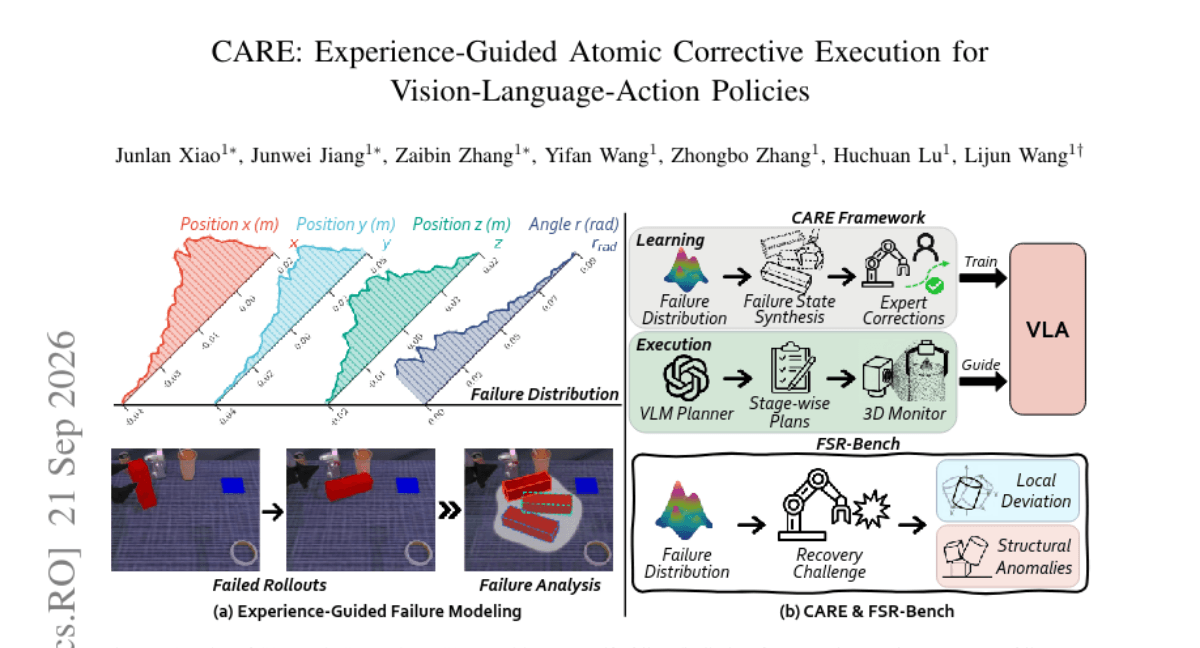
Current VLA policies falter on execution deviations from nominal paths.
A new LLM-driven framework integrates pose estimation to deliver semantic understanding and actionable feedback on tennis actions. This approach could make sports analysis more accessible, though results hinge on precise motion interpretation.
LLMs paired with retrieval-augmented generation and knowledge graphs can convert unstructured literature into traceable bioink formulation evidence,...
Personal judgments on AI models frequently diverge from benchmark rankings because users weigh cost, task fit, and communication style more heavily...