3h ago
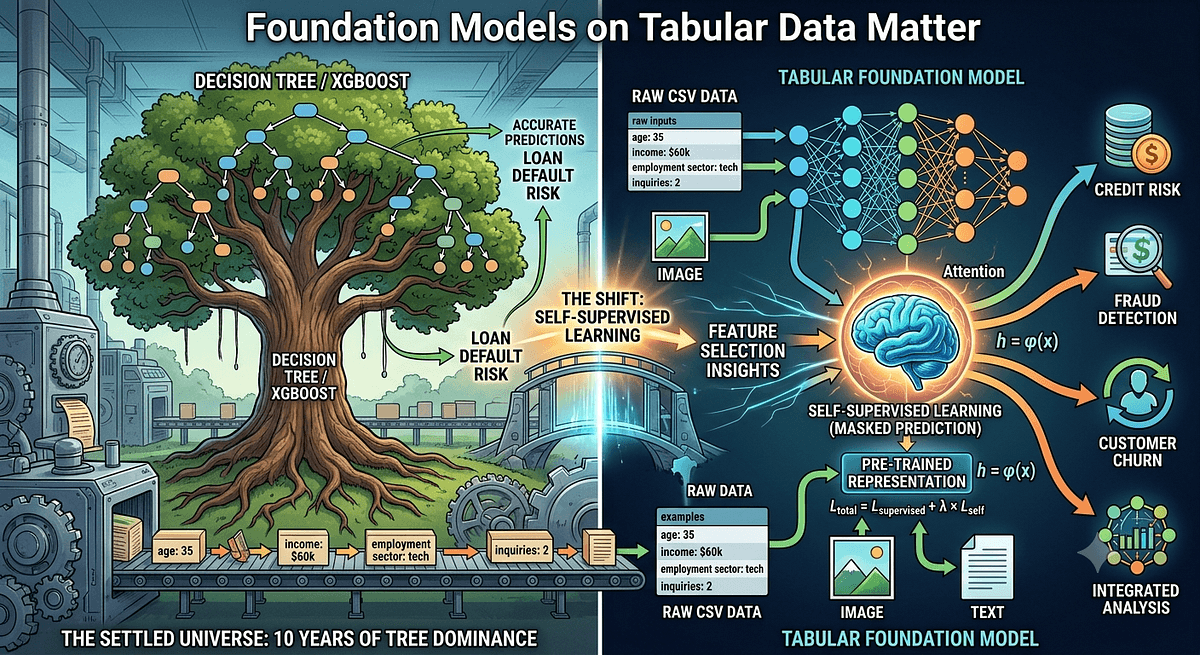
Tabular Data's Long-Ignored Bottleneck Finally Yields
Deep learning split into two worlds because neural nets consistently lost to 2015-era tree methods on CSV files, leaving trillions in industry running...

Created by Barbara Roy
Cutting‑edge AI research updates on theory, scaling laws, and new architectures
Explore the latest content tracked by AI Theory Frontier
Deep learning split into two worlds because neural nets consistently lost to 2015-era tree methods on CSV files, leaving trillions in industry running...
VGI-Bench provides the first quantitative academic benchmark for measuring visual intelligence in generative video models, moving evaluation beyond subjective visual quality toward comparable, measurable capabilities.
Optimizing stimuli to force disagreement among high-capacity neural network models provides a powerful way to discriminate competing hypotheses of...
Customization with embedded expert judgment outperforms general-purpose LLMs on text-to-SQL. By folding human evaluation into every stage of RLVR, researchers built the first model to exceed the human baseline.
Some models suffer major pass@3 drops and ranking reversals when tasks are swapped for unreleased variants, while others stay stable, pointing to possible contamination or instability in current benchmarks.
Co-packaged optics (CPO) tackles AI scaling limits by placing optical engines millimeters from the XPU instead of centimeters away.
A free introduction starts with formal definitions of feedforward networks and progresses through universal approximation, splines, and ReLU networks toward high-dimensional analysis, giving researchers a direct path into foundational theory.
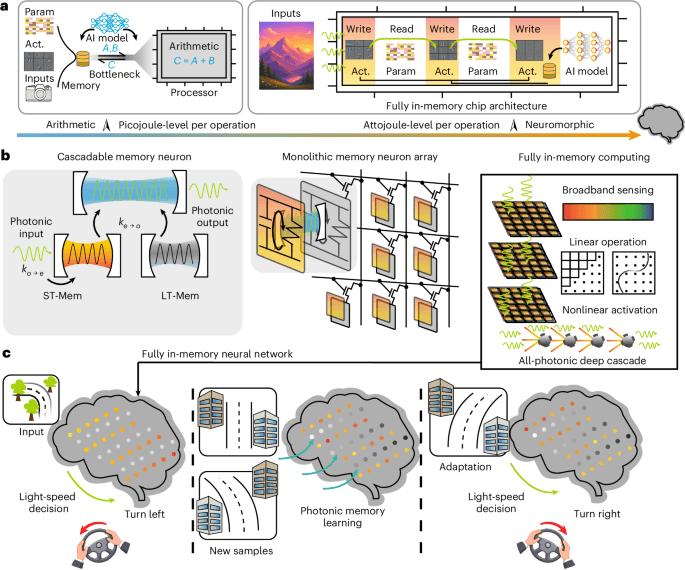
Can photonic memory-compute integration overcome the data-movement bottleneck?
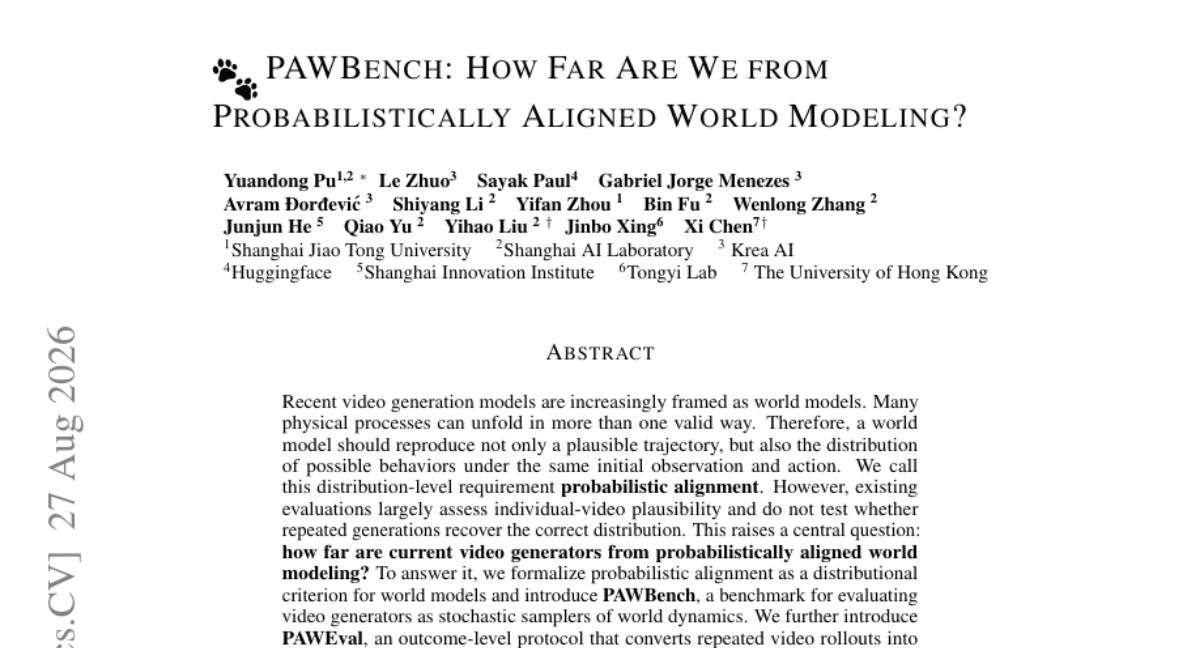
Three papers trace a clear shift in world-model research.
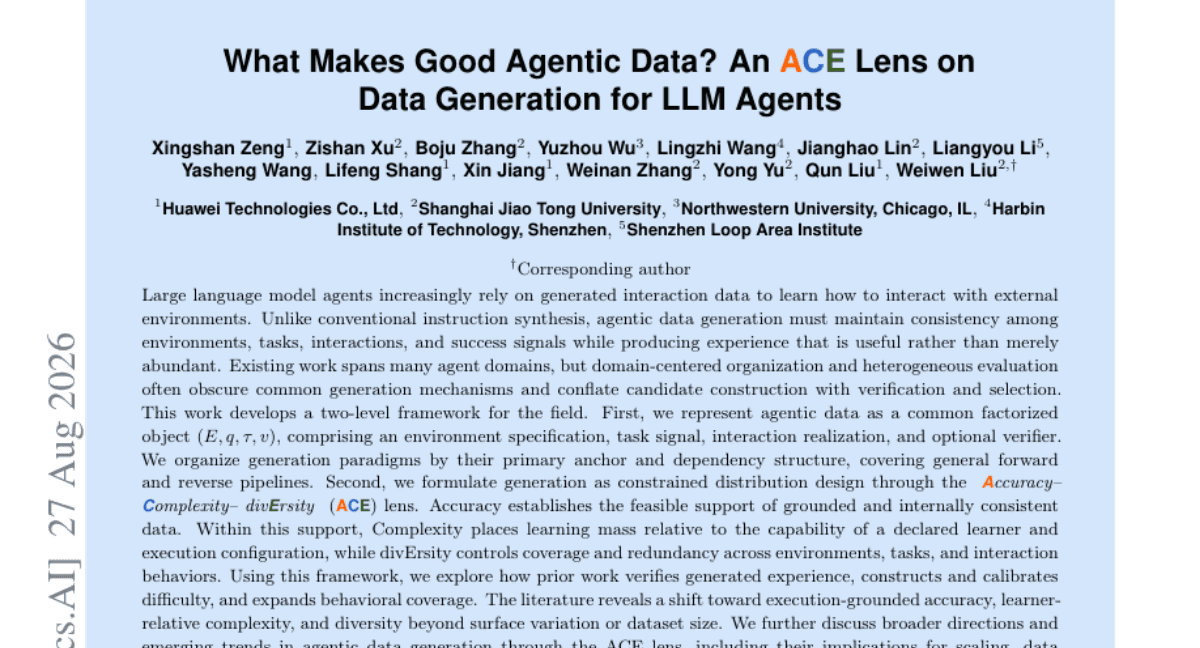
Two papers highlight a shift from raw interaction scale to structured experience management.
Models excelling at independent task completion often fail to boost human performance when collaborating. Opus and Sonnet lead in automation yet lag in assistance, while GPT-5-Mini succeeds across both.
LLMs gain physical-world grounding when mobility patterns enrich place embeddings, yielding up to 81.9% gains in visit-intent prediction.
Multiple groups now attack long-horizon fragility through bounded recursion and automated patching.
MetaRoCE treats Ethernet as lossy, spraying packets across paths with NIC-handled recovery and no PFC, sustaining ~86% throughput at 1%...
Novel architectures are embedding domain-specific inductive biases to tackle spatiotemporal interpolation and time series forecasting.
Accelerated Understanding Inc launches a 4D neural operator model that skips transformers, scaling to 1 trillion parameters and handling 5 trillion...
Three angles on scaling laws reveal tensions between enabling progress and managing consequences.
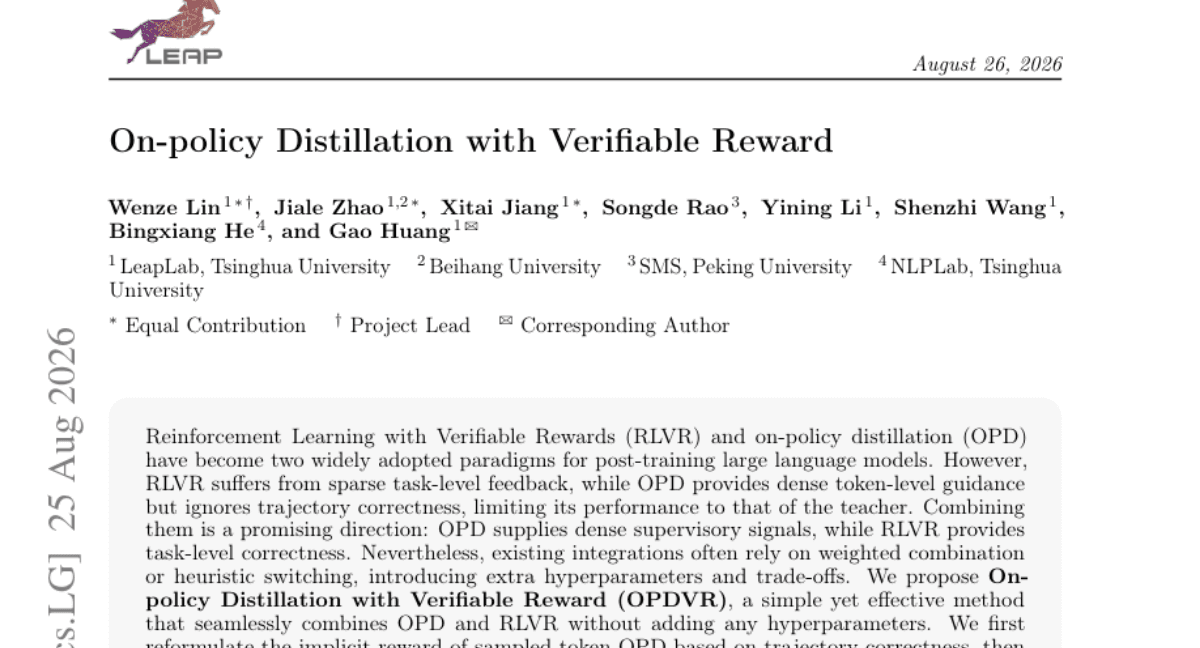
RL with verifiable rewards is emerging as a unifying approach for LLM post-training across domains.