# The 2026 Milestone in Multimodal Video and Audio AI: Unveiling Breakthroughs in Long-Context Understanding, Generation, and Safety
The year 2026 marks a transformative epoch in the evolution of multimodal artificial intelligence, characterized by unprecedented capabilities in understanding, generating, and reasoning over multi-hour streams of video and audio content. Building on decades of incremental progress, recent breakthroughs have propelled AI systems into a realm where **coherent, safe, and deeply insightful reasoning** over extended media becomes routine. These advances are not only bridging the perceptual gap between machines and humans but are also unlocking new applications across entertainment, scientific research, autonomous systems, and interactive agents, positioning multimodal AI as a cornerstone of the future digital landscape.
---
## The Pinnacle of Long-Range Multimodal Capabilities
### Hierarchical, Time-Aware Architectures for Extended Media
At the heart of this revolution lie **hierarchical, time-sensitive models** capable of maintaining **contextual coherence over multi-hour streams**. Early models designed for short clips have evolved into sophisticated architectures like **TimeChat-Captioner**, which employ **multi-level scene understanding and content indexing**. These systems can generate **multi-tiered descriptions** for long-form content such as documentaries, lectures, or narrative videos, enabling functionalities like **content retrieval**, **navigation**, and **active engagement** similar to human perception.
Complementing these architectures are techniques such as **"Zooming without Zooming"**, which utilize **region-to-image distillation** to facilitate **multi-scale scene comprehension**. This approach enhances **spatial-temporal coherence**, supporting **immersive storytelling** and **virtual environment creation**, where maintaining a consistent and realistic perception across extended media is paramount.
### Long-Horizon Memory Modules and Dynamic Reasoning
A major breakthrough addressing the challenge of reasoning over hours-long streams involves **long-horizon memory mechanisms** like **GRU-Mem**. These modules implement **gated recurrent structures** that dynamically decide **when to memorize or forget** information, effectively **preventing information degradation** over time. This **"When to Memorize and When to Stop"** paradigm ensures **reasoning accuracy** and **narrative continuity**, allowing AI to **sustain attention** and **maintain storyline coherence**—crucial for **scientific analysis**, **long-form storytelling**, and **interactive applications**.
### Efficient Codec Primitives and Geometry-Aware Embeddings
Handling the vast sequences inherent in multi-hour media has been made feasible through **efficient codec primitives**, exemplified by **CoPE-VideoLM**, which models **temporal dynamics** efficiently, significantly **reducing training time** and **inference latency**. Additionally, **geometry-aware rotary position embeddings** like **ViewRope** preserve **spatial-temporal consistency**, critical for **autonomous navigation**, **virtual scene modeling**, and **3D asset generation**.
### Bridging Training-Test Gaps with Dynamic Reasoning
A persistent challenge has been the **training-test horizon mismatch**—models trained on limited contexts often struggle with open-ended, real-world scenarios. The **Rolling Sink** approach addresses this by **dynamically extending reasoning horizons**, enabling models to **sustain coherence over hours**. When paired with **Mercury 2**, a **diffusion-based reasoning language model** capable of processing **over 1,000 tokens per second**, these innovations facilitate **high-throughput, interpretable reasoning** across extensive media streams, vital for **scientific exploration**, **long-form storytelling**, and **interactive agents**.
---
## Towards Universal and Attribute-Structured Multimodal Large Language Models (MLLMs)
The quest for **universal video multimodal large language models** has accelerated through initiatives like **"Towards Universal Video MLLMs"** and **LaViDa-R1**. These models emphasize **attribute-structured understanding**, enabling **fine-grained scene comprehension** and **multi-domain interactive tasks**. Supported by extensive datasets such as **DeepVision-103K**, which provides **diverse, verifiable annotations** spanning visual, textual, and mathematical modalities, these models are becoming **more robust and adaptable**.
Frameworks like **MoRL** leverage **diffusion-based reasoning** and **multi-modal inference** to address **complex reasoning tasks**, fostering **more generalizable and resilient models** capable of **deep multimedia comprehension** at scale.
---
## Advances in Video and Audio Tokenization, Compression, and Synthesis
### High-Fidelity Video Tokenization
**Video tokenization** remains central to scalable content generation. The **UniWeTok** tokenizer exemplifies this with a **codebook size of \(2^{128}\)**, enabling **highly compressed, semantically rich discrete representations**. When combined with **diffusion models** such as **BitDance**, **T3D**, and **D3iT**, these tokenizers facilitate **resource-efficient, multi-hour video synthesis** with **remarkable fidelity**, paving the way for **real-time, high-quality content creation**.
### Structured and Communication-Inspired Representations
Recent approaches draw inspiration from **human communication protocols**, introducing **structured, interpretable tokenization schemes**. These methods promote **semantic understanding** and **robust content synthesis**, effectively bridging raw data and human perception.
### 3D and 4D Scene Generation
Tools like **AssetFormer**, an autoregressive transformer for **systematic 3D asset creation**, streamline workflows for **virtual environments** and **video game development**. Meanwhile, **Light4D** offers **training-free 4D relighting**, allowing users to **virtually re-light scenes** without retraining—revolutionizing **virtual production**, **visual effects**, and **interactive storytelling**.
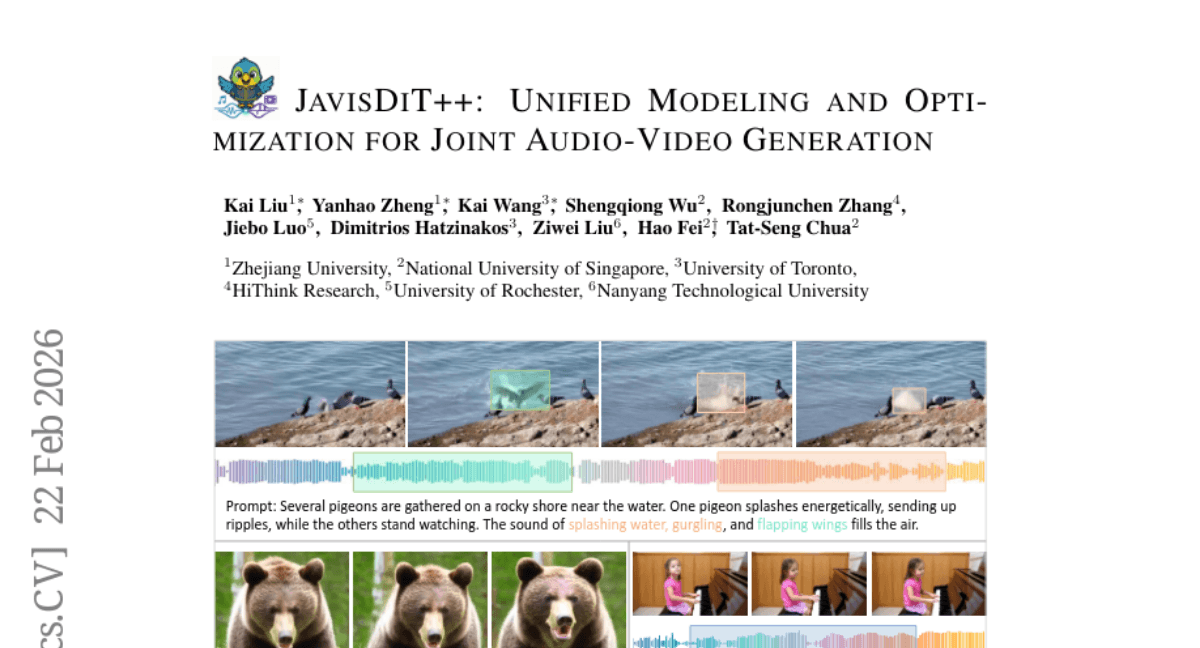
### New Milestone: SkyReels-V4 — Multimodal Video-Audio Generation and Editing
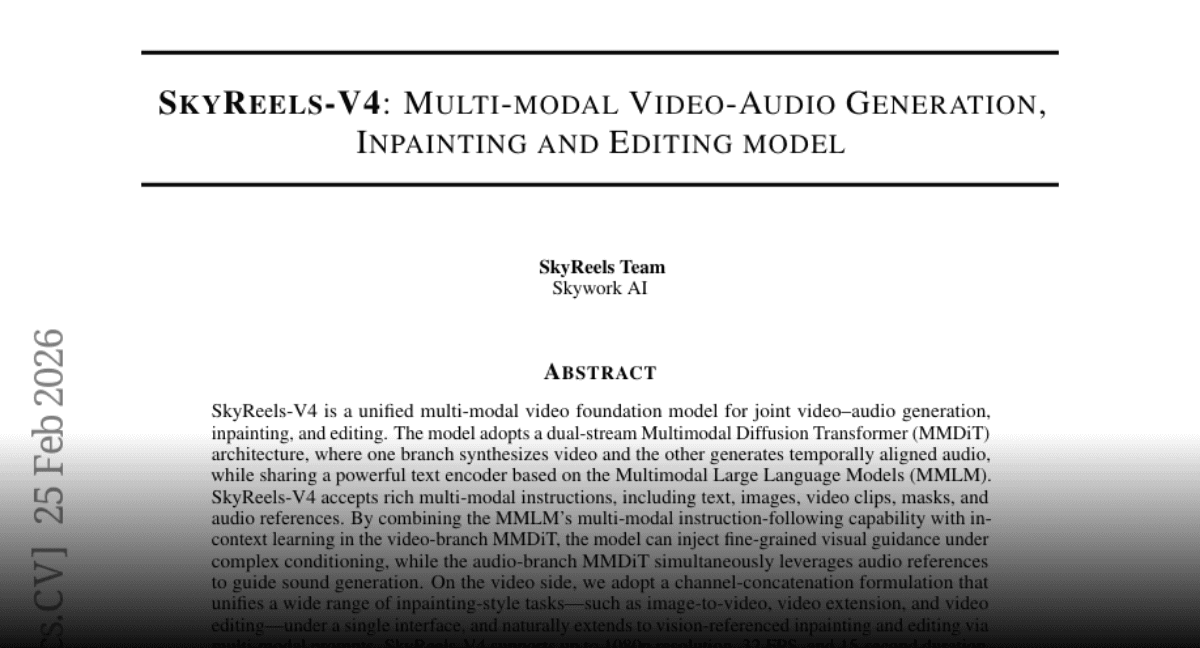
Adding a significant leap forward, **SkyReels-V4** is a state-of-the-art **multimodal video-audio generation, inpainting, and editing system**. As detailed in its recent publication, **"SkyReels-V4: Multi-modal Video-Audio Generation, Inpainting and Editing,"** this model **integrates audio and visual streams** to produce **coherent, high-quality multimedia content**. Its capabilities include **seamless inpainting**, **style transfer**, and **content editing** across modalities, empowering creators with tools for **high-fidelity content creation**, **storytelling**, and **creative workflows** previously unattainable at scale.
---
## Audio Understanding, Tokenization, and Creative Control
**MOSS-Audio-Tokenizer** offers **scalable, semantically rich audio representations**, capturing complex features across languages and contexts. This enhances **diffusion-based audio synthesis** and **multilingual voice generation**. Tools like **TADA!** enable **activation steering**, providing **interpretable control** over **attributes** such as **timbre, rhythm, and genre**, thus expanding **creative possibilities** for musicians and sound designers. Additionally, **KittenTTS** demonstrates that **small-footprint models** can deliver **state-of-the-art, real-time speech synthesis**, democratizing **high-quality TTS** for **edge devices**.
---
## Ensuring Safety, Robustness, and Interpretability
As AI systems grow more capable, **safety and robustness** remain critical. Recent vulnerabilities, such as **vision-centric jailbreak techniques**, reveal **weaknesses in perception modules**, prompting urgent research into **countermeasures**.
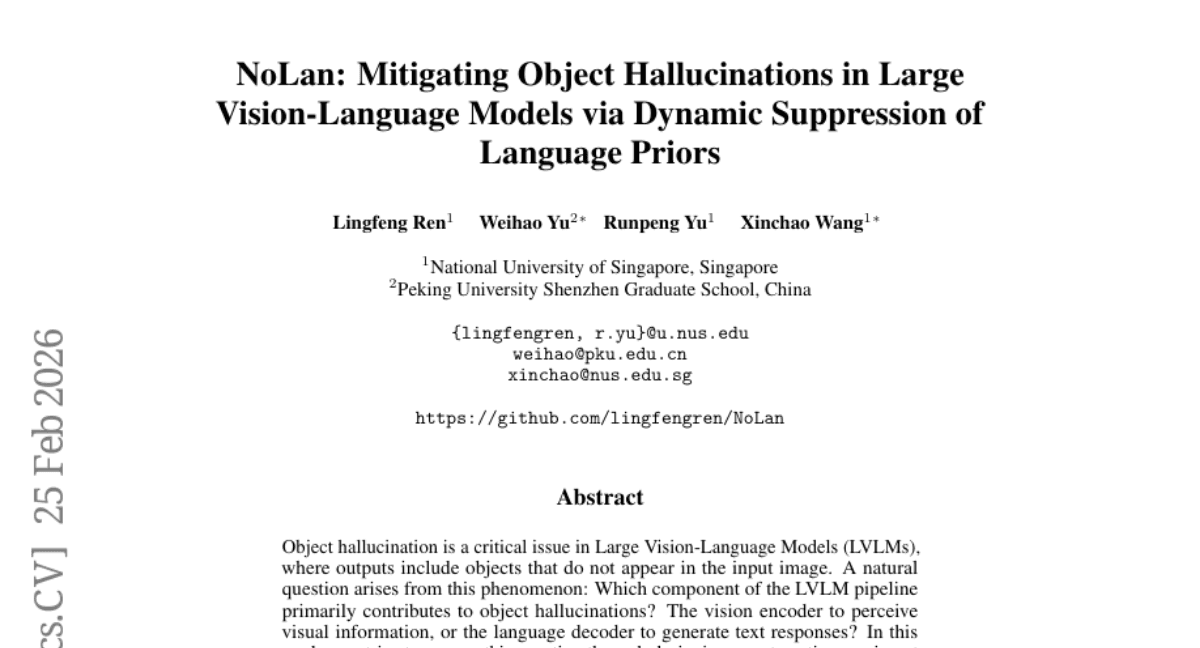
Innovations like **NoLan**—a technique designed to **mitigate object hallucinations** in large vision-language models—introduce **dynamic suppression of language priors**, significantly improving **factual accuracy** and **trustworthiness**. The paper **"NoLan: Mitigating Object Hallucinations in Large Vision-Language Models via Dynamic Suppression of Language Priors"** highlights this method's effectiveness.
**Interpretability** is further bolstered through tools like **ThinkRouter**, which **provides explicit reasoning pathways**, enhancing **trust** and enabling **misalignment detection**. Fine-tuning models such as **Claude Sonnet 4.6** with **reinforcement learning** and **system cards** continues to advance **explainability** and **robustness**.
### Addressing Malicious Manipulation
The proliferation of **vision-centric jailbreaks** has led to extensive **adversarial testing** and **benchmarking** efforts to **fortify models** against **malicious manipulation**, bias, and adversarial inputs—particularly in sensitive domains like **healthcare**, **autonomous driving**, and **security**.
---
## System-Level and Hardware Innovations
Handling **multi-hour, high-fidelity media streams** necessitates **advanced hardware**. **NVIDIA Blackwell** delivers **significantly reduced inference latency** and **improved energy efficiency**, enabling **large-scale multimodal models** to operate effectively in practical settings.
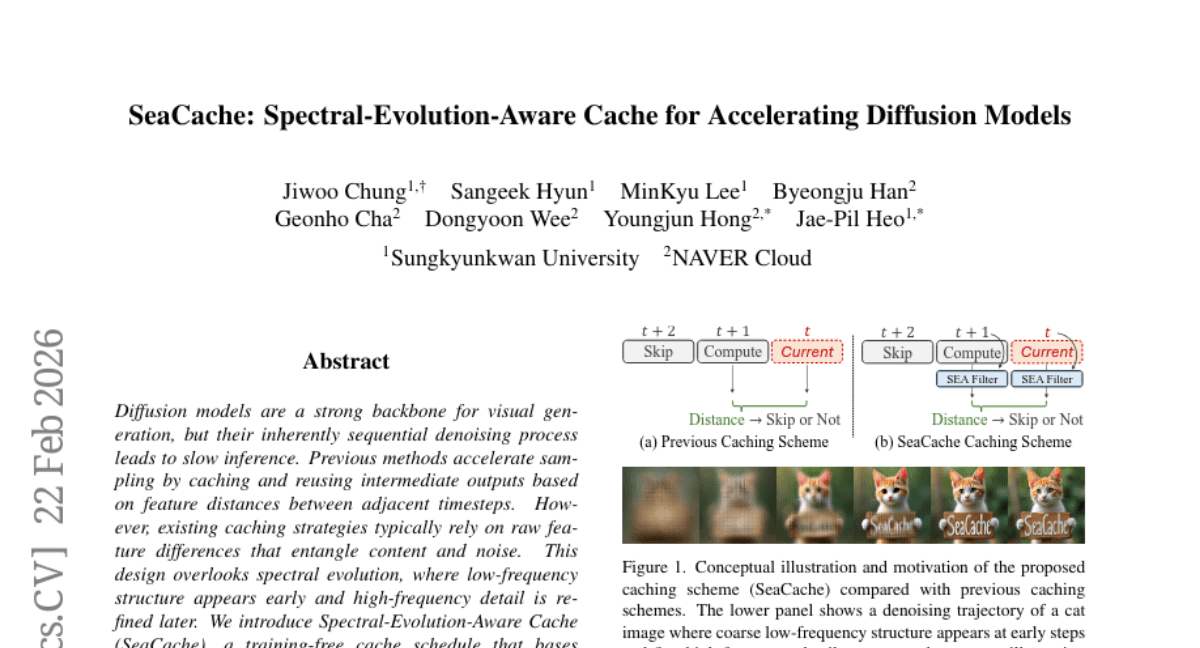
On the system side, techniques such as **SeaCache**, a **spectral-evolution-aware cache**, accelerate diffusion processes, reducing computational costs. The **COMPOT** framework supports **on-the-fly model compression**, allowing **large models** to run efficiently on **edge devices** like **NVIDIA Jetson**, facilitating **real-time multimodal AI** at scale.
---
## The Rise of Dynamic Long-Horizon Reasoning and Agent Infrastructure
A notable recent development is **Opal 2.0** from Google Labs, an **open-source, no-code AI workflows platform** integrated with **smart agents**, **memory**, **routing**, and **interactive chat** features. This platform exemplifies the ongoing shift towards **autonomous, agentic multimodal systems** capable of **reasoning, acting, and learning** over extended durations.
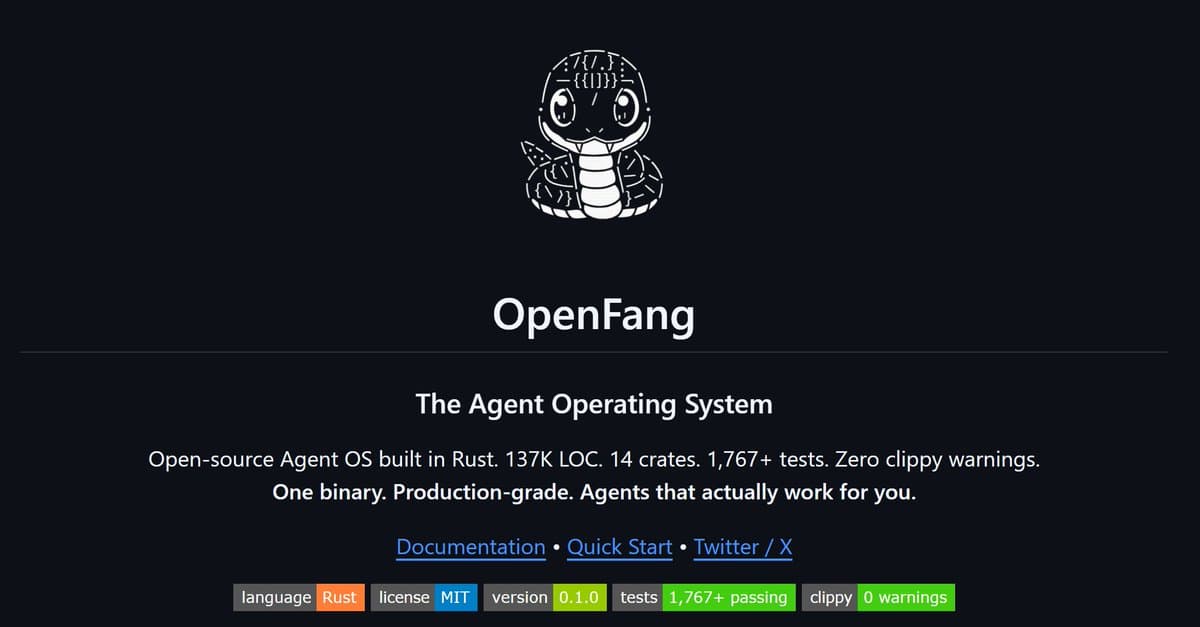
Complementing this is the **"AI Agents OS"**—an open-sourced infrastructure for **native, omni-modal agents** that seamlessly integrate **long-term memory**, **routing mechanisms**, and **multi-modal reasoning**. These systems aim to **orchestrate complex workflows**, handle **multi-hour streams**, and **adapt dynamically to new information**, setting the foundation for **autonomous AI companions** and **long-term scientific explorers**.
The **Rolling Sink** paradigm continues to address the **training-test horizon mismatch** by **dynamically extending reasoning horizons**, ensuring **coherent, sustained reasoning** over extended media. When combined with **Mercury 2**, a **diffusion-based reasoning LLM** capable of processing **over 1,000 tokens per second**, these innovations enable **high-throughput, interpretable, and reliable reasoning** for **scientific discovery**, **storytelling**, and **complex interactive agents**.
---
## Recent Highlights and Emerging Trends
The most recent notable addition is **SkyReels-V4**, a comprehensive **multimodal video-audio generation, inpainting, and editing system**. Its ability to **synthesize, modify, and coherently edit multimedia content** across modalities signifies a new standard in **content creation** and **creative AI tooling**.
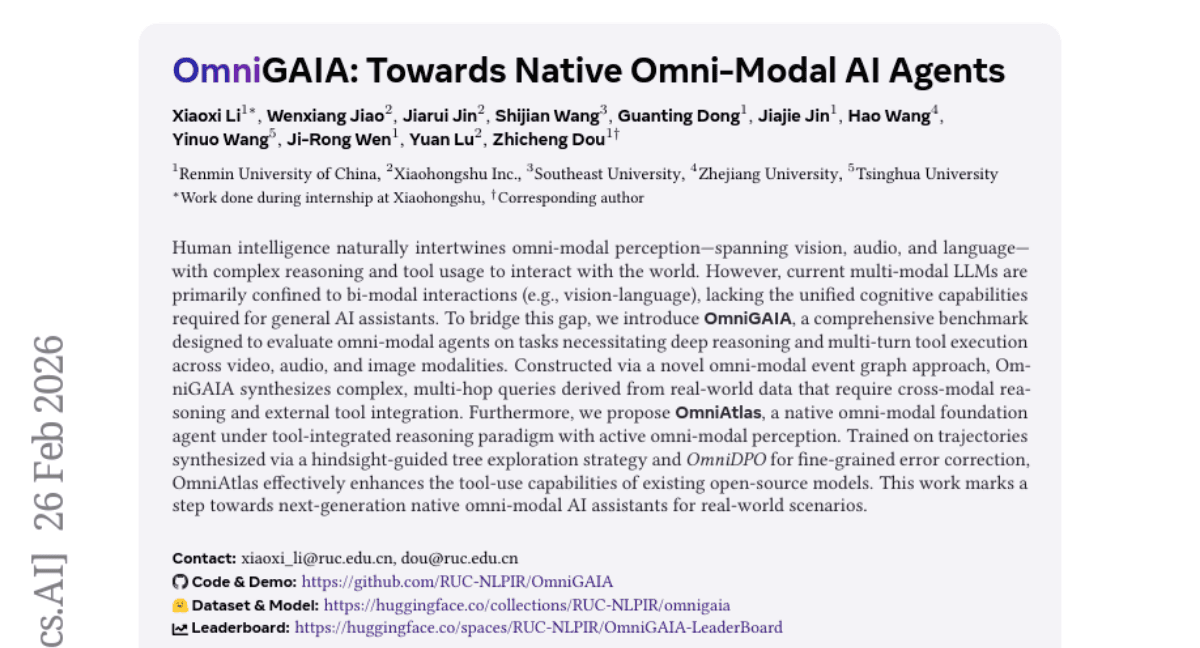
Furthermore, the publication of **OmniGAIA**—a framework for **native, omni-modal AI agents**—strengthens the trajectory toward **integrated, long-term, autonomous systems** capable of **multi-modal reasoning, memory, and action**. This aligns with the broader push for **multi-year, self-sustaining AI ecosystems** that seamlessly blend perception, cognition, and interaction.
---
## Current Status and Future Outlook
By 2026, **multimodal AI systems** routinely process **multi-hour streams** with **unparalleled coherence, safety, and interpretability**. These systems are **more trustworthy**, **energy-efficient**, and **adaptable**, poised to revolutionize industries ranging from **entertainment** and **scientific research** to **autonomous navigation** and **human-AI interaction**.
**Future priorities** include:
- Enhancing **interpretability** through advanced explainability tools like **ThinkRouter**.
- Reducing **operational costs** via hardware innovations (**NVIDIA Blackwell**) and **model compression** (**COMPOT**).
- Strengthening **safety measures** with techniques like **NoLan** to mitigate **object hallucinations** and adversarial vulnerabilities.
- Scaling **long-horizon training and inference** with paradigms like **Rolling Sink** and **Mercury 2** to support **open-ended reasoning** over hours of media.
The integration of **Opal 2.0**, **SkyReels-V4**, **AI Agents OS**, and **OmniGAIA** underscores a future where **autonomous, agentic, multi-modal systems** will **reason, learn, and act** across extended durations, transforming the landscape of AI-driven creativity, discovery, and interaction.
---
## Implications and Outlook
The technological strides of 2026 herald an era where **trustworthy, human-aligned multimodal AI** becomes integral to daily life. These systems will **empower creators**, **accelerate scientific breakthroughs**, and **foster richer human-AI collaboration**—all while maintaining rigorous standards of **safety**, **explainability**, and **efficiency**.
As ongoing research addresses remaining challenges—such as **robust safety protocols**, **long-horizon training**, and **edge deployment**—the coming years promise **more intelligent, adaptable, and human-centric multimodal ecosystems** that will profoundly influence our digital and physical worlds.