# Critical Update: Blizzard Calvin Continues to Devastate Northeast and Midwest with Worsening Conditions and Ongoing Recovery Challenges
As **Blizzard Calvin** persists across the northeastern and midwestern United States, its destructive force remains unabated, dramatically impacting daily life, transportation, infrastructure, and emergency response efforts. Recent developments underscore the storm’s escalating severity, highlighting the urgent need for sustained resilience, adaptive strategies, and community coordination amid worsening weather conditions.
## Escalating Severity and Extended Blizzard Warnings
**Blizzard Calvin** continues to be a formidable, life-threatening event. **Blizzard warnings remain in effect** across key regions, including New York, New Jersey, Connecticut, Pennsylvania, and Michigan. The storm has dumped **exceeding 12 inches of snow** in many areas, often combined with **whiteout conditions** and **wind gusts over 50 mph**, creating treacherous environments for residents, commuters, and emergency responders alike.
Forecast models now project that **blizzard conditions could persist through the weekend**, extending chaos and complicating recovery efforts. **Governor Ned Lamont of Connecticut** labeled this as **“the worst storm since 2013”**, urging residents to **“hunker down”** and **avoid all non-essential travel** until conditions improve. State officials warn that **the ongoing cold snap and relentless snowfall will delay infrastructure repairs and exacerbate storm damage**.
### New Weather Briefings and Regional Outlooks
Recent updates from regional weather briefings, including the **Morning Rush traffic & weather report** and the **Local 10 News Weather (02/24/2026)** morning segment, emphasize the storm’s severity:
- The **Morning Rush report** highlights **hazardous travel conditions during peak hours**, urging **caution and preparedness**.
- The **Local 10 News Weather** segment reports **continued heavy snowfall and dangerously cold temperatures**, forecasting **additional accumulations and persistent icy conditions** into the coming days.
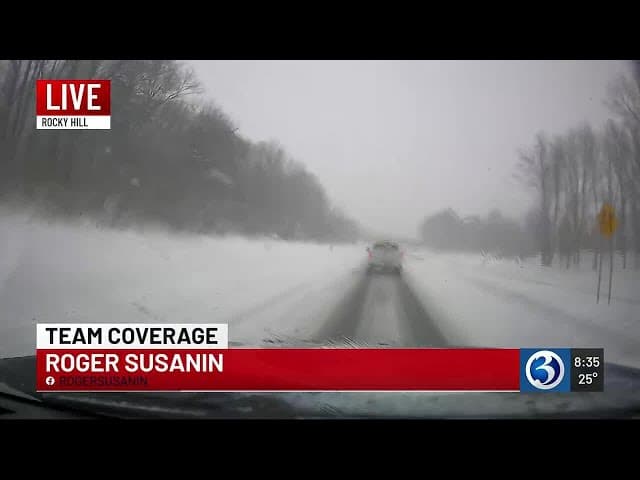
A particularly concerning report from **Rocky Hill** notes **severely reduced visibility**, with residents experiencing **near-zero visibility in some areas** due to blowing snow, further complicating travel and rescue efforts.
## Transportation Disruptions and Critical Incidents Worsen
Transportation infrastructure remains severely impacted, with **multi-car crashes, road closures, and severe congestion** becoming commonplace:
- In **Connecticut**, a **major collision on I-84 East in Newtown** resulted in **serious injuries** and prompted a **full highway closure**.
- A **severe crash on I-81 South near Harper Tavern, Pennsylvania**, has caused extensive detours, hampering emergency responses and regular travel.
- In the Midwest, **sections of I-20 and I-680** remain heavily disrupted, with rescue teams navigating **hazardous, snow- and ice-covered roads** to extricate stranded motorists.
- **I-91 in Enfield** and **I-95 between exits 91 and 92** have been **completely shut down**, causing significant delays.
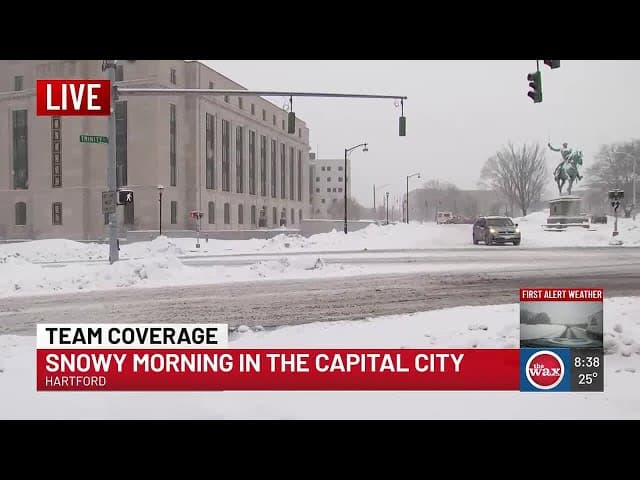
- In **Hartford, Connecticut**, a **multi-vehicle pileup on I-84** overwhelmed emergency responders, exemplifying the dangers posed by treacherous driving conditions.
- In **Michigan’s Richland Township**, authorities issued **urgent advisories to avoid M-46** due to **ice-related accidents** overwhelming rescue efforts.
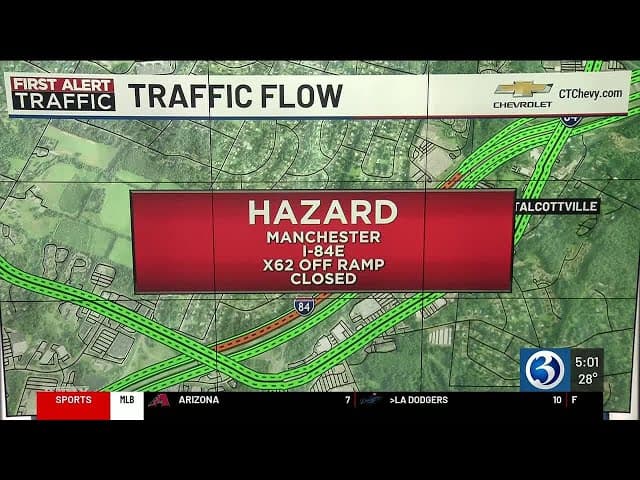
- **Part of I-84 and I-384 are closed in Manchester** following a serious crash, as shown in recent footage illustrating blocked lanes and stranded vehicles.
- Additionally, a **jackknifed tractor-trailer on Route 2 in Bozrah** has closed a lane, further constraining traffic flow and complicating rescue operations.
Recent footage from **News 12** and local agencies vividly depicts **deteriorating highway conditions**, with **decreasing visibility**, **ice-covered roads**, and **stranded vehicles**. Salt supplies are critically low—**frozen waterways and logistical delays** have hampered de-icing efforts, exacerbating hazards and increasing accident risks.
### Updated Regional Road Conditions
- **Connecticut**: Roads remain **treacherous with icy patches and snow-covered lanes**, with ongoing rescue and cleanup efforts.
- **Pennsylvania**: **PennDOT** reports **hazardous conditions** in Bucks and Montgomery counties, with many roads **closed or restricted**. Recent videos depict **difficult travel environments** and **delays in clearing major routes**.
- **Waterbury, Connecticut**: Visuals show **snowdrifts blocking lanes** and **vehicles stranded**, highlighting the storm’s ongoing impact on mobility.
## Human Toll and Emergency Incidents Continue to Mount
The human toll remains severe. Recent incidents include:
- A **woman was found dead on an icy trail in Truxtun Park, Annapolis**, emphasizing **the lethal risks of exposure, slips, and falls** during extreme cold.
- In **Minneapolis**, a **fire at an apartment complex** broke out during **subzero temperatures**, involving **nearly 50 firefighters battling icy conditions**. Early investigations suggest **defective heaters or improper heating sources** contributed, shedding light on **fire hazards associated with increased reliance on space heaters**.
- Hospitals across the affected regions report being **overwhelmed with cold-related injuries**, including **frostbite, hypothermia, slips, and falls**. Vulnerable populations—**elderly residents and the homeless**—are disproportionately impacted, straining medical resources and emergency services.
- Emergency responders continue to rescue stranded motorists, but many remain trapped due to **impassable roads and ongoing snow and ice accumulation**.
## Infrastructure Damage and Recovery Challenges
The storm inflicted extensive damage to critical infrastructure:
- Over **100,000 households** remain **without power**, suffering from **downed power lines, ice-laden trees, and frozen equipment**. Utility crews face **dangerous conditions**, leading to **delays in restoring services**.
- Many neighborhoods are under **boil-water advisories** due to **broken pipes and potential contamination**.
- **Ice dams** are forming on roofs of public buildings—including **libraries and community centers**—leading to **water leaks and structural damage**. These vulnerabilities expose **climate-related infrastructure weaknesses**, especially in older structures not designed for such extreme weather.
### Major Crashes and Ongoing Hazards
- The **multi-car crash on I-84 in Newtown** caused **serious injuries** and highway closures.
- The **collision on I-81 near Harper Tavern** resulted in extensive detours.
- The **jackknifed tractor-trailer on Route 2 in Bozrah** further exemplifies the ongoing hazards on icy roads.
## Community Response, Safety Messaging, and Protecting Vulnerable Populations
Community efforts are crucial during this crisis. **Warming centers and emergency shelters** are operating at capacity, providing **hot meals, blankets, and medical supplies**. Outreach continues to focus on **distributing supplies to homeless populations, seniors, and isolated residents**.
Public safety advisories emphasize:
- **Insulating pipes** to prevent freezing and bursting.
- **Using space heaters cautiously**, ensuring they are **placed away from flammable materials**.
- **Following boil-water advisories** until systems are stabilized.
- **Avoiding non-essential travel** on hazardous roads.
- **Checking on neighbors**, especially the elderly and vulnerable.
### Ice and Water Safety Measures
Authorities continue to stress **the dangers of unsafe ice conditions**:
- Residents should **test ice thickness carefully**—a minimum of **4 inches** for **walking**, and **8–12 inches** for **small vehicles**.
- Carry **ice picks**, **wear life jackets**, and **test ice with caution**.
- Be **alert to unpredictable ice conditions**, as **drownings and falls** are common during such storms.
## Technological Innovations Supporting Emergency Response
In response to these hazards, **advanced traffic management systems** are increasingly deployed to aid emergency responders:
- The **Highway Assistance Activation System (HAAS)** and **Opticom Emergency Vehicle Priority (EVP)** are now being utilized to **control traffic lights remotely**, **expediting response times**, and **reducing delays caused by snowy or icy roads**.
- A recent feature titled **"How Martin Fire Department Improves Emergency Response with HAAS & Opticom EVP"** highlights how these **integrated systems** **allow emergency responders to clear intersections**, **prioritize emergency vehicles**, and **improve safety during critical incidents like multi-car pileups or fires**.
These technological advancements **represent a significant leap forward** in **storm response and recovery operations**, helping **save lives** and **protect emergency personnel**.
## Current Status and Future Implications
While some roads are beginning to reopen and power is gradually being restored, **hazards persist across the affected regions**. The **cold snap and ongoing snowfall** threaten to prolong the emergency, with **damaged infrastructure** demanding **sustained recovery efforts**.
Emergency responders remain **stretched thin**, and **community vigilance** remains essential. The storm underscores the **climate-related vulnerabilities**—highlighting the necessity of **climate-resilient infrastructure** and **long-term planning** to mitigate future extreme weather impacts.
Forecasts warn that **subfreezing temperatures will continue through at least February 9**, with **additional snowfall exceeding 12 inches** possible. The **melting and potential flooding**—accelerated by **damaged infrastructure and ice dams**—pose significant risks, especially as **milder temperatures and rain** arrive and **increase flood potential**.
### Strategic Recommendations
- **Pre-positioning emergency supplies** and **strengthening community aid networks**.
- **Investing in climate-adaptive infrastructure** designed to withstand intensified weather extremes.
- **Enhancing public education** on **winter safety**, **ice conditions**, and **preparedness**.
### Improving Emergency Response Capabilities
The deployment of **traffic-signal priority systems** like **HAAS** and **Opticom EVP** exemplifies how **technology enhances response efficiency**. These systems **allow emergency vehicles to control traffic signals remotely**, **reduce response times**, and **improve safety** in hazardous conditions—particularly vital during severe winter storms.
## Final Outlook
Although some progress has been made—roads are reopening, and power outages are decreasing—the **hazards remain significant**. The **cold temperatures**, **persistent snow and ice**, and **damaged infrastructure** continue to pose risks.
**Community vigilance, technological support, and strategic planning** are crucial to navigating this ongoing crisis. The storm serves as a stark reminder of the **climate-related vulnerabilities** that necessitate **robust resilience measures** to protect communities against future extreme weather events. The continued deployment of intelligent traffic management systems and proactive community outreach will be essential in mitigating risks and safeguarding lives moving forward.