Human–bear interactions across North America and Arctic regions have continued to intensify and diversify throughout 2026, presenting increasingly complex challenges for coexistence. Driven by climate change, habitat fragmentation, and expanding human development, bears are exhibiting remarkable behavioral adaptations as they venture more frequently into suburban neighborhoods, recreational areas, and Arctic communities. Recent developments—from escalating suburban pet attacks and bold garbage scavenging in Florida and Pennsylvania, to a mother black bear denning beneath a Lake Tahoe cabin with triplets, and polar bears disrupting community events in Churchill—underscore the urgent need for innovative management, infrastructure investment, and culturally sensitive public education grounded in ethical coexistence principles.
---
### Rising and Diversifying Human–Bear Encounters: Patterns and Notable Incidents
**Suburban incursions escalate, highlighting pet safety and attractant management**
Florida’s Collier County remains a hotspot for black bear incursions, with the first half of 2026 witnessing a notable increase in pet attacks and property damage. Bears in suburbs such as Winter Garden and Longwood have been repeatedly documented scavenging unsecured garbage bins and even rifling through delivered packages—behaviors indicative of growing habituation to anthropogenic food sources. Wildlife officials stress that these learned behaviors necessitate community-wide commitment to bear-proof waste management and responsible property practices to reduce attractants.
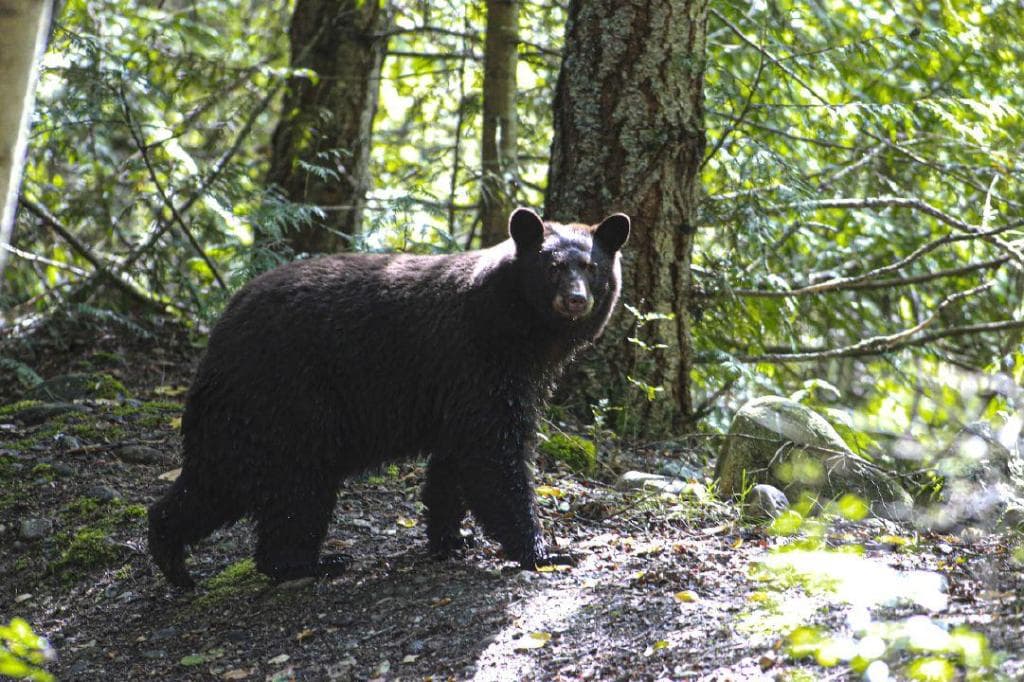
In Pennsylvania, Black Moshannon State Park has gained renewed attention after trail cameras captured a black bear family that included a cinnamon-phase juvenile—a rare color morph that signals successful reproduction and habitat expansion into previously marginal areas. The sighting has galvanized Pennsylvania wildlife agencies to expand multilingual outreach programs tailored to diverse populations living at the wildland–urban interface, emphasizing culturally sensitive education to foster coexistence.
Similar patterns are emerging in Colorado’s Front Range and Allegheny County, Pennsylvania, where transparent reporting platforms enable residents to share bear sightings and incidents in real time. These systems improve rapid response capabilities and build public trust, serving as exemplary models of community engagement in human–bear conflict mitigation.
---
**Recreational landscapes reveal adaptive bear behaviors and novel challenges**
Bears are adapting to milder winters and fluctuating natural food availability in recreation zones. A particularly striking incident involved a mother black bear named Rose, filmed giving birth to triplets in a crawl space beneath a Lake Tahoe cabin—an unprecedented example of bears utilizing human structures for denning. This event has raised serious concerns about human safety and the risks of den disturbance in heavily trafficked recreational areas.
At Northstar California Resort near Lake Tahoe, viral videos show black bears, including mothers with cubs, crossing ski slopes during winter months—an increasingly common phenomenon as bears remain active longer due to changing seasonal cues. Montana wildlife officials report heightened late-fall and early-winter grizzly bear encounters, prompting updated public safety guidelines that stress group travel, noise-making, and mandatory carry of bear spray where legal.
Notably, Tennessee’s Land Between the Lakes area confirmed a resident black bear population for the first time, likely linked to climate-driven habitat shifts and land use changes. Early-stage education and outreach efforts have been launched to prepare local communities for cohabitation with these large mammals.
Meanwhile, Yellowstone and Alaska’s Katmai National Parks continue to grapple with risky visitor behaviors, including tourists approaching bears too closely for photographs. Such habituation has led to several controversial euthanizations and removals recently, including in British Columbia’s Berg Lake Provincial Park and on Texada Island. These incidents have sparked intense ethical debates regarding the balance between public access, animal welfare, and long-term bear management strategies.
---
**Polar bears increasingly disrupt Arctic community life and events**
In Churchill, Manitoba, polar bears are spending extended periods onshore due to earlier sea ice melt and delayed freeze-ups, intensifying human–bear encounters in a town heavily reliant on polar bear tourism. Enhanced safety infrastructure—such as bear-proof shelters, guided tours, and comprehensive public education—remains vital to community resilience.
A particularly notable incident in 2026 involved a polar bear dragging away a 10K course sign during the annual Polar Bear Marathon, forcing organizers to alter the race route mid-event. This disruption highlights the growing need for adaptive, event-specific safety protocols as polar bears become more present year-round in human settlements.
---
### Innovations in Management and Infrastructure
**Washington state’s largest wildlife bridge leads the way**
The recently completed wildlife overpass spanning Interstate 90 near Snoqualmie Pass, Washington, stands as the largest of its kind in the United States. Designed to provide safe passage for bears and other wildlife while significantly reducing vehicle collisions and habitat fragmentation, this landmark infrastructure reflects a paradigm shift toward large-scale, ecologically integrated solutions for mitigating human–bear conflict. Early monitoring indicates promising usage rates by black bears and other species, signaling positive outcomes for habitat connectivity.
**Advanced monitoring and citizen science empower communities**
The increasing availability of doorbell cameras, thermal drones, and citizen science platforms such as **KumaMap** and **iNaturalist** has revolutionized the ability of communities and wildlife managers to monitor bear movements in real time. These tools enable rapid intervention, improve data transparency, and foster trust between residents and officials. Colorado and Pennsylvania communities in particular have embraced these technologies as critical elements of their adaptive management strategies.
---
### Public Engagement, Education, and Ethical Considerations
**Addressing knowledge gaps in bear spray use**
Despite widespread promotion of bear spray as an essential safety tool, misuse persists, sometimes with dangerous consequences. A viral video this year depicted a tourist mistakenly deploying bear spray on a moose instead of a bear, illustrating ongoing deficiencies in public training and awareness. This misuse complicates wildlife management and public safety efforts, underscoring the urgent need for accessible, comprehensive bear spray education programs.
**Ethics of wildlife photography and tourism**
A recent in-depth discussion featuring wildlife photographers Melissa Groo and Bobby Stormer has brought renewed attention to the ethics of wildlife photography, emphasizing responsible behavior that respects animal welfare and minimizes disturbance. Such ethical media projects contribute to deeper public empathy, reinforcing the importance of maintaining respectful distances and avoiding habituation, particularly in sensitive bear habitats.
**Science informing policy: recent research and outreach efforts**
Jordan Pruszenski, a University of Alaska–Fairbanks alumnus, was recently featured for his work on grizzly bears, highlighting the vital role of scientific research in guiding evidence-based management and policy. Similarly, regional extensions like the Alabama Cooperative Extension System have increased outreach efforts, providing detailed guidance on black bear biology and conflict reduction tailored to local contexts.
---
### Policy and Management Developments
- **Non-lethal management remains central but resource-intensive**, including relocation, aversive conditioning, and early intervention approaches. Massachusetts’s expanded multilingual video campaign, *“Living with Black Bears in MA,”* exemplifies efforts to reach immigrant and Indigenous communities effectively.
- **Regional policy updates:** Yosemite National Park will enforce year-round bearproof locker use starting February 2026, though it continues to prohibit bear spray within park boundaries. Ontario’s Algonquin Provincial Park maintains strict food storage regulations, while Japan has officially endorsed bear spray for brown bear defense, aligning with shifting global best practices.
- **Ethical debates over euthanasia and relocation persist**, particularly following recent removals in British Columbia. These debates highlight the complexity of balancing public safety with animal welfare and the need for transparent, science-driven decision frameworks.
---
### Practical Safety Recommendations
**For residents:**
- Use bear-proof containers and secure all food storage year-round.
- Remove pet food and bird feeders promptly.
- Employ motion-activated cameras to monitor bear presence.
- Utilize secure package delivery options to prevent attractants.
- Report bear sightings promptly to wildlife authorities.
**For recreationists and visitors:**
- Carry bear spray where permitted and receive proper training in its use.
- Travel in groups and make noise to avoid surprise encounters.
- Leash dogs and follow trail advisories year-round.
- Exercise extra caution during extended bear activity seasons, including winter months.
**For communities and wildlife managers:**
- Promote attractant reduction and ongoing bear awareness campaigns.
- Support multilingual and culturally tailored education initiatives.
- Advocate for ethical wildlife tourism principles.
- Invest in infrastructure that enhances habitat connectivity and reduces wildlife-vehicle collisions.
---
### Conclusion: Toward a Resilient, Collaborative Human–Bear Coexistence
The evolving human–bear interface of 2026 is characterized by increasing frequency, geographic expansion, and notable behavioral adaptations. From suburban pet attacks and garbage scavenging in Florida and Pennsylvania, to a rare bear family denning beneath a Lake Tahoe cabin, to polar bear disruptions in Churchill, these developments reflect the compounded impacts of climate change, habitat fragmentation, and human expansion.
As one seasoned wildlife expert summarized:
> _“Coexistence is a shared responsibility—only through collaboration, innovation, and respect for wildlife can communities and bears thrive side-by-side in an increasingly interconnected world.”_
Addressing this challenge requires sustained investment in non-lethal management, attractant control, adaptive infrastructure exemplified by Washington’s wildlife bridge, ethical tourism, multilingual education, and cross-jurisdictional cooperation. Complemented by enhanced media storytelling and cutting-edge technology, these efforts equip society to foster safer, more resilient relationships with bears amid a rapidly changing environment.
---
### Summary of Key 2026 Developments
- **Human–bear interactions continue expanding** across suburban, recreational, and Arctic contexts with notable behavioral adaptations.
- **New incidents include** suburban pet attacks, garbage scavenging, and a black bear giving birth to triplets beneath a Lake Tahoe cabin.
- **Washington’s largest wildlife bridge** demonstrates innovative infrastructure mitigating collisions and habitat fragmentation.
- **Polar bears increasingly impact Arctic communities,** disrupting events like Churchill’s Polar Bear Marathon.
- **Persistent bear spray misuse highlights critical education gaps,** while Japan’s policy shift signals evolving global standards.
- **Ethical debates over euthanasia and relocation persist,** reflecting the complexity of balancing safety and welfare.
- **Multilingual outreach, citizen science, and technology-enabled monitoring** remain vital tools for adaptive coexistence.
- **Guidance on black bear behavior and conflict reduction** from regions such as Alabama enhances localized management approaches.
- **Scientific research and ethical media projects** deepen public understanding and inform policy.
The ongoing human–bear interface demands vigilance, innovation, and shared stewardship to ensure safe, ethical, and sustainable coexistence in an increasingly interconnected and changing world.