# Cutting-Edge Astronomy and Space Exploration in 2026: A Year of Unprecedented Discoveries and Advancements
The year 2026 marks a watershed moment in humanity’s ongoing quest to understand the cosmos, driven by technological innovation, international cooperation, and ambitious exploration initiatives. This year’s breakthroughs are transforming our perceptions of planets, space environments, and our future beyond Earth. From the profound insights gathered by the James Webb Space Telescope (Webb) to rapid progress in human spaceflight and sustainable space infrastructure, 2026 exemplifies a new era of exploration, discovery, and global partnership.
## Webb Space Telescope: Unlocking Cosmic Mysteries
Webb continues to be a cornerstone of astronomical discovery, providing data that challenge existing models and open new questions.
- **Atmospheric Erosion on Ultra-Hot Exoplanets**:
Webb’s high-resolution spectroscopic observations have definitively confirmed atmospheric escape phenomena on *KELT-9b*, an exoplanet with surface temperatures soaring above **4,600°C**. The detection of hydrogen and helium escaping due to intense stellar radiation refines models of **exoplanet atmospheric evolution** and raises new questions about their potential habitability under extreme conditions.
- **Infrared Imaging of Stellar Nurseries**:
Recent Webb images of the *Helix Nebula*, often called the "Eye of God," reveal intricate gas filaments and dynamic star-forming regions. These visuals deepen our understanding of the **stellar lifecycle**, from gas cloud collapse to star birth and death, providing critical insights into **galactic development**.
- **Evidence of Cryovolcanism and Subsurface Oceans on Mimas**:
Infrared data from Webb suggest **cryovolcanic activity** on Saturn’s moon *Mimas*. Signatures indicate the presence of a **subsurface ocean** beneath its icy crust, positioning Mimas as a prime candidate for **astrobiological exploration**, where microbial life might persist in hidden, liquid environments.
- **Active Kuiper Belt Objects**:
Webb’s ongoing surveys have revealed that Kuiper Belt objects, previously thought dormant, are more geologically and thermally active. Notably, *Makemake* exhibits signs of surface activity, challenging previous assumptions about the compositional and thermal states of distant icy worlds and prompting fresh questions about their internal processes and histories.
## Progress and Challenges in Human Spaceflight
While robotic missions continue to expand scientific frontiers, human spaceflight in 2026 navigates a landscape of technical hurdles and promising developments.
- **Artemis II: From Delay to Near-Launch Readiness**
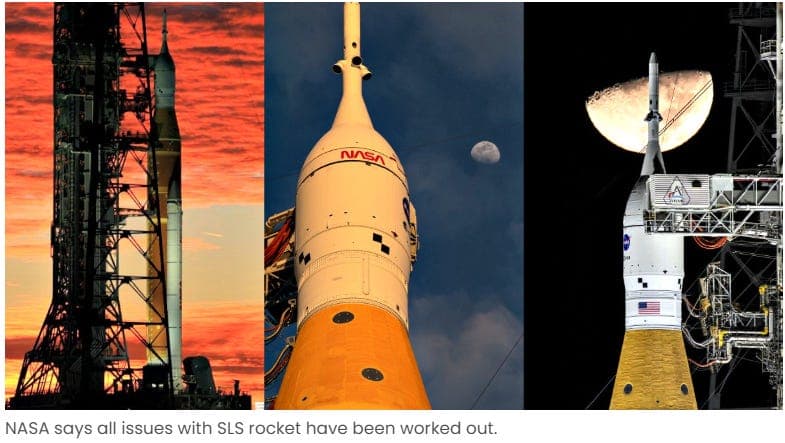
The Artemis II mission, poised to orbit the Moon with astronauts onboard, initially faced setbacks due to a **helium flow-related fuel leak** during cryogenic fueling tests. Extensive diagnostics and repairs followed. However, recent milestones—including a successful **full wet dress rehearsal** at Kennedy Space Center on **February 19, 2026**—have reignited momentum. With all critical systems, including the **heat shield**, passing rigorous safety checks, NASA now targets a **scheduled launch in April**. This mission is a pivotal step toward establishing a **sustainable lunar presence** and paving the way for future Mars exploration.
- **Innovative Training for Extreme Environments**
In preparation for long-duration missions, astronauts are undergoing specialized training, including **cold-weather and snow cave analogs**, to simulate lunar and Martian surface conditions. These exercises aim to enhance crew resilience against environmental extremes and ensure operational safety during future deep-space missions.
- **Commercial Launch Vehicle Milestones and Challenges**
The commercial sector continues its rapid evolution:
- **SpaceX’s Starship V3 prototype** achieved significant milestones during **Flight 12**, demonstrating capabilities for **interplanetary transport**.
- Conversely, a **Falcon 9 second-stage engine irregularity** caused temporary delays for some missions, such as **Crew Dragon 12** to the ISS. These safety measures underscore the industry’s commitment to reliability amid technological progress, emphasizing the importance of **reusability and cost-effective space access**.
## Accelerating International and Commercial Space Efforts
Global initiatives are intensifying around lunar resource utilization, human presence, and sustainable technologies.
- **Lunar Technologies and Resource Prospecting**
- **Astrolab’s FLEX rover** has been enhanced to support lunar exploration, resource prospecting, and scientific investigations—key for establishing **sustainable lunar bases**.
- China’s recent **rocket recovery test** in Helsinki highlights advanced **launch recovery techniques** that could revolutionize reusable rocket technology, significantly reducing costs and increasing safety.
- India’s **Chandrayaan-4 and Chandrayaan-5** missions are providing detailed insights into lunar mineralogy, water ice deposits, and potential resource sites, supporting subsequent robotic and human endeavors.
- Europe’s **Ariane 64** rocket, with increased payload capacity, continues to bolster European participation in scientific and commercial missions, reinforcing its space presence.
- **Expanding Human Presence and Space Resource Utilization**
The **Tiangong space station** is evolving with new modules and laboratories, fostering **long-term scientific research** and **international cooperation**.
Meanwhile, **Varda Space’s successful return** of space-grown manufacturing samples exemplifies the potential of **space-based manufacturing** and **resource extraction**—crucial for supporting lunar and Martian colonies.
- **Lunar Habitat and Infrastructure Development**
The European Space Agency (ESA) has contracted multiple teams to develop **remote lunar habitat studies**, focusing on **habitat design**, **power systems**, and **life support**. These efforts are foundational for **long-term lunar settlements**.
## Sustainability, Safety, and Space Environment Management
As space activities expand, safeguarding the orbital environment and crew safety remain vital.
- **Lunar Power and Sustainable Technologies**
International collaborations are working toward deploying a **500 kWe nuclear reactor** on the Moon by 2030. This **reliable power source** will underpin lunar bases, scientific experiments, and resource extraction activities, enabling **sustainable lunar colonization**.
- **Green Propulsion and Environmental Initiatives**
China’s development of a **240-ton reusable rocket engine** reflects a broader push toward **eco-friendly propulsion systems** that minimize environmental impacts and promote **sustainable launch practices**.
- **Space Debris Mitigation and Planetary Protection**
The ESA’s **OMLET laser system** nears deployment, offering innovative **debris removal** capabilities—aimed at **deorbiting defunct satellites** and **altering debris trajectories**. These measures are critical amid increasing **orbital congestion**. Additionally, enhanced **biological sterilization protocols** and deployment of **radiation sensors** strengthen **planetary protection** measures and **crew safety**, especially during long-range missions.
## Scientific Frontiers and Space Weather Insights
Research in 2026 continues to deepen our grasp of space phenomena and human adaptation to space environments.
- **Auroras and Magnetospheric Dynamics**
NASA’s twin rockets launched into Alaska have studied **black auroras**—dark patches within the northern lights caused by charged particle interactions—providing insights into **space weather** mechanisms. These findings are vital for **satellite and crewed spacecraft protection** from solar storms.
- **Effects of Microgravity on Human Physiology**
A groundbreaking study titled *"Life in space changes the 'brain position'"* reveals that **microgravity** causes **shifts in brain position**, potentially impairing **cognitive functions** and **spatial awareness**. Understanding and mitigating these effects are essential for **long-duration missions** to Mars and beyond.
- **Astrobiology and Subsurface Environments**
Webb’s observations of *Makemake* and evidence of **cryovolcanism on Mimas** invigorate **astrobiological research**. These discoveries suggest that **subsurface environments** on icy worlds could harbor microbial life, guiding future exploration toward **habitats of potential life**.
## Notable New Initiatives and Upcoming Missions
- **ESA's Lunar Habitat Studies**:
The European Space Agency has awarded contracts to develop **remote lunar habitat concepts**, focusing on **sustainable design**, **life support systems**, and **resource utilization**—laying the groundwork for **long-term lunar settlements**.
- **Upcoming Moon and Mars Missions**:
The *"Space Race 2026 — Next Moon & Mars Missions"* video highlights upcoming endeavors: NASA’s Artemis III aims to land humans on the lunar surface, while China’s **Mars sample return** efforts are gaining momentum. These efforts reflect a **renewed global race** to explore and colonize other celestial bodies within the next decade.
## Current Status and Broader Implications
As of early 2026, humanity stands at a pivotal crossroads. The successful advancement of **Artemis II** and the **Webb’s cosmic revelations** symbolize a new chapter characterized by scientific breakthroughs and technological progress. The development of **sustainable lunar infrastructure**, **advanced launch systems**, and **space resource utilization** strategies points toward a future where **humans are active explorers and stewards of the cosmos**.
The ongoing initiatives to **mitigate space debris**, **protect against space radiation**, and uphold **planetary protection protocols** exemplify a responsible approach—balancing exploration ambitions with sustainability and safety.
In conclusion, 2026 epitomizes a year of extraordinary progress—highlighting the transformative power of **cutting-edge technology, international collaboration, and scientific curiosity**. Each milestone draws us closer to **a sustainable human presence beyond Earth**, unlocking new frontiers for discovery, innovation, and our collective future among the stars.
---
### **Vandenberg Rocket Launch Schedule: Upcoming Liftoffs**
- Multiple launches are scheduled from Vandenberg Space Force Base, including **SpaceX’s Starship V3 prototype** and various commercial and national security payloads.
- These launches are integral to expanding satellite networks, advancing interplanetary transportation, and supporting Earth observation initiatives.
- The increased cadence underscores the importance of **sustainable, reliable, and safe space operations** as activity accelerates.
---
**Overall, 2026 is a testament to how technological ingenuity, international collaboration, and scientific inquiry are reshaping our universe view. The progress achieved this year paves the way for a future where exploration is no longer a distant dream but an active, shared human endeavor among the stars.**