# The 2026 Onchain Asset Revolution: Mainstream Adoption Accelerates with Institutional Confidence and Infrastructure Maturity
The year **2026** marks an extraordinary milestone in the evolution of global finance, where **tokenized assets—including stocks, ETFs, RWAs, stablecoins, and commodities—have transitioned from niche experiments to integral components of mainstream markets**. This rapid transformation is underpinned by a **confluence of regulatory clarity, technological innovation, institutional deployment, and infrastructure sophistication**, fundamentally reshaping traditional financial paradigms and embedding a deeply interconnected onchain economy into everyday financial activities.
---
## Mainstream Institutionalization: Regulatory Milestones and Market Engagement
### Regulatory Milestones Cement Confidence
A pivotal driver of this acceleration has been the **significant progress in regulatory frameworks worldwide**, which has lowered barriers and fostered trust among institutional players:
- The **SEC’s reaffirmation that tokenized stocks qualify as securities** has provided essential legal certainty, enabling compliant issuance and trading of these digital assets.
- The **WisdomTree SEC relief for tokenized money market funds** exemplifies regulators’ willingness to adapt, encouraging innovation within established legal boundaries.
- The **UAE’s issuance of its first USD-backed stablecoin** has revolutionized cross-border payments, facilitating faster, cheaper international settlements and elevating the region’s fintech stature.
- **Hong Kong’s comprehensive stablecoin licensing regime** has created a vibrant environment where traditional finance and blockchain solutions coexist, attracting significant fintech investments.
- **Dubai and Abu Dhabi** have emerged as global fintech hubs by establishing **regulatory sandboxes** that expedite testing and deployment of RWAs, tokenized equities, and other innovative assets—blending traditional financial services with cutting-edge blockchain technology.
### Institutional Adoption and Product Innovation
Major financial institutions are now deploying blockchain-based products at scale, signaling widespread acceptance:
- The **CME Group**, partnering with **Google**, piloted a **regulated tokenized cash settlement system** that has **reduced settlement times from days to minutes**, setting new industry standards.
- **BlackRock** launched a **tokenized U.S. Treasury fund**, now holding approximately **$2.2 billion** in assets, actively traded on decentralized exchanges such as **Uniswap**, demonstrating growing institutional trust in government debt tokenization.
- The **tokenized Treasuries market** now boasts **over $15 billion in daily trading volume**, reflecting broad acceptance and liquidity among large traders.
- Platforms like **Maple Finance** are issuing **liquid USDC yield tokens** (e.g., **SyrupUSDC**) on **Coinbase’s Base network**, bridging private credit markets with established infrastructure.
- **Laser Digital**, backed by Nomura, has introduced **tokenized Bitcoin yield funds**, providing transparent, income-generating products tailored for institutional investors seeking steady yields.
### Infrastructure and Product Development Accelerate
This surge is supported by a **robust, scalable infrastructure** emphasizing **security, transparency, and compliance**:
- **Stablecoin reserves** have become increasingly transparent:
- **Tether (USDT)** has increased its **gold reserves by approximately 27 metric tons**, directly addressing prior transparency concerns.
- The **USAt stablecoin**, issued via **Anchorage** under **GENIUS standards**, now undergoes **regular, comprehensive audits**.
- During recent market turbulence, **USDT** **burned over $3 billion worth of tokens** to stabilize reserves, exemplifying proactive risk management.
- **Settlement protocols** and **infrastructure enhancements** continue to mature:
- The **UAE’s stablecoin initiative** supports **regional liquidity pools**, reducing cross-border transaction costs.
- Protocols like **Ripple’s Multi-Purpose Tokens (MPTs)** enable **permissioned, regulated RWAs** with **custom transfer rights**, aligning asset tokenization with strict compliance standards.
- The **CME–Google pilot** remains a model for **large-scale digital settlement workflows**, encouraging wider industry adoption.
- **Onchain auctions and data infrastructure** are revolutionizing transparency and efficiency:
- **Uniswap’s Continuous Clearing Auctions (CCA)**—operating on **Layer 2 solutions** like **Base**—offer **full transparency** in securities and RWA trading, enabling **efficient price discovery**.
- The **R3 Corda** platform provides **secure, scalable issuance, transfer, and custody solutions**, emphasizing **interoperability** and **regulatory compliance**.
- **Data feeds** from **Chainlink**, **RedStone**, and **Canton** supply **tamper-proof, high-precision data** covering **U.S. equities**, **RWAs**, and **commodities**, which are crucial for **accurate valuation** and **reliable settlement**. Recent incidents have highlighted the importance of **redundant, resilient data feeds** to prevent misvaluation during volatile periods.
- **Liquidity and redemption mechanisms** have seen significant advances:
- Platforms such as **Multiliquid** and **Metalayer Ventures** have introduced **instant redemption protocols** for RWAs, reducing liquidity risks during market stress and boosting investor confidence.
---
## Expanding Asset Classes and Marketplaces
The universe of tokenized assets continues its rapid expansion, seamlessly integrating traditional assets into blockchain ecosystems:
- **Tokenized U.S. Treasuries** now experience **daily trading volumes exceeding $15 billion**, enabling **programmatic income streams** and **instant cross-border settlements**.
- **Private credit and yield products**, like **SyrupUSDC** and **tokenized Bitcoin yield funds**, offer **structured, transparent yields**, attracting institutional investors seeking reliable income.
- **Physical asset tokenization** advances notably:
- **ETHZilla** recently acquired **two CFM56-7B24 engines** valued at **$12.2 million**, exemplifying how tokenization enhances liquidity and transferability for tangible assets.
- **Commodity-backed tokens**, including **gold-backed stablecoins** from **Aurelion** and **Tether**, continue to build trust and stability.
- **Settlement stablecoins** like **USAt** remain central to **cross-border workflows** and **reserve management** for institutions.
### Marketplaces, Clearing, Custody, and Data
The supporting infrastructure continues evolving rapidly:
- **Onchain auction platforms**, notably **Uniswap’s CCA**, provide **full transparency** and **efficient trading**, significantly enhancing **price discovery**.
- **Enterprise-grade custody solutions**, such as **R3’s Corda**, ensure **secure, compliant issuance, transfer, and custody** of tokenized assets.
- **Data feeds** from **Chainlink**, **RedStone**, and **Canton** have vastly improved **valuation accuracy** and **market stability**, which are vital for **regulatory reporting** and **risk management**.
---
## Addressing Security and Systemic Risks
Despite the impressive progress, the industry continues to face **security vulnerabilities and systemic risks**:
- **High-profile hacks**—including **Step Finance’s $40 million breach**, **CrossCurve’s exploit**, and intrusions on **Solana**—have exposed weaknesses in **treasury management** and **cross-chain bridges**.
- **Oracle failures**, such as recent incidents with **Moonwell**, led to **brief misvaluations** during volatile conditions. For example, **Aave** experienced **around $27 million in liquidations** due to a price glitch, underscoring the need for **robust, redundant oracle systems**.
- **Cross-chain bridge exploits** threaten the integrity of wrapped assets and RWAs, emphasizing the importance of **advanced security protocols** and **multi-layer safeguards**.
- **Custody concentration** remains a systemic concern: **$11 trillion in RWAs** are **held among just five institutions**, amplifying **counterparty risks**.
- Regulatory scrutiny over **illicit flows**, estimated at **$158 billion in 2025**, has prompted **stricter AML/CFT enforcement**.
- Breaches on **Layer-1 platforms** and **smart contract vulnerabilities** highlight the necessity of **formal verification**, **multi-sig controls**, and **continuous security audits**.
### Industry Responses and Future Focus
The industry actively mitigates these risks through:
- Deployment of **multi-sig treasury controls** and **formal verification tools**.
- Implementation of **redundant oracle systems** and **cross-verification mechanisms**—for example, **DIA’s recent launch of an oracle tailored for illiquid assets**—which have markedly reduced valuation risks during turbulent markets.
- Adoption of **AI-driven security tools**, such as **XRPL’s proactive flaw detection**, to identify vulnerabilities early.
- Reinforcing **cross-chain bridge security protocols** to prevent exploits and sustain trust.
---
## Latest Developments & Broader Implications
**2026** continues to be a year of groundbreaking innovation and strategic evolution:
- **Tokenized stocks** have now **surpassed $1 billion in total value**, with platforms like **Ondo**, **xStocks**, and **Kraken’s xStocks** leading the charge. Kraken’s **xPoints** ecosystem rewards program hints at expanding governance tokens and ecosystem incentives, deepening integration.
- The **listing of XAUm**, a **commodity-backed token**, on **BNB Chain** via **Venus Protocol**, secured through **Chainlink SmartData**, exemplifies cross-chain liquidity for tangible assets.
- **Marketplaces** now include **large institutional and retail platforms**, supporting **daily trading volumes exceeding $20 billion** across diverse asset classes.
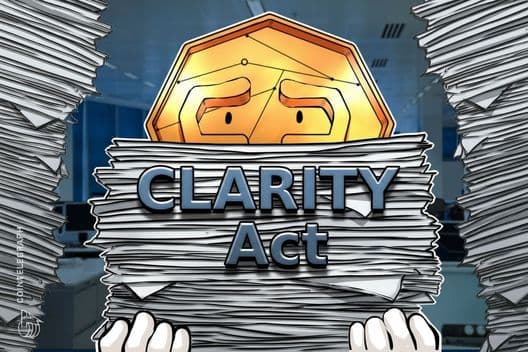
- The **delays in the CLARITY Act**—initially perceived as a regulatory hurdle—are now understood as part of **the regulatory process’s complexity**, providing clarity and fostering confidence in **regulated yield-bearing stablecoins** and **asset issuance**.
- **DIA’s new oracle**, launched following a **$19 billion liquidation event**, has notably improved **pricing accuracy** for illiquid assets, reducing systemic risks and enhancing confidence during volatile periods.
---
## Confirmed: U.S. Treasury’s Programmable Financial System and Market Impact
A defining development of 2026 has been the **U.S. Treasury’s announcement** of a **comprehensive, programmable financial system**:
- The **Treasury** is deploying **advanced technological tools**—including **AI-driven transaction monitoring**, **blockchain forensic analysis**, and **real-time analytics**—to combat **digital asset-related illicit finance** and **illicit flows**.
- This initiative aims to **integrate seamlessly with existing financial infrastructure**, enabling **automated compliance**, **transparent reporting**, and **secure settlement**.
- The **$3 trillion stablecoin market cap**, dominated by **USDT**, **USDC**, and **USAt**, exemplifies the shift toward **programmable reserves** and **instant settlement capabilities**.
- Notably, **Kraken** has launched its **Fed account**, providing **institutional clients** direct access to **federal reserve settlement rails**. This move bridges traditional banking and blockchain infrastructure, further **legitimizing onchain assets** within the **mainstream financial system**.
This **paradigm shift** signals a future where **digital dollars and onchain assets** are embedded into **national monetary systems**, reinforcing the **integral role of blockchain technology** in the global economy.
---
## Broader Implications and Market Dynamics
By **2026**, the **mainstreaming of tokenized assets** is firmly established:
- **Daily RWAs trading volumes** now **exceed $15 billion**, with the **stablecoin ecosystem** approaching a **$312 billion market cap**.
- The industry demonstrates **maturity** in **product innovation, infrastructure resilience, and regulatory acceptance**, positioning blockchain-based finance as a **core element of global markets**.
- Nonetheless, **security vulnerabilities**—such as oracle failures, cross-chain exploits, and custody risks—remain challenges. The industry’s proactive **mitigation strategies**—via **multi-sig controls, formal verification, redundant data feeds**, and **security audits**—are establishing a **robust foundation** for a **more secure, trustworthy onchain economy**.
- The ongoing development of **compliant auction mechanisms**, **interoperability protocols**, and **clarifying regulations** will be critical for sustained growth.
- **Stablecoins** are transforming not only payments but also macroeconomic dynamics:
- **Stablecoin deposit drains** are projected to cause a **3% earnings squeeze on U.S. banks** over five years, according to analysts from Jefferies.
- Moreover, **cryptocurrencies** are increasingly seen as **hedges against the U.S. dollar**, with some **large crypto institutions** holding substantial **U.S. Treasuries**, further influencing liquidity and market structures.
---
## Recent Major Development: Treasury’s Report on Innovative Technologies to Combat Illicit Finance
Adding to this momentum, **on March 6, 2026**, the **U.S. Treasury Department** published a landmark report titled **“Innovative Technologies to Counter Illicit Finance Involving Digital Assets”**. This comprehensive document details **cutting-edge technological approaches** aimed at **detecting, investigating, and preventing illicit flows** linked to digital assets:
- The report underscores the **deployment of AI-driven transaction monitoring systems** capable of **real-time analysis** of blockchain activity, enabling **rapid identification of suspicious transactions**.
- It highlights the integration of **blockchain forensic tools** with **regulatory reporting frameworks**, making **illicit flow detection more accurate and efficient**.
- The Treasury emphasizes **enhanced cross-jurisdictional cooperation**, leveraging **interoperable data sharing** between agencies and private sector partners.
- **Forensic analysis tools** are being developed to **trace complex cross-chain transfers**, thereby **reducing the effectiveness of anonymized or layered transactions** used in illicit schemes.
- The report states: *"Technological innovation is critical to ensuring the integrity of the digital asset ecosystem. Our focus is on deploying scalable, interoperable solutions that enhance transparency and support law enforcement efforts."*
This latest initiative **complements the Treasury’s broader goal** of establishing a **programmable, compliant financial system**, which **integrates advanced analytics and forensic capabilities**—ultimately reducing the systemic risks associated with illicit activities and reinforcing **public trust** in digital assets.
---
## Implications and Future Outlook
The combined momentum of **regulatory clarity, technological advancements, and institutional confidence** has cemented **2026 as a pivotal year** in the onchain asset revolution. The **U.S. Treasury’s proactive stance** on leveraging **innovative technologies** to **counter illicit finance** not only bolsters **market integrity** but also signals **government endorsement** of the digital asset ecosystem’s legitimacy.
Looking forward, **continued innovation, enhanced security protocols, and clearer regulatory pathways** will be vital for **sustained growth**. As **tokenized assets** become seamlessly integrated into **mainstream finance**, their influence on **liquidity, efficiency, and transparency** will reshape the landscape of global markets, making **onchain finance** an indispensable pillar of the **future economy**.
In this landscape, **trust, resilience, and compliance** remain the guiding principles—ensuring that the **onchain asset revolution** proceeds steadily toward **widespread adoption and stability**.