# Enterprise AI in 2026: The Evolution of Secure Orchestration, Trust, and Autonomous Ecosystems
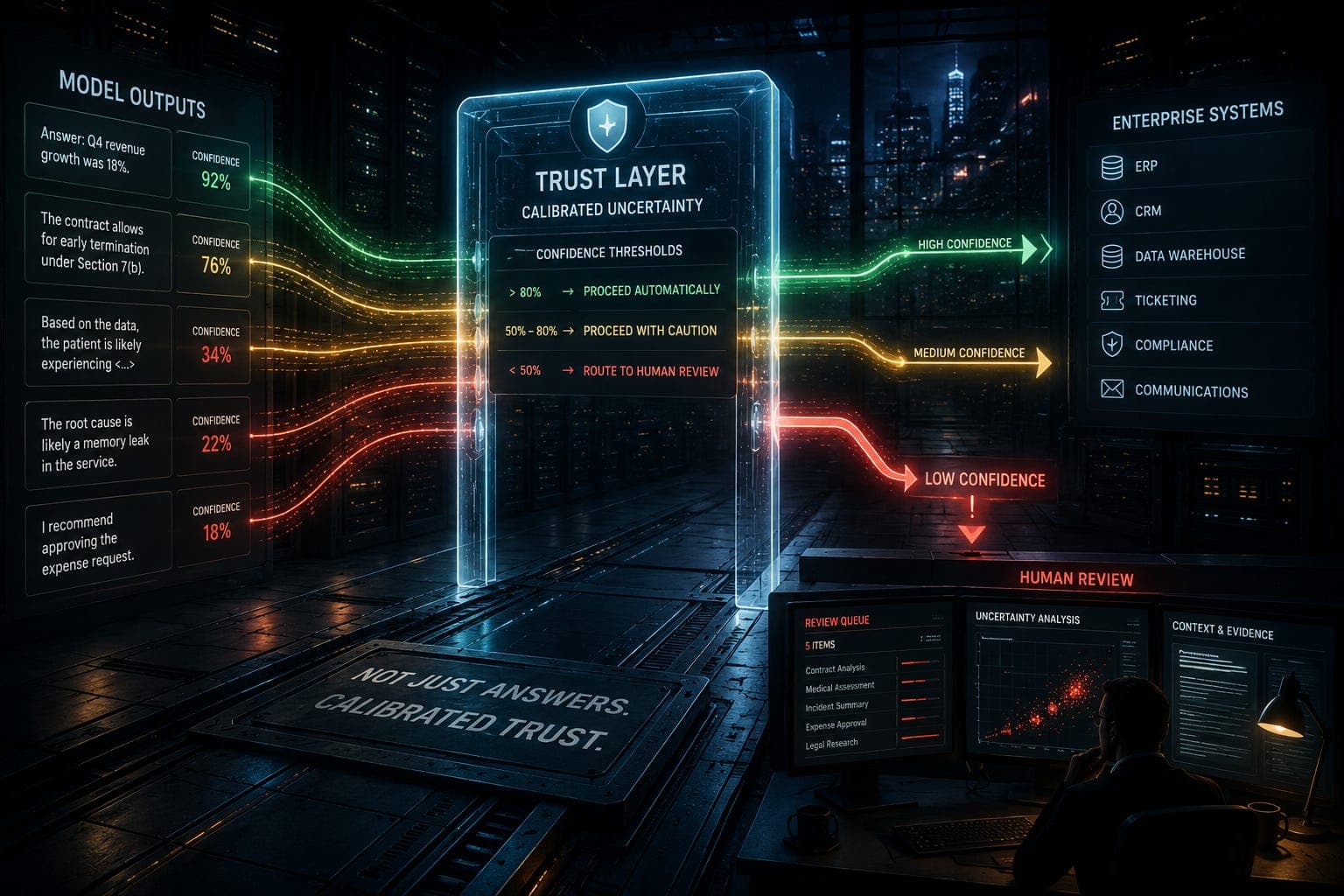
The enterprise AI landscape of 2026 stands as a testament to how far security, trust, and autonomous orchestration have advanced. AI systems are no longer mere automation tools; they form the backbone of mission-critical operations across diverse industries, operating within **trustworthy, scalable, and secure frameworks**. This transformation is fueled by revolutionary developments in cryptography, multi-agent orchestration, runtime security, edge deployment, and governance, collectively shaping an era where AI is both immensely powerful and inherently trustworthy.
---
## Security-First Foundations: Cryptography, Identity, and Gateways
### Universal Cryptographic Protocols and Interoperability
A defining hallmark of 2026’s enterprise AI ecosystem is the **widespread adoption of cryptographic communication standards**. The **Model Context Protocol (MCP)**—initially introduced by **Anthropic** in late 2024—has now become the **industry standard** for **secure, verifiable AI interactions**. **MCP** enables **cryptographically signed messages** and **behavioral verification**, **drastically reducing vulnerabilities** such as **command injection, impersonation, and data tampering**.
This standardization has facilitated **seamless interoperability** among a broad spectrum of AI components, tools, and workflows, creating **performance-optimized, scalable ecosystems**. Leading infrastructure solutions like **Bifrost** and **Helicone** now serve as **enterprise-grade platforms** that **compose, manage, and verify complex workflows** with **high assurance and transparent audit trails**, which are indispensable for compliance and security in regulated contexts.
### Cryptographic Policy Enforcement & Secure Gateways
All data exchanges—be they API calls, command invocations, or data transfers—are now secured via **cryptographic signatures**. Embedded **policy rules** within signed messages support **verifiable compliance**, **granular access control**, and **comprehensive auditability**.
**Unified AI gateways**, exemplified by **Azure API Management**, have evolved into **central security hubs** that **enforce cryptographic policies**, **monitor interactions**, and **support a zero-trust model**. These measures **significantly reduce attack surfaces** and **enhance resilience** against increasingly sophisticated cyber threats.
### Identity-Linked Governance: The Emergence of Aperture
A groundbreaking development this year has been **Aperture**, introduced by **Tailscale** in open alpha. **Aperture** **links user identities directly to AI tools and agents**, enabling **fine-grained policy enforcement** and **comprehensive audit trails**. This approach **ensures that only verified users** can **operate or invoke AI components**, establishing a **trustworthy, scalable governance framework** that adapts effortlessly to organizational complexity.
> _"Aperture links identity to AI tool and agent access, ensuring only verified users can operate or invoke AI components,"_ states Tailscale. As AI ecosystems grow more intricate, **identity-linked governance** is becoming **indispensable** for **building scalable, trustworthy AI infrastructures**.
---
## Orchestration & Long-Lived Multimodal Agents: From Automation to Strategic Operations
The orchestration layer has matured into a **resilient, security-aware fabric**, handling **long-lived, multimodal workflows** involving **models, tools, and human operators**. These workflows now support **mission-critical automation**, emphasizing **statefulness**, **multi-stage processing**, and **long-term reasoning**.
### The Rise of Stateful, Multimodal Agents
- **Claude Code’s 'Tasks'** now support **stateful agents** with **long-term memory**, enabling **multi-phase, multi-day workflows** that process **vision, language, code, and more**. This empowers organizations to automate **strategic decision-making** and **complex operational procedures** that previously relied heavily on manual oversight.
- The evolution of **multi-agent collaboration** is exemplified by **Claude Agent Teams’ "AI Double Agent"**, which demonstrates **coordinated execution**, **resilience**, and **human-like teamwork**, all while **adhering to strict security and compliance standards**.
### Infrastructure Supporting Secure, Complex Workflows
- The **Evolink AI Gateway** has become a **central orchestration hub**, supporting **dynamic model routing**, **context sharing**, and **lifecycle management** across **multimodal, multi-stage workflows**.
- Support for **edge inference** has grown dramatically with tools like **Cloudflare’s SDK v0.5.0** and the **Rust-powered Infire engine**, enabling **privacy-preserving, low-latency deployment** suitable for **enterprise-scale** operations. These advances extend AI’s reach into **local environments** and **remote sites**, facilitating **secure, distributed AI deployment**.
- The **marketplace ecosystems**, including **PrivateGPT** and **Open WebUI**, provide **enterprise-grade AI modules** that are **secure by design** and integrate seamlessly into existing workflows.
### Tool Governance & Agent Contracts
Managing an expanding **tool catalog**—with **OpenAI’s function-calling supporting over 340 tools**—requires **robust discovery mechanisms**, **structured approval workflows**, and **agent contracts**. Features like **first-class tool approvals in OpenClaw** and **resource caps** help **maintain security**, **operational integrity**, and **cost control** amid exponential growth.
Recent innovations such as **"Composio"**, an **open-source orchestrator**, are making **scalable multi-agent workflows** more **manageable** and **secure**, empowering organizations to automate complex tasks with confidence.
---
## Runtime Security & Observability: Vigilance in an Autonomous Era
As **autonomous, long-lived AI agents** become central to **mission-critical workflows**, they are increasingly targeted by **sophisticated threats**. Recent incidents highlight the critical importance of **robust runtime security measures**.
### Notable Incidents & Lessons Learned
- **Infostealer malware attacks** infiltrated **OpenClaw secrets** via **runtime vulnerabilities**, emphasizing the **necessity of cryptographic verification** and **runtime anomaly detection**.
- **MCP gateway breaches** prompted the adoption of **hardened communication channels** with **signed message verification** and **behavioral analytics**.
- Over **15,000 control panels** were exposed due to **misconfigurations**, underscoring the importance of **automated audit trails**, **runtime monitoring**, and **secure deployment practices**.
### Industry-Developed Security Tools
In response, the industry has introduced **advanced security tools**:
- **SecureClaw** (by **Adversa AI**) — An **OWASP-aligned open-source plugin** that offers **runtime validation**, **attack mitigation**, and **cryptographic policy enforcement**—crucial for defending against **evolving attack vectors**.
- **Lasso–Portkey** — Initiatives that leverage **cryptographic message signing** and **behavioral analytics** to **fortify communication pathways**.
- **Canary AI Monitors** (e.g., **jx887/homebrew-canaryai**) — Runtime **security monitors** for Claude Code that **scan session logs**, **detect anomalies**, and **alert on threats**, enabling **proactive defense**.
### Ongoing Threat Modeling & Continuous Learning
Organizations are increasingly adopting **behavioral analytics** and **automated incident response** systems, informed by recent attack lessons, to **proactively identify and mitigate threats**.
---
## Edge Inference & Overcoming Storage Bottlenecks
The push toward **edge inference** addresses **privacy**, **latency**, and **local deployment** needs through technological breakthroughs:
- **Cloudflare’s Infire engine** — A **Rust-powered inference engine** supporting **distributed, privacy-preserving deployment** at the **network’s edge**, enabling AI to operate **locally** within private networks or devices.
- **OpenClaw agents** now run securely on **Cloudflare Workers** and similar edge environments, facilitating **cost-effective, low-latency AI** at the **periphery**.
- **Browser sandboxes** and **local LLMs**, like **Qwen 3**, offer **decentralized AI solutions** that enhance **privacy** and **control**, reducing reliance on centralized cloud infrastructure.
A **notable recent breakthrough** is **"Breaking the Storage Bandwidth Bottleneck in Agentic LLM Inference"**, which addresses the long-standing challenge of **efficient storage and bandwidth utilization** for deploying large language models at the edge. Innovations in **memory management**, **compressed storage formats**, and **on-demand data streaming** now enable **scalable, high-throughput inference** even under constrained bandwidth, drastically improving **performance and cost-efficiency**.
---
## Developer Experience & Cost Optimization
The rapid proliferation of tools and models has driven the need for **robust discovery, approval workflows**, and **cost-aware exploration**:
- **Discovery mechanisms** allow developers to **rapidly identify suitable tools** securely.
- **Approval workflows**, including **agent contracts** and **resource caps**, ensure **security** and **operational integrity**.
- The **"Calibrate-Then-Act"** approach emphasizes **cost-aware exploration**, balancing **performance gains** with **resource expenditure**—crucial for **sustainable scaling**.
- **Code Mode in Cloudflare**, exemplified by **"Code Mode: give agents an entire API in 1,000 tokens,"** streamlines **tool integration** and **reduces development overhead**.
---
## Notable New Developments
### Perplexity’s “Computer”: The Next Step in Multi-Agent Orchestration
Perplexity has introduced **“Computer”**, an **AI agent** designed to **delegate work to other agents**, creating a **hierarchical and safer delegation pattern**. It functions as a **central coordinator** that assigns tasks, manages workflows, and ensures **strict security controls**, exemplifying **multi-agent orchestration** while improving **trustworthiness**.
### Oasis Security’s Critical Vulnerability Discovery
The **Oasis Security Research Team** uncovered a **critical vulnerability** in **OpenClaw**, which **allows any website** to **silently take full control of a developer's AI agent** via a **vulnerability chain**. This alarming security flaw underscores the **ongoing risks** in AI ecosystems and highlights the importance of **cryptographic verification** and **runtime monitoring** to **detect and prevent malicious exploits**.
---
## Current Status and Implications
The enterprise AI ecosystem of 2026 is firmly anchored in **security-by-design principles**, integrating **cryptography**, **identity governance**, and **runtime vigilance** into its core infrastructure. The advent of **multi-agent orchestration**, **edge inference**, and **automated security tools** has dramatically **expanded AI’s capabilities**, **reduced latency**, and **fortified defenses**.
**Implications include**:
- **Enhanced trust** in AI systems, enabling their deployment in sensitive, mission-critical environments.
- **Scalable, secure workflows** capable of managing complex, multimodal, long-term strategies with **minimal manual oversight**.
- The necessity for **continuous security assessment**, especially as **threat landscapes evolve** and **new vulnerabilities** emerge.
- The **integrated approach**—combining cryptography, governance, and security tooling—is setting a **new standard** for enterprise AI resilience.
As threats continue to evolve, **trust, security, and robustness** will remain the pillars of enterprise AI in 2026, facilitating a future where AI acts as a **trusted partner**—powerful, autonomous, and secure.