# The Evolution of Agentic AI: Tool-Calling Protocols, Multi-Agent Ecosystems, and the Road to Autonomous Commerce
The rapid advancement of artificial intelligence is fundamentally transforming how machines operate within complex, real-world environments. Moving beyond reactive large language models (LLMs), the latest wave of **agentic AI systems** now exhibit **autonomous decision-making**, **multi-tool invocation**, and **multi-agent collaboration**—ushering in a new era of **trustworthy, scalable autonomous ecosystems** across industries such as finance, retail, logistics, and beyond.
## From Reactive Models to Autonomous, Tool-Calling AI
Historically, LLMs served primarily as **passive generators of text**, responding reactively to prompts with limited contextual awareness and no proactive engagement with external data sources. Their scope was confined to **single-turn interactions**, which restricted their applicability in dynamic, operational environments.
Today, **modern AI agents** are **proactively invoking external tools, APIs, and utilities** to execute complex workflows. This shift enables several transformative capabilities:
- **Multi-tool chaining**: Combining APIs, databases, computational utilities, and web services to perform multi-step tasks seamlessly.
- **Multi-agent collaboration**: Distributed agents work together, delegating subtasks, sharing context, and solving problems collectively.
- **Autonomous, real-time operation**: Agents operate independently with minimal human oversight, **adapting dynamically** to real-time data, market conditions, or logistical changes.
- **Persistent memory and web access**: Maintaining long-term context and fetching live data to inform decisions, enhancing responsiveness and accuracy.
This **paradigm shift** elevates AI systems from simple reactive tools into **reasoning entities** capable of **managing complex workflows** across sectors, effectively transforming digital operations and customer experiences.
## Core Capabilities and Industry Enablers
Several emerging **capability stacks** and **protocol standards** underpin these agentic ecosystems:
- **Multi-tool chaining** and **multi-agent collaboration** facilitate complex, orchestrated workflows.
- **Persistent memory** combined with **real-time web access** ensures agents operate with relevant, up-to-date information.
- **Autonomous operation** allows continuous, adaptive decision-making.
To support interoperability, **industry-standard protocols** are rapidly evolving:
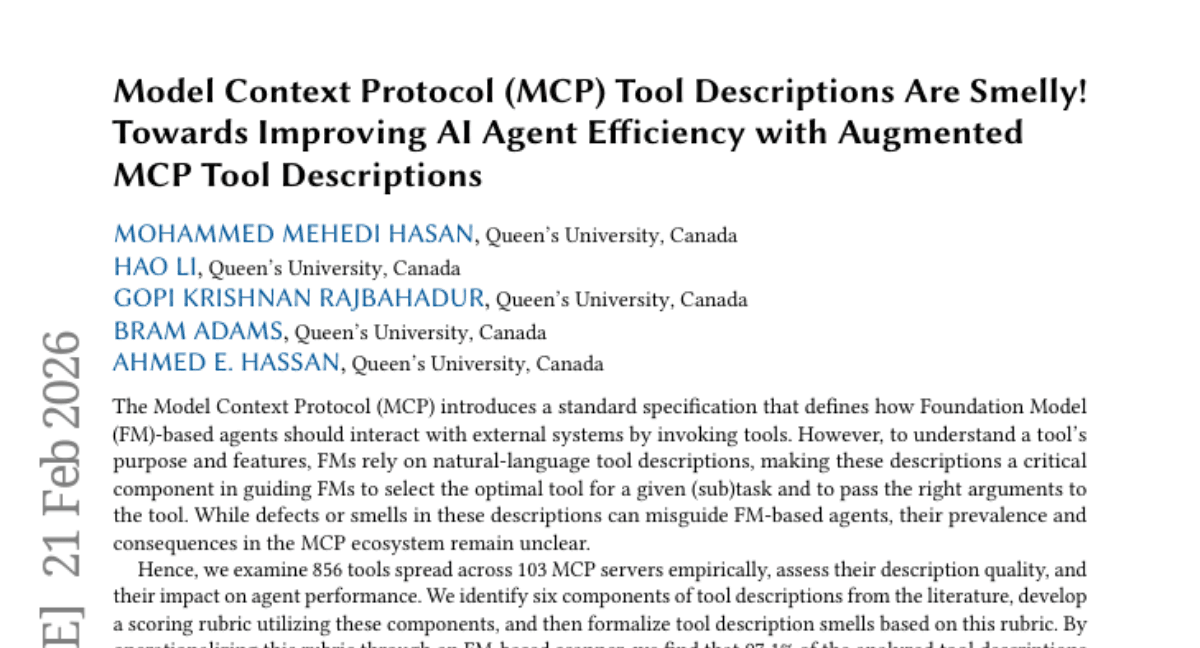
- **Model Control Protocol (MCP)** (Google): Orchestrates multiple models and tools, manages workflows, and supports dynamic model switching.
- **Agent2Agent (A2A)** (Open standard): Enables secure messaging and task delegation among heterogeneous agents, fostering **distributed problem-solving**.
- **Universal Control Protocol (UCP)** and **Agorio v0.3**: Interconnect different protocols, creating **interoperable ecosystems**.
- **ERC-8004** (Ethereum): Introduces **on-chain identity and reputation management** for AI agents, supporting **trustworthiness** and **behavioral auditing**.
Complementing these standards are **infrastructure advancements**:
- **Edge inference hardware** such as **Nvidia’s Vera Rubin NVL72** enables **high-performance AI inference at the edge**, crucial for real-time logistics and in-store applications.
- **Faster protocols** (e.g., WebSockets, Stagehand caching) have achieved **up to 99% speedups**, ensuring scalable, low-latency orchestration.
- **Security and observability tools** like **IronClaw** (credential security, prompt injection prevention) and **Opik** (behavioral auditing, deep observability) are critical for **trustworthy deployment**.
## Recent Research and Innovations
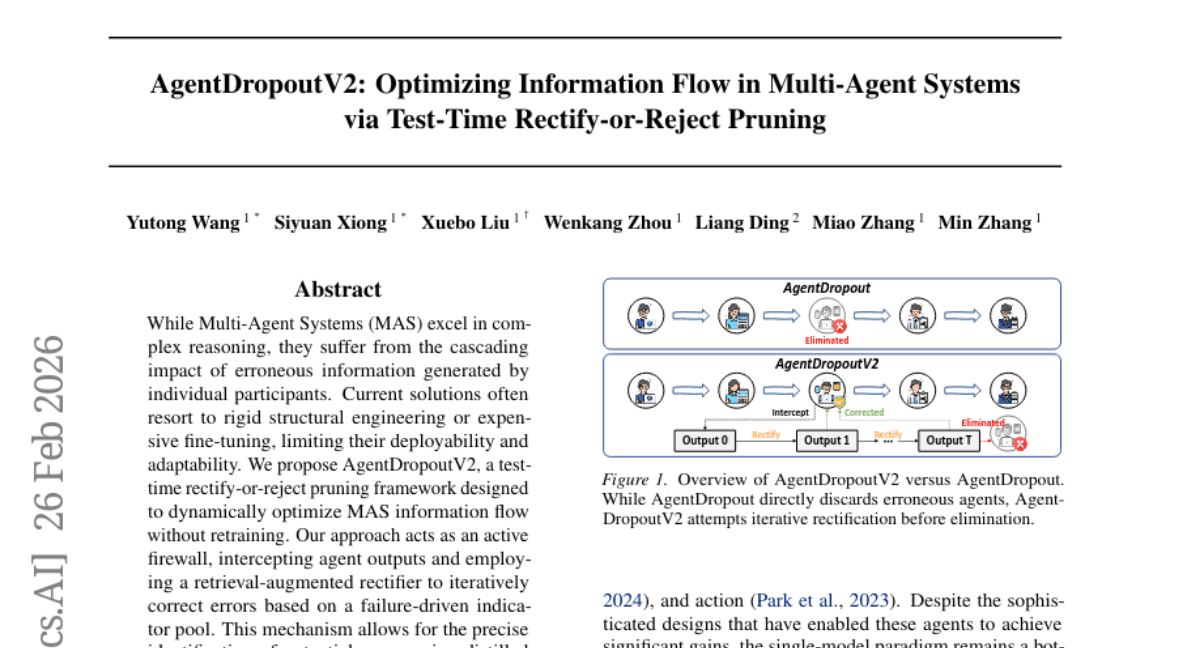
A notable recent development is the **AgentDropoutV2** research, which offers **test-time prune-or-reject strategies** to optimize **multi-agent information flow**. This technique **prunes irrelevant or redundant information**, improving **runtime efficiency and reliability** in agent collaboration. Such innovations are vital in managing the **complexity and resource demands** of large-scale autonomous systems.
Simultaneously, the emphasis on **identity, access, and governance** has intensified. As **AI agents become integral to enterprise operations**, ensuring **secure, governed, and auditable interactions** is paramount. This includes **strict credential management**, **behavioral controls**, and compliance with emerging standards and regulations.
## Industry Demonstrations and Deployments
The practical impact of **agentic AI** is evident through numerous high-profile deployments:
- **WooCommerce** announced plans to embed **full-stack AI functionalities** within its **Universal Checkout Platform (UCP)**. This integration enables **real-time product recommendations**, **dynamic pricing**, and **automated customer support**, transforming online shopping into a **self-optimizing, autonomous ecosystem**. SMBs benefit from **advanced AI tools** with minimal technical overhead, fostering **personalization** and **market responsiveness**.
- The **ClawNegotiator** demo showcases an **AI agent capable of autonomous procurement**, handling negotiations, order placements, and supply chain coordination—highlighting AI's potential to **streamline enterprise operations**.
- **Loblaws** collaborates with **Google** to develop **conversational AI shopping experiences**, where agents **manage inquiries**, **handle transactions**, and **offer personalized suggestions**, improving **customer engagement**.
- **Mastercard** demonstrated **autonomous financial transactions and negotiations** within the Indian market, integrating **blockchain standards** like **ERC-8004** for **trustworthy, transparent digital commerce**.
- On the developer front, tools such as **"Build an Agentic AI Framework in Python"** and **Open Code Plugin** facilitate **multi-tool assembly** and **dynamic code automation**, empowering developers to create **modular, multi-agent systems** tailored for various enterprise needs.
## Building Trust and Ensuring Responsible Deployment
As autonomous agents assume **more critical roles**, **industry standards** emphasize **security**, **behavioral transparency**, and **governance**:
- **Evaluation SDKs** like **Evals SDK** enable **benchmarking** agent performance, success rates, and resilience.
- **Behavioral auditing** and **formal verification** are becoming **industry best practices**.
- Regulatory bodies such as **NIST** are launching initiatives like **NIST N5**, aiming to **standardize trustworthiness, security, and transparency** in AI agents.
**Identity management** emerges as a **security imperative**. The recent article **"Identity Management as a Security Imperative in the Era of Agentic AI"** underscores the importance of **governing AI agents**—defining **who** they are, **what** they can access, and **how** their actions are audited.
## Practical Guidance for Enterprises
Organizations seeking to harness **agentic AI** should focus on:
- **Adopting interoperability standards** such as **MCP**, **A2A**, and **ERC-8004**.
- Implementing **robust identity, credential, and access management** frameworks.
- Utilizing **observability and evaluation tools** like **Opik** and **Evals SDK** for **behavioral diagnostics** and **performance monitoring**.
- Developing **offline, secure development environments** (e.g., **Foundry Local**) to **safely prototype and audit agents**.
- Ensuring **compliance** with emerging **regulatory frameworks** to **build trust** with users, partners, and regulators.
## The Future Landscape
The convergence of **full-stack AI integration**, **protocol standardization**, and **technological innovations** heralds the dawn of **interconnected, reasoning autonomous agents** capable of **orchestrating entire workflows**—from customer engagement to supply chain management—with **minimal human oversight**.
These systems will **collaborate**, **learn**, and **adapt**, delivering **greater personalization**, **resilience**, and **efficiency**. Enterprises that embrace these advancements are poised to **lead the next wave of automation**, redefining **business models** and **digital ecosystems**.
---
### Current Status and Implications
The ongoing research, standardization efforts, and industry deployments illustrate a **robust momentum** toward **trustworthy, scalable agentic AI ecosystems**. The recent introduction of **AgentDropoutV2** enhances **multi-agent reliability**, while emphasis on **identity and governance** ensures **secure, compliant operations**.
As **autonomous agents** become integral to enterprise functions, **trustworthiness**, **security**, and **transparency** will remain central. The industry’s collective focus on **standards like MCP, ERC-8004**, and **regulatory initiatives** signals a future where **agentic AI** operates **safely, effectively, and ethically**—redefining the landscape of **digital commerce and enterprise automation**.
---
*In sum*, the evolution from reactive language models to **autonomous, multi-tool, multi-agent ecosystems** is reshaping the AI frontier. With ongoing innovations in **protocol standards**, **security**, and **industry applications**, we stand at the cusp of a **trustworthy, scalable autonomous future**—one where AI agents **collaborate, learn,** and **act** across the entire spectrum of enterprise operations.