# The 2026 Tabletop Gaming Industry: Strategic Innovation, New Releases, and Societal Expansion
The tabletop gaming industry in 2026 stands at a pivotal crossroads, marked by unprecedented technological integration, sophisticated strategic planning, and a broadening societal role. Building upon its previous momentum, the industry now exhibits a more professionalized approach to crowdfunding, innovative digital enhancements, and an emphasis on long-term ecosystem development. These trends collectively signal a maturation that is reshaping how games are conceived, marketed, and utilized across entertainment, education, and corporate sectors.
## Industry Maturation: Embracing Long-Term Planning and Coordinated Launches
One of the most significant shifts in 2026 is the industry's movement toward **multi-year release pipelines** and **coordinated launch strategies**. Leading publishers are adopting **long-term roadmaps**, which incorporate community feedback, data analytics, and strategic timing to ensure sustained engagement and brand loyalty.
### Notable Examples:
- **Wingspan: Americas Expansion**: Announced well before its 2026 retail debut, this expansion exploring North American ecosystems exemplifies proactive communication. The early reveal fostered **community anticipation**, enabled **precise production planning**, and mitigated logistical issues.
- **Thunderworks Games**: The publisher unveiled an **extensive, multi-year roadmap for *Cartographers***, including **standalone expansions** that introduce **innovative map-drawing mechanics**. This sustained content pipeline encourages ongoing community participation and keeps interest high over time.
- **Goliath Games**: Showcased at the New York Toy Fair, emphasizing a **strategic release schedule** that balances **new titles** with refreshed classics, ensuring **brand consistency** and timely product delivery.
**Early reveals**, **long-term storytelling**, and **active community engagement** have become vital tools for **market stability** and **growth**. These strategies allow companies to **optimize resources**, **respond swiftly to feedback**, and **adapt marketing efforts** dynamically, fostering a resilient and future-oriented industry.
## Crowdfunding: From Hobbyist Venture to AI-Driven Professional Campaigns
Crowdfunding remains a foundational element for launching innovative tabletop projects, but success now hinges on **professionalized marketing strategies** empowered by **artificial intelligence** and **rich storytelling**.
### Key Strategies:
- **Targeted Narrative Development**: Crafting compelling stories that resonate emotionally about **game mechanics**, **themes**, and **community participation** enhances backer engagement.
- **High-Quality Content Production**: Investing in **professional gameplay videos**, **designer interviews**, and **immersive visuals** increases campaign credibility and appeal.
- **Pre-Launch Engagement**: Offering **exclusive previews**, **early bird rewards**, and **dynamic social media campaigns** helps generate buzz and cultivate dedicated backer communities.
### Industry Innovation: AI-Powered Marketing & Discovery
Recent insights from **"Breaking News of the Week? State of Gaming Marketing & More!"** by **AppsFlyer** and **Unity** reveal a **revolution in campaign scaling through artificial intelligence**:
- **AI tools** enable creators to **personalize outreach at scale**, **optimize ad placements**, and **maximize backer retention**.
- **AI-driven analytics** provide **real-time marketing adjustments**, allowing campaigns to remain highly responsive and effective.
- **ChatGPT-based conversational ads** facilitate **interactive pitches** and **personalized inquiries**, significantly boosting **engagement**, **trust**, and **conversion rates**.
Supporting data from **KS Analytics**—highlighting ladder-climbing games like **Sagrada (2017)** and **For the Gods! (2026)**—demonstrate how **strategic campaign scaling** benefits from **AI insights**, helping identify promising titles and optimize marketing spend.
This technological evolution underscores that **standing out in a crowded crowdfunding landscape** requires a **holistic approach**—merging **compelling storytelling**, **visual excellence**, **advanced analytics**, and **AI tools**. Successful campaigns are those that **build lasting relationships** with backers and **maintain momentum** through continuous engagement.
## Digital Integration and Hybrid Play Models
Innovation continues through **digital integration**, enabling **hybrid models** that expand **accessibility**, **interactive engagement**, and **monetization**:
- **Augmented Reality (AR)** and **companion apps** are increasingly used to **augment physical components**, offering **interactive content**, **remote play**, and **storytelling enhancements**.
- **App-based tools** streamline **game setup**, **progress tracking**, and **content expansions**.
- **Digital content expansions** and **subscription models**—such as **season passes** and **in-game purchases**—provide ongoing revenue streams.
A notable example is **ZBD**, which recently completed a **$40 million Series C funding round** led by **Blockstream Capital Partners**. ZBD specializes in **secure, compliant game payments** across both physical and digital platforms, signaling a move toward **robust financial infrastructure**. The new capital will fund **transaction security improvements**, **cross-border payment simplification**, and **monetization expansion**, facilitating **global reach** and **scalable growth**.
Furthermore, **print-to-demand models** are evolving. For example, Wizards of the Coast’s decision to **discontinue print-to-demand Secret Lairs**—citing that **"it's better for business"**—reflects a strategic shift toward **demand-driven manufacturing** based on **precise market analytics**. This approach emphasizes **quality**, **sustainability**, and **cost efficiency**.
## Expanding Utility: Beyond Entertainment to Education and Society
A noteworthy trend in 2026 is the **broadening function** of tabletop games—they are increasingly recognized as **educational tools** and **corporate development assets**.
### Emerging Opportunities:
- **Corporate Adoption**: Many organizations are replacing traditional icebreakers with **custom corporate editions** designed to **foster teamwork**, **strategic thinking**, and **effective communication**.
- **Workshops & Training**: Long-term programs utilize game mechanics to cultivate **soft skills** such as **leadership**, **problem-solving**, and **collaborative decision-making**.
- **Educational Partnerships**: Schools and universities incorporate games into **curriculum** and **training initiatives**, aiming for **measurable outcomes** like **improved communication**, **team cohesion**, and **critical thinking**.
As **The Times of India** reports:
> "In corporate training rooms, board games are replacing familiar icebreakers. Instead of quick energizers, organizations are adopting games that foster teamwork, strategic thinking, and communication skills."
This evolution elevates tabletop games from leisure activities to **societal tools** actively shaping **economic resilience** and **community development**.
## Design Ecosystem & Community Resources: Supporting Creators and Diversity
The industry is committed to **inclusive design** and **accessible play**, embracing **universal principles**, **clear iconography**, and **adaptive components** to reach diverse audiences. Supporting creators with resources like **The Kobold Guide to Board Game Design** by **Mike Selinker**—available digitally—further **professionalizes** the field.
A vibrant **community ecosystem** promotes emerging talent through **design contests**, **print-and-play initiatives**, and **game jams**:
- **Everyday Ramen**: A recent **print-and-play** contest emphasizing quick, accessible two-player games.
- **Mystery Box Game Jam**: An event encouraging rapid prototyping within tight constraints.
- **BoardGameGeek Design Contests**: Ongoing competitions highlighting new designers and ideas.
Supporting these initiatives, a popular resource titled **"10 publishers accepting board game submissions (and 5 tips for pitching to them!)"**—a widely viewed YouTube video with over 92,000 views—offers practical advice to aspiring designers. It emphasizes **professional presentation**, **clear communication**, and **relationship-building**, with success stories like **"Silly Street"** illustrating how **playful design combined with strategic marketing** can lead to sustainable success.
These efforts foster a **diverse pipeline** of ideas and talent, fueling ongoing innovation and ensuring the industry's vitality.
## Discovery and Marketing: Visual Platforms and Influencer Power
In 2026, **social media**, especially **Instagram**, has become the dominant platform for **discovery** and **marketing**. Its **visual-centric** nature allows publishers and creators to showcase **artwork**, **themed previews**, and **community content**, fostering **authentic engagement**.
A viral article titled "**How Instagram Changed Board Gaming**" highlights how **aesthetic appeal** and **community-curated content** now drive **game visibility**. Features like **Stories**, **Reels**, and collaborations with **influencers** generate **buzz**, **prototype showcases**, and **community involvement**, propelling titles into the mainstream and significantly boosting sales.
## Strategic Partnerships, Legacy Brand Strategies, and Financial Movements
Recent developments include **strategic collaborations** and **legacy brand approaches**:
- **Mattel** has emerged as a blueprint for integrating **long-term brand strategies** with innovative game design, adopting a **holistic approach** that combines nostalgic IP with modern gameplay mechanics.
- Major players like **KessCo** and **Square Enix** are developing **Final Fantasy-themed tabletop products**, leveraging **IP recognition** to appeal to broader audiences—a classic example of **cross-media synergy** reinforcing brand loyalty.
Financial movements reflect confidence and growth:
- **CMON** raised **$1.2 million** through a share sale, funding expanded development efforts.
- **Games Workshop Group PLC** continues to outperform broader entertainment stocks, driven by **Warhammer’s enduring popularity**, emphasizing **brand loyalty** and **community engagement**.
## Future Outlook and Strategic Implications
Looking ahead, **AI-powered tools** are poised to further revolutionize the industry:
- **AI analytics** will refine **campaign targeting** and **backer engagement**.
- **AI-assisted game design** may accelerate **prototype creation** and **cultural preservation** initiatives.
- **Hybrid digital-physical models** will broaden **accessibility** and **monetization**, with **subscription services**, **content expansions**, and **season passes** becoming standard.
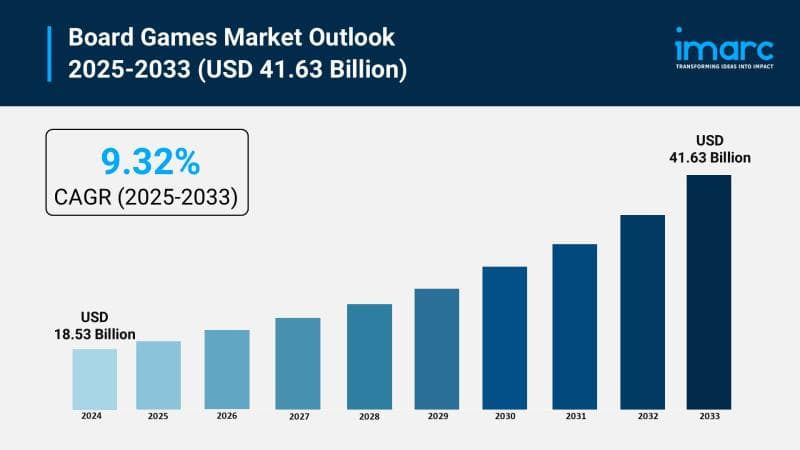
Industry projections estimate the global tabletop market will surpass **USD 41.63 billion by 2033**, growing at an impressive **9.32% CAGR**. This resilience and adaptability underscore a **vibrant, innovative sector** that not only entertains but also actively contributes to **education**, **community building**, and **economic resilience**.
---
**In summary**, the tabletop gaming industry in 2026 exemplifies a **mature, forward-looking ecosystem** that skillfully leverages **technology**, **strategic foresight**, and **societal engagement**. Its continued evolution promises an **inclusive, innovative, and influential** landscape—one that shapes entertainment, education, and cultural dialogue globally. With the integration of **AI-driven marketing**, **hybrid experiences**, and a focus on societal utility, the industry is well-positioned for sustained growth and enduring relevance in the years to come.