# Courts Hand Down Prison Terms in Distinct Murder Cases: Recent Convictions, Cold Case Breakthroughs, and Systemic Pursuits of Justice
In an era where technological innovation, persistent investigative efforts, and active media engagement converge, the pursuit of justice in murder cases continues to demonstrate remarkable resilience. Recent developments across various jurisdictions underscore society’s unwavering commitment to accountability, proving that even crimes committed decades ago can be brought to justice. From swift convictions of recent offenders to groundbreaking breakthroughs in cold cases spanning over a quarter-century, these cases reflect a justice system that adapts, evolves, and perseveres—offering closure for victims’ families and reinforcing public confidence in the rule of law.
---
## Recent Convictions and Long-Delayed Sentencing Reinforce Accountability
### Swift Justice in Sunnyvale 2023 Homicide
Earlier this year, law enforcement officials in Sunnyvale achieved a notable milestone by securing a rapid conviction in a homicide case from just months prior. Forensic evidence played a pivotal role in ensuring a swift resolution, exemplifying how contemporary investigative techniques can expedite justice. The court’s decision was publicly broadcast via court video, emphasizing the community’s stance against violence and serving as a potent deterrent to potential offenders. This case highlights that **timely judicial responses** can produce tangible results, bolster public trust, and affirm that **justice delayed is justice denied**.
### Cold Case Closure in Manhattan: Nearly Three Decades Later
A landmark case in Manhattan reached its conclusion when a defendant was sentenced for the 1994 murders of a mother and her daughter. The courtroom was filled with emotion, with the judge declaring, **“You will die in prison,”** signifying a hard-fought victory for the victims’ families and a testament to the power of advanced forensic techniques and relentless investigation. The 29-year gap between the crime and its resolution underscores that **time does not diminish the pursuit of justice**—rather, persistent efforts and technological advancements can bridge decades to deliver accountability.
### Illinois Deputy’s 20-Year Sentence: Holding Authority Figures Accountable
In Illinois, a former sheriff’s deputy was sentenced to 20 years for fatally shooting Sonya Massey. The case sent a clear message: **no one—regardless of rank—is above the law.** This conviction underscores that systemic immunity cannot shield individuals from justice, reinforcing **public trust** and affirming that **justice applies equally to all**, including those entrusted with authority. Such cases serve as a reminder that accountability is vital for systemic integrity.
---
## High-Profile Ongoing Trials and Media Engagement Maintaining Public Focus
### Edrick Faust and the Tara Baker Cold Case
One of the most closely followed ongoing trials involves Edrick Faust, accused in the 1990s murder of Tara Baker. The case has garnered widespread media attention, with live streams, social media updates, and detailed summaries such as the YouTube video **"Tara Baker Cold Case: Edrick Faust on Trial,"** which offers a concise 1:53-minute overview. As the trial enters its fourth day, community engagement remains high, fueled by hope that **decades of uncertainty will finally give way to justice**. The case exemplifies how **media can keep cold cases in the public eye**, encouraging tips and public participation.
### The Power of Media and True Crime Series
- The documentary **"Friends Like These: The Murder of Skylar Neese,"** premiered on Hulu in March 2026, explores friendship dynamics and secrets that concealed the murder, illustrating how social relationships can underpin violent acts.
- Multiple documentaries and podcasts continue to spotlight cold cases; notably, a 44-minute YouTube documentary about a gambling addict who murdered her uncle in Leiston has garnered over 1,700 views, demonstrating media’s role in raising awareness and generating investigative leads.
### Reopening and Reinvestigation of Cold Cases
- The 2021 shooting of a business owner in Richardson remains under active investigation, with authorities employing modern forensic techniques, including DNA analysis, to identify suspects despite the case’s age.
- Platforms such as **"Cold Case Homicides LIVE"** stream ongoing investigations, emphasizing how media keeps victims’ stories alive and encourages public tips.
- The stories of Skylar Neese, Nancy Guthrie, and other cold cases continue to be focal points in true crime media, maintaining public interest and exerting pressure for resolution.
---
## Breakthroughs Driven by Forensic Technology and Renewed Investigations
Technological advances are transforming cold case investigations, often leading to long-awaited breakthroughs:
- **Oklahoma City 2003 Murder Weapon:**
DNA analysis linked evidence from a 2003 murder scene and weapon, resulting in an arrest—highlighting how scientific progress can close cases once deemed unsolvable.
- **Nancy Guthrie Case (Disappeared 1992):**
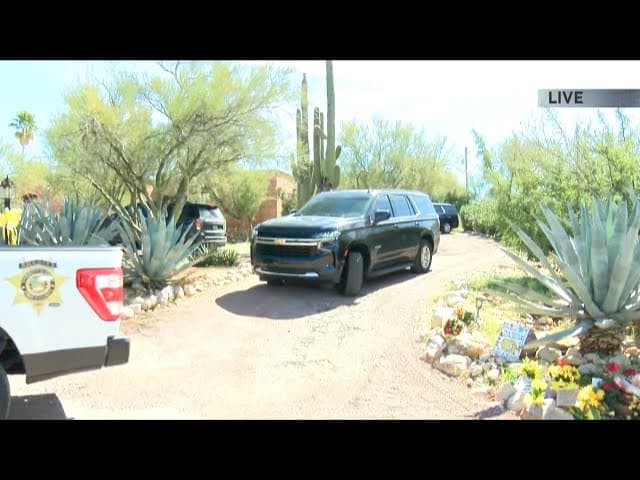
The FBI is offering up to **$50,000** for information regarding Nancy Guthrie’s disappearance. Newly released footage, including haunting Nest Cam videos capturing her last known movements, has rekindled hopes for answers after more than three decades.
- **Cesar Barone’s Connection to 1992 Hillsboro Killing:**
DNA evidence has linked notorious killer Cesar Barone to the 1992 murder of Elizabeth Wasson in Hillsboro, Oregon. This exemplifies the ongoing importance of DNA profiling in cracking long-standing cases.
- **Louisiana Cold Case: Destiny Carr (1999–2020):**
After 21 years, the cold case of Destiny Carr, an 11-year-old girl missing since 1999, was officially solved. A YouTube documentary titled **"SOLVED: Louisiana Cold Case | Destiny Carr, 11 | Case Solved After 21 Years"** chronicles the investigation’s success, providing long-awaited answers and closure for the community.
- **San Bernardino’s Oldest Cold Case:**
San Bernardino County announced the resolution of its oldest cold case, demonstrating how perseverance and technological innovations can finally deliver justice. This milestone inspires similar efforts nationwide.
---
## Recent and Notable New Developments
### Woman Charged with Murder in Fatal Carjacking of Uber Eats Driver in Chicago
A recent case has garnered attention with the arrest and charging of a woman in connection with the fatal carjacking of an Uber Eats driver in Chicago. The incident, captured briefly in a 1:35-minute YouTube video, underscores ongoing dangers faced by gig economy workers and highlights efforts to seek justice in violent crimes involving vulnerable populations.
### Pre-trial Activity in the Frattolin Murder Case
Pre-trial proceedings have begun in Essex County Court for the case of a 9-year-old girl, Frattolin, whose murder shocked her community. The upcoming trial aims to shed light on the circumstances surrounding her death and deliver justice for her family, reflecting ongoing efforts to pursue accountability in particularly tragic cases.
---
## Systemic Challenges and Calls for Reform
While progress is evident, systemic vulnerabilities persist. Recent revelations about police misconduct—particularly in Toronto, where over **65 indicators** since June 2023 have been linked to fentanyl, cocaine trafficking, and conspiracy to murder—have sparked widespread calls for reform. These findings underscore the urgent need for increased oversight, transparency, and accountability within law enforcement agencies to prevent justice from being compromised by systemic failures.
---
## The Role of Media and Technology in Advancing Justice
Media remains central to maintaining public interest, transparency, and pressure to resolve cold cases:
- **Live streaming** trials and investigations keeps communities engaged.
- **Documentaries, podcasts, and social media campaigns**, like the 2026 "Lauren Burk" documentary, raise awareness, stimulate tips, and keep victims’ stories alive.
- **Technological advancements**, including DNA profiling, surveillance footage analysis, and digital forensics, are critical in solving cases once considered unsolvable.
These tools foster an environment where **relentless pursuit of justice** is possible, often resulting in breakthroughs years or decades after the crimes occurred.
---
## Current Status and Future Outlook
The landscape of homicide justice continues to evolve rapidly. Recent convictions, cold case breakthroughs driven by forensic advances, and systemic reforms collectively demonstrate society’s resilience and dedication to accountability. As forensic technology progresses and media transparency increases, the likelihood of solving more long-standing cases grows.
**The overarching message remains clear:** **justice endures beyond the passage of time.** Victims’ families find solace in knowing that perseverance, scientific progress, and societal will can eventually bring perpetrators to justice.
---
## In Summary
- **Recent convictions** in Sunnyvale, Illinois, and Manhattan exemplify both swift and long-delayed justice.
- **Cold case breakthroughs**—via DNA analysis, ballistic evidence, and surveillance—have solved cases in Oklahoma, Louisiana, California, and beyond.
- **High-profile investigations** like Tara Baker’s and ongoing trials like Edrick Faust’s demonstrate the power of media in maintaining public focus.
- **Reinvestigation efforts** into cases from the 1970s and 1980s showcase ongoing dedication to uncovering truths.
- **Historical and serial killer cases**, including Richard Cottingham’s recent admission and Scotland’s Bible John, highlight the importance of technological and investigative persistence.
- **Systemic vulnerabilities**, especially police misconduct, emphasize the need for reform to safeguard justice.
- **Media and technological advances** remain vital tools in solving cases, providing closure, and fostering public trust.
As these efforts continue, the message is unequivocal: **justice is relentless and enduring, regardless of how much time has passed.** The pursuit of truth persists, promising more resolutions and reaffirming that ultimately, **justice prevails.**