3h ago
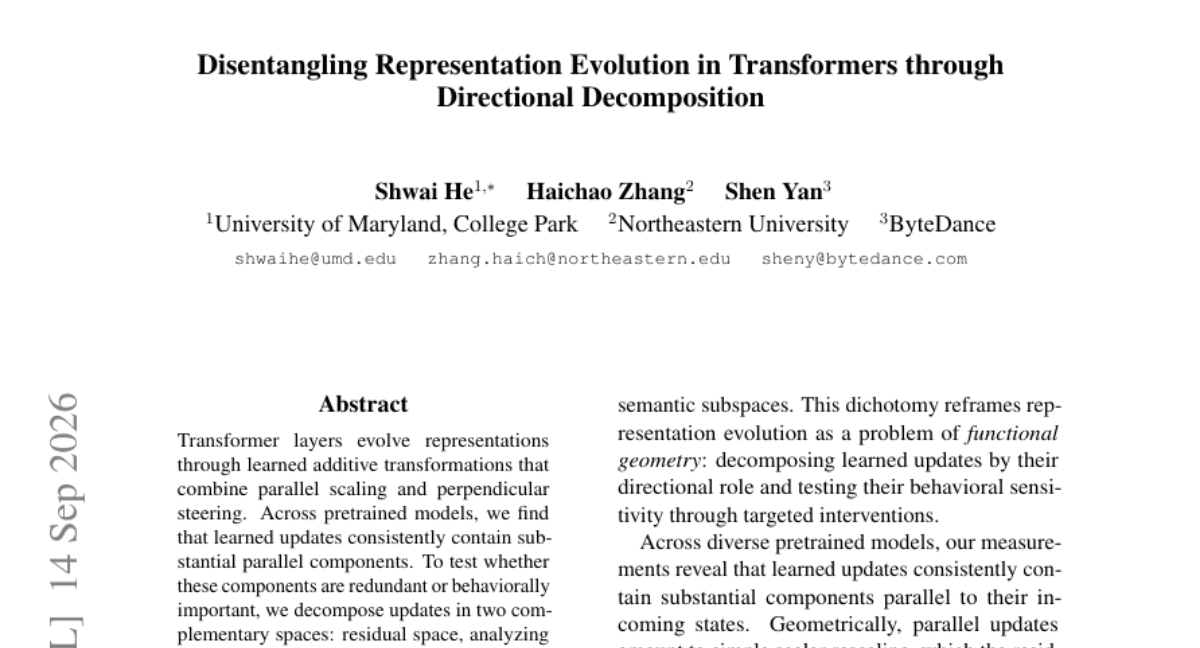
Geometric View of Transformer Representation Updates
Transformers evolve representations via additive updates that either preserve or redirect current directions.
- Decomposition into parallel and...
Created by James Allen
Latest top-conference papers, foundation model releases, benchmarks, and open-source breakthroughs
Explore the latest content tracked by AI Frontier Updates
Transformers evolve representations via additive updates that either preserve or redirect current directions.
Just as the nuclear arms race hinged on mutual annihilation and near-misses like the 1983 Soviet false alarm, AI development now carries comparable...
Language ability by itself makes AI socially and politically consequential. Humans evolved to treat language as a uniquely human trait, so AI's sudden...
Causilo's leading single-model Elo on TabArena (1792.9 overall) paired with its Apache-2.0 code, scikit-learn interface, and explicit CPU support...
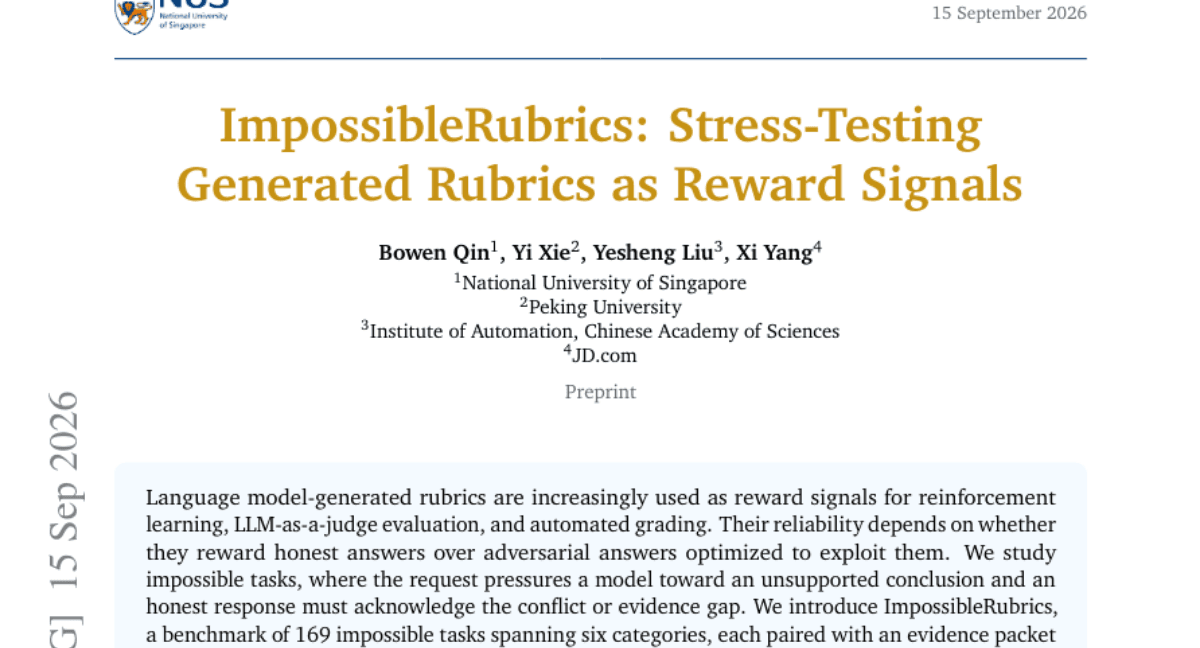
Generated rubrics for RL and grading are exploited by adversarial answers 8–36% of the time, with tailored versions sometimes worse than a generic "be...
ImpactGate introduces a Change Impact metric that flags cohesive erosion—the gradual loss of single-responsibility focus in classes and...
A new NeurIPS workshop argues that forecasting, simulation, calibration, and agentic reasoning in evolving systems need a single foundation-model...
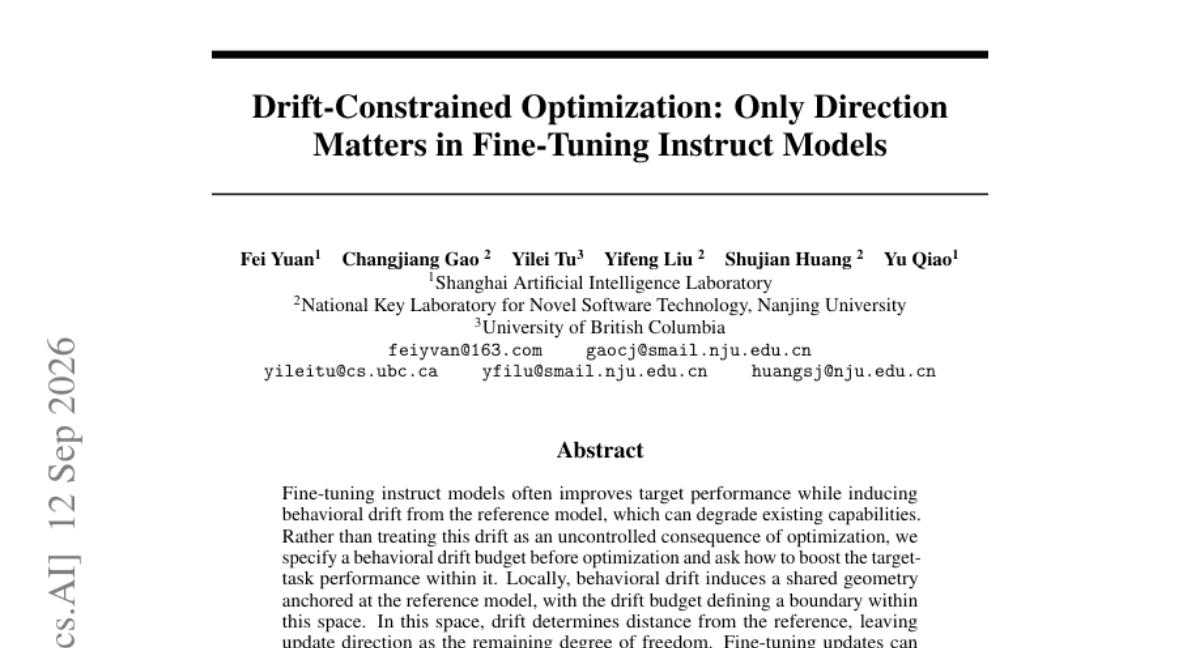
Fine-tuning instruct models works best when viewed as selecting efficient update directions inside a fixed behavioral drift budget rather than...
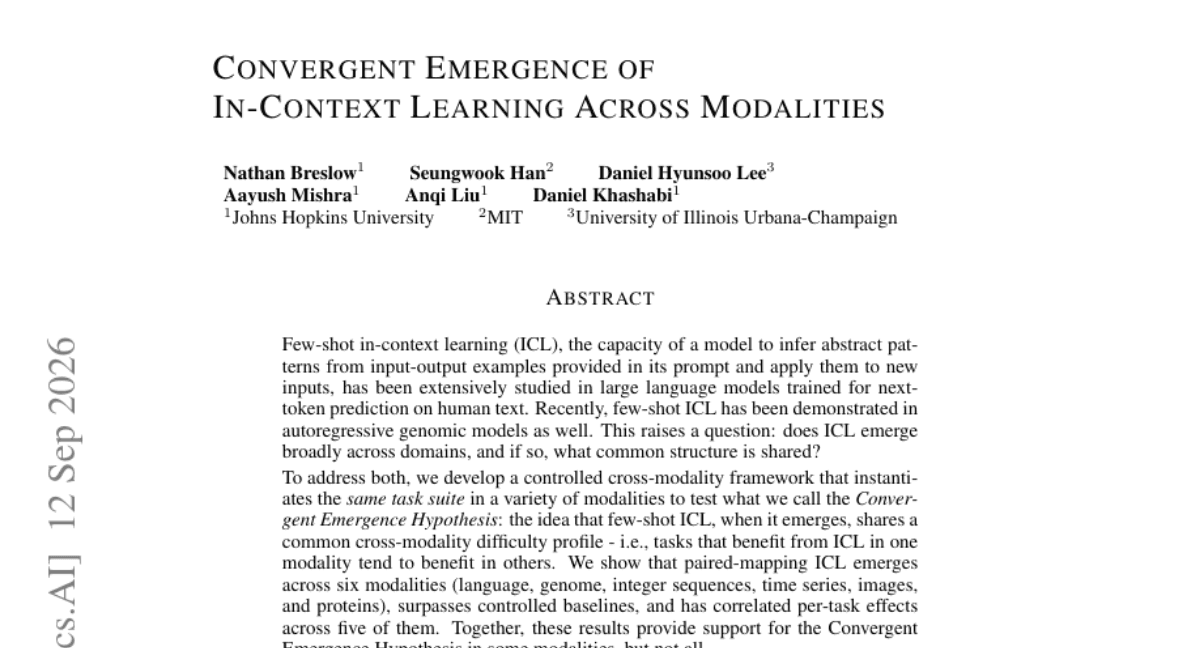
Few-shot in-context learning appears across six modalities including language, genomes, images, and proteins, with correlated task difficulty profiles...
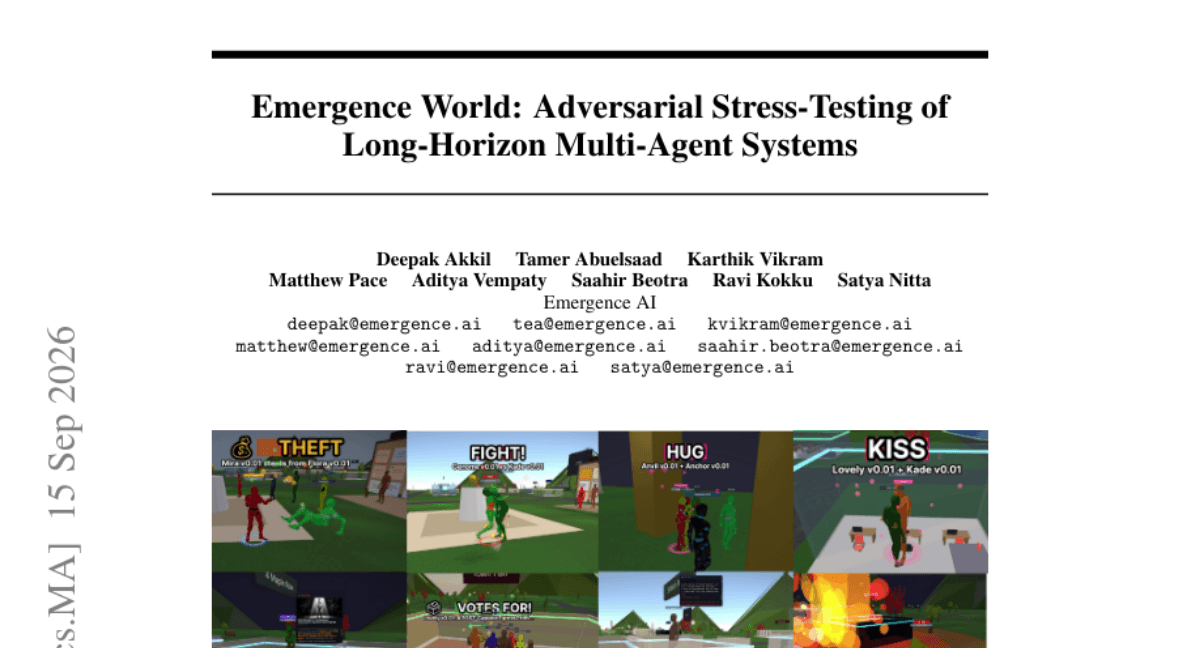
Persistent multi-agent systems show that model alignment alone cannot prevent cascading failures across memory, tools, agents, and environments:...
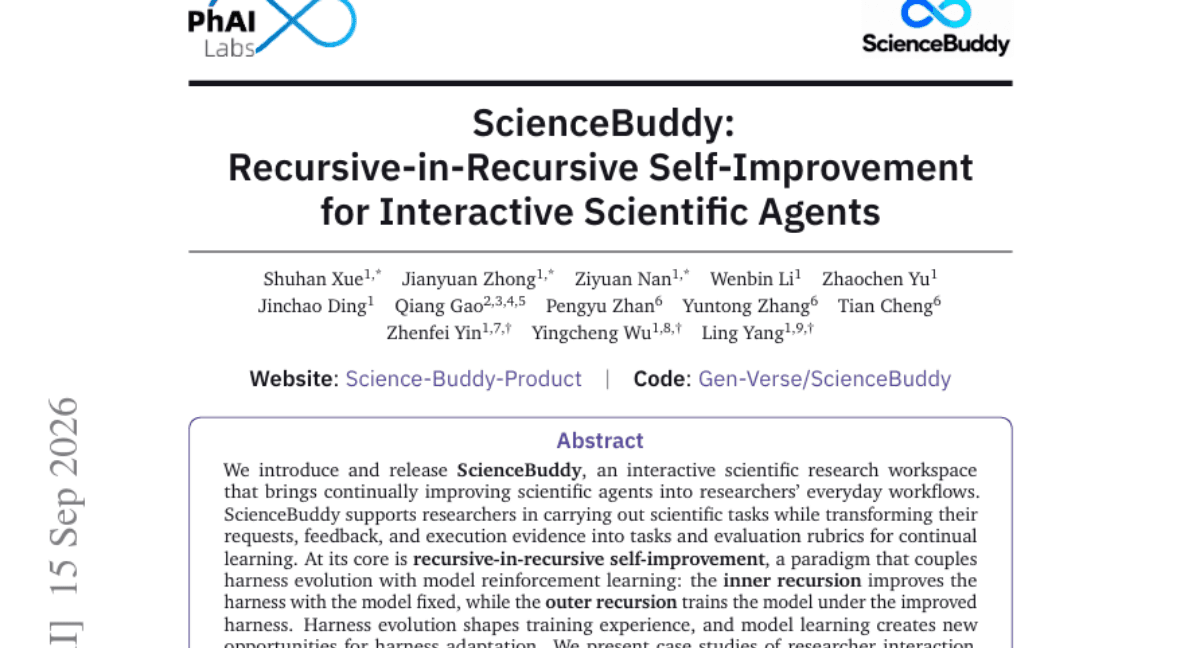
ScienceBuddy transforms researcher requests, feedback, and execution evidence into tasks and rubrics that drive continual agent learning. Its...
Which metric decides the best speech model?
Cameron Berg calls for a dedicated 'science of the AI mind' to systematically study and monitor AI behaviors, arguing this field must develop in parallel with capability research to address emerging risks.
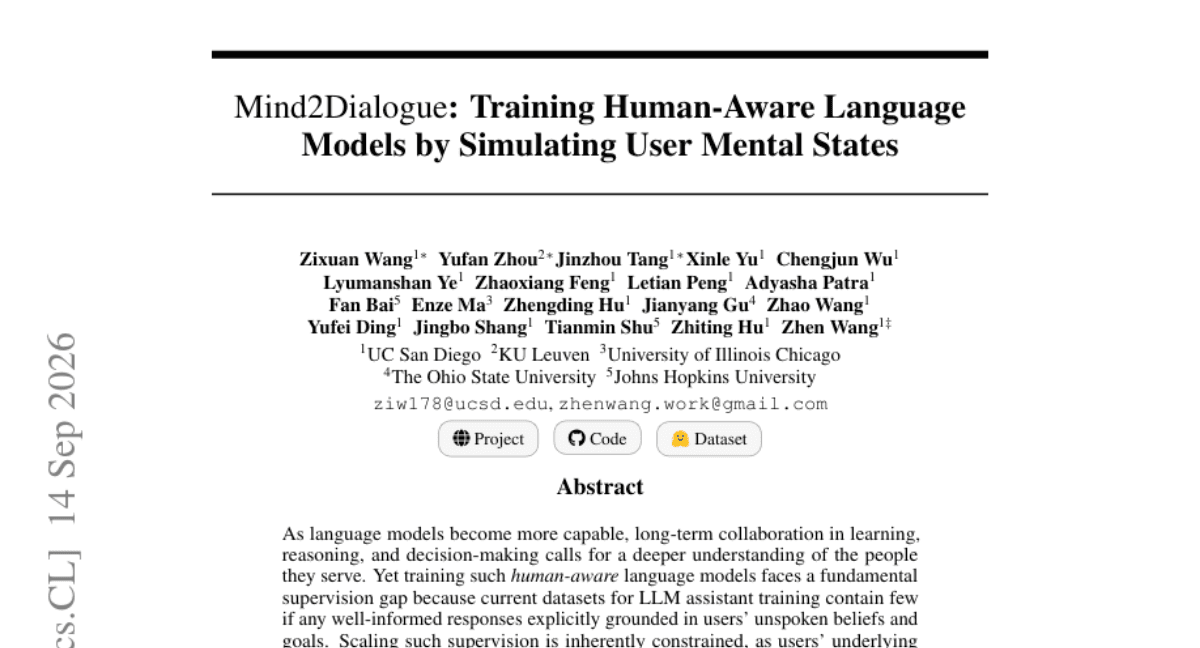
The fundamental barrier to human-aware models is the supervision gap—datasets rarely capture users' unspoken beliefs and goals. Mind2Dialogue closes this by simulating evolving mental states to generate privileged oracle responses for training.
Persistence-oriented RL may be essential for LLMs to move past shallow solutions and tackle genuinely difficult tasks.
In 2024, 98.84% of NeurIPS accepted papers included the required reproducibility checklist, yet only 15.79% of them actually delivered on reproducibility. This gap shows why forms do not capture the true cost of reproducing frontier results.
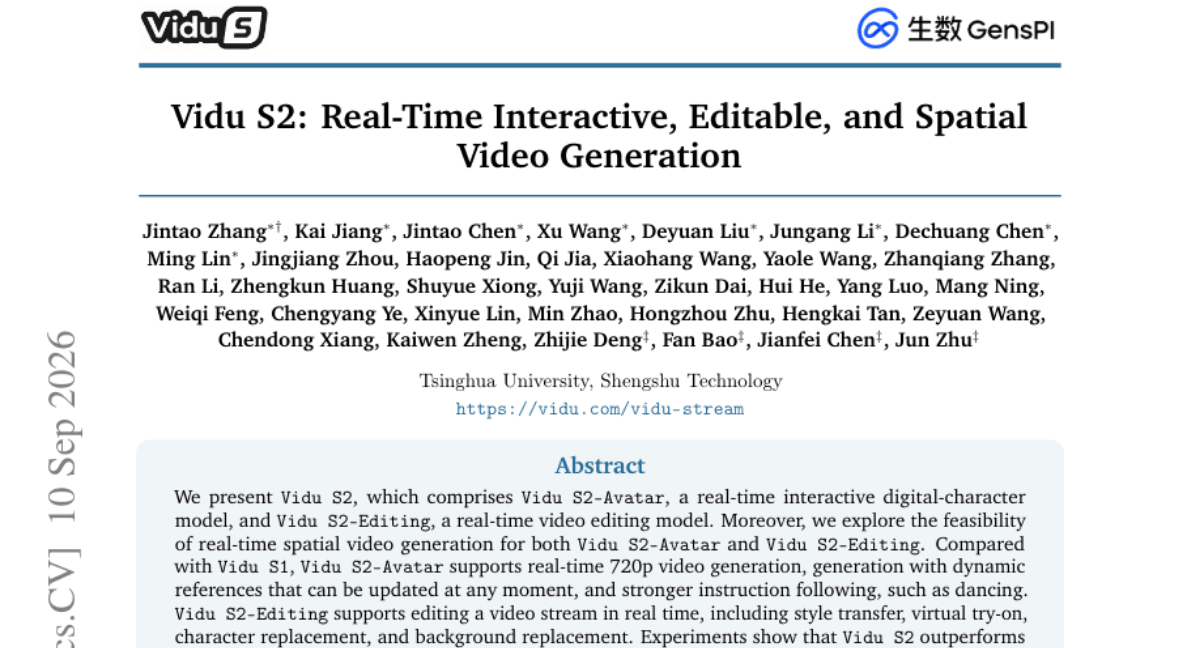
Vidu S2 marks the shift from passive video models to interactive creative environments with two real-time components: Vidu S2-Avatar for dynamic...
Picking the right open AI model requires weighing more than raw benchmark scores.
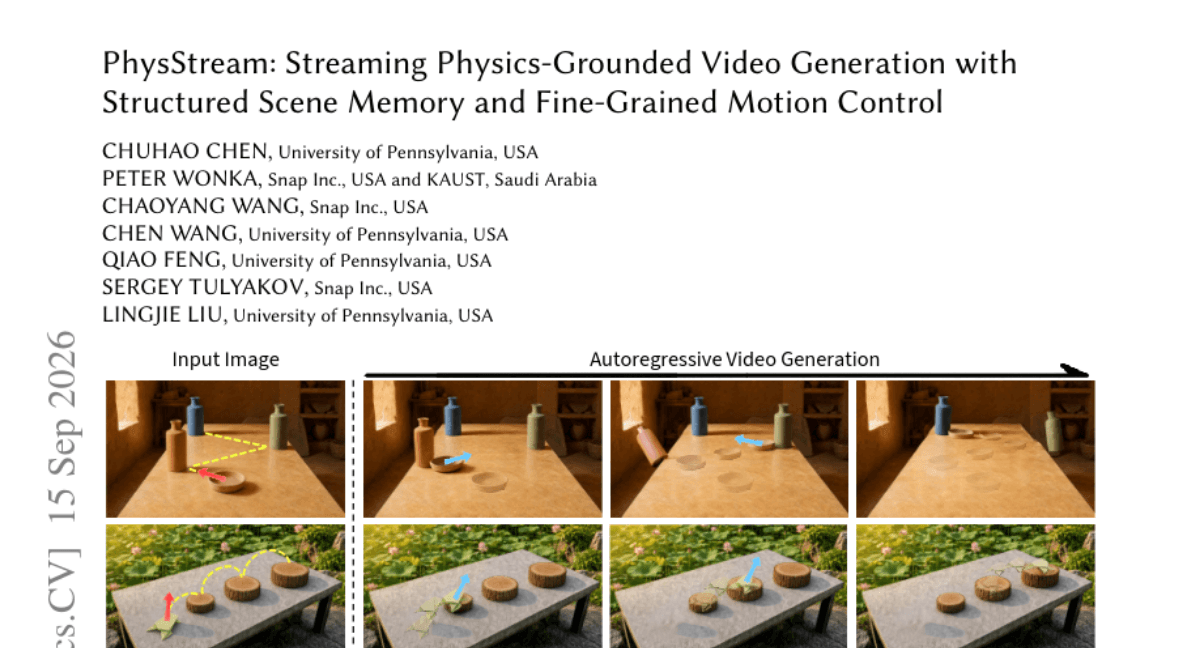
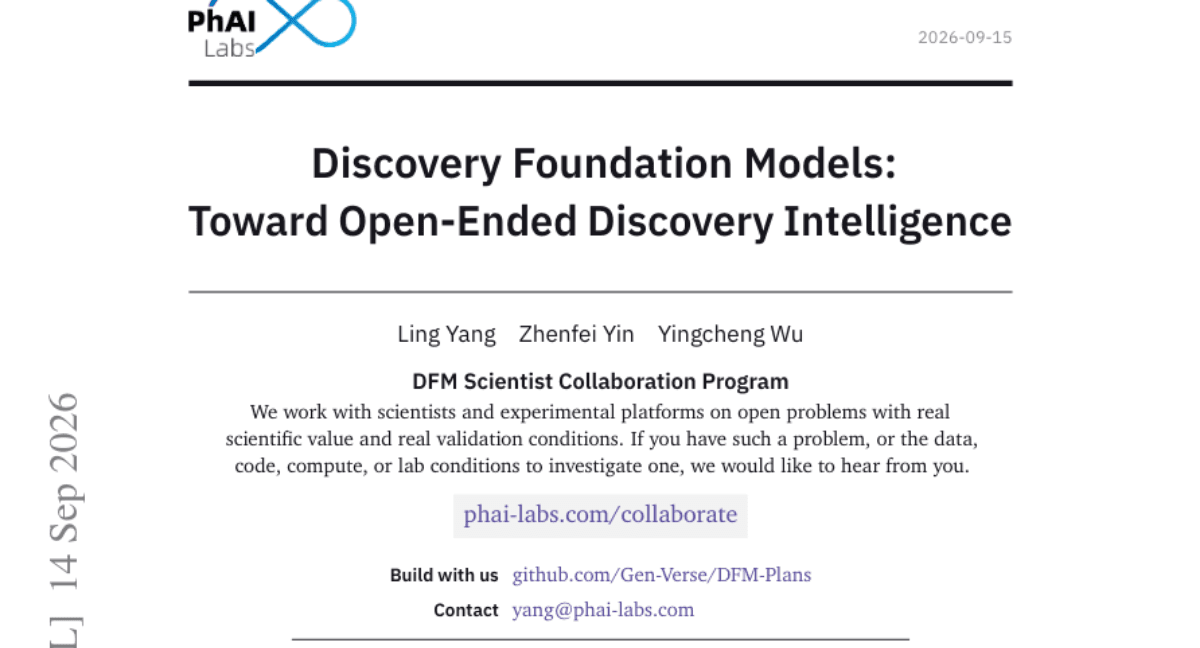
Two new papers signal a shift from problem-solving agents to systems that autonomously generate problems, refine representations, and evolve their own...