# Pushing LLMs Beyond Text: Reinforcement Learning as the Backbone for Tool-Using, Agentic Systems — Updated with Recent Breakthroughs
The landscape of large language models (LLMs) is rapidly evolving from static text generators into autonomous, multi-capable agents capable of complex reasoning, precise tool use, and tackling domain-specific challenges. Central to this transformation is the maturation of reinforcement learning (RL), which now serves not merely as a fine-tuning technique but as the foundational backbone enabling LLMs to operate with greater agency, safety, and practical utility. Recent innovations across diverse fields—ranging from code synthesis to scientific research—underscore RL’s pivotal role in pushing beyond traditional language generation into realms of autonomous problem-solving and multi-agent collaboration.
## Reinforcement Learning: The Engine Behind Autonomous, Tool-Using LLMs
Over the past year, researchers have made significant strides in leveraging RL to imbue LLMs with capabilities that emulate intelligent agents. Key advances include:
- **RL-Only Training for Tool Use:** Models are now fine-tuned solely through reinforcement signals to reliably select and deploy external tools—such as code interpreters, search engines, or scientific databases—enabling them to extend their functionalities dynamically.
- **Routing Across Model Mixtures:** Dynamic routing mechanisms now facilitate switching between different model variants, such as mixtures of LoRAs (Low-Rank Adaptations), to optimize performance tailored to specific tasks. This flexibility enhances both efficiency and specialization.
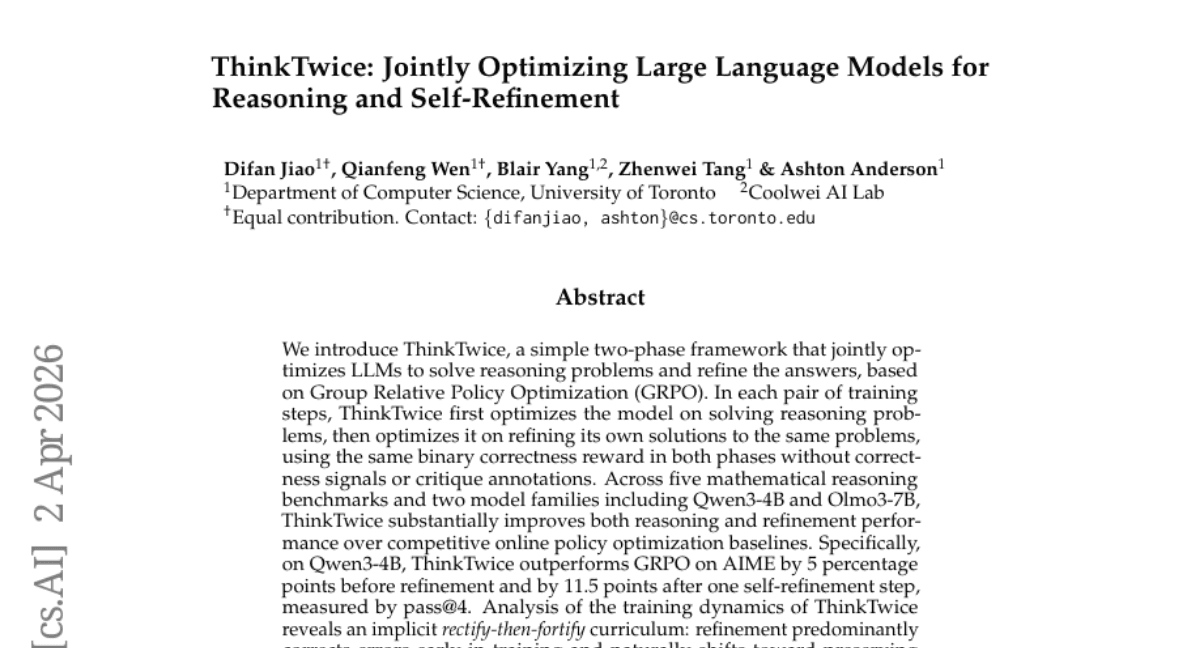
- **Credit Assignment for Long-Horizon Reasoning:** Algorithms have been developed to more accurately attribute rewards or failures over extended reasoning chains, which is vital for complex, multi-step problem-solving tasks.
- **Value Models Guiding Sparse Rollouts:** Learned value functions are used during inference to prioritize exploration paths, improving both the efficiency and accuracy of reasoning processes.
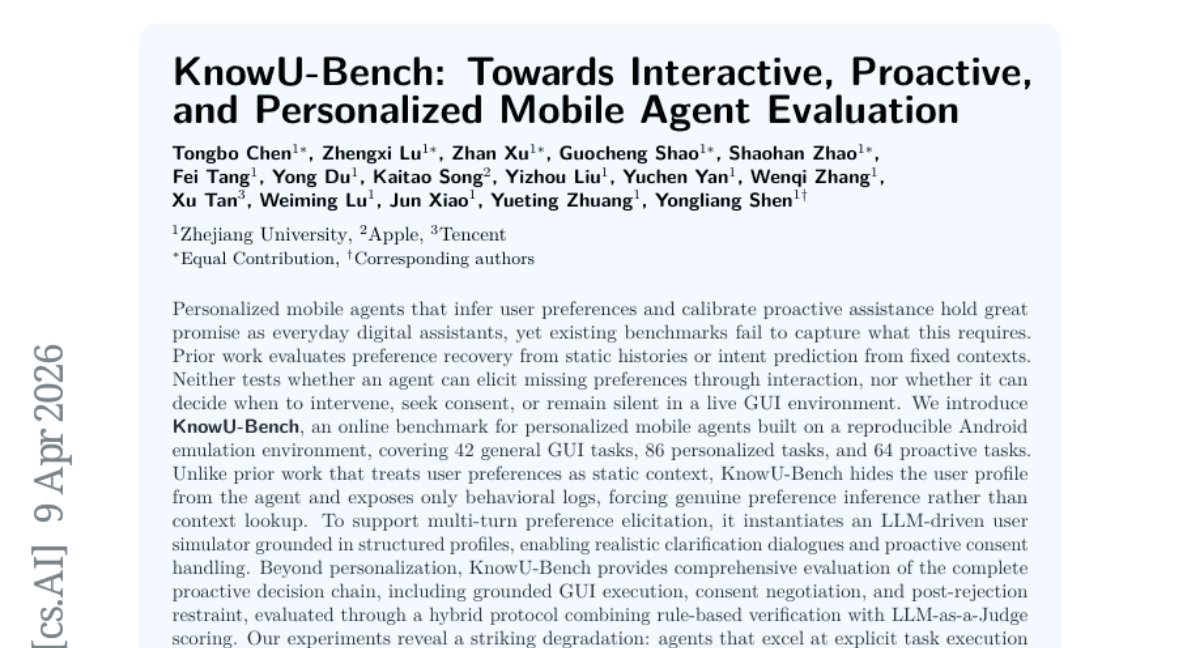
- **Natural-Language-Driven RL Frameworks:** Initiatives like **OpenClaw-RL** and **AutoResearch-RL** exemplify how models can learn autonomous research, reasoning, and decision-making strategies directly from natural language instructions, making the process more intuitive and scalable.
This collection of advancements demonstrates that RL has transitioned from a mere reward tuning method into the core architecture for interpretable, safe, and highly capable LLM agent systems. These models can operate autonomously across tasks, adapt through interaction feedback, and learn with minimal supervision—marking a new era of intelligent systems.
## Recent Domain-Specific and Multi-Agent RL Breakthroughs
### CUDA Agent: RL-Driven CUDA Kernel Generation
One of the most striking recent achievements is **CUDA Agent**, an RL-based system designed to generate high-performance CUDA kernels. As detailed in an arXiv preprint, CUDA Agent exemplifies how domain-specific RL agents can explore vast code spaces, learn from execution performance feedback, and synthesize optimized GPU code automatically.
> *"CUDA Agent leverages reinforcement signals from kernel performance metrics to iteratively improve code generation, enabling scalable and reliable high-performance GPU programming."*
This work pushes the boundaries of automated software engineering, illustrating that RL-tuned agents can undertake complex, high-stakes engineering tasks—automating performance-critical code synthesis at scale and opening doors for autonomous hardware optimization.
### Hierarchical Multi-Agent RL for Retrieval-Augmented Document QA
In the realm of information retrieval and question answering, a recent study published in *Scientific Reports* introduced **hierarchical multi-agent reinforcement learning** that significantly enhances retrieval-augmented document QA systems. This architecture involves multiple specialized agents operating at different levels—such as retrieval, reasoning, and verification—collaborating to process large document repositories effectively.
Key features include:
- **Hierarchical Coordination:** Structuring exploration and decision-making across layers to handle complex retrieval and reasoning tasks.
- **Multi-Agent Collaboration:** Combining the strengths of various specialized modules to improve answer accuracy and robustness.
- **Performance Gains:** Demonstrated outperformance over single-agent systems on industrial document QA benchmarks.
> *"This multi-layered RL approach enables the system to handle complex retrieval and reasoning tasks with greater accuracy and robustness, showcasing the potential of structured agent architectures in scientific and industrial applications."*
Such architectures exemplify how multi-agent RL frameworks can revolutionize structured, high-performance information processing—especially valuable in scientific research, legal analysis, and industrial data management.
## Supporting Developments and Practical Methods
### Tree Search Distillation for Language Models Using PPO
A recent innovation, **Tree Search Distillation using Proximal Policy Optimization (PPO)**, bridges classical search algorithms with RL, enabling models to learn efficient search strategies. This method distills search-based decision processes into language models, improving their reasoning capabilities and reducing inference costs—a promising approach for scaling reasoning in domain-specific tasks.
### VLA Models: Simple Continual RL Using LoRA
**VLA Models** demonstrate how simple continual RL can be achieved efficiently with Low-Rank Adaptations (LoRA). These models can adapt and improve over time without massive retraining, making RL more accessible for real-world deployment. The associated YouTube video underscores the ease and effectiveness of this approach.
### Neural Thickets: Dense Task Experts Around Pretrained Weights
The concept of **Neural Thickets** explores how diverse task experts can be densely clustered around pretrained weights, facilitating routing and mixture-of-experts mechanisms. This approach informs improved model architectures and routing strategies, enabling models to specialize dynamically for different tasks with minimal additional parameters.
> *"Neural Thickets highlight how dense, task-specific experts near foundational weights can enhance multi-task learning and modularity, providing a pathway for scalable, versatile AI systems."*
## Ongoing Challenges and Critical Frontiers
Despite these exciting breakthroughs, several persistent challenges remain:
- **Interpretability and Transparency:** As RL agents grow more complex, understanding their decision-making remains critical for safety, trust, and debugging.
- **Long-Horizon Credit Assignment:** Accurately attributing rewards over extended reasoning chains continues to be a technical hurdle, especially in multi-step, multi-modal tasks.
- **Safe Tool Verification at Test Time:** Ensuring the correctness and safety of tools used by agents—particularly in high-stakes domains like healthcare or finance—is essential for reliable deployment.
- **Standardized Benchmarking:** Developing comprehensive and domain-specific benchmarks (e.g., for code synthesis, scientific research, industrial QA) is necessary to measure and compare progress objectively.
- **Mitigating Deception and Bias:** New probing frameworks are underway to detect and mitigate deceptive behaviors in LLMs, which is crucial for deploying trustworthy AI systems.
## Current Status and Future Outlook
The integration of reinforcement learning into LLM development is transforming the potential of AI systems. We are witnessing models that can autonomously perform high-stakes, domain-specific tasks—such as generating optimized GPU code, conducting scientific research, or managing complex retrieval workflows—with minimal human intervention. These systems are becoming more adaptable, efficient, and aligned with real-world needs.
However, realizing the full promise of RL-driven LLMs requires addressing key challenges:
- Improving interpretability and safety mechanisms.
- Enhancing long-term credit assignment algorithms.
- Developing robust test-time tool verification processes.
- Establishing standardized evaluation benchmarks.
As research continues to accelerate—highlighted by recent advances like **Tree Search Distillation, VLA Models, Neural Thickets,** and domain-specific agents like **CUDA Agent**—the trajectory points toward increasingly autonomous, capable, and trustworthy AI systems. These developments suggest a future where LLMs, guided and fine-tuned through reinforcement learning, will seamlessly perform complex, high-stakes tasks across scientific, industrial, and societal domains, fundamentally expanding the scope and impact of artificial intelligence.
---
**In summary**, reinforcement learning is now the backbone of next-generation LLMs—driving their evolution from simple language processors to sophisticated, autonomous agents capable of tool use, reasoning, and multi-agent collaboration. The ongoing breakthroughs and challenges shape a promising yet demanding path toward truly intelligent, safe, and versatile AI systems.