# How Multiplier Choices Are Reshaping FIRE in India: Embracing Flexibility Amidst Evolving Realities
Achieving **Financial Independence and Retire Early (FIRE)** in India is no longer a straightforward pursuit guided solely by traditional rules. While decades past saw a reliance on fixed benchmarks such as the **25X savings multiplier** and the **4% withdrawal rule**, recent economic, demographic, and market developments are compelling aspirants to rethink their strategies. Instead of rigid formulas, the future of FIRE in India increasingly hinges on **scenario-based, flexible planning** that accounts for local realities, inflation volatility, healthcare costs, and longevity. This shift is transforming how Indians approach retirement planning—making resilience, personalization, and ongoing reassessment central to success.
---
## The Limitations of Rigid Multipliers in the Indian Context
Historically, global standards like the **25X savings multiplier**—which suggests accumulating 25 times annual expenses—and the **4% withdrawal rule** have served as universal benchmarks. However, their direct application in India **ignores critical local factors**:
- **Persistent high inflation**: Costs for essentials such as food, fuel, healthcare, and energy often surge **8% or more annually**, eroding fixed withdrawal plans and risking underfunding.
- **Longer life expectancy**: With many Indians expecting to live **beyond 85 or 90**, retirement durations are extending, demanding **larger retirement savings**.
- **Rising healthcare costs**: Medical expenses, especially post-65, are escalating **faster than inflation**, creating significant financial risks if not adequately planned for.
- **Market and currency volatility**: Fluctuations in Indian stock markets and the rupee **add layers of uncertainty**, making rigid multipliers **potentially misleading**.
Applying a **fixed 25X multiplier** without adjusting for inflation, healthcare, or longevity **may lead to underfunding during inflation surges** or **overfunding**, unnecessarily delaying FIRE. This underscores the importance of **adaptive, scenario-driven planning** that emphasizes **resilience, personalization, and regular review**.
---
## The Risks of Rigid Multipliers: Underfunding and Overestimations
Relying solely on **fixed multipliers** can expose aspirants to **significant pitfalls**:
- **Inflation spikes** can cause expenses to **balloon unexpectedly**, threatening portfolio sustainability if withdrawals aren’t adjusted.
- **Medical emergencies** often require **large, unplanned withdrawals**, risking premature depletion.
- Conversely, **overly conservative multipliers**—say, 40X or higher—**prolong the journey**, impacting personal freedom and opportunity costs.
To mitigate these risks, **stress testing**—**simulating various inflation, market, and health scenarios**—becomes vital. Such proactive planning ensures FIRE aspirants **prepare for multiple eventualities**, safeguarding their goals amidst India’s economic volatility.
---
## Transitioning to Scenario-Based, Adaptive Planning
The **paradigm shift** in Indian FIRE planning emphasizes **scenario-driven, flexible strategies**:
- **Dynamic withdrawal rates**: Adjust withdrawals based on **market performance**, **inflation levels**, and **portfolio health**.
- During downturns, **reduce withdrawals** to conserve capital.
- During growth phases, **moderate increases** can be considered.
- **Diversification and rebalancing**: Maintain **balanced asset allocations**—including equities, bonds, real estate, and income-generating assets—and **review every 3–5 years**.
- **Stress testing**: Regularly **simulate different inflation and return scenarios** to **evaluate portfolio resilience**.
- **Personalization**: Tailor strategies according to **risk tolerance**, **health outlook**, **lifestyle preferences**, and **family circumstances**.
This **adaptive framework** ensures FIRE plans **become more resilient**, **shorten timelines**, and **withstand India’s economic uncertainties**. It also facilitates **more realistic withdrawal strategies**, **asset allocations**, and **long-term sustainability**.
---
## Rethinking the 4% Rule: India-Specific Insights
The **Western 4% withdrawal rule**—a cornerstone of global FIRE strategies—**may not be directly applicable** in India. **Recent research** and **practical experience** suggest adopting **more conservative withdrawal rates**, around **3.9%**, due to **higher inflation volatility** and **longer life expectancies**.
**Key considerations include**:
- Larger multipliers (**e.g., 40X or higher**) provide **safety margins**.
- **Stress testing plans** over **extended horizons** (up to **age 100+**) helps **avoid underfunding**.
- Developing **personalized multipliers** based on **inflation scenarios**, **health**, and **market conditions** is more prudent.
**In essence**, transplanting Western standards **without contextual adjustments** can lead to **shortfalls**. Indian FIRE aspirants need to **craft plans rooted in local realities**, incorporating **scenario awareness** and **personalized assumptions**.
---
## Investment Vehicles & Fees: ETFs & Tracking Error
Investment choices are **crucial** in **achieving and maintaining retirement goals**:
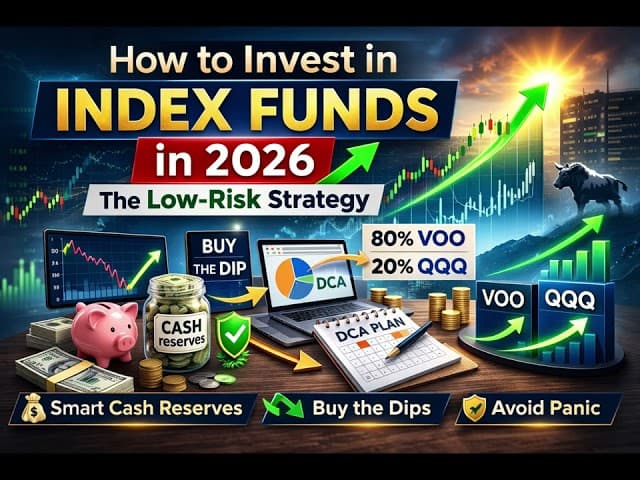
- **Low-cost index ETFs** (e.g., Nifty or Sensex ETFs) are **vital for cost-effective, long-term growth**.
- **Tracking error**—the deviation of ETF performance from its benchmark—**accumulates over time**, potentially **reducing expected returns**.
- **Index construction** (market-cap weighted vs. fundamental indices) **shapes risk and return profiles**.
### Practical Tips:
- Prioritize **low-expense ETFs** with **minimal tracking error**.
- **Regular stress testing** assumptions such as **fees** and **tracking error** can **refine corpus needs**.
- Consider ETFs that **distribute dividends** if generating **cash flow** is part of your withdrawal strategy.
Understanding **ETF construction**, **fees**, and **tracking error** enables **more accurate planning** and **better alignment** with **retirement goals**.
---
## Embracing Dynamic, Scenario-Driven Planning
Given the **many variables**—inflation, market returns, healthcare costs, longevity—a **paradigm shift** toward **scenario-based, flexible planning** is essential:
- **Stress-test** plans under various **inflation** and **market return** scenarios.
- Conduct **periodic reviews** (every **3–5 years**) to **adapt strategies**.
- **Personalize** **multipliers**, **withdrawal rates**, and **asset allocations** based on **risk tolerance** and **changing circumstances**.
This **adaptive methodology** enhances **resilience**, **reduces sequence-of-return risk**, and **supports sustainable FIRE** amid India’s economic volatility.
---
## Tactical Acceleration Strategies: Shortening Your FIRE Timeline
An emerging approach involves **accelerating FIRE**—reducing the typical **20–30-year** journey into **5–7 years**—through:
- **Aggressive savings** and **market timing**.
- **Leveraging tax benefits** (e.g., PPF, NPS, ELSS).
- **Targeted investments** during market upswings.
- **Strategic withdrawals** aligned with **market cycles**.
### Example: "How I Shortened a 30-Year Retirement into 5–7 Years"
This method employs **early liquidation of assets**, **exploiting market rallies**, and **tax efficiencies**. While **riskier**, it can **expedite** the FIRE timeline significantly but **requires discipline** and **risk management**.
---
## Healthcare & Insurance Risks in Early Retirement
A **crucial component** often underestimated is **healthcare**:
- **Unexpected medical emergencies** can **devastate portfolios**, especially without steady income.
- **Health insurance** should include:
- **Comprehensive health policies**
- **Critical illness coverage**
- **Retirement-specific health plans**
**Healthcare buffers**—cash reserves for emergencies—are **essential**:
- Incorporate **healthcare cost estimates** into scenario planning.
- Secure **early health insurance**.
- Prioritize **preventive care**.
**Expert perspective**: Dr. Berry’s recent content emphasizes that **retirement health is foundational**—better health reduces costs and enhances quality of life.
---
## Explicit Longevity Planning: Planning to 100+
With **increased life expectancy**, **explicit longevity planning** is vital:
- Use **stress tests** extending projections to **age 100+**.
- Allocate **income-generating assets** to **bridge longer periods**.
- Maintain **flexibility** to **adjust withdrawals** based on **health** and **circumstances**.
---
## The Role of Spousal Benefits & Tax Implications
Managing **joint accounts**, **benefit transfer options**, and **tax-efficient withdrawal sequencing** can **maximize benefits**:
- Maximize **tax benefits** through **strategic withdrawals** from PPF, NPS, and other instruments.
- Plan **spousal benefit sharing** to **optimize income**, **minimize taxes**, and **sustain household finances**.
---
## Evaluating Extreme Frugality: Living on Very Low Expenses
Some aspirants target **ultra-frugal lifestyles**—like **₹3 lakh (~$4,000)** annually—to **expedite FIRE**:
- Using a **3.9% withdrawal rate**, this requires roughly **₹76.9 lakh**.
- **Pros**: Faster retirement.
- **Cons**: Lifestyle constraints, inflation risks, and unforeseen costs.
This ultra-frugal approach **lowers initial corpus requirements** but demands **strict discipline** and **cost management**.
---
## Incorporating New Developments: "Why $2 Million Isn't 'Rich'" & ETF Strategies
### Why $2 Million Isn't "Rich" Anymore (Case Study)
Recent discussions highlight that **$2 million** (approx. ₹16 crore) **may no longer guarantee** the lifestyle many associate with wealth—especially considering **inflation**, **longer lifespans**, and **rising healthcare costs**. A detailed case underscores:
- **Retirement goals** need **inflation buffers**, **healthcare contingencies**, and **longevity margins**.
- **Personalized multipliers** should be **adjusted** to reflect **local economic realities**.
### Stress-Testing High-Yield Income ETFs
A recent **YouTube analysis** on **stress-testing high-yield income ETFs** emphasizes the importance of **evaluating income sustainability**:
- Many **high-yield ETFs** may **not sustain income streams** during downturns.
- **Historical performance**, **dividend sustainability**, and **volatility analysis** are vital.
- **Scenario analysis** ensures **withdrawal strategies** remain **robust** even during adverse market conditions.
---
## Review Cadence & Ongoing Monitoring
Given the **dynamic environment**, **periodic reassessment**—every **3 to 5 years**—is **crucial**:
- Revisit **inflation assumptions**, **market returns**, and **healthcare costs**.
- Adjust **multipliers**, **withdrawal rates**, and **asset allocations** accordingly.
- During **major life events** or **market shocks**, **more frequent reviews** are advisable.
This **continuous evaluation** is fundamental to **maintaining plan resilience** and **financial peace of mind**.
---
## Current Status & Future Implications
The **FIRE landscape in India** is **rapidly evolving**. The reliance on **fixed formulas** like **25X** and **4%** is **fading into the background**. Instead, the focus is shifting toward **scenario-based, flexible planning**—embracing **stress testing**, **personalized assumptions**, and **regular reviews**.
**Key implications include**:
- Recognizing that **inflation often exceeds assumptions**, necessitating **more conservative multipliers**.
- Understanding that **healthcare costs** are rising faster than general inflation.
- Planning **for longer lifespans**, extending projections **beyond age 85**.
- Making **informed ETF choices** to **optimize returns** and **manage fees/tracking error**.
This **paradigm shift** toward **adaptive, resilient planning** empowers aspirants to **navigate India’s economic complexities confidently**. It reduces risks, shortens timelines, and supports **lasting financial independence**.
---
## Final Thoughts
The **days of fixed rules** like **25X** and **4%** are giving way to **personalized, scenario-aware strategies**—a **necessity** given India’s economic landscape. Success now depends on **scenario planning**, **stress testing**, **periodic reviews**, and **localization**.
**Actions to consider**:
- Develop **range-based multipliers** instead of fixed targets.
- **Simulate multiple inflation, return, and health scenarios**.
- Prioritize **low-cost ETFs** with **minimal tracking error**.
- Incorporate **income-focused ETF** and **dividend strategies** to enhance cash flow.
- **Revisit and recalibrate** your plan **every 3–5 years**.
**In conclusion**, the future of FIRE in India hinges on **adaptability and personalization**. Those who embrace **flexibility**, **ongoing assessment**, and **local realities** will be best positioned to **achieve and sustain** their financial independence amid India’s evolving economic environment. This **paradigm shift** from rigid formulas to **scenario-based, resilient planning** is **not just advisable**—it’s **absolutely essential** for lasting success.