# The 2026 Revolution: Multi-Agent Systems Evolve into the Backbone of Enterprise Infrastructure
The year 2026 marks a watershed moment in the evolution of **multi-agent systems (MAS)**—transitioning from experimental research into essential, production-ready infrastructure powering critical industries worldwide. Driven by unprecedented advancements in **developer-facing frameworks, SDKs, enterprise orchestration platforms, and security architectures**, MAS are now foundational to automating complex operations, ensuring resilience, and safeguarding privacy at scale.
---
## Rapid Maturation of Developer Tools and Frameworks
Over the past year, the ecosystem surrounding MAS has experienced explosive growth, fueled by innovative platforms such as **AutoGen**, **MetaGPT**, **LangGraph**, **Grok**, **Claw/ClawSwarm**, **AgentCore**, and **AgentFabric**. These tools emphasize **no-code and low-code agent creation**, democratizing access to autonomous system development:
- **No-code/low-code builders** allow domain experts and developers alike to prototype workflows rapidly, exemplified by the **“World’s First Agentic App Builder,”** which enables professionals across industries to design automation scenarios with minimal coding.
- **Real-time code generation, debugging, and iterative refinement** features significantly lower entry barriers, shortening deployment cycles.
- Tutorials like **“Build a Deep Research Agent in under 40 minutes”** exemplify how these frameworks accelerate innovation and reduce time-to-value, fostering a new wave of enterprise automation.
## Enterprise-Grade, Privacy-Preserving Deployments
The shift toward **enterprise-grade MAS** is now well underway, with a strong emphasis on **privacy, security, and regulatory compliance**:
- **On-premises deployments** have become the norm for sensitive sectors such as **healthcare, finance, and telecommunications**, ensuring data sovereignty and compliance with regulations.
- **OpenClaw**, a leading MAS platform, exemplifies this trend by offering **privacy-preserving workflows** and **enterprise orchestration capabilities**. Its evolution into a commercially viable product demonstrates MAS’s readiness for production use cases.
- Industry collaborations, notably **Mavenir** and **Red Hat**, have advanced **secure, low-latency, on-prem AI solutions** tailored for telecom providers. These initiatives enable **agent orchestration within complex network environments**.
- Embedding **AI agents within enterprise tools** like **Atlassian Jira** via integrations now automates routine tasks such as **workflow management and task assignment**, seamlessly embedding MAS into daily operations.
## Advanced Operator Tooling, Observability, and Communication Protocols
To support large-scale, reliable deployments, the ecosystem has developed **operator-centric tooling**:
- **Dashboards**, **observability interfaces**, and **debugging tools** provide **transparency into agent behaviors** and **interaction flows**, fostering trust and facilitating system scaling.
- The development of **augmented Model Context Protocol (MCP)** descriptions improves **agent communication efficiency**, addressing issues like **“description smelliness”**, and enabling **large, heterogeneous agent societies**.
- **Standardized protocols** such as **A2A (agent-to-agent)** and **Symplex**—an open-source **semantic negotiation protocol**—are establishing **interoperability standards**, ensuring diverse agents can cooperate seamlessly across ecosystems.
## Sector-Specific Demonstrations and Use Cases
MAS’s versatility continues to expand across industries, with notable recent demonstrations:
- **Finance**: Platforms like **FinSight** now enable **metacognitive earnings call analysis** and **real-time market monitoring**, empowering traders with autonomous insights.
- **Healthcare**: Solutions such as **Galileo** support **clinical workflows**, **medical robotics**, and **hospital logistics**, directly improving **patient safety and operational efficiency**.
- **Logistics and Supply Chain**: Companies like **FourKites** leverage MAS for **real-time routing**, **disruption management**, and **dynamic inventory coordination**, critical during recent global supply chain disturbances.
- **Telecommunications**: Collaborations between **Mavenir** and **Red Hat** deliver **secure, on-prem AI-powered network management**, ensuring **compliance and low latency**.
- **Robotics & Space Exploration**: Projects like **“Agent Mars”** demonstrate **multi-agent coordination** in extraterrestrial environments, supporting **planetary exploration** initiatives.
- **UAS Operations**: NASA’s **autonomous drone fleets** exemplify **scalable, safe multi-agent coordination** in complex aerial ecosystems.
## Ecosystem Growth: Standards, Protocols, and Open-Source Initiatives
The rapid proliferation of MAS is underpinned by **developing standards and open-source projects**:
- **Symplex**, an open-source **semantic negotiation protocol**, is emerging as a cornerstone for **structured, reliable communication**.
- **Gossip protocols** and **peer-to-peer cooperation models** (e.g., **ALIGN**) are enabling **resilient, large-scale agent societies** without reliance on central control.
- **Graphon mean-field models** support **massive, heterogeneous agent populations**, vital for **urban infrastructure, financial markets, and logistics**.
- The open-source ecosystem is thriving with projects like **Astron Agent**, **LatentMem**, and **Rust-based agent OS**, offering **standardized tools** for accessible, scalable MAS development.
## Trust, Safety, and Ethical Governance
As MAS systems become woven into societal functions, **trustworthiness** and **ethical considerations** take center stage:
- **Formal trust models**, inspired by **DeepMind**’s approaches, provide **mathematical guarantees** for **secure cooperation**.
- **Security frameworks** aligned with **OWASP Top 10** and **threat modeling** (e.g., by **Fady Othman**) focus on **attack surface reduction**.
- **Privacy-by-design communication protocols** and **explainability modules** within platforms like **AgentCore** and **Grok** foster **human oversight** and **regulatory compliance**.
- Ongoing research addresses societal risks through **norm evolution**, **bias mitigation**, and **malicious agent detection**, exemplified by projects like **“Project Sid”**.
## New Frontiers: Security Agents, Industrial Digital Twins, and Hierarchical Planning
Recent developments have pushed MAS into new domains:
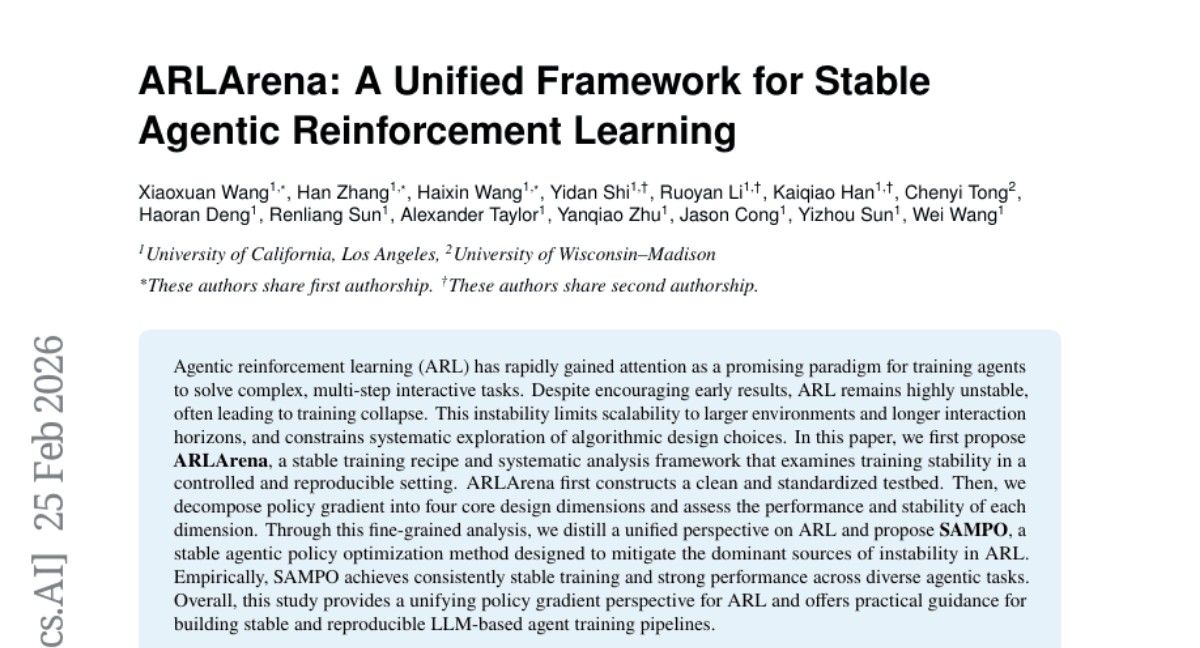
- **AWS Security Agent** introduces a **multi-agent architecture** dedicated to **automated penetration testing**. It autonomously scans for vulnerabilities, adapts to emerging threats, and provides remediation recommendations, marking a significant leap in **security automation**.
- **Gantry**, an **Autonomous Industrial Digital Twin**, showcases **agent-driven modeling of complex industrial systems**. Its **Elastic Agent Builder MVP** enables dynamic simulation and real-time control of manufacturing processes, enhancing **industrial resilience**.
- **Microsoft Research’s CORPGEN** delivers **hierarchical planning** combined with **long-term memory**, empowering **autonomous agents** to handle **multi-horizon tasks**—a breakthrough for **long-term autonomous decision-making** in complex environments.
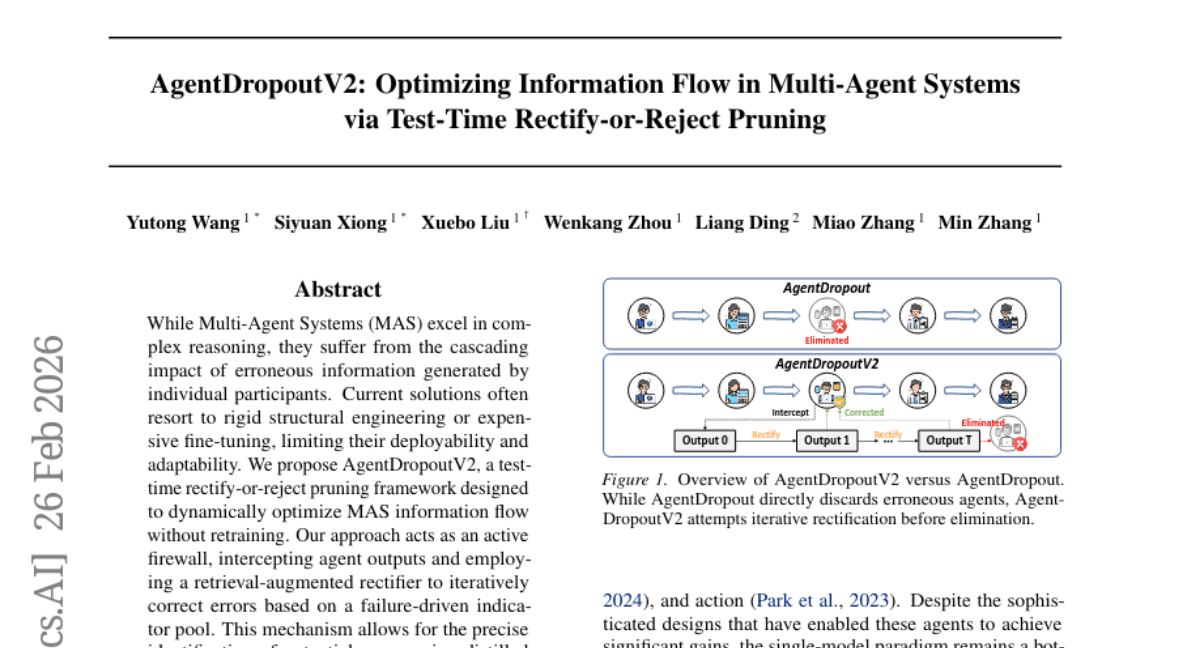
- **AgentDropoutV2** offers **test-time pruning** techniques to **optimize information flow**, reducing noise and improving **societal robustness** in multi-agent interactions.
---
## The Current Status and Future Implications
The confluence of **advanced frameworks, security architectures, industry-specific demonstrations, and open standards** signals that **MAS are no longer experimental** but are **integral to enterprise infrastructure**. They enable:
- **Ease of development** via **no-code/low-code platforms**.
- **Secure, privacy-first deployment** both cloud-based and on-premises.
- **Robust observability and management tools**.
- Seamless **interoperability** grounded in **industry standards**.
- **Open-source innovation** that accelerates adoption and customization.
- **Trustworthy and ethical governance** frameworks that ensure societal acceptance.
**Multi-agent systems are poised to revolutionize enterprise automation**, supporting **resilient, scalable, and ethically aligned autonomous ecosystems**. They are now the backbone of **future enterprise AI**, driving innovations in **industrial operations, financial analysis, healthcare, space exploration**, and beyond.
### **In summary**, 2026 underscores that MAS are transitioning from experimental prototypes to **core infrastructure components**—empowered by **comprehensive tooling, industry collaborations, and open standards**—ushering in a new era of **trustworthy, scalable autonomous systems** that serve societal needs and catalyze economic growth.




![A Survey on the Unique Security of Autonomous and Collaborative LLM Agents: Threats, Defenses, and Futures[v1] | Preprints.org](/_next/image?url=https%3A%2F%2Fi.prt.news%2Fff754c9945e73cb71619dd1f149868cf.jpg&w=3840&q=75)