# The 2026 Multi-Polar AI Ecosystem: Regional Sovereignty, Hardware Breakthroughs, and Autonomous Innovation
The artificial intelligence landscape of 2026 stands at a defining crossroads, characterized by a profound shift toward **regionalized AI infrastructure**, **hardware innovation breakthroughs**, and **autonomous workflow automation**. Building upon earlier trends, recent developments underscore a move away from dependence on Western tech giants toward a **diversified, resilient AI ecosystem** rooted in **regional sovereignty**, **technological independence**, and solutions finely tuned for local contexts. This transformation is reshaping global AI dynamics, fostering innovation hubs that are both self-reliant and globally interconnected.
---
## Reinforcing a Decentralized, Regionalized AI Ecosystem
A hallmark of 2026 is the **accelerated proliferation of regional AI development efforts**. Countries and corporations are prioritizing **technological sovereignty** to mitigate geopolitical vulnerabilities and empower local economies. Notable initiatives include:
- **Dominance of Regional Models**
Open-source models such as **Qwen3.5-397B-A17B** continue to dominate global rankings, particularly on platforms like Hugging Face. Chinese technology firms, led by **Alibaba**, have successfully launched **Qwen3.5-Medium**, which offers **performance on par with Western models like Sonnet 4.5** but is **finely adapted for regional languages, cultural nuances, and hardware standards**. These models excel in **regional relevance and usability**, fueling a vibrant ecosystem of **local startups, research institutions, and enterprise deployments** focused on **context-aware, culturally aligned AI solutions**.
- **Hardware Sovereignty and Lithography Innovation**
China’s strategic investments in **domestic lithography technology**—aimed at phasing out Western suppliers like ASML—are making significant strides. Breakthroughs in **next-generation semiconductor fabrication** are fostering **chip independence**, ensuring **supply chain resilience** and **reducing geopolitical vulnerabilities**. These advancements are underpinning **regional hardware hubs**, which support large-scale training and deployment of AI models without reliance on foreign hardware infrastructure.
- **Global Collaborations and Strategic Mergers**
Industry alliances such as **Anthropic’s acquisition of @Vercept_ai** exemplify a trend toward **specialized mergers** focused on **enhancing capabilities in autonomous systems and high-performance computing**. Meanwhile, **platform integrations**, such as **OpenAI’s GPT-5.3-Codex** embedded within **Microsoft Foundry**, are fostering **hybrid, multi-modal ecosystems** that serve diverse regional needs while leveraging international expertise.
---
## Hardware Breakthroughs Democratizing AI Access
2026 has been marked by **transformational hardware innovations** that dramatically **expand AI accessibility, processing speed, and deployment flexibility**. Highlights include:
- **On-Device AI and Wearables**
The launch of **state-of-the-art AI glasses** exemplifies AI’s seamless integration into **wearable, real-time visual processing devices**. These lightweight augmented reality (AR) glasses enable users to **access powerful AI functionalities instantly**, **preserve privacy**, and **operate with minimal latency**, creating **instantaneous augmented reality experiences** that bring AI into daily life.
- **High-Performance, Power-Efficient Chips**
The **Taalas HC1 chip** exemplifies hardware optimized for **high-speed inference**, capable of processing **nearly 17,000 tokens per second** with models like **Llama 3.1 8B**—all while maintaining **low energy consumption**. This hardware makes **local inference on smartphones, IoT devices, and embedded systems** feasible, **eliminating privacy concerns** associated with cloud-based processing and **reducing latency**.
- **Photonic Computing and Print-onto-Chip Technologies**
Recent breakthroughs in **photonic computing**, which utilize **light instead of electrons**, promise **energy consumption reductions of up to 100x**. These advancements are crucial for **scaling AI while addressing environmental impacts**. Additionally, **print-onto-chip technology**, pioneered by companies like **Taalas**, enables **embedding large language models directly into silicon hardware**. This **drastically reduces hardware complexity, latency, and costs**, making **powerful AI models accessible on small, affordable devices**—broadening AI’s reach into **wearables, embedded systems, and consumer electronics**.
- **Ultra-Efficient Edge Hardware**
Companies such as **femtoAI** and **ABOV** have introduced **ultra-efficient chips** tailored for **smart appliances, wearables, and consumer electronics**. These innovations **decentralize AI processing**, significantly **enhancing privacy** and **scalability**. Devices like **ZeroCon26’s assistive aids** are **revolutionizing accessibility**, providing **real-time visual, environmental, and communication support** that **empowers independence and inclusivity**.
---
## Agentification and Workflow Automation: Transforming Productivity
The rise of **custom AI agents** and **automated workflows** is fundamentally **redefining business operations and personal productivity**:
- **Turnkey Digital Workers and No-Code Platforms**
- **Perplexity Computer** exemplifies a **comprehensive AI digital worker** that **orchestrates multiple models** to **manage complex, multi-domain tasks** efficiently. Acting as a **digital workforce**, it **handles data processing, decision-making, and action execution**, transforming traditional workflows.
- **Google’s Opal platform** offers a **drag-and-drop, no-code environment** for **building AI automation**, lowering barriers for **business adoption**.
- **Notion’s autonomous AI agents** are now **learning user preferences** and **proactively managing tasks**, even **while users sleep**, demonstrating **personalized automation at scale**.
- **Jira** has integrated **AI-assisted task management and issue tracking**, streamlining **project workflows** and **team collaboration**.
- **Advanced Agent Capabilities**
Innovations like **GUI-Libra** focus on **training native GUI agents** capable of **reasoning, acting**, and **verifying actions** based on **visual inputs**. These advances are critical for **autonomous robotics**, **autonomous vehicles**, and **next-generation personal assistants**, approaching **general-purpose AI agents**.
- **Enhanced Agent Experience**
As emphasized by **@danshipper**, **agent experience**—the **quality of interaction, trustworthiness, and reliability**—**has become as vital as traditional UI design**. Developers prioritize **reliable, intuitive, and context-aware agents** to **build user trust** and **drive automation adoption** in complex environments.
- **Persistent Memory and Contextual Awareness**
Technologies like **DeltaMemory** introduce **fast, persistent cognitive memory**, enabling **AI agents** to **remember sessions, retain context**, and **improve continuity**. Paired with **Zavi AI’s voice-to-action OS**, which **transforms voice commands into concrete actions across devices and platforms**, these innovations **redefine human-computer interaction**, making AI assistants more **natural and effective**.
---
## Advances in Model Training, Scaling, and Efficiency
Progress in **training methodologies** ensures models are **more efficient, scalable, and adaptable**:
- **Diagnostic-Driven Iterative Training**
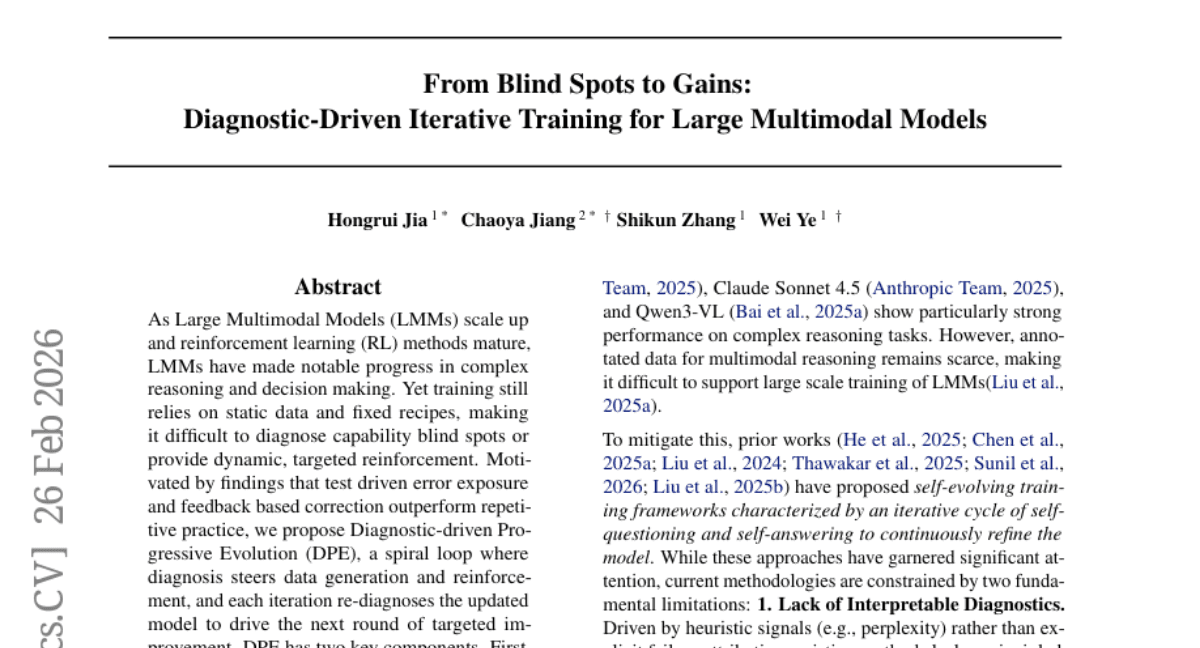
Recent research emphasizes **diagnostic-driven approaches** that **identify model blind spots** and **targeted improvements**, accelerating **training efficiency** and **robustness**, especially for **large multimodal models**.
- **Flexible FSDP at Scale**
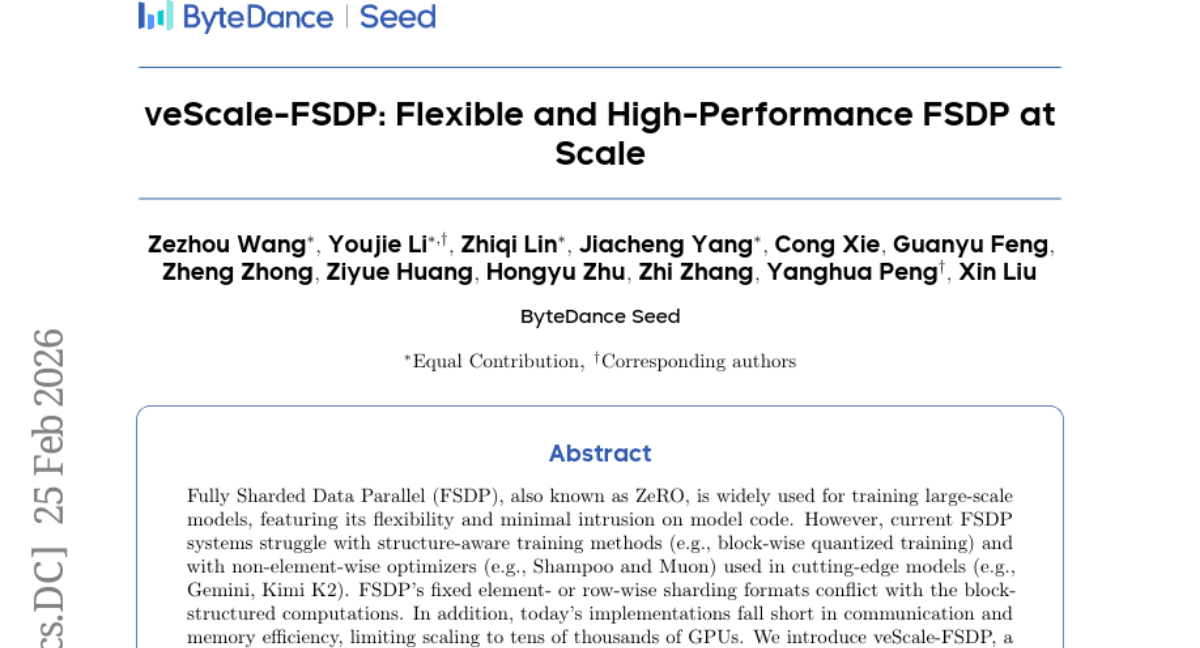
Innovations like **veScale-FSDP** facilitate **efficient, high-performance distributed training** of **massive models**, optimizing **resource utilization** while maintaining **scalability**.
- **Parameter-Efficient Fine-Tuning**
Techniques such as **Doc-to-LoRA** and **Text-to-LoRA** enable **adapting large models** to **specific tasks or domains** with **fewer parameters**, making **fine-tuning more accessible and cost-effective**.
---
## Multi-Agent and Omni-Modal Progress
The development of **multi-agent systems** and **omni-modal agents** is pushing AI toward **more integrated, human-like intelligence**:
- **Graph-Augmented Coding Agents**
Incorporating **graph structures** into **coding agents** enhances **reasoning capabilities**, leading to **more accurate and reliable code generation**.
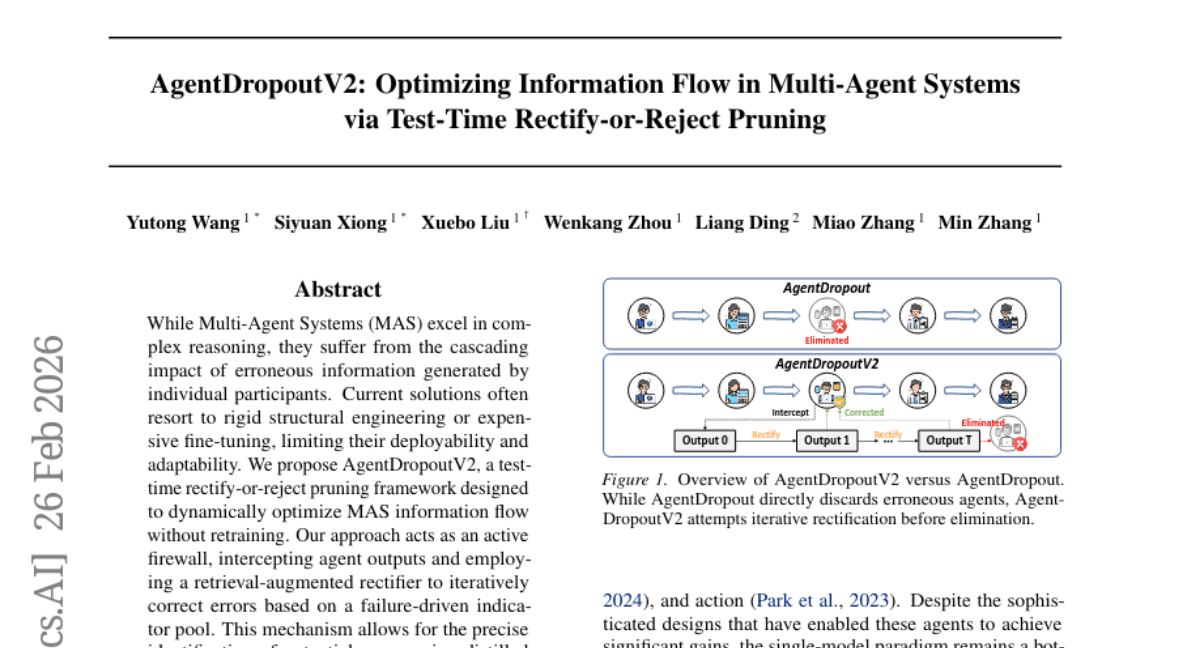
- **AgentDropoutV2**
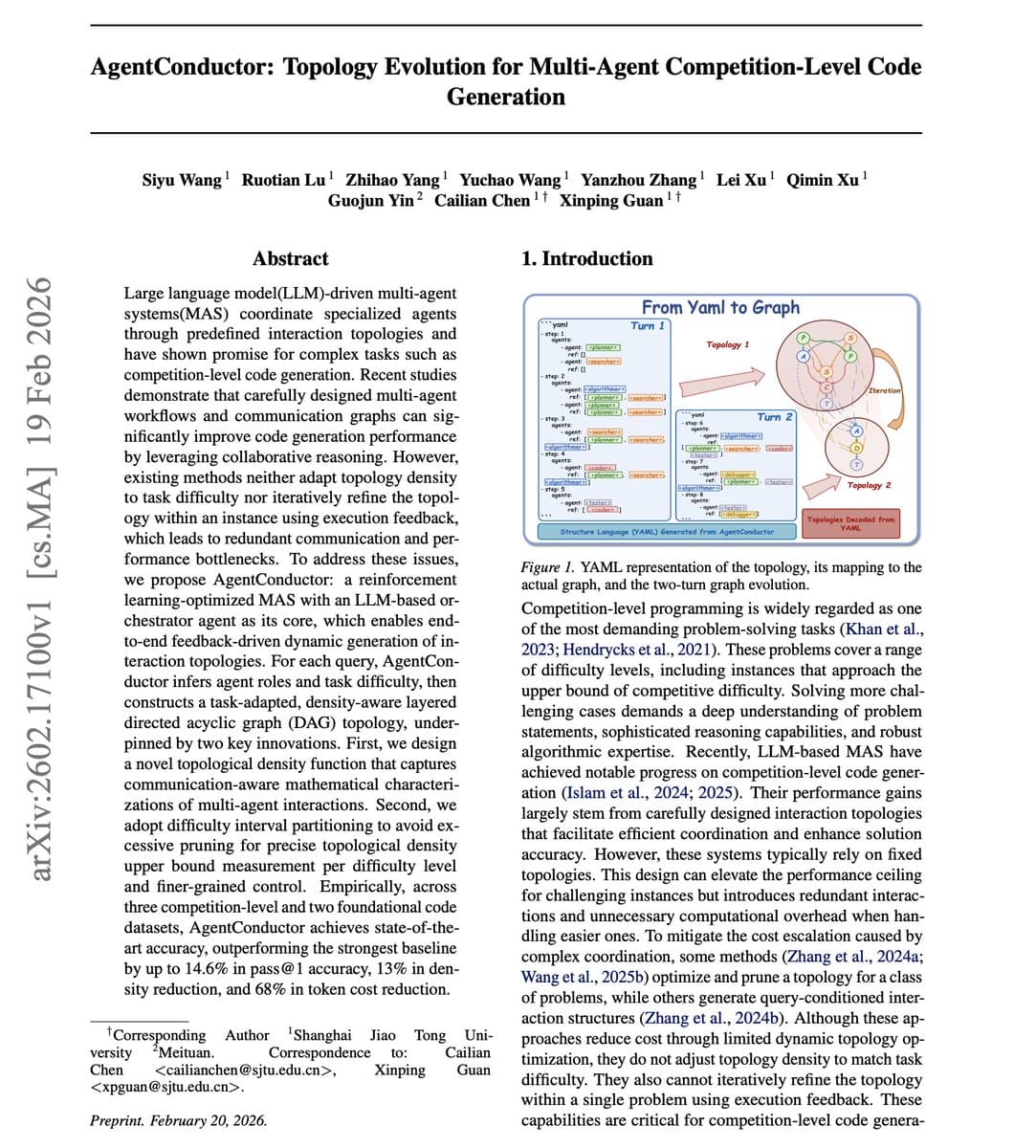
This approach **optimizes multi-agent information flow** through **test-time pruning**, resulting in **more efficient and robust multi-agent systems**.
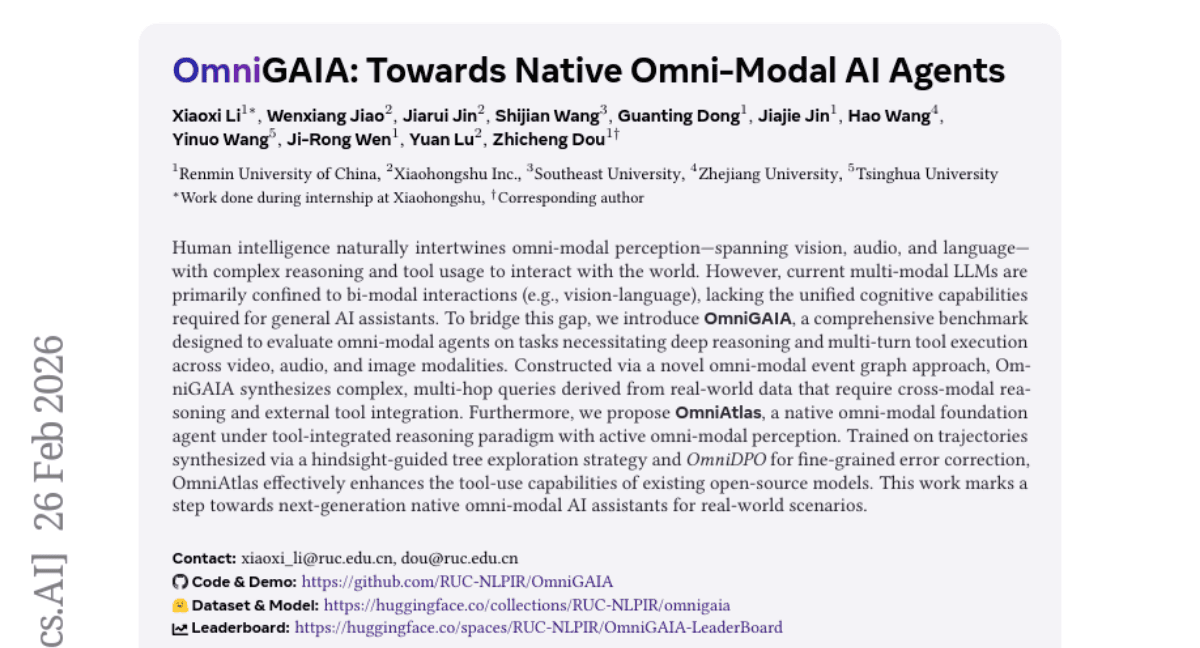
- **OmniGAIA**
The advent of **native omni-modal agents** such as **OmniGAIA** enables **seamless integration of visual, textual, and auditory inputs**, fostering **versatile, human-like AI systems** capable of **understanding and acting across diverse modalities**.
---
## Sector-Specific Breakthroughs and Autonomy
AI’s impact across various sectors continues to deepen, particularly in **autonomous systems**:
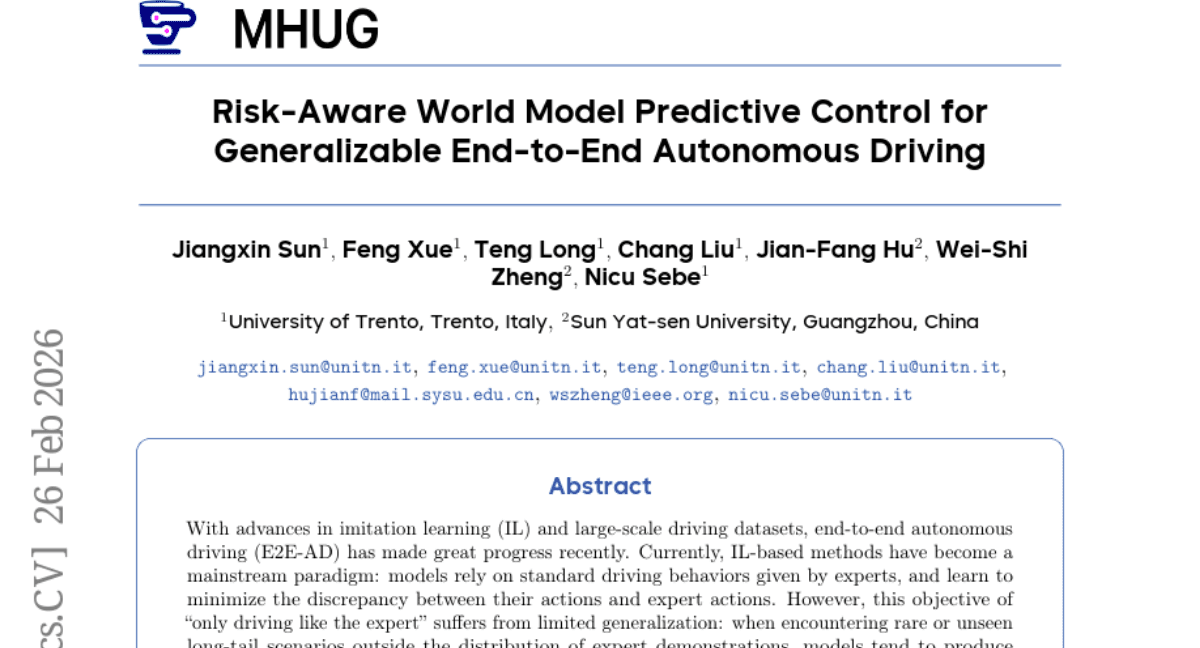
- **Risk-Aware World-Model MPC and Motion Diffusion**
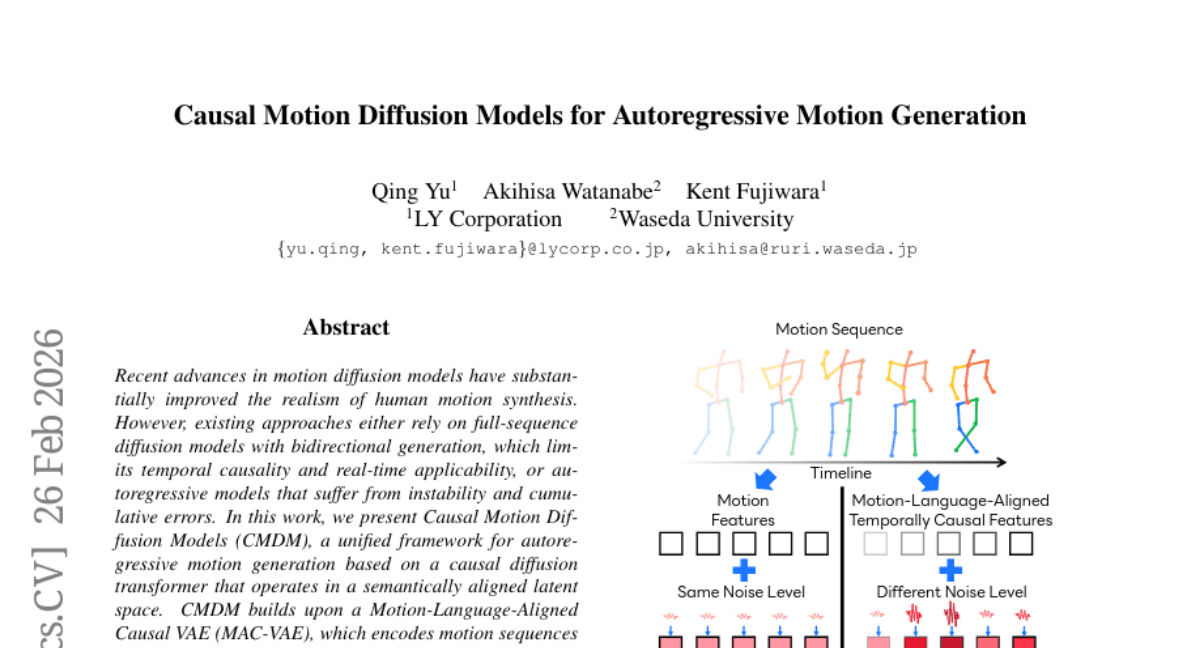
Innovations in **model predictive control (MPC)** and **motion diffusion** are driving **autonomous driving** and **robotics** forward. These systems now incorporate **risk-awareness** and **generalization capabilities**, resulting in **safer, more reliable autonomous navigation** in complex environments.
- **Healthcare & Accessibility**
Wearables equipped with **thermal sensors** and **AI analytics**, such as **Oura’s health AI**, provide **personalized biometric insights**. AI models like **SleepFM AI** now **predict over 130 diseases**, including various cancers, supporting **preventive medicine** and **early diagnosis**.
**Assistive devices** from **ZeroCon26** are **revolutionizing independence** for users with disabilities through **real-time visual, environmental, and communication support**.
- **Creative and Consumer Applications**
Tools like **Nano Banana 2** and **gpt-realtime-1.5** enhance **real-time multimedia creation** and **voice workflows**, democratizing **high-quality content generation**. The **Samsung Galaxy S26** integrates **on-device AI** for **photography, health monitoring, and personalization**, offering **privacy-preserving, seamless experiences**.
---
## Current Status and Future Implications
The AI ecosystem of 2026 is now **more resilient, sustainable, and human-centric** than ever before. The **regional emphasis** on **model development and hardware independence** reduces **global dependencies** and **geopolitical risks**, while **hardware breakthroughs** like **photonic computing** and **print-onto-chip** continue to **drive energy efficiency and scalability**.
**Autonomous workflows** and **multi-modal agents** are transforming **business productivity** and **daily human interactions**, with **sector-specific innovations** revolutionizing healthcare, accessibility, and mobility. These trends collectively forge a future where **AI seamlessly integrates into society**, **empowering individuals** and **strengthening regional ecosystems**.
As we move forward, the focus on **privacy-preserving, localized AI**, combined with **interoperable multi-agent systems**, will be pivotal in **building trust** and **ensuring equitable access**. The developments of 2026 set a robust foundation for an AI future that is **more resilient, inclusive, and aligned with human needs**, heralding a new era of **autonomous, sustainable, and human-centered intelligence**.