# The 2026 Revolution in Multimodal AI, Robotics, and Energy-Efficient Systems: An Updated and Expanded Perspective
The year 2026 stands as a pivotal milestone in the evolution of artificial intelligence, characterized by a remarkable convergence of perception, embodied robotics, world modeling, and hardware innovation. These breakthroughs are fundamentally transforming AI from narrowly focused tools into **embodied, trustworthy, and sustainable systems** capable of sophisticated reasoning, seamless interaction with the physical environment, and responsible deployment at scale. Building upon the foundational milestones of 2025, recent developments have addressed longstanding limitations, introduced innovative frameworks, and demonstrated practical solutions that are reshaping the AI landscape across multiple domains.
This ongoing revolution heralds an era of **embodied intelligence**, where perception, reasoning, and action are deeply integrated. Central to this shift is **causality-aware modeling**, which grounds AI understanding firmly in physical and causal relationships. The integration of multimodal perception with advanced world models and energy-efficient hardware is enabling AI systems that are not only smarter but also more sustainable and trustworthy.
---
## Bridging the Gap: From Perception to Physical and Causal Reasoning
Despite significant progress in vision-language models (VLMs) and multimodal large language models (MLLMs), a persistent challenge has been enabling models to **comprehend complex physical dynamics directly from videos**. As @drfeifei emphasized, *"VLMs/MLLMs do NOT yet understand the physical world from videos,"* highlighting the need for models to ground perception in causality and physical interactions.
Recent breakthroughs are making strides toward this goal through **interactive, human-centric video world models** that facilitate **simulated environment manipulation conditioned on user inputs**, such as hand gestures and camera controls. A pioneering concept is **"Generated Reality,"** which leverages **interactive video generation** to track **head and hand movements** in real-time, producing **immersive, controllable virtual environments**. These environments enhance **scene understanding** and **spatial reasoning**, with practical applications spanning **virtual assistants**, **robotic training simulators**, and **augmented reality interfaces**.
Complementing these are **geometric-aware encoding techniques** like **ViewRope** and **Rotation-Enhanced Positional Embeddings**, which **significantly improve the long-term spatiotemporal coherence** of video-based world models. These encodings enable models to **maintain a consistent understanding over extended durations**, a vital capability for **causal inference** and **autonomous decision-making**. For example, **Causal-JEPA** employs **latent interventions** within **object-centric latent spaces** to support **multi-step causal reasoning**, marking a pivotal step toward **physically grounded AI systems**.
### Recent Highlights:
- The challenge of **understanding physical dynamics directly from videos** remains, yet **interactive models and geometric-aware encodings** are narrowing this gap.
- **Human-centric simulation environments** foster **responsive, real-time scene interaction**.
- These innovations are catalyzing the development of **causality-aware, multimodal AI** capable of **deep physical comprehension**.
---
## Robotics: From Object Manipulation to Adaptive, Embodied Control
Robotics continues its rapid evolution by integrating perception and control through **end-to-end learning frameworks**. Notably, **EgoPush** has demonstrated **egocentric multi-object rearrangement** within cluttered environments via **perception-guided policy learning**, enabling robots to **manipulate objects with high precision** in complex, unstructured scenarios. This progress moves us closer to **autonomous domestic, healthcare, and industrial automation**.
Further advancements include **smooth, time-varying linear control policies** that incorporate **action Jacobian penalties**. These penalties **prevent abrupt or unrealistic control signals**, resulting in **more natural, safe, and adaptable behaviors**—crucial for **real-world deployment**. The **Fast-ThinkAct** framework, showcased at **#CVPR2026**, exemplifies **rapid, reliable embodied control** capable of **adapting efficiently** in dynamic environments with **minimal latency**.
### Key milestones:
- **EgoPush**'s success in **end-to-end egocentric object manipulation**.
- Incorporation of **action Jacobian penalties** to produce **smooth, safe robot behaviors**.
- The emergence of **Fast-ThinkAct**’s ability to **deliver fast, adaptive control** in complex, real-time scenarios.
Beyond object manipulation, **cross-embodiment** and **zero-shot tool use** are advancing through **Language-Action Pre-Training (LAP)** and **SimToolReal**, which enable robots to **transfer skills across different embodiments** and **manipulate novel tools** without explicit retraining. These developments are critical steps toward **flexible, general-purpose robotic agents** capable of **learning and adapting in unstructured environments**.
---
## Generative Models and Hardware: Speed, Efficiency, and Sustainability
The landscape of **generative modeling** has undergone a **revolution driven by algorithmic innovations and hardware breakthroughs**. **Discrete diffusion models**, utilizing techniques like **Categorical Flow Maps** and **Masked Bit Modeling**, now **achieve near real-time image and video synthesis**, drastically reducing **sampling latency**. This progress makes **high-fidelity content generation** more **accessible and scalable**, fueling applications in **creative industries**, **industrial design**, and **consumer entertainment**.
On the hardware front, **attention mechanisms** have been **optimized with SpargeAttention2**, which attains **up to 95% attention sparsity** and **16.2× speedups** in **video diffusion workloads**. These innovations enable **real-time multimodal content generation** on **edge devices** such as **NVIDIA Jetson modules**, expanding deployment possibilities beyond traditional data centers.
Further, **model compression techniques** like **COMPOT** facilitate **post-training orthogonalization and parameter sharing**, allowing large models like **Llama 3.1** (70 billion parameters) to run efficiently on **consumer-grade GPUs** such as the RTX 3090. This democratizes access to **state-of-the-art AI**, significantly reducing **computational** and **energy barriers**.
A transformative development is the advent of **thermodynamic-like computers**, which **mimic AI image generation** but **consume a fraction of the energy**. As Stephen Whitelam explains, these devices **leverage thermodynamic principles** to **perform computations with minimal energy expenditure**, aligning AI progress with **environmental sustainability**. Additionally, **SambaNova’s SN50 chips** aim to support **10-trillion parameter models** capable of **agentic AI**, promising **massively scaled, energy-efficient systems**.
### Key advances include:
- **Near real-time diffusion-based models** for **rapid multimodal content creation**.
- Hardware innovations like **SpargeAttention2** and **COMPOT** that **democratize deployment**.
- The emergence of **thermodynamic computing** and **advanced chips** for **large-scale, energy-efficient AI** capable of **agentic behaviors**.
---
## Accelerating Model Development and Democratization
Efforts are intensifying to **develop robust, versatile AI models** and **broaden accessibility**. The **VLANeXt** framework offers **comprehensive strategies** for building **strong Virtual Language Agents (VLA)** capable of **multimodal reasoning and interaction**. Simultaneously, models such as **Qwen 3.5 Medium** demonstrate that **smaller, efficient models** can **perform at production-level quality**, making **advanced AI** more **cost-effective and accessible** across research and industry.
Recent work also includes **test-time verification techniques** for **Vision-Language Agents (VLAs)**, such as those reported by @mzubairirshad on the **PolaRiS evaluation benchmark**. These methods significantly enhance **model reliability** by enabling **test-time verification** that guards against errors, boosting **trustworthiness** in practical deployments.
---
## Trustworthiness, Safety, and Explainability
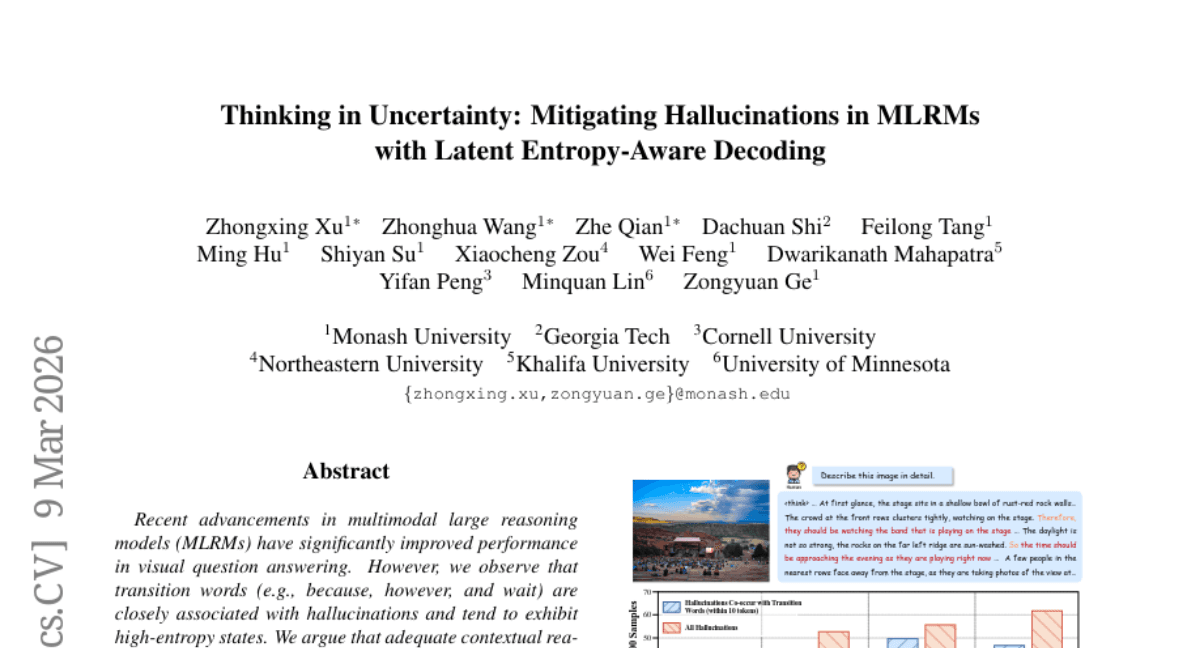
As AI systems grow more capable, **trustworthiness and safety** are paramount. Techniques like **Retrieval-Augmented Generation (RAG)** and **REFRAG** continue to **ground language models** in external knowledge bases, **reducing hallucinations** and **factual inaccuracies**. Frameworks such as **LangChain** support **long-term memory architectures**, fostering **coherent, human-like interactions** over extended periods.
**Privileged Information Learning (PIL)** enhances models during training by providing **high-quality signals** unavailable at inference, further **mitigating hallucinations**. At the neuron level, **NeST** offers **targeted safety interventions** and **behavioral controls**. Visualization tools like **TensorLens** and **SABER** improve **explainability** by illuminating **internal decision pathways** and **rationales**, thereby promoting **transparency and user trust**.
Recent advances also address **defenses against distillation attacks**, safeguarding model integrity, while innovations in **training efficiency**—via **hyperparameter optimization** and **new optimizers like hyperstep**—accelerate convergence and **reduce energy consumption**, aligning AI development with **sustainability goals**.
---
## Multi-Agent and Embodied Learning at Scale
The ecosystem increasingly emphasizes **multi-agent cooperation** and **embodied learning**. Frameworks like **"Cord"** enable **structured multi-agent collaboration** through **hierarchical task allocation** and **dynamic interaction**, critical for **urban navigation**, **warehouse automation**, and **collaborative robotics**.
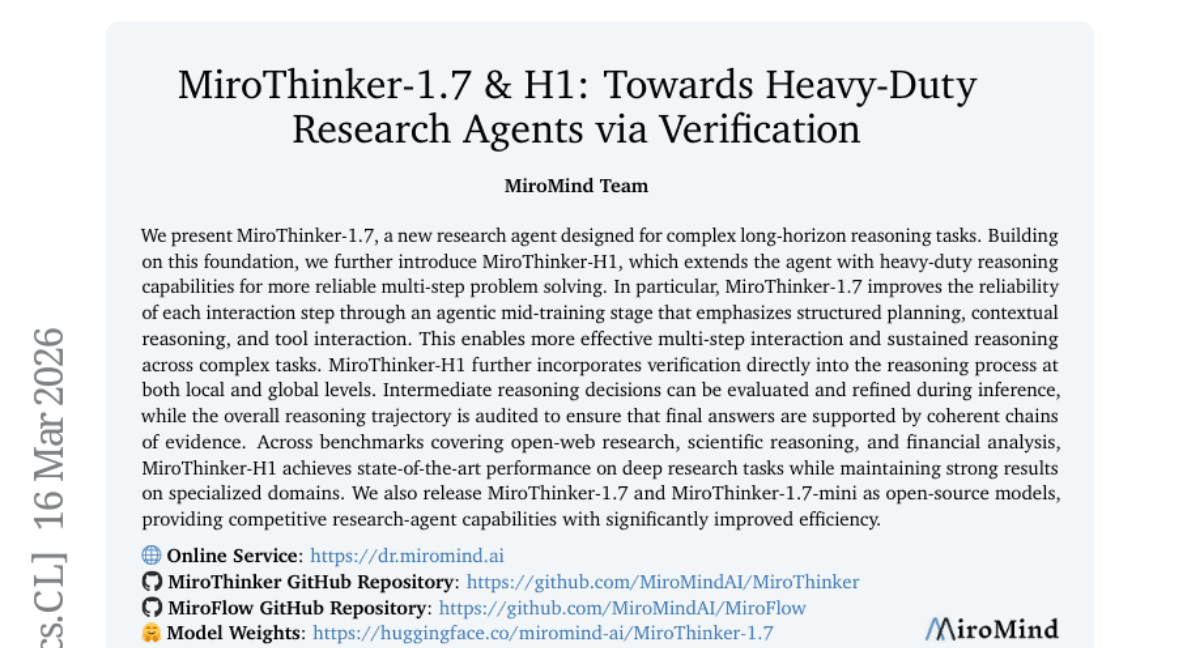
**DreamDojo** exemplifies large-scale embodied learning by training models on vast datasets of human videos, resulting in **adaptive motor control** and **physical reasoning**. Open-source tools such as **oh-my-opencode** and **Voxtral Realtime** accelerate the development of **robust multi-agent autonomous systems** capable of **coordinated decision-making** in complex environments. The **SkillOrchestra** paradigm supports **modular skill routing**, enabling **behavior transfer** and **task flexibility**.
---
## Expanding into 3D Content Creation and Reconstruction
Recent innovations extend AI capabilities into **3D asset generation** and **reconstruction**. **AssetFormer** employs an **autoregressive transformer architecture** for **detailed, modular 3D asset creation**, while **tttLRM** advances **test-time training techniques** for **long-context, autoregressive 3D reconstruction**. These tools empower **content creators** and **virtual environment developers** with **realistic, customizable 3D models**, fueling applications in **gaming**, **virtual reality**, and **simulation**.
---
## Foundations for Long-Horizon Reasoning and World Models
To support **long-term planning and complex reasoning**, models like **K-Search** utilize **co-evolving intrinsic world models** to generate **kernel functions** for large language models (LLMs). When combined with **reasoning regularizers** such as **DSDR**, these approaches **enhance the models’ intrinsic understanding** of dynamic environments, enabling **multi-step, multi-faceted tasks** with **greater consistency and robustness**.
---
## Recent Advances in Interactive and Latent Reasoning
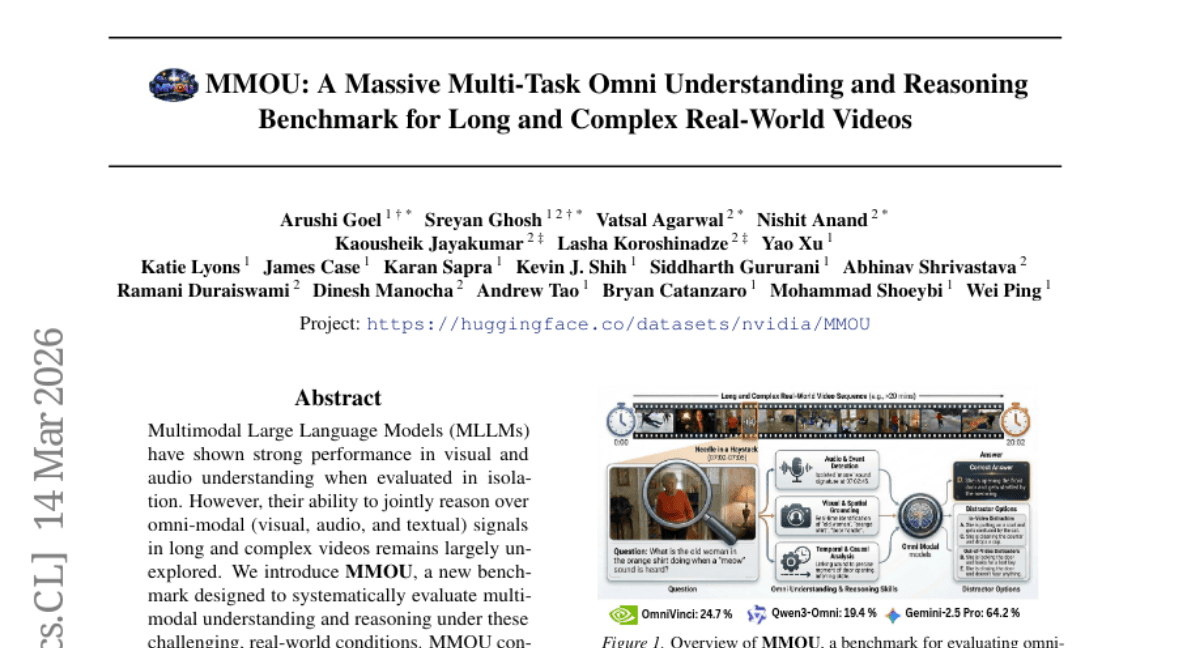
Innovations in **interactive in-context learning**, leveraging **natural language feedback**, enhance models' capacity to **refine understanding dynamically**. The **ManCAR** framework (Manifold-Constrained Latent Reasoning with Adaptive Test-Time Computation) introduces **adaptive, latent-space reasoning**, optimizing sequential reasoning processes. The **"Very Big Video Reasoning Suite"** integrates **multi-modal, long-horizon video understanding** with **efficient architectures**, empowering AI to **perform complex physical reasoning** and **in-context learning** at scale.
These advances significantly bolster AI’s ability to **model, manipulate, and reason about physical dynamics** from unstructured, real-world video data, moving toward **truly embodied, causality-aware systems**.
---
## Current Challenges and Future Outlook
Despite these remarkable advancements, several challenges remain:
- **Learning physical dynamics directly from videos** continues to be complex, requiring further progress in **interactive simulation** and **causal inference**.
- Ensuring **robust safety and resilience** in autonomous systems, especially against **adversarial threats**, remains a priority.
- Achieving **sustainable large-scale deployment** demands continued innovation in **energy-efficient algorithms**, **thermodynamic computing**, and **hardware design**.
Looking ahead, the trajectory points toward **embodied, multimodal, and energy-efficient AI systems** that are **trustworthy, adaptive, and environmentally sustainable**. These systems will **seamlessly integrate perception, reasoning, and action**, transforming industries, enhancing human capabilities, and fostering a **more sustainable AI ecosystem**.
---
## In Summary
The developments of 2026 encapsulate a **synchronized leap**—where **hardware acceleration, perception, reasoning, safety, and scalability** coalesce into **embodied AI systems** that **see, reason, act, and learn** with **human-like sophistication** and **machine-like efficiency**. This revolution is poised to **reshape industries**, **empower human activity**, and **advance AI toward trustworthy and sustainable futures**, marking a profound new chapter in artificial intelligence’s transformative journey.
---
### Notable Recent Contributions:
- @srush_nlp highlights that **text diffusion** techniques are “really happening,” signaling rapid progress in **text generative diffusion**.
- **Reflective test-time planning** for **embodied large language models** is gaining traction, enabling models to **self-improve** through **trial and error**.
- **PyVision-RL** explores **agentic vision systems** trained via **reinforcement learning**, pushing toward **autonomous, adaptable vision agents**.
- **Diffusion Duality, Chapter II** introduces **Ψ-samplers** and **efficient curricula**, further refining **diffusion-based generative models** for **speed and quality**.
As these innovations unfold, the **convergence of perception, reasoning, control**, and **efficiency** promises an exciting future where AI **seamlessly integrates into human life, industry, and the environment**, with **trustworthiness and sustainability at its core**.